What an Online Chromium Analyzer for Wastewater Actually Measures
An online chromium analyzer for wastewater is a real-time instrument that continuously quantifies either total chromium (TCr) or hexavalent chromium (Cr(VI)) in a process or effluent stream, with results available as a 4–20 mA signal, a digital Modbus/TCP value, or a logged trend inside the plant SCADA. Distinguishing the two species is not academic — every major 2026 discharge regulation, including U.S. EPA, China GB 8978, and EU IED, sets the compliance number on Cr(VI), not TCr. TCr is the sum of Cr(III), Cr(VI), and any particulate or complexed chromium, and is most often used for influent load trending and mass-balance work, not for the daily compliance report.
Three measurement philosophies dominate the market. The first is direct photometry, where Cr(VI) reacts with 1,5-diphenylcarbazide (DPC) in a strongly acidic medium (pH ≈ 1, typically H2SO4) to form a red-violet complex whose absorbance is read at 540 nm — the chemistry codified in EPA Method 218.7 for online Cr(VI) compliance. The second is ORP-based indirect control: a gold-electrode ORP probe and a pH probe sit in the reduction tank, and the controller uses the ORP setpoint (typically +200 to +300 mV vs Ag/AgCl) to dose FeSO4, Na2S2O5, or SO2 so that Cr(VI) is quantitatively reduced to Cr(III) before hydroxide precipitation. The third is UV-direct detection at ~370 nm, which responds to TCr without reagents but cannot speciate Cr(VI) from Cr(III), so it is a screening tool rather than a compliance instrument.
Three Measurement Methods Compared: Photometric, ORP, and UV
No single analyzer fits every tank. ORP/pH systems control the reduction step but do not measure chromium at all; Cr(VI) photometric analyzers provide the only defensible compliance number; TCr photometric analyzers give the influent load an operator needs to size chemical feed. The table below summarizes the practical envelope of each method based on current vendor specifications.
| Parameter | Photometric TCr (e.g., Raipun-class) | Cr(VI) Photometric (DPC, EPA 218.7) | ORP + pH (e.g., Yokogawa FLXA402) | UV-Direct (e.g., HORIBA UV500) |
|---|---|---|---|---|
| Target species | TCr (Cr(III) + Cr(VI) + particulate) | Cr(VI) only | Redox potential; no Cr-specific detection | TCr via UV absorbance at 370 nm |
| Typical range | 0–5 mg/L (auto-range to 20 mg/L) | 0–1 mg/L | −1500 to +1500 mV ORP | 0–10 mg/L TCr |
| Detection limit | 0.02–0.05 mg/L | 0.005–0.01 mg/L | N/A (control parameter) | 0.05–0.1 mg/L |
| Response time | 5–10 min (digestion + reaction) | 3–8 min | Continuous (<30 s) | <1 min, no reagents |
| Reagents required | Acid digestion, oxidant, buffer | DPC in H2SO4, light-sensitive | Reference fill solution only | None |
| Typical use case | Influent load, final TCr trend | Final effluent Cr(VI) compliance | Closed-loop reducing-agent dose control | Screening, polishing after precipitation |
The decision heuristic is straightforward: use ORP for reduction-tank control, dedicated Cr(VI) photometry for the compliance number that goes to the regulator, TCr photometry for influent trending and mass balance, and UV-direct only for screening on clean streams where particulates and Cr(III) interferences are negligible. Plants that try to substitute ORP for the compliance reading will fail an audit; plants that try to use UV-direct in untreated plating wastewater will read high because of iron, nickel, and organic color.
2026 Regulatory Limits for Chromium in Wastewater Discharge

The analyzer specification only makes sense once the discharge number is fixed. The table below consolidates the 2026 limits that govern the four most common jurisdictions for chromium-bearing effluent — U.S. EPA, China GB, EU IED BAT-AEL, and India CPCB. Note that compliance is always on Cr(VI); TCr limits are set higher because they include the less-toxic Cr(III) fraction that is acceptable in many receiving waters once precipitation is complete.
| Region / Standard | Cr(VI) limit | TCr limit | Typical source category |
|---|---|---|---|
| U.S. EPA — 40 CFR 433 (Metal Finishing), 2026 ELG | 0.1 mg/L (surface discharge) | 0.5 mg/L | Electroplating, metal finishing |
| China GB 8978-1996 (amended 2024) | 0.05 mg/L (first-class) | 1.5 mg/L | All industrial discharge to surface water |
| EU IED BAT-AEL (2024 BAT conclusions, in force 2026) | 0.1 mg/L (surface treatment of metals) | 0.2–0.5 mg/L range | Surface treatment of metals & plastics |
| India CPCB / MoEFCC (2024 Schedule VI) | 0.1 mg/L (inland surface) | 2.0 mg/L | Electroplating, tannery, pigments |
Three industries carry the highest Cr(VI) load and therefore the highest compliance risk: electroplating, leather tanning, and stainless-steel pickling — the same scope cited in the Yokogawa reduction-monitoring application note and in the EU IED BAT conclusions. The trend from 2024 through 2026 is a tightening of Cr(VI) toward 0.05 mg/L in several EU member-state implementations and in California, so any analyzer specified in 2026 should have a limit of detection ≤ 0.01 mg/L to remain defensible when the local limit drops. A close relative of this stream is the heavy-metal panel handled in a display panel heavy metal wastewater treatment guide, where chromium, copper, and nickel removal share the same reduction–precipitation logic.
Sensor Selection: Electrodes, Cells, and Reagent Handling
Most analyzer downtime is mechanical or chemical, not electronic. Two field failures dominate: fouled reference junctions on the ORP probe, and exhausted or degraded reagent lines on photometric analyzers. For ORP in chrome-bearing wastewater, a gold electrode is mandatory per the Yokogawa application note; platinum dissolves in the reducing environment and a standard silver billet is poisoned by sulfide from Na2S2O5 or SO2 dosing. The reference half-cell must be double-junction with KNO3 or saturated KCl fill — a properly specified double-junction reference lasts 6–12 months in this service, where a single-junction reference fails in 2–4 weeks.
For photometric analyzers, the flow cell material is the second critical choice. The Cr(VI)-DPC complex degrades in UV-exposed acrylic, so the cell must be quartz or opaque polypropylene, with a 10–50 mm path length for sub-mg/L detection. Reagent handling drives the OPEX line item: DPC is light-sensitive and must be stored at 4–10 °C, which means analyzer cabinets in tropical plants need air-conditioning, not just ventilation. Typical consumption is 1.2–2.0 L of combined reagents per measurement channel per month, depending on cycle time. Sample preconditioning is the third decision: TCr analyzers tolerate a < 100 µm strainer, but Cr(VI) analyzers need ultrafiltration, because particulates carried into the reaction cell will auto-reduce Cr(VI) to Cr(III) during digestion and bias the reading low by 10–30%.
2026 Cost of Ownership: CAPEX, Reagents, and Calibration

The CAPEX line is straightforward to budget; the OPEX line is where most procurement requests fail because nobody modeled reagent and electrode consumption. The table below gives 2026 market-typical ranges for a single sampling point, excluding installation, panel integration, and SCADA wiring (add $3,000–$8,000 per point for that scope).
| System class | CAPEX (hardware only) | Annual OPEX | Main OPEX drivers | 5-year TCO multiplier |
|---|---|---|---|---|
| ORP + pH system (Yokogawa FLXA-class) | $4,000–$9,000 | $500–$1,200 | Gold electrode ($300–$600/yr), reference fill | 1.2–1.5× CAPEX |
| Photometric TCr analyzer (Raipun-class) | $8,000–$18,000 | $2,500–$4,500 | Reagents, 1 annual service visit, tubing | 1.8–2.2× CAPEX |
| Dedicated Cr(VI) analyzer (DPC, EPA 218.7) | $15,000–$35,000 | $3,500–$6,000 | DPC reagent (light-sensitive), 2 service visits/yr | 1.8–2.5× CAPEX |
| UV-direct (e.g., HORIBA UV500) | $25,000–$40,000 | <$1,000 | Lamp replacement every 2–3 years | 1.1–1.3× CAPEX |
Calibration cadence drives OPEX almost as much as reagent cost. A Cr(VI) photometric analyzer needs a 1-point check every 24 hours, a full 5-point calibration every 30 days, and a 4–20 mA loop verification quarterly. An ORP system needs a weekly buffer check and a monthly slope verification against a quinhydrone or Light's solution. Over 5 years, photometric analyzers cost 1.8–2.5× their purchase price in TCO, while ORP runs at 1.2–1.5× — a strong argument for ORP on budget-constrained plants where reduction control is the goal, but not a substitute for the compliance photometric analyzer where Cr(VI) is reported.
Procurement Decision Framework: Selecting the Right Analyzer for Your Plant
Four questions turn a vendor catalog into a single defensible specification. Run them in order — each answer narrows the field.
- Are you reporting Cr(VI) to a regulator? If yes, only a dedicated Cr(VI) photometric analyzer (DPC method, EPA Method 218.7 equivalent) is acceptable. ORP and UV-direct do not qualify for the compliance number, no matter how stable their readings look.
- Do you dose reducing agents — FeSO4, Na2S2O5, or SO2? If yes, pair the Cr(VI) compliance analyzer with a Yokogawa-class ORP + pH system for closed-loop dose control. The ORP setpoint window is +200 to +350 mV vs Ag/AgCl at pH 2.0–2.5; outside that window reduction is either incomplete (low ORP) or wasting reagent (high ORP).
- Is your influent TCr typically > 5 mg/L? If yes, either dilute the sample in the conditioning panel or specify a photometric TCr analyzer with auto-range 0–20 mg/L. Most 0–1 mg/L Cr(VI) analyzers saturate above 2 mg/L and give a flat-line compliance reading — a dangerous failure mode because the plant believes it is in compliance.
- Does your plant run continuous shifts (24/7)? If yes, require dual-stream sample conditioning with automatic probe cleaning, or budget > 30% data loss from manual cleaning windows. Continuous-shift plants that skip this option end up with compliance gaps exactly when the regulator samples.
Once the analyzer is selected, the next engineering step is dose control. An automatic chemical dosing system takes the ORP controller output and modulates the reducing-agent pump speed in real time, typically cutting Na2S2O5 consumption by 20–35% relative to a manually set dose. For plants with high chromium-bearing flows, pairing the analyzer with a dissolved air flotation system ahead of the reduction tank removes oils and emulsified plating additives that would otherwise consume reducing agent and foul the ORP probe. Plants evaluating the full treatment train can refer to the broader electroplating wastewater treatment guide or, for hide-and-beam shops, the tannery wastewater treatment guide.
Frequently Asked Questions
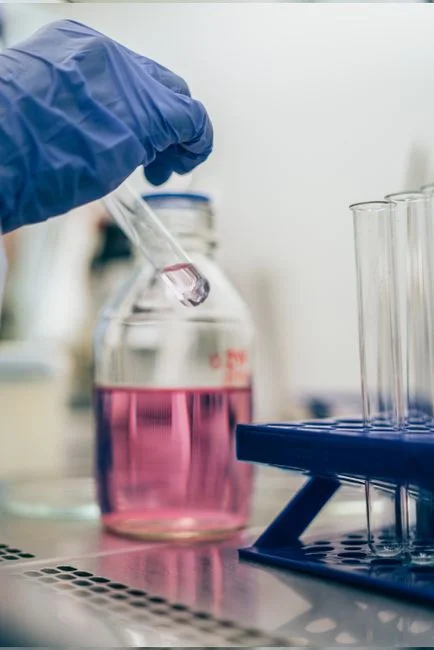
What is the difference between TCr and Cr(VI) analyzers? A TCr analyzer digests the sample and reports the sum of all chromium species using photometric or UV detection, while a Cr(VI) analyzer uses the DPC reaction at 540 nm without oxidation — so it sees only the hexavalent fraction. EPA Method 218.7 is the U.S. compliance reference for online Cr(VI) photometry and is the only method defensible for the daily discharge report.
Can an ORP sensor replace a chromium analyzer? No for compliance reporting — ORP measures redox potential, not chromium concentration, and a passing ORP reading does not prove Cr(VI) is below 0.1 mg/L. Yes for reduction-tank control, where ORP + pH is the standard closed-loop signal per the Yokogawa reduction-monitoring application note.
How often does a Cr(VI) photometric analyzer need calibration? A 1-point calibration check every 24 hours, a full 5-point calibration every 30 days, and a 4–20 mA loop check quarterly. Reagent lines and the DPC stock must be inspected weekly because DPC degrades under light and heat.
What is the typical cost of an online chromium analyzer in 2026? Hardware ranges from $4,000–$9,000 for an ORP + pH system, $8,000–$18,000 for a photometric TCr analyzer, $15,000–$35,000 for a dedicated Cr(VI) photometric analyzer, and $25,000–$40,000 for a UV-direct unit. Annual OPEX is 10–25% of CAPEX for photometric systems and under 15% for ORP.
Which industries need online chromium monitoring? Electroplating, metal finishing, leather tanning, stainless-steel pickling, wood preservation, and chromate chemical manufacturing — the same scope defined by the Yokogawa reduction-monitoring note and the EU IED BAT conclusions for the surface treatment of metals. Any plant discharging more than a few hundred grams of Cr(VI) per day into a municipal sewer or surface water will need continuous monitoring to meet 2026 limits without batch compliance risk.