What Is the MVR Evaporator Working Principle?
The MVR evaporator working principle centers on recompressing secondary vapor and returning it as the heating medium. Feed typically boils at 50–90°C under 0.2–0.5 bar absolute. Compressor work of 10–30 kWh per ton of water evaporated replaces most live steam after start-up. Distillate leaves as condensate; brine exits as concentrate.
The closed vapor loop puts the compressor at the center of the duty. Feed liquid enters a falling-film heat exchanger and boils under vacuum. Secondary vapor rises into a separator, where entrained droplets are knocked out, then enters the suction of a centrifugal or roots compressor. The compressor raises vapor pressure by a ΔT equivalent of 8–20°C—enough to push saturation temperature above the boiling liquid in the same exchanger.
Pressurized vapor condenses on the shell side and releases latent heat of about 620 kWh per ton of water evaporated through the tube wall. That heat drives fresh feed to boil again. Distillate exits as condensate, concentrated brine exits from the bottom, and the loop repeats with no fresh steam at steady state. Most plants we size for high-salinity wastewater run boiling temperatures at the lower end of 60–80°C to cut scaling risk.
Evaporating one ton of water at 70°C still needs roughly 620 kWh of latent heat. MVR recovers and reuses 95%+ of that energy as compressed vapor, so net input is mainly shaft work—typically 10–30 kWh/ton depending on ΔT and compressor isentropic efficiency (65–75% for centrifugal units). Vacuum operation lowers the boiling point from 100°C to 60–80°C, reduces scaling, protects heat-sensitive products, and shrinks wall ΔT so 304 stainless can replace titanium in moderate-chloride service. Once running, fresh steam is needed only for cold start-up—typically 5–15% of the annual steam use of an equivalent multi-effect evaporator (MEE).
Main Components of an MVR Evaporator
Five equipment blocks define an MVR skid, each with selection criteria a buyer can audit against a vendor data sheet.
- Compressor. Centrifugal units are specified for >5 t/h evaporation capacity with isentropic efficiency of 65–75% and the lowest specific power per ton. Roots blowers cover the 0.5–5 t/h range where lower CAPEX outweighs the efficiency penalty and where vapor wetness is harder to control—roots designs tolerate droplets better than multi-stage centrifugals. Steam-jet ejector (TVR) re-compression remains the historical alternative for very large ΔT or where electricity is constrained and 4–6 bar exhaust steam is free.
- Separator / vapor body. A cyclone or demister-pad chamber with 2–5 seconds of vapor residence time. The design target is entrained-droplet carryover below 0.1% of vapor mass—anything above that erodes compressor blades and trips vibration sensors within weeks.
- Heat exchanger. Falling-film tubular is the standard for wastewater duty because it handles fouling and viscous brines better than plate. Plate exchangers are reserved for clean food, dairy, or pharma streams. For chloride above 500 mg/L at >80°C, specify titanium grade 2 or duplex 2205 tubes; 316L fails by pitting within 6–12 months in this regime.
- Vacuum system. Liquid-ring pump or two-stage steam-jet ejector holding absolute pressure at 0.2–0.5 bar so the boiling point sits at 60–80°C. A non-condensable bleed (typically 5–15% of vapor mass) is routed through the vacuum pump to prevent blanketing.
- Condensate and distillate polishing. Conductivity meters, pH probes, and a flash tank that recovers another 5–10% of input energy from hot condensate going to drain.
How Much Steam Does an MVR Evaporator Use?
An MVR evaporator uses 0–0.1 ton of external steam per ton of water evaporated at steady state, versus 0.3–0.5 for TVR and about 0.33 for a 3-effect MEE. Start-up steam is still required, but annual live-steam use is typically only 5–15% of an equivalent MEE when electricity is available for the compressor.
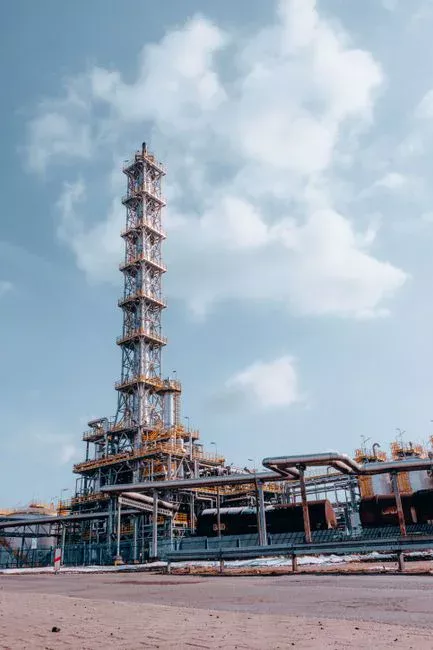
Three competing evaporator topologies differ on four axes: external steam demand, electrical energy, CAPEX per ton of evaporation capacity, and minimum feed flow.
| Parameter | MVR | TVR | MEE (3-effect) | MEE (5-effect) |
|---|---|---|---|---|
| External steam (ton/ton water) | 0–0.1 | 0.3–0.5 | 0.33 | 0.20 |
| Electrical energy (kWh/ton water) | 10–30 | 5–10 | 2–5 | 2–5 |
| CAPEX (USD per ton/day capacity) | 25,000–60,000 | 40,000–80,000 | 50,000–110,000 | 90,000–180,000 |
| Typical feed TDS range (g/L) | 1–200 | 1–100 | 1–250 | 1–300 |
| Minimum feed flow (t/h) | 0.5 | 2 | 5 | 10 |
MVR wins when evaporation capacity exceeds ~2 t/h, when steam cost is above $25–35/ton, when feed temperature is below 80°C, or when the site wants to avoid live-steam infrastructure. MEE wins for very large capacities above 20 t/h—beyond this point, scaling a single centrifugal compressor becomes impractical—and when waste heat or low-pressure exhaust steam is already available at near-zero marginal cost. TVR keeps a niche at plants with cheap medium-pressure steam (4–6 bar) and limited electrical capacity; it is mechanically simple, has no moving wear parts, and tolerates fouling better than MVR.
For 2026 export projects, MVR packaged skids from Asia typically arrive 20–35% below EU/US CAPEX with comparable energy performance when specified to the same compressor OEM (e.g., Howden, Atlas Copco, KPT). For a deeper MEE maintenance cost comparison, see the MEE maintenance cost comparison for 2026.
Energy Economics and OPEX in 2026
Every 1 kWh of compressor electricity in an MVR system replaces 6–8 kg of fresh steam in equivalent evaporation duty.
At 2026 industrial electricity of $0.08–0.12/kWh and natural-gas-derived steam of $30–45/ton, MVR OPEX typically lands at $1.20–3.50 per ton of water evaporated, against $3.50–7.50 for a 3-effect MEE running on fresh steam. The carbon delta is large: switching from a 3-effect MEE to MVR cuts scope-2-equivalent CO₂ by 60–80% per ton of water evaporated. That delta matters for 2026 ESG reporting under EU CBAM scope and for Chinese exporters selling into European supply chains.
Payback math is straightforward. The MVR CAPEX premium over an MEE is typically recovered in 18–36 months when steam cost exceeds $35/ton. Below $20/ton steam—common in coal-chemical clusters with captive waste-heat boilers—MEE often wins on lifecycle cost despite the higher steam bill. The global MVR market for industrial wastewater is projected to grow at 8–10% CAGR through 2030. Growth is driven by ZLD mandates in China, India, and the Gulf states where brine disposal by deep-well injection or evaporation pond is being restricted.
Feed-Water Requirements and Pretreatment for ZLD
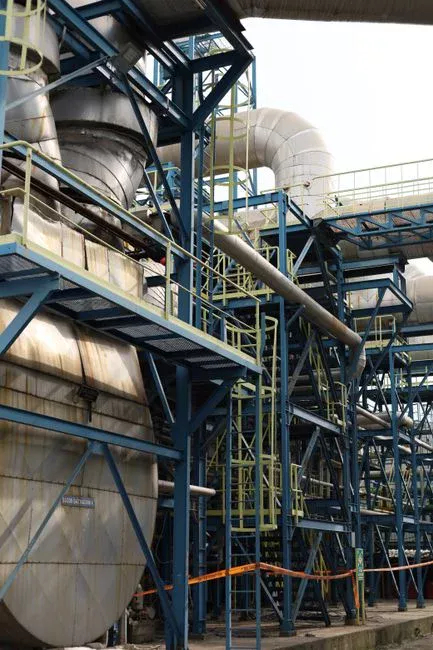
Scale and fouling on the heat-exchanger surface is the primary cause of MVR underperformance, and pre-treatment trigger values are now well established.
- Ca²⁺ >400 mg/L — trigger lime-soda softening to keep CaSO₄ and CaCO₃ below their solubility limits at the operating temperature.
- SiO₂ >150 mg/L — trigger magnesia dosing or anion exchange; silica scale is the most difficult deposit to CIP and is the most common cause of permanent tube-bundle replacement in ZLD duty.
- Chloride >1,000 mg/L at >80°C — switch to titanium grade 2 or duplex 2205 tubes; 316L pitting failures start at 6–12 months in this regime.
- COD >5,000 mg/L in feed — upstream biological or Fenton polishing to prevent foaming; foam carryover destroys the separator demister and trips the compressor.
- Suspended solids >100 mg/L — upstream DAF pre-treatment unit or multi-media filter to protect the separator demister and compressor blades. Where settleable solids dominate over free oil, compare the lamella clarifier working principle against DAF before freezing the solids-removal step.
- pH 6.5–8.5 — the safe operating window; outside it, expect accelerated corrosion even on 316L stainless.
The standard 2026 ZLD pre-treatment train runs biological → DAF → softening → MVR → crystallizer. An automatic chemical dosing system typically handles the softening, antiscalant, and pH trim reagents. Feed analysis must be reviewed before confirming compressor configuration, heat-exchanger material, pretreatment design, and crystallization route. Skipping that review is the most common reason 2026 ZLD tenders slip schedule.
Common MVR Field Issues and How to Diagnose Them
Four symptoms account for roughly 80% of MVR field downtime, which can be triaged using the matrix below.
| Symptom | Likely root cause | First check | Corrective action |
|---|---|---|---|
| Low evaporation rate at steady compressor load | Scaling on heat-exchanger tubes | Vapor-inlet vs vapor-outlet ΔT; 3–5°C widening over 500 h signals fouling | CIP acid wash (typically 5–8% HCl with inhibitor at 50–60°C for 2–4 h) |
| High compressor amp draw or vibration trip | Liquid carryover from separator | Inspect demister pad; check separator pressure drop | Repair or replace demister; reduce feed rate to restore residence time |
| High distillate conductivity (>50 µS/cm) | Tube leak in heat exchanger | Pressure-test bundle; isolate each effect for conductivity profile | Plug or replace leaking tubes; switch to duplex material if chloride-induced |
| Frequent compressor shutdown on bearing temp | Bearing wear or lubrication failure | Check lube-oil analysis; verify oil cooler | Replace bearings every 8,000 h; review alignment and balance |
Foaming in the separator almost always traces back to biological or surfactant contamination in the feed. The durable fix is upstream, typically via MBR biological pre-treatment, rather than antifoam dosed into the vapor body where it fouls the compressor. Before you lock COD polishing, review the mbr working principle against simpler aeration options for your COD speciation. Most field issues above are prevented by a pre-treatment train backed by an automatic chemical dosing system that holds antiscalant and pH inside the operating envelope.
Selection Checklist and Cost Drivers
Buyers who shortlist an MVR skid should confirm these items against the process design package before CAPEX approval:
- Feed TDS, Ca²⁺, SiO₂, chloride, COD, and TSS at design and worst-case swings.
- Steam price ($/ton) versus electricity ($/kWh) at the meter, including demand charges.
- Heat-exchanger alloy for chloride and temperature; titanium or duplex when chloride exceeds 1,000 mg/L above 80°C.
- Compressor type (centrifugal vs roots) matched to capacity and wetness risk.
- CIP chemistry, frequency, and downtime allowance in the OPEX model.
- Downstream crystallizer or brine disposal route if the project target is ZLD.
Who this is for: plant engineers and EPC teams concentrating high-salinity wastewater above ~2 t/h where steam is costly. Who should look elsewhere: sites with free waste heat above 20 t/h evaporation duty, or sites with no reliable electrical capacity for a compressor. Next step: send feed analyses and utility prices for a duty-specific sizing check via our MVR evaporator inquiry form.
Frequently Asked Questions
What is the typical energy consumption of an MVR evaporator?
A well-designed MVR system uses 10–30 kWh of electricity per ton of water evaporated at 50–90°C boiling duty, depending on ΔT and compressor efficiency. That shaft work replaces most live steam after start-up. Equivalent latent heat is still about 620 kWh per ton at 70°C, but 95%+ is recovered in the closed vapor loop. Packaged small units can run higher specific power; always verify against your ΔT and vapor wetness.
How much steam does an MVR evaporator need?
At steady state an MVR evaporator needs 0–0.1 ton of external steam per ton of water evaporated. Cold start-up still consumes steam, but annual live-steam use is typically 5–15% of an equivalent MEE. TVR systems need 0.3–0.5 ton steam per ton water, so MVR is preferred when electricity is available and steam exceeds about $25–35/ton.
When should I choose MVR over a multi-effect evaporator?
Choose MVR when capacity is above ~2 t/h, steam is expensive, and electrical power is reliable. Choose MEE when capacity exceeds ~20 t/h or when waste heat or low-pressure exhaust steam has near-zero marginal cost. CAPEX for MVR often sits at $25,000–60,000 per ton/day of capacity, with payback in 18–36 months when steam exceeds $35/ton.
What pretreatment does an MVR evaporator need for ZLD?
Softening is triggered above Ca²⁺ 400 mg/L, silica control above SiO₂ 150 mg/L, and solids removal above TSS 100 mg/L. Chloride above 1,000 mg/L at >80°C drives titanium or duplex tubes. COD above 5,000 mg/L needs biological or Fenton polishing to stop foaming. The common 2026 train is biological → DAF → softening → MVR → crystallizer.
What causes low evaporation rate in an MVR evaporator?
Scaling on heat-exchanger tubes is the most common cause when compressor load looks normal. Watch vapor-inlet versus vapor-outlet ΔT; a 3–5°C widening over about 500 h signals fouling. CIP with 5–8% inhibited HCl at 50–60°C for 2–4 h usually restores duty. Persistent foaming points upstream to COD or surfactants, not to antifoam in the vapor body.