Why Gelatin Wastewater Is a Special Case for Biological Treatment
Gelatin production discharges liquors from degreasing, lime conditioning, ossein washing and glue evaporation that are simultaneously protein-rich, ammonia-rich, warm and pH-variable. These characteristics differ from municipal sewage on every load axis a designer evaluates. Because a sequencing batch reactor is a fill-and-draw activated-sludge system in which the fill, aeration, settlement and draw phases all take place in the same reaction tank, that same tank also serves as the clarifier (nyruralwater.org, 2026-01).
That single-tank architecture lets the reactor buffer shock loads in a way a continuous plug-flow train cannot, which is a direct fit for batch cooker discharges from the gelatin cookers. Before sizing a sequencing batch reactor for a gelatin plant, the engineer must confirm the actual COD, total Kjeldahl nitrogen, ammonia-N, total suspended solids, pH and temperature of the combined effluent from those unit operations — none of which are quantified in the open-access sources available for this article — and reject any vendor proposal that does not start from those measured values.
Two-Stage SBR: Hydrolysis + Nitrification/Denitrification for Gelatin
The published gelatin-specific process is a two-stage configuration: a hydrolysis stage in series with a separate nitrification/denitrification SBR (China Water & Wastewater, indexed at openalex.org/W2350384804). Stage 1 is a hydrolysis SBR run under limited aeration so that proteins and amino acids are cracked into volatile fatty acids without driving full nitrification; this buffer stage protects the slower-growing nitrifying biomass downstream from organic overloading and ammonia toxicity. Stage 2 is a nitrification/denitrification SBR with alternating aerated and anoxic phases in the same vessel, because an SBR is "easily modified to satisfy nutrient removal of nitrogen and phosphorous" by re-programming the cycle (nyruralwater.org, 2026-01). The two-stage layout inherits the general SBR advantage that fill, aeration, settlement and draw all happen in one tank, which reduces civil-works scope for a gelatin-plant retrofit compared with building two continuous basins. In design meetings, this configuration should be named explicitly — hydrolysis SBR followed by nitrification/denitrification SBR — so suppliers cannot quietly substitute a single-tank SBR and under-size the nitrification stage.
Influent and Effluent Targets the Two-Stage SBR Must Meet
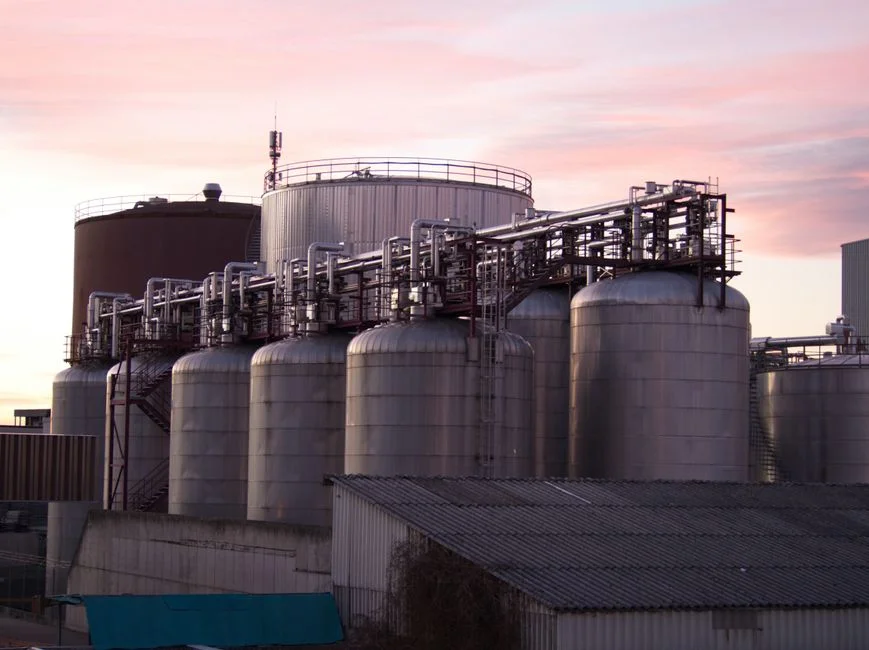
The gelatin-specific SBR paper indexed at openalex.org/W2350384804 did not provide numeric influent or effluent limits for this article. The SBR is confirmed to deliver carbonaceous pollutant removal as a baseline, with nutrient removal of nitrogen and phosphorus achievable by cycle modification rather than by adding a new reactor (nyruralwater.org, 2026-01). Treated SBR effluent "may need to be equalized to ensure the effluent quality is suitable for disposal or for further advanced treatment" (nyruralwater.org, 2026-01), which is a binding constraint for any gelatin plant tied to an intermittent sewer discharge consent. The defensible path is to extract the actual influent BOD, COD, TKN, ammonia-N, TSS, pH and temperature from the plant's own 24-hour composite samples, overlay them against the local discharge standard, and have the supplier size the two reactors to those numbers. Where the supplied research does not give numeric limits, the engineer should request them from the openalex.org/W2350384804 study directly or run a bench/pilot test rather than accept vendor defaults.
| Parameter to confirm | Source for the number | Why it matters for the two-stage SBR |
|---|---|---|
| Influent COD and BOD5 | Plant composite sampling; openalex.org/W2350384804 (to be obtained) | Sizes hydrolysis-stage hydraulic retention and aeration demand |
| Total Kjeldahl nitrogen and ammonia-N | Plant composite sampling; openalex.org/W2350384804 (to be obtained) | Sets nitrification/denitrification SBR aerobic volume and anoxic HRT |
| Total suspended solids | Plant composite sampling | Determines whether pre-screening or DAF is required ahead of Stage 1 |
| pH and temperature | Plant composite sampling | Drives whether pH correction and cooling are needed before biology |
| Effluent quality targets | Local discharge consent; 2026 discharge-standard guide for animal-protein effluent | Sets the residual load that downstream MBR or GAC polishing must remove |
Cycle Design and Aeration Strategy Inside the SBR
The SBR cycle consists of fill, react (aerated or anoxic), settle and decant/idle, executed in the same tank (nyruralwater.org, 2026-01; graf.info, 2026). High-efficiency oxygen transfer aeration equipment is required to satisfy the high-rate oxygen consumption at the start of the fill and aeration cycles, which is the demand pattern a gelatin hydrolysis effluent produces (nyruralwater.org, 2026-01). In the nitrification/denitrification SBR, the cycle must reserve discrete aerated and anoxic windows so ammonia oxidation and nitrate reduction can both proceed in the same vessel — a single continuously aerated phase will not deliver total nitrogen removal. Decant volume and timing must be matched to downstream equalization capacity, because "the treated effluent may need to be equalized to ensure the effluent quality is suitable for disposal or for further advanced treatment" (nyruralwater.org, 2026-01). A supplier that offers a fixed municipal-style cycle without re-balancing the aerated fraction for gelatin liquor should be asked to justify the dissolved-oxygen setpoint against the actual peak oxygen uptake rate.
| Cycle phase | What it does in the gelatin SBR | Design input to confirm |
|---|---|---|
| Fill | Receives screened, pH-corrected effluent; the tank buffers shock loads (nyruralwater.org, 2026-01) | Maximum instantaneous flow from the cookers |
| React — aerated (Stage 1 hydrolysis / Stage 2 nitrification) | Cracks VFAs in Stage 1; oxidizes ammonia in Stage 2 (nyruralwater.org, 2026-01) | Peak OUR and DO setpoint |
| React — anoxic (Stage 2 only) | Reduces nitrate to nitrogen gas | NO3-N endpoint and carbon availability from Stage 1 effluent |
| Settle | Solids separate in the same tank that acts as the clarifier (nyruralwater.org, 2026-01) | Sludge volume index under gelatin loading |
| Decant / idle | Draws supernatant; may feed equalization for further treatment (nyruralwater.org, 2026-01) | Decant volume vs. downstream buffer capacity |
When to Add GAC, MBR or Polishing to an SBR Train
A granular activated carbon SBR (GAC-SBR) has been compared with a conventional SBR as a documented upgrade path for treating refractory industrial wastewater (the textile basic-dye study indexed at doi.org/10.1080/19443994.2016.1167629). For gelatin plants, the same logic supports GAC addition when residual colour, refractory COD or polishing targets are binding on the discharge consent, and an MBR polishing skid downstream of the SBR is the alternative when suspended solids in the SBR decant are too high for water-reuse targets. No removal percentages from the scraped sources are quoted for gelatin here, because the underlying numeric tables could not be retrieved; these should be confirmed in a jar test or on-site pilot. The decision rule is straightforward: if the SBR effluent already meets the consent on the parameters the regulator checks, polishing is unnecessary expenditure; if it does not, the engineer should compare GAC dosing against an MBR skid on footprint, operator skill and sludge handling.
Buying and Sourcing Checklist for a Gelatin-Plant SBR
Procurement should treat the openalex.org/W2350384804 paper as a design reference and require the supplier to demonstrate that the proposed reactors are configured as a hydrolysis SBR followed by a separate nitrification/denitrification SBR, not a single tank. The vendor's documentation must show the cycle schedule, the aeration strategy, and an explicit statement that the reactor also acts as the clarifier — the defining SBR behaviour per nyruralwater.org (2026-01) — because that single point drives civil-works cost. Shock-load handling is the second line item: the SBR tank's ability to absorb influent variability should be quantified in kilograms of COD per cubic metre per day (nyruralwater.org, 2026-01). Whenever the literature is silent on a number, the procurement plan should mandate a pilot test on the actual site liquor before the PO is released, and the contract should tie final acceptance to the pilot's documented removal rates. Pre-treatment and sludge-dewatering items are part of the same train and should be specified in parallel — a DAF pre-treatment unit ahead of the SBR for suspended solids, and a filter press for the SBR waste-activated sludge downstream. Cross-check the package against the 2026 discharge-standard guide for animal-protein effluent and the 2026 advanced nutrient-removal construction guide before signing.
| Checklist item | What to demand from the supplier | Defensible reference |
|---|---|---|
| Two-stage configuration | Hydrolysis SBR + separate nitrification/denitrification SBR | China Water & Wastewater, openalex.org/W2350384804 |
| Cycle schedule and aeration strategy | Documented fill/react (aerated-anoxic)/settle/decant with DO setpoints | nyruralwater.org, 2026-01; graf.info, 2026 |
| Single-tank clarification | Explicit statement that the reactor also acts as the clarifier | nyruralwater.org, 2026-01 |
| Shock-load tolerance | Quantified COD/N load range | nyruralwater.org, 2026-01 |
| Pilot test on site liquor | Required where literature is silent, tied to acceptance criteria | Gap from research; must be requested |
| Upstream and downstream units | DAF for TSS, filter press for waste-activated sludge, MBR if reuse | Internal product specification |
Frequently Asked Questions
Is a sequencing batch reactor actually suitable for gelatin production wastewater?
Yes — but the published configuration is a two-stage SBR: a hydrolysis SBR in series with a separate nitrification/denitrification SBR, designed specifically for gelatin effluent (China Water & Wastewater, openalex.org/W2350384804). A single-tank SBR is rarely sufficient for the protein and ammonia load swings from gelatin cookers.
What influent and effluent numbers should I put in the SBR specification?
Use the plant's own 24-hour composite data for COD, BOD5, TKN, ammonia-N, TSS, pH and temperature, then overlay the local discharge consent. The openalex.org/W2350384804 paper was not retrievable during research, so the influent values for the gelatin-specific design must be obtained directly from that study or generated by on-site sampling — request both from the supplier before the bid goes out.
How much does a two-stage SBR cost for a gelatin plant?
The supplied research does not include a price for a gelatin-plant SBR. The actionable check is to ask each bidder for a priced bill of quantities tied to the actual flow and load, with separate lines for the hydrolysis reactor, the nitrification/denitrification reactor, the aeration system and the sludge-dewatering train, and to benchmark those lines against the 2026 DAF design-criteria guide and the