Why Power Plant Wastewater Management Is a 2026 Priority
Three regulatory shifts in 2025–2026 have made wastewater a board-level issue for thermal generation. China's GB 39728-2025, in force since 1 March 2025, tightened coal-fired effluent limits on COD, ammonia, total mercury, and total arsenic for the first time since 2012. The EU's Industrial Emissions Directive 2010/75/EU continues to enforce revised BAT-AELs for heavy metals and TDS in cooling water discharge, and the US EPA Steam Electric ELG 2020/2024 milestones remain in active enforcement through 2026 — including the legacy wastewater (TDS), FGD wastewater, and fly ash transport limits under 40 CFR Part 423. A 2026 treatment train that worked in 2018 will not pass an audit today.
Water stress is the second driver. Thermal plants consume 600–1,100 gallons/MWh (2,270–4,160 L/MWh) depending on cooling configuration, putting fossil generation in direct competition with municipalities and agriculture in arid basins. Veolia's industry framing makes the operational baseline explicit: fossil plants face "many regulatory requirements associated with air emissions and effluent water discharge" (Veolia Water Tech, 2025). Once discharge permits tighten and freshwater costs climb, reuse and ZLD move from optional to economically rational. This article covers the pollutant profiles you need to size equipment against, the unit operations that remove each contaminant, and the 2026 equipment guidance for specifiers.
Wastewater Streams Inside a Power Plant
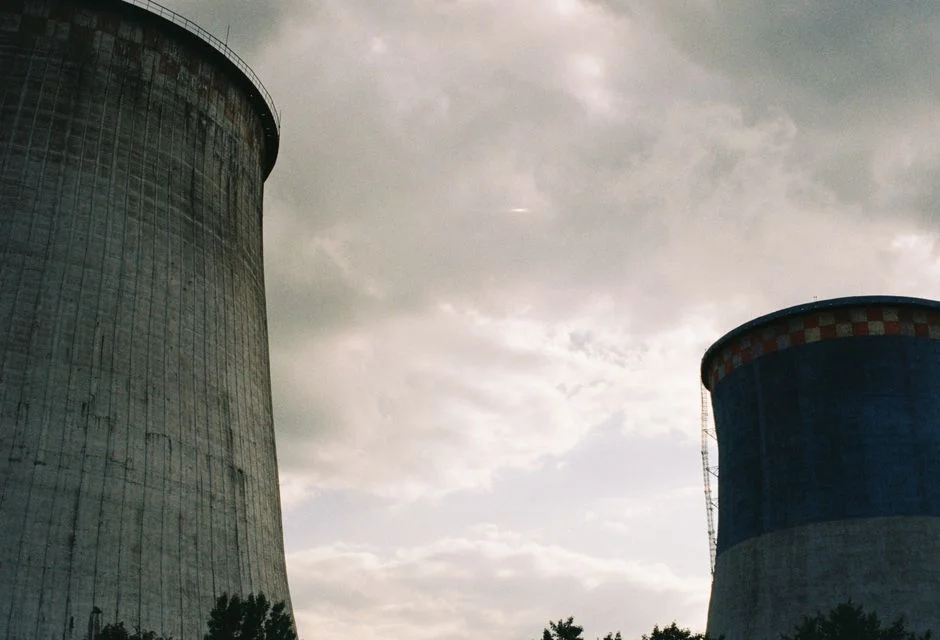
A typical coal-fired or combined-cycle plant generates seven distinct wastewater streams, each with its own chemistry, flow profile, and reuse potential. Veolia groups the upstream uses into steam generation, cooling, emission control, and fire protection, and each of those produces a different waste stream downstream.
Flow splits are plant-specific but industry-typical bands hold: cooling tower blowdown accounts for 60–80% of total liquid waste, FGD scrubber blowdown 10–25%, boiler blowdown 1–5%, and the remainder — coal pile runoff, gypsum bleed, acid-cleaning waste, and demineralizer regeneration — combined at 5–10%. The exact split shifts with cooling system design (once-through vs. recirculating), coal sulfur content, and load factor. A high-sulfur coal (3–4% S) running wet limestone FGD will push FGD blowdown to the upper end of that range; a combined-cycle plant with dry cooling may produce almost no cooling tower blowdown at all.
Streams also vary seasonally and with dispatch order. FGD wastewater quality shifts with coal sulfur content, limestone purity, and scrubber operating pH; coal pile runoff is highly seasonal (peaks in the first flush after a dry spell) and acidic from pyrite oxidation; boiler blowdown is steady but carries hydrazine or amine residues that complicate biological treatment. Understanding this variability is what drives the equalization tanks, online TSS meters, and PLC-controlled chemical dosing systems that anchor any 2026 treatment train.
| Stream | Typical Flow Share | Origin | Variability |
|---|---|---|---|
| Cooling tower blowdown | 60–80% | Recirculating cooling system blowdown | Steady; scales with cycles of concentration |
| FGD scrubber blowdown | 10–25% | Wet limestone gypsum scrubber purge | Shifts with coal S%, limestone purity, scrubber pH |
| Boiler blowdown | 1–5% | Continuous + intermittent boiler blowdown | Steady; carries hydrazine/amine residues |
| Gypsum bleed / FGD wastewater | Included in FGD % | Gypsum dewatering filtrate | Correlates with FGD flow |
| Coal pile runoff | Seasonal | Stockpile area stormwater | High seasonal peak; acidic (pH 2–5) |
| Boiler acid-cleaning waste | Batch, infrequent | Annual/semi-annual acid cleaning | Batch, high strength, low pH |
| Demineralizer regeneration waste | Batch, frequent | Cation/anion exchanger regeneration | Batch, very high TDS, low pH then high pH |
Characteristics and Pollutant Profile of Each Stream
The data core of any treatment design is the stream-by-stream characteristics matrix. FGD scrubber blowdown is the most complex stream: pH 4–7, TSS 1,000–10,000 mg/L, chloride 5,000–30,000 mg/L, sulfate 1,000–15,000 mg/L, fluoride 10–300 mg/L, total arsenic 0.1–10 mg/L, mercury up to 1 mg/L, and selenium up to 5 mg/L. Molewater's 2025 supplier reference describes the same stream as carrying high suspended solids, fluctuating salt content, heavy metals (notably arsenic), fluorides, and unstable pH — a fair summary of why FGD blowdown drives the design envelope.
Cooling tower blowdown sits in a different regime: pH 7–9, TDS 500–5,000 mg/L, TSS 50–500 mg/L, plus treatment-chemical residues such as phosphonates, biocides, and zinc-based corrosion inhibitors. Cycles of concentration amplify these values — a tower at 5 cycles of concentration will discharge 5× the dissolved solids of the makeup water. Boiler blowdown is a low-volume, low-TSS stream with moderate TDS (200–2,000 mg/L) and hydrazine, morpholine, or amine carryover from the steam cycle. Coal pile runoff is highly seasonal, often exceeding 5,000 mg/L TSS at low pH (2–5) from pyrite oxidation. Demineralizer regeneration waste is batch, with swings from low-pH acid waste to high-pH caustic waste and TDS up to 50,000 mg/L at the peak of the regeneration cycle.
| Parameter | FGD Blowdown | Cooling Tower Blowdown | Boiler Blowdown | Coal Pile Runoff | Demin Regen Waste |
|---|---|---|---|---|---|
| pH | 4–7 | 7–9 | 9–11 | 2–5 | 1–13 (batch swing) |
| TSS (mg/L) | 1,000–10,000 | 50–500 | <50 | 500–10,000+ | <100 |
| TDS (mg/L) | 10,000–50,000 | 500–5,000 | 200–2,000 | 500–3,000 | 10,000–50,000 |
| Cl⁻ (mg/L) | 5,000–30,000 | 200–1,500 | 50–300 | Low | Variable |
| F⁻ (mg/L) | 10–300 | <5 | Trace | Trace | Trace |
| SO₄²⁻ (mg/L) | 1,000–15,000 | 200–1,000 | 50–200 | 500–3,000 | Variable |
| COD (mg/L) | 100–1,500 | 20–150 | 10–100 | 50–500 | 50–500 |
| As (mg/L) | 0.1–10 | <0.05 | Trace | 0.05–2 | Trace |
| Hg (mg/L) | 0.01–1 | <0.005 | Trace | 0.005–0.1 | Trace |
| Se (mg/L) | 0.5–5 | <0.05 | Trace | 0.05–1 | Trace |
| Typical flow | 5–50 m³/h per 500 MW unit | 50–500 m³/h per 500 MW unit | 2–20 m³/h per 500 MW unit | Seasonal peak | Batch, 20–100 m³/day |
Treatment Technologies by Pollutant and Stream
Every 2026 treatment train starts with the same foundation: rotary bar screens for large debris, equalization tanks for flow and load dampening, and pH adjustment with lime or NaOH. From there, the unit operations branch by target pollutant.
Suspended solids and bulk metals are removed by chemical precipitation — lime plus ferric chloride or alum for the FGD stream — followed by a high-capacity DAF system or lamella clarifier. A well-designed DAF achieves 90–98% TSS removal at hydraulic loading rates of 5–25 m³/m²·h, and pairs naturally with a PLC-controlled chemical dosing system tied to online TSS meters for coagulant optimization. For trace fluoride and residual heavy metals after precipitation, adsorption on activated alumina or ion exchange drives F⁻ below 10 mg/L and As below 0.1 mg/L; co-precipitation with lime-alum is the lower-cost alternative when the target is <30 mg/L F⁻.
TDS and chloride reduction is where RO enters the train. A two-pass industrial RO system concentrates FGD brine to 50,000–80,000 mg/L TDS at 75–90% permeate recovery; the concentrate is then sent to a multi-effect evaporator (MEE) or mechanical vapor recompression (MVR) unit. A multi-media filtration unit upstream of the RO protects membranes from fouling and extends cleaning intervals. The ZLD finish is a forced-circulation crystallizer that produces a solid salt or gypsum byproduct for disposal or resale, at typical energy use of 25–45 kWh/m³ of brine — covered in detail in the multi-effect evaporation engineering guide. On the cooling water side, scale and corrosion inhibitors plus side-stream filtration address the biofouling and condenser damage risks that Veolia flags as a primary cause of unplanned outages.
| Unit Operation | Target Pollutants | Typical Removal / Performance | Best-Fit Stream |
|---|---|---|---|
| Bar screens + equalization | Debris, flow/load variability | Flow dampening 4–8 h HRT | All streams |
| pH adjustment (lime/NaOH) | pH excursion, free CO₂ | To target pH 7–9.5 | All streams |
| Chemical precipitation + DAF/clarifier | TSS, bulk metals, fluoride (partial) | 90–98% TSS, 80–95% As, 60–85% F⁻ | FGD blowdown, coal pile runoff |
| Multi-media filtration | Residual TSS, turbidity | <1 NTU downstream | RO pretreatment, polishing |
| Activated alumina / ion exchange | F⁻, As, Se, residual heavy metals | F⁻ <10 mg/L, As <0.1 mg/L | FGD polishing |
| Two-pass RO | TDS, Cl⁻, SO₄²⁻ | 75–90% recovery, permeate <500 mg/L TDS | FGD brine, cooling tower blowdown |
| Multi-effect evaporation (MEE/MVR) | Concentrated brine volume | 90–98% water recovery from RO concentrate | RO brine, ZLD trains |
| Forced-circulation crystallizer | Final brine solids | 99%+ water recovery, solid salt/gypsum byproduct | ZLD finish |
| Side-stream filtration + biocides | Biofouling, suspended solids in cooling loop | Condenser protection, scale prevention | Cooling tower recirculating loop |
Building a Treatment Train: Conventional, Recycle, and ZLD
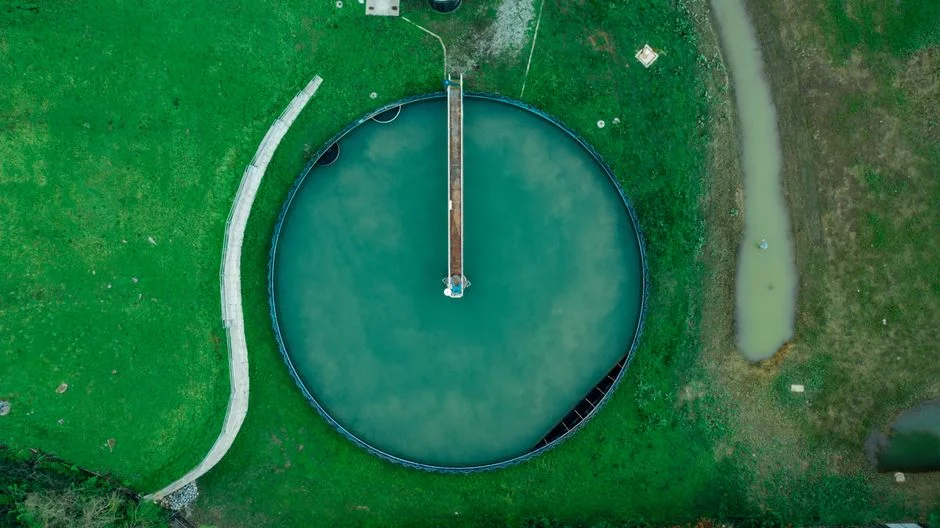
Three treatment philosophies dominate 2026 specifications. The conventional train — equalize, precipitate, DAF/clarify, filter, discharge — has the lowest CAPEX and suits plants with abundant water and stable surface-water discharge permits. Recovery is zero; everything leaves the fence.
The recycle train layers softening, cartridge filtration, and RO on top of the conventional front end. Permeate goes to the cooling tower or demineralizer; RO concentrate goes to an evaporation pond or, increasingly, back to the FGD scrubber for chloride reuse. Recovery is 75–90%, and OPEX is dominated by RO membrane replacement and chemical consumption. The ZLD train — full pretreatment, RO brine concentrator, MEE, and forced-circulation crystallizer — pushes recovery to 95–99% with no liquid discharge. CAPEX is 3–5× the conventional train, and OPEX runs $0.8–$3 per m³ of treated water depending on feed salinity and energy costs. 2026 ZLD adoption trends (HydropureWater, 2026) show that hybrid configurations — RO brine fed back to the FGD scrubber, MEE concentrate blended with coal pile runoff for volume reduction — are closing the OPEX gap with conventional trains in water-stressed basins.
| Train | CAPEX Band (USD per m³/day capacity) | OPEX Band (USD per m³ treated) | Water Recovery | Discharge Volume | Best-Fit Plant Scenario |
|---|---|---|---|---|---|
| Conventional (discharge) | $150–$400 | $0.10–$0.40 | 0% | 100% of influent | Abundant water, low-cost discharge permit, no reuse mandate |
| Recycle (RO-based) | $400–$900 | $0.40–$1.20 | 75–90% | 10–25% as RO brine | Moderate water stress, reuse to cooling tower, surface discharge still permitted |
| ZLD (evaporation + crystallizer) | $1,200–$2,500 | $0.80–$3.00 | 95–99% | Zero liquid discharge; solid byproduct only | Zero-discharge mandate, arid basin, brine disposal unavailable, FGD chloride loop |
| Hybrid (RO brine → FGD reuse) | $500–$1,100 | $0.30–$0.90 | 90–95% | 5–10% | Wet limestone FGD with chloride tolerance, partial discharge restriction |
Hybrid trains are the growth segment. By sending RO concentrate back to the scrubber, the plant reuses both water and chloride (which improves FGD chloride tolerance and reduces fresh water makeup), while a smaller downstream MEE handles the residual brine. Operators report 20–35% OPEX reduction versus straight ZLD (HydropureWater field data, 2026).
2026 Regulatory and Reuse Standards Power Plants Must Meet
Three jurisdictions set the 2026 compliance envelope. China GB 39728-2025, in force since 1 March 2025, sets the limits most engineers are now designing to: COD ≤50 mg/L, ammonia nitrogen ≤8 mg/L, total mercury ≤0.05 mg/L, total arsenic ≤0.3 mg/L, total lead ≤0.5 mg/L, and pH 6–9 for coal-fired power plant wastewater discharged to surface water or reused. The EU's Industrial Emissions Directive 2010/75/EU continues to enforce revised BAT-AELs (2021/2026 conclusions) for heavy metals and TDS in cooling water discharge, with site-specific BAT-AEL ranges set during permit review. The US EPA Steam Electric ELG under 40 CFR Part 423 imposes numeric limits for FGD wastewater, fly ash transport water, bottom ash transport water, and combustion residual leachate — including the legacy wastewater (TDS) limits that triggered the 2020/2024 milestone schedule still in active enforcement.
For reuse, WHO guidelines and most utility internal specs require cooling-tower makeup at <500 mg/L TDS and <1 NTU turbidity, with tighter limits (typically <100 mg/L TDS) for boiler makeup. Achieving these targets is what drives the RO and polishing stages of the recycle train.
Equipment Selection and Implementation Tips for 2026
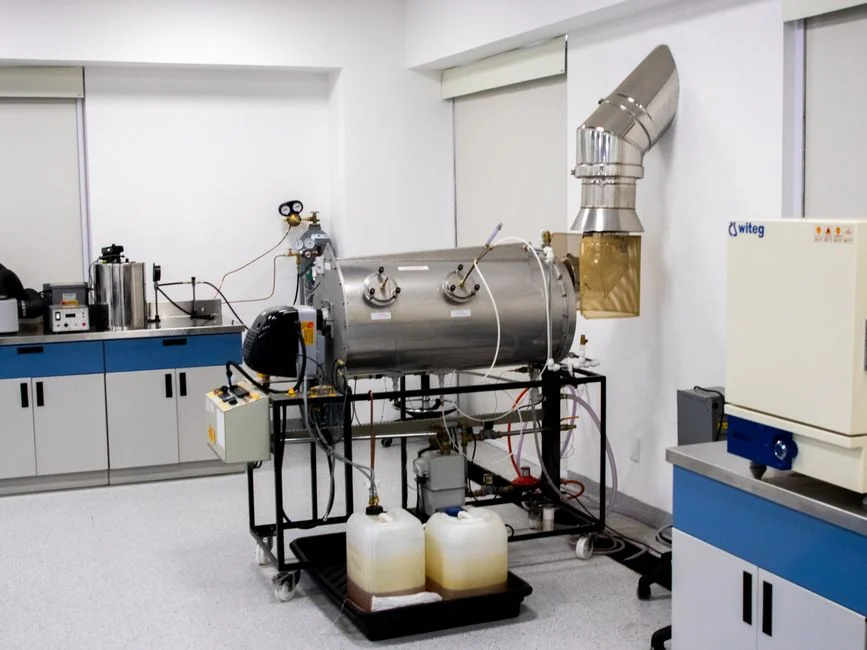
Specifying equipment against the matrix above means matching each unit to its target pollutant, not buying a generic skid. For high-TSS FGD streams, select a high-capacity DAF system with hydraulic loading rated for the peak FGD flow (5–25 m³/m²·h) and pair it with a PLC-controlled chemical dosing system tied to inline TSS and pH analyzers. For RO brine concentration, specify a two-pass industrial RO system with energy-recovery devices to hold specific energy below 3 kWh/m³ permeate, and a multi-media filtration unit ahead of the high-pressure pump. For the ZLD finish, multi-effect evaporation with mechanical vapor recompression remains the lowest-energy path; 2026 ZLD adoption trends (HydropureWater, 2026) confirm MEE+MVR as the default for new builds in the 50–200 m³/day brine range. For fluoride and trace-metal polishing, ion exchange with automated regeneration cycles reduces operator burden and stabilizes discharge quality.
Two cross-cutting recommendations close the spec. First, integrate the full train on a single PLC/DCS platform with online analyzers on TSS, pH, conductivity, and residual chlorine — the 2026 industrial water reuse outlook (HydropureWater, 2026) shows that automated plants recover 5–8% more water at lower chemical cost than manually controlled equivalents. Second, build the train modularly: equalization, precipitation, DAF, filtration, RO, and evaporation should be skidded and containerized where site footprint allows, because most retrofits in 2026 are happening on operating plants with limited outage windows. A typical 500 MW FGD wastewater retrofit runs 6–9 months end-to-end with this approach versus 12–18 months for stick-built construction.
Frequently Asked Questions
What is the most difficult wastewater stream to treat at a coal-fired power plant?
FGD scrubber blowdown. It combines high TSS (1,000–10,000 mg/L), high chloride (5,000–30,000 mg/L), elevated fluoride (10–300 mg/L), and trace heavy metals (As, Hg, Se) at unstable pH, and it drives the design envelope for precipitation, DAF, RO, and often evaporation. Treating the other streams first and isolating FGD blowdown for dedicated treatment is standard practice.
What are the 2026 discharge limits for FGD wastewater in China, the EU, and the US?
China GB 39728-2025 sets total arsenic ≤0.3 mg/L, total mercury ≤0.05 mg/L, COD ≤50 mg/L, and pH 6–9 for coal-fired power plant wastewater. The EU's IED 2010/75/EU BAT-AELs set site-specific ranges for heavy metals and TDS, defined in the 2021 BAT conclusions. The US EPA Steam Electric ELG (40 CFR Part 423) imposes numeric limits on FGD wastewater constituents including mercury, arsenic, selenium, and TDS under the 2020/2024 milestone schedule still in enforcement through 2026.
When does ZLD make economic sense for a power plant?
ZLD is justified when surface-water discharge is prohibited or capped, when freshwater cost exceeds roughly $1.50–$2.00 per m³, or when brine disposal costs exceed $0.50 per m³. In those conditions, a ZLD or hybrid RO+FGD-reuse train at 95–99% recovery typically delivers 5–8 year payback versus continued freshwater purchase and brine hauling. Hybrid configurations (RO brine to FGD scrubber plus smaller MEE) are closing the OPEX gap further in 2026.
Can cooling tower blowdown be reused as FGD scrubber makeup?
Yes, and this is a 2026 best practice in water-stressed regions. Cooling tower blowdown at 500–5,000 mg/L TDS is suitable for FGD makeup after suspended solids polishing; chloride in the blowdown also improves FGD chloride tolerance and reduces fresh water demand. A DAF or clarifier ahead of the scrubber makeup line is normally sufficient pretreatment.