Why Johor Bahru's Industrial Boom Is Driving WWTP Manufacturer Demand in 2026
Pasir Gudang, Tanjung Pelepas, and Senai now house more than 2,800 manufacturing facilities in the Iskandar Malaysia zone, with cumulative realised investment reaching approximately RM 80 billion through 2025 (per Iskandar Regional Development Authority data, cited 2025-11). That factory density translates directly into wastewater treatment plant demand: each new electroplating line, food processing hall, or palm-oil downstream facility in the corridor needs a compliant effluent system sized 10–2,000 m³/day before it can discharge.
What changed between 2024 and 2026 is enforcement, not the regulation itself. The Department of Environment (DOE) Malaysia has tightened on-site sampling frequency at Pasir Gudang outfalls and now cross-references operator self-monitoring reports against real-time conductivity probes, with several compounds receiving stop-work orders in 2025 for repeated Standard A exceedances (per industry reports, 2025-Q3). For a factory manager, that makes manufacturer selection a compliance decision first and a CAPEX decision second — a poorly designed biological stage will not pass the new sampling regime regardless of how cheap the skid looked on a quotation.
Buyers in Johor also face a pricing reality unique to the region. Chinese packaged WWTP export pricing begins at roughly US$4,000 per unit for a basic 10 m³/day system (per Made-in-China listings, 2026-Q1) — the floor of the global market. A Johor buyer must convert that headline number into installed MYR before comparing it to a local Malaysian integrator quote, and the gap is substantial once freight, customs, commissioning, and a one-year defect liability period are added.
Malaysia DOE Discharge Limits Every Johor Bahru WWTP Must Meet
Under the Industrial Effluent Regulations 2009, issued pursuant to the Environmental Quality Act 1974 (Act 127), every Johor Bahru discharge point must meet either Standard A or Standard B limits depending on the receiving water body. Standard A applies to effluents entering inland waters, including the Johor River catchment, while Standard B applies downstream where waters feed into the Strait of Johor (per DOE Malaysia, Industrial Effluent Regulations 2009, Schedule 1).
| Parameter | Standard A | Standard B |
|---|---|---|
| BOD5 (mg/L) | 20 | 50 |
| COD (mg/L) | 80 | 200 |
| Suspended Solids (mg/L) | 50 | 100 |
| Oil & Grease (mg/L) | 5 | 10 |
| Ammoniacal Nitrogen (mg/L) | 10 | 20 |
| pH | 6.0–9.0 | 5.5–9.0 |
The ammoniacal nitrogen limits (10/20 mg/L) are often the deciding factor between process technologies. Conventional activated sludge struggles to nitrify reliably below 15 mg/L NH3-N in tropical mixed liquor without extended aeration tankage, whereas an MBR with submerged PVDF membranes typically achieves 1–3 mg/L total nitrogen with a much smaller footprint (HydropureWater field data, 2026). Buyers evaluating a manufacturer's bid should always ask which limit the quoted process is designed against — a Standard B design at MYR 1.2 million is not equivalent to a Standard A design at the same price, even if the equipment looks identical on paper.
Discharge into the Strait of Johor or any water body upstream of a water intake additionally triggers the EQA 1974 Section 25 prohibition on pollution, and penalties for non-compliance were increased in 2024 amendments to a minimum MYR 50,000 and up to five years' imprisonment for repeat offenders (per EQA 1974 amendments gazetted 2024-06).
Four Sourcing Routes for a Wastewater Treatment Plant Manufacturer in Johor Bahru
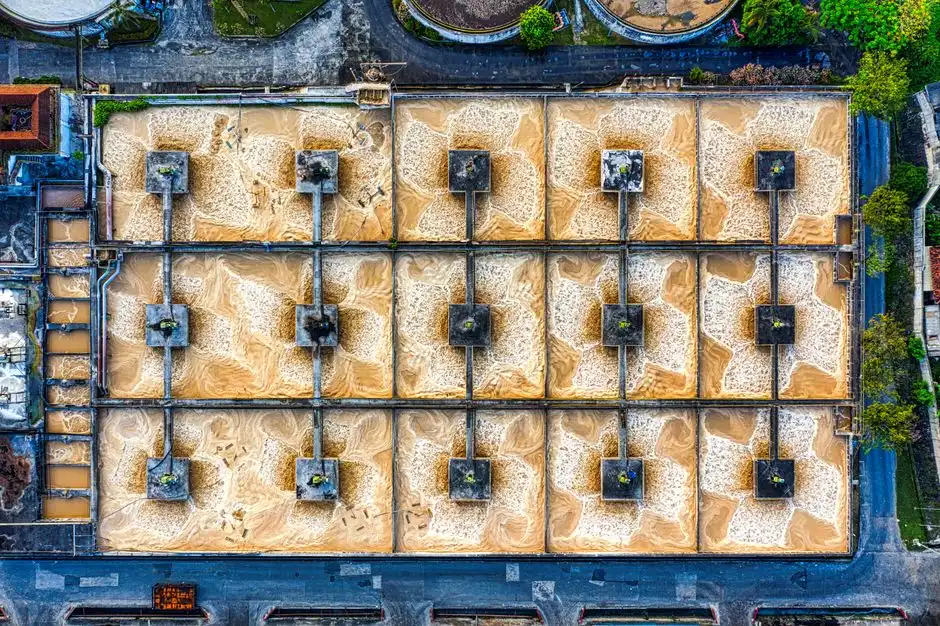
Johor buyers typically have four discrete supplier archetypes to choose from, each with a different risk-and-reward profile. Knowing which archetype fits the project size saves weeks of misdirected RFQs.
Route 1 — Local Malaysian system integrators. Typically Johor Bahru– or Kuala Lumpur-based firms delivering 10–2,000 m³/day packaged or containerised plants, with full on-site commissioning, a local AMC team, and MYR-denominated pricing. Typical install duration is 4–8 weeks for a packaged system and 12–20 weeks for a 500 m³/day MBR. This is the lowest-risk route for a Pasir Gudang factory without in-house process engineers.
Route 2 — Chinese OEM direct (Shandong, Guangzhou, Hunan clusters). Price-competitive, with FOB China pricing ranging from US$4,000 to US$20,000 per packaged unit depending on capacity (per Made-in-China listings, 2026-Q1). Lead time runs 12–16 weeks ex-works plus 4–6 weeks sea freight to Port of Tanjung Pelepas, and Malaysian after-sales support is typically limited to remote commissioning unless the buyer contracts a local agent separately. Risk concentrates in installation supervision and warranty enforcement.
Route 3 — Singapore-based EPC contractors serving cross-border Johor projects. Premium pricing (typically 30–50% above local Malaysian integrators), but strong process documentation, PUB-spec familiarity, and bankable performance guarantees. Preferred for multinationals with Singapore-headquartered EHS standards that must be reflected in the Johor plant design.
Route 4 — Indian turnkey suppliers (ERA Hydro-Biotech archetype). Strong track record on STP for housing, hospitality, and commercial complexes — 650+ installations and 20+ years operating history (per ERA Hydro-Biotech, 2026). Pricing is competitive on standard biological packages, but heavy-industrial ETP scope (high-COD palm oil, electroplating mixed wastewater) is weaker and the local Johor commissioning presence is thin. Best suited for residential and hospitality projects in the 50–500 m³/day range rather than a heavy industrial Pasir Gudang tenant.
Process Comparison: MBR vs SBR vs Conventional Activated Sludge for Johor Conditions
Process selection should be driven by the influent profile, footprint available, and whether the operator has trained O&M staff — not by what the supplier stocks. The three biological options that dominate Johor industrial bids are MBR, SBR, and conventional activated sludge (CAS), and each behaves differently under tropical mixed-liquor conditions.
| Parameter | MBR (submerged PVDF, 0.1 µm) | SBR (sequencing batch) | Conventional ASP |
|---|---|---|---|
| BOD/COD removal | 92–97% | 85–92% | 80–90% |
| Footprint (relative) | ~40% of CAS | ~70% of CAS | 100% baseline |
| Sludge yield (kg MLSS/kg COD) | 0.2–0.3 | 0.3–0.4 | 0.4–0.5 |
| Effluent SS (mg/L) | ≤1 | 10–20 | 20–40 |
| Typical flow range (m³/day) | 10–2,000 | 50–500 | 100–5,000 |
| Operator skill required | Low–moderate | Moderate–high | High |
For a 27°C average mixed-liquor temperature — typical of Pasir Gudang aeration tanks — biological kinetics accelerate and oxygen transfer improves, allowing roughly 20% smaller tankage than a temperate 20°C design. This is a real cost saving that Chinese OEM catalogues built for domestic Chinese municipal bids usually do not credit; the buyer must insist the design datasheet reflects the Johor ambient baseline. The trade-off is higher evapourative loss and faster sludge mineralisation, which a tropical-climate-aware supplier will price into the dewatering stage.
An MBR membrane bioreactor system is the strongest fit for 10–2,000 m³/day industrial estates where discharge limits are tight and the site footprint is constrained; for very small flows under 50 m³/day or sites where burial is preferred to free up surface car-parking, a WSZ underground package plant is the cost-effective alternative. SBR is well matched to intermittent flows common in food processing, but the operator-skill requirement rules it out for factories without a dedicated wastewater technician. For a broader view of how MBR demand is tracking across Southeast Asia in 2026, the MBR market 2026 outlook provides useful benchmark data.
CAPEX and OPEX Ranges in MYR for a Johor Bahru Wastewater Treatment Plant
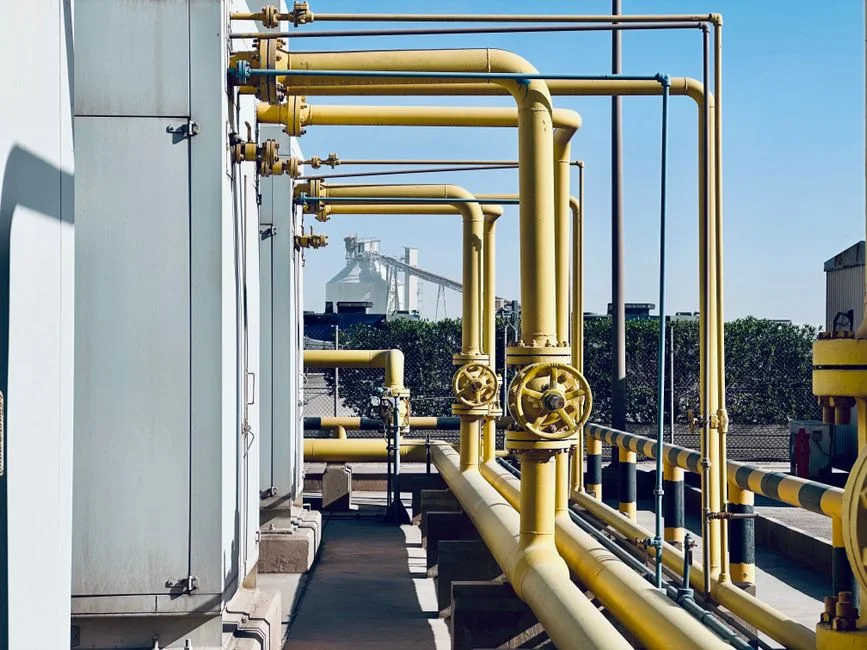
Translating the US$4,000–20,000 China FOB pricing into installed Johor figures is the single most useful exercise a buyer can do before issuing an RFQ. The headline China number must absorb roughly 25–30% in international freight, 5–10% in Malaysian customs duty and SST, 15–25% in on-site civil and installation, and a commissioning reserve.
| Plant size | Typical scope | Installed CAPEX (MYR) | OPEX benchmark (MYR/m³) |
|---|---|---|---|
| 10–50 m³/day | Packaged / underground (WSZ, containerised MBR) | 80,000–250,000 | 2.5–4.0 |
| 100–500 m³/day | MBR or SBR, mid-scale industrial | 600,000–2,200,000 | 1.8–3.2 |
| 1,000–2,000 m³/day | Large industrial / municipal | 4,000,000–8,000,000 | 1.5–2.5 |
OPEX is dominated by aeration energy (typically 60% of electrical load) and sludge hauling to a licensed Scheduled Waste collector. For an MBR, the membrane cleaning chemical cost adds roughly MYR 0.10–0.20 per m³, while CAS avoids that line but pays for larger blowers and more sludge disposal. AMC contracts from local Malaysian integrators typically run 5–8% of CAPEX annually and cover routine maintenance, consumables, and a defined response time (commonly 24–48 hours for Johor Bahru–based providers).
For a side-by-side installed-cost comparison with neighbouring markets, the Thailand WWTP pricing guide shows similar per-m³ economics adjusted for Thai labour rates, and the filter press supplier comparison is relevant when budgeting the downstream sludge dewatering stage that typically adds 10–15% to total installed cost.
What to Verify Before Awarding the Contract
A defensible shortlist requires pressure-testing every vendor's pitch against the same checklist. Five items separate a credible bid from a quote that will fail at commissioning.
- Reference sites within 1–2 hours' drive. Any manufacturer claiming Malaysian experience should produce at least three operating sites a buyer can physically visit. Phone references and PDF case studies are not substitutes — operating plants reveal maintenance habits, noise levels, and actual effluent clarity that brochures never show.
- Certifications and DOE submission track record. Confirm CE marking, ISO 9001:2015, and ideally MS 1228 (Malaysian Standard for water pollution control). Ask how many DOE preliminary site clearance (PSC) submissions the vendor has personally shepherded through — this is the document that gates commissioning.
- Biological design temperature. The process datasheet must state 27°C mixed-liquor, not 20°C. A 7°C temperature correction changes alpha factors, oxygen demand, and tank sizing by 15–25%.
- Scope clarity on commissioning and defect liability. The MYR price must explicitly include commissioning, performance testing against DOE Standard A or B, and a 12-month defect liability period. Vendors who quote "equipment ex-works" leave the buyer holding 20–30% of total project cost in latent risk.
- Performance bond against discharge samples. Require a process guarantee bonded to a real 24-hour composite sample after stabilisation, not a design-parameter guarantee that is impossible to dispute. A vendor unwilling to bond against the actual discharge should be downgraded.
For buyers evaluating pre-treatment on the inlet side, a GX rotary bar screen is a common first-stage component that protects downstream MBR or SBR tankage from ragging and grit loading — worth specifying by datasheet rather than leaving to the vendor's discretion.
Frequently Asked Questions
What plant size do most Johor Bahru factories actually need? The dominant scope is 50–500 m³/day for individual Pasir Gudang and Senai factory tenants, with 1,000–2,000 m³/day reserved for industrial park centralised systems or municipal-scale projects.
What is a realistic installed CAPEX range in MYR for a 200 m³/day industrial WWTP? Approximately MYR 800,000–1,600,000 for an MBR or SBR system fully installed and commissioned, depending on influent complexity and discharge target (HydropureWater field data, 2026).
How long does DOE Malaysia approval take for a new WWTP in Johor? From complete submission, the DOE preliminary site clearance typically takes 8–14 weeks, with final approval conditional on commissioning results demonstrating Standard A or B compliance (per DOE Malaysia processing guidelines, 2025).
What is the typical commissioning lead time for a packaged MBR in Johor? For a pre-engineered 10–100 m³/day packaged unit, on-site commissioning takes 1–2 weeks after delivery; for a 500 m³/day MBR, expect 4–8 weeks of biological acclimation before performance testing is meaningful.
Is local AMC support realistically available in Johor Bahru? Yes, but only from local Malaysian integrators or Chinese/Indian vendors with a contracted Johor agent. Pure OEM-direct purchases typically face 5–10 working day waits for an engineer to fly in, which is unacceptable during a discharge exceedance event — this is a strong argument for sourcing Route 1 or Route 3 over Route 2 for any critical-process factory.
Related Equipment
- MBR membrane bioreactor system — specifications, capacity range, and technical data