What Makes a Package Plant Suitable for Chicago Housing?
A packaged sewage treatment plant is a factory-built or prefabricated system integrating major treatment stages in a compact arrangement, rather than a conventional plant assembled mainly through site-built civil works. For Chicago housing, decentralized treatment is plausible only after confirming that sewer connection is unavailable or unsuitable and that the site can support the required flow, effluent, maintenance and sludge routes. Buried A/O, MBR and reuse-oriented MBR-UF systems serve different constraints, so no package is universally best. Selection must follow site engineering and Chicago-area approvals, not catalog capacity alone.
A residential sewage treatment package may combine biological treatment, clarification and disinfection in a prefabricated installation. Flow variations, wastewater characteristics, operating conditions and future needs still require engineering, as Ion Exchange’s packaged sewage treatment plant guide explains.
The first pathway to test is a connection to an available public sewer. Confirm service availability, easements, downstream capacity and the responsible authority before treating an off-site treatment package as viable. The alternative is decentralized treatment with a defined discharge, conveyance or reuse route. That route determines the treatment and approval work; the supplied research does not establish a universal Chicago discharge standard for this development type.
Large Chicago developments make early infrastructure decisions consequential. RIOS describes The 1901 Project as a multi-phased West Side mixed-use plan encompassing more than 13 million square feet and tied to $7 billion in private investment (RIOS, 2026). That scale supports planning sewer routes and treatment capacity early, rather than selecting a package after development commitments are fixed. The same housing comparison of A/O, MBR and MBR-UF configurations and review of buried A/O, MBR and biofilm options for residential developments provide useful process references, but Chicago approval and site constraints still govern the decision.
Build the Project Design Basis Before Choosing Equipment
Capacity starts with average and peak residential flow, not a headline daily rating. Build the basis in this order:
- Establish average and peak flow and the wastewater loading pattern.
- Characterize BOD, COD, suspended solids and relevant nutrients.
- Define the outlet route and required effluent quality.
- Inventory footprint, access, power, sludge removal and construction interfaces.
- Match operating requirements and future development phases.
Ion Exchange’s guide identifies BOD, COD, suspended solids and, where appropriate, nutrients as wastewater characteristics that should be tracked. It also states that effluent requirements differ between environmental discharge and reuse. Those parameters, together with space, access, electricity and sludge removal, determine whether the biological process and clarification arrangement suit the project (Ion Exchange, 2026).
Define the outlet first. Direct environmental discharge, discharge to a receiving conveyance, reuse or connection to another wastewater facility can require different treatment configurations. The required quality must therefore be established with the receiving authority before bids are evaluated.
| Design-basis item | Information the buyer must obtain | Decision affected |
|---|---|---|
| Hydraulic demand | Average flow, peak flow and wastewater loading pattern | Equipment sizing, equalization and peak-flow method |
| Wastewater characteristics | BOD, COD, suspended solids and relevant nutrients | Process loading and clarification requirements |
| Outlet route | Discharge location, receiving conveyance or reuse demand, and confirmed quality requirement | A/O, MBR or advanced treatment train |
| Site constraints | Available footprint, maintenance access, unloading route, electrical supply and burial depth | Configuration, installation method and operating access |
| Residuals and growth | Sludge withdrawal and disposal route, construction phases and expected growth | Residual storage, logistics and expansion strategy |
Inventory more than the tank footprint. Include access covers, equipment replacement paths, odor control, landscaping interfaces, sludge-removal access and electrical requirements. A buried installation can preserve usable surface area, but it does not remove the need for inspection, unloading and maintenance space.
Treat modularity as a phasing tool, not as proof of capacity. Community Sewer describes phased residential development as a reason to choose a modular system, while also describing a process that includes regulatory research, project-specific engineering, construction, shipment, installation and startup (Community Sewer, 2026). A step-by-step MBR sizing methodology can help structure hydraulic and process review, but final sizing must reflect this project’s conditions.
Ask bidders for an operating concept covering routine inspection, aeration and pumping access, membrane or media maintenance, sludge withdrawal, alarms and remote or unattended control. If growth is uncertain, document how capacity can be added without replacing the complete treatment train.
Compare Buried A/O, MBR and MBR-UF for the Site
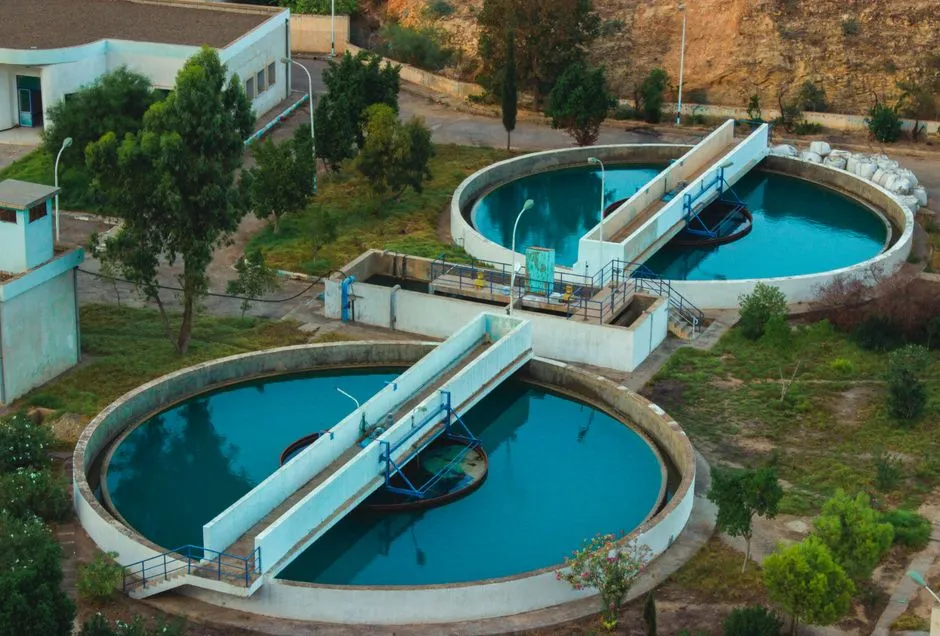
The defensible choice is the simplest process that reliably meets the confirmed effluent requirement at the design flow. A/O, MBR and MBR-UF differ mainly in treatment intensity, physical arrangement, operating burden and reuse potential.
| Configuration | Treatment scope and listed evidence | Most defensible site fit | Key decision issue |
|---|---|---|---|
| Buried A/O package | The WSZ Series combines anoxic/aerobic biological contact oxidation, sedimentation and disinfection. HydropureWater lists a capacity range of 1–80 m³/h, fully automated operation with no operator required, and installation below grade with landscaping above or on a trailer for mobile deployment (HydropureWater, 2026). | Space-constrained residential sites with a discharge route that the verified A/O process can meet | Confirm peak-flow capacity, process loading, access and sludge withdrawal |
| MBR | The HydropureWater MBR combines activated sludge with submerged PVDF membrane filtration, provides filtration below 1 μm and is listed with a 60% smaller footprint than conventional systems at 10–2,000 m³/day (HydropureWater, 2026). | Sites requiring compact biological treatment or tighter solids separation | Include membrane cleaning, replacement, aeration and spare-parts provisions |
| MBR-UF | For an engineered MBR-UF treatment train, the HydropureWater DF module uses 0.1 μm PVDF flat-sheet membranes with an integrated aeration box. Configurations are listed at 80–225 m², producing 32–135 m³/day (HydropureWater, 2026). | Projects with a defined reuse objective and a complete advanced-treatment scope | “UF” alone does not establish reuse quality; define pretreatment, final treatment, recovery, reuse demand and redundancy |
| Modular lamella/aeration package | Ion Exchange describes the INDION NGPSTP as a compact, modular single-tank package with capacities from 10–100 m³/day. Its manufacturer states that lamella clarification can reduce suspended solids by 75% and BOD by 25% (Ion Exchange, 2026). | Residential or similar defined-source sites where the packaged treatment sequence fits the load and outlet requirement | Confirm hydraulic and treatment performance rather than relying on the clarification-stage claim alone |
The buried A/O sewage treatment plant is credible for a Chicago development because it combines treatment stages in an underground package and offers a listed 1–80 m³/h range. That range is broad enough to warrant engineering evaluation, not proof that a particular unit fits. Peak flow, wastewater strength, treatment objectives and installation constraints determine final selection.
The MBR membrane bioreactor becomes more defensible where membrane solids separation, compact biological treatment or a reuse-driven objective justifies the added mechanical and maintenance scope. MBR-UF should be treated as a complete engineered train, not an off-the-shelf WSZ variant: define the pretreatment, final filtration or disinfection, controls, recovery, reuse demand and redundancy.
Use the market comparison to keep the selection disciplined. Ion Exchange’s NGPSTP shows that a compact modular package can be credible, but its listed reductions are stage-specific and do not substitute for project effluent criteria. Technology selection should follow verified performance under the confirmed residential loading pattern.
Use a Chicago Site-Selection Decision Framework
A restricted footprint supports requesting a buried A/O proposal only if the confirmed discharge can be met after design verification. Apply the following sequence:
- If footprint is the controlling constraint: request a buried WSZ proposal with landscaping above the unit. Require verification against average and peak flow, wastewater characteristics and the confirmed outlet requirement.
- If tighter solids separation or compact biological treatment is required: request an MBR option. Price membrane cleaning, aeration, replacement and spare-parts responsibilities into the proposal.
- If water has a defined higher-grade reuse purpose: require bidders to define the complete MBR-UF train, including pretreatment, final filtration or disinfection, controls, recovery, reuse demand and redundancy.
- If development is phased: ask the supplier to state how the initial package can be expanded without replacing the full treatment train.
- If public sewer connection is possible: compare that option’s easements, infrastructure charges, downstream capacity and approval pathway against the operating and lifecycle implications of decentralized treatment.
Each proposal should state the design flow, peak-flow approach, process units, tankage, equipment duty, controls, power demand, installation method, O&M access, sludge handling, commissioning tests and authorities consulted. Do not compare bids on footprint alone. Normalize them around the same design basis, outlet quality, civil scope, commissioning obligations and long-term operating responsibility.
Ask each supplier to identify its exclusions and assumptions, especially those involving electrical service, site preparation, burial, odor control, access roads, sludge transport, permits and future expansion. A shortlist becomes defensible only when bidders are answering the same technical questions. For any sludge-handling component, define the removal method, holding arrangement and destination rather than treating it as an incidental line item.
Plan Installation, Commissioning and Long-Term Operation
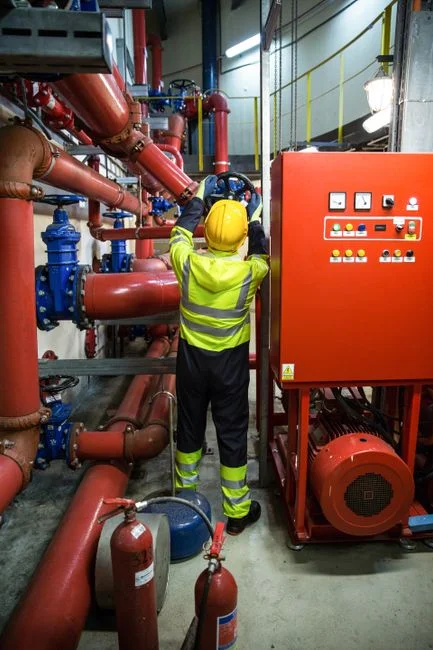
Procurement should follow the project workflow from requirements through verified operation. Community Sewer’s stated residential-package process is: consult on needs, research local regulations, engineer around the project, build and ship, oversee installation and startup, and return for a follow-up performance assessment (Community Sewer, 2026). Treat this as a supplier benchmark, not a universal specification.
That supplier also states that its MBBR construction material is AISI 304 stainless steel and that it conducts a follow-up assessment after twelve weeks (Community Sewer, 2026). Require every bidder to identify materials, construction standards, factory testing, site testing and post-startup performance obligations without assuming those features apply to every package.
For installation, define gravity versus pumped influent and effluent, burial depth, access covers, odor control, landscaping interfaces, electrical supply, controls, alarm handling and commissioning criteria. Where a package is installed below grade, confirm how major equipment can be removed without disrupting landscaping or other utilities.
For an A/O system, include diffuser or media inspection, air-system maintenance, sedimentation performance, sludge withdrawal and disinfection checks. For an MBR system, add membrane cleaning, replacement provisions and the spare-parts strategy. These are not optional extras; they define whether the plant remains operable after handover.
The operating agreement should name the responsible operator, inspection frequency, monitoring program, alarm response times, laboratory responsibilities, spare-parts availability and the owner’s annual operating-cost estimate. Clarify who obtains monitoring data, performs corrective work and remains accountable when treatment performance changes with occupancy or seasonal loading.
Approval of the treatment technology should precede final procurement. A vendor’s design calculations, process description, effluent basis and commissioning plan support the engineer’s permit package, but they do not replace agency review or discharge authorization. Keep the approval pathway tied to the selected outlet route.
Frequently Asked Questions
How should a packaged sewage treatment plant be sized for a Chicago housing development?
Start with average and peak flow, then establish wastewater characteristics, outlet quality, available space, power, sludge handling, maintenance access and future capacity. Use the same design basis for every bid. Do not size from a manufacturer’s headline capacity range alone; the final selection must demonstrate performance under the residential loading pattern and confirmed discharge or reuse requirement.
Is the WSZ buried A/O package the right choice for every Chicago development?
No. The WSZ is a credible candidate for space-constrained sites because it integrates A/O biological contact oxidation, sedimentation and disinfection in an underground package. Its listed range is 1–80 m³/h, but that range does
Frequently Asked Questions
What is the best packaged sewage treatment plant for a housing development in Chicago?
The optimal plant for Chicago residential projects is typically a Membrane Bioreactor (MBR) system. Given Chicago's stringent Metropolitan Water Reclamation District (MWRD) discharge standards and limited urban footprint, MBR technology provides the highest effluent quality—often exceeding tertiary treatment requirements—by utilizing microfiltration membranes with pore sizes typically between 0.04 and 0.4 microns.
How many gallons per day does a Chicago housing development sewage treatment plant need?
For standard residential developments in Chicago, engineers typically calculate flow based on 75 to 100 gallons per capita per day (GPCD). A multi-family housing development should be sized using these figures multiplied by the total number of bedrooms or expected occupancy, with an additional safety factor of 15% to 25% to account for peak diurnal flows and infiltration/inflow (I/I) common in the Chicago climate.
Is a buried A/O system or an MBR better for a residential development?
For Chicago housing, an MBR system is superior to a conventional Anoxic/Oxic (A/O) system. While A/O systems are effective for basic nutrient removal, they require large secondary clarifiers and have a higher risk of solids carryover during high-flow events. MBR systems offer a significantly smaller physical footprint, produce a permeate suitable for non-potable reuse, and maintain consistent effluent quality regardless of sludge settleability.
What should I ask a wastewater package plant supplier before approving a bid?
You must request a performance guarantee that the system meets MWRD’s specific limits for Total Suspended Solids (TSS), Biochemical Oxygen Demand (BOD), and Total Phosphorus (TP). Additionally, ask for the expected membrane lifespan in years, the energy consumption measured in kilowatt-hours per thousand gallons (kWh/kgal), and a detailed list of local Chicago-based service technicians who can provide 24-hour emergency response for automated control system failures.
Can a packaged sewage treatment plant satisfy Chicago discharge and reuse requirements?
Yes, provided the plant is equipped with advanced tertiary treatment components such as ultraviolet (UV) disinfection and membrane filtration. These systems can be configured to meet strict Illinois EPA and MWRD discharge permits. Furthermore, the high-quality effluent produced by MBR systems can be repurposed for subsurface irrigation or toilet flushing, helping developers meet Chicago’s evolving sustainable building codes and water conservation mandates.