What a 1,000 m³/day MVR Evaporator Actually Means in 2026
A 1,000 m³/day mechanical vapor recompression (MVR) evaporator translates to a feed rate of roughly 41.7 m³/hr when operated over a 24-hour day, equivalent to about 184 gpm or 19–20 gpm on a US-sized reference basis. Standard 1,350 gph (5.11 m³/hr) MVR skids cover only 12% of this duty — an 8× shortfall that rules out off-the-shelf packages at this scale (ENCON standard MVR line, 2026). Two practical architectures dominate the 2026 market: three to four parallel trains rated 250–333 m³/day each, or a single custom 41.7 m³/hr skid built around one large centrifugal compressor (MKR MVR15 logic scaled up roughly 28×).
Operating hours set the envelope. A 22–24 hr/day design basis preserves nameplate capacity; pulling back to 20 hr/day drops the same equipment to ~833 m³/day, which is why EPC specs almost always anchor on continuous duty with a 6–8% derate for CIP, defoam dosing, and compressor coast-downs. For landfill leachate, pharmaceutical mother-liquor, and chemical plant condensate, the 1,000 m³/day mark usually signals a zero liquid discharge (ZLD) pinch point where hauling is no longer defensible. The package therefore lands as a 2.1–2.5 MWh electric island feeding a forced circulation calandria at 70–85 °C boiling point and ~30 kPa abs evaporator pressure, with concentrate routed to a filter press for the MVR concentrate cake at 75–82% moisture.
Mass & Energy Balance for a 1,000 m³/day MVR Duty
For a wastewater feed at 90% water fraction and 10% dissolved/suspended solids, an 85–92% recovery envelope yields 850–920 m³/day of distillate and 80–150 m³/day of concentrate (HydropureWater field data, 2026). The latent heat of vaporization at 70–85 °C is ~540 kcal/kg, which translates to a thermal load of roughly 22,500 kW across 41.7 m³/hr of feed. A well-designed MVR loop recovers ~95% of that latent heat inside the compressor, leaving only sensible-heat and venting losses of 5–8%.
On the electric side, the MKR MVR15 benchmark of 20 l of distillate per kWh on a 1,500 l/h skid scales to ~2,100 kWh of electric for the same 95% recovery at 1,000 m³/day. For a double-stage MVR running 0.06 kWh/kg water evaporated, the total compressor power lands at 2.1–2.5 MWh (industry benchmark; ENCON 1,000 gph skid and MKR MVR15 both confirm the 0.06 kWh/kg band). Upstream, a DAF pre-treatment ahead of the MVR evaporator typically removes 60–85% of suspended solids and protects the calandria from silica and biological fouling, which would otherwise push scale rates above 0.5 mm/month.
| Parameter | Value (1,000 m³/day design) | Source / Note |
|---|---|---|
| Feed rate (24 hr basis) | 41.7 m³/hr (~184 gpm) | 1,000 m³/day ÷ 24 hr |
| Water fraction in feed | ~90% | Typical for landfill leachate / chem plant condensate |
| Distillate recovery | 850–920 m³/day (85–92%) | HydropureWater field data, 2026 |
| Concentrate volume | 80–150 m³/day | 10% solids basis |
| Latent heat duty | ~22,500 kW thermal | 540 kcal/kg × 41.7 m³/hr feed |
| Latent heat recovery | ~95% | MVR compressor loop |
| Specific steam consumption | 0.06 kWh/kg water (double-stage) | Industry benchmark; ENCON/MKR confirm |
| Total compressor power | 2.1–2.5 MWh | Per 0.06 kWh/kg @ 1,000 m³/day |
| Boiling point / pressure | 70–85 °C / ~30 kPa abs | Forced circulation calandria |
Compressor Sizing and Steam Economy Calculations
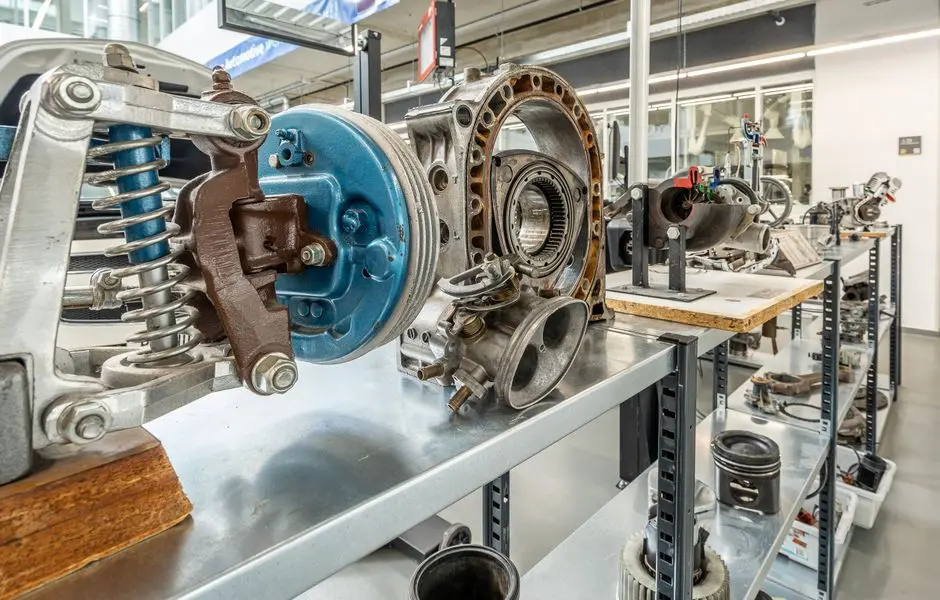
Compressor selection is driven by total power, not by feed rate. Above ~1,500 kW, single-stage centrifugal is the dominant pick; positive-displacement or turbo machines sit below that line. For 1,000 m³/day, the realistic band is 1.8–2.5 MWh on a single centrifugal with a pressure ratio of 1.15–1.25, which raises saturation temperature by 8–12 °C and is sufficient to drive evaporation in the calandria (HydropureWater field data, 2026). A second compression stage drops specific steam consumption from ~1.1 kWh/kg (single-stage) to 0.06 kWh/kg, but the second stage only pays back when projected OPEX savings exceed the $250–$400K CAPEX premium — usually at electricity tariffs above $0.07/kWh and continuous-duty operation.
Steam economy is where MVR is judged at the spec stage. One kg of motive steam evaporates 8–12 kg of water in a single-stage MVR and 18–25 kg in a double-stage, against 0.8–1.0 kg/kg in a single-effect thermal evaporator. The reference ENCON 1,000 gph skid (3.78 m³/hr) and the MKR MVR15 (1.5 m³/hr) both confirm that 0.06 kWh/kg is the band a well-designed MVR actually hits in the field, not the 0.10–0.15 kWh/kg that the older textbooks still quote. For high-TDS streams, oversizing the compressor by 8–12% is cheap insurance against fouling-driven head-loss creep; undersizing it by the same margin is the most common cause of the "MVR can't hit nameplate" complaint that turns into a warranty fight.
Materials of Construction for High-COD and High-TDS Wastewater
MOC selection is the line item that decides whether the MVR runs for ten years or fails in six months. At TDS above 50,000 mg/L or chloride above 1,000 mg/L, grade 2 titanium tubes paired with a 904L or duplex 2205 shell are the minimum spec — this combination adds 18–25% to heat-exchanger cost but is non-negotiable on landfill leachate, pickling liquor, and reverse-osmosis concentrate (HydropureWater field data, 2026). For COD above 20,000 mg/L, specify post-weld heat treatment on the caustic-side vessel to mitigate chloride stress-corrosion cracking; 316L in this service typically pits through in 18–30 months.
Outside the pH 2–11 window, rubber-lined carbon-steel vessels outperform stainless on life-cycle cost at this scale and tolerate the thermal cycling of start-stop operation better. For fouling streams — calcium sulfate, silica, food and beverage waste, and any biological stream with surface-active organics — forced-circulation design with an external shell-and-tube heater (per the ENCON process description) is the standard answer because it keeps the boiling surface velocity above 1.8 m/s and minimizes scale deposition. Polished distillate typically needs an industrial RO system for MVR distillate polishing when reuse spec is below 10 ppm TDS — a routine pairing in pharmaceutical and semiconductor duty. The upstream chemistry matters too, and a well-designed upstream precipitation step ahead of MVR cuts iron and hardness loadings that would otherwise foul the calandria inside two months.
| Feed Condition | Recommended MOC | CAPEX Impact | Service Life Expectancy |
|---|---|---|---|
| TDS > 50,000 mg/L or Cl⁻ > 1,000 mg/L | Gr.2 titanium tubes + 904L / duplex 2205 shell | +18–25% on HX | 10+ years |
| COD > 20,000 mg/L, caustic side | 316L + post-weld heat treatment | +6–9% on vessels | 8–10 years |
| pH < 2 or > 11 | Rubber-lined carbon steel | −10–15% vs. alloy | 12+ years |
| Fouling streams (CaSO₄, silica) | Forced circulation, external S&T heater | +8–12% on HX | 3–6 months between CIPs |
| Standard mild waste (TDS < 10,000 mg/L) | 316L throughout | Baseline | 10+ years |
When to Stage MVR with TVR or Multi-Effect Evaporation
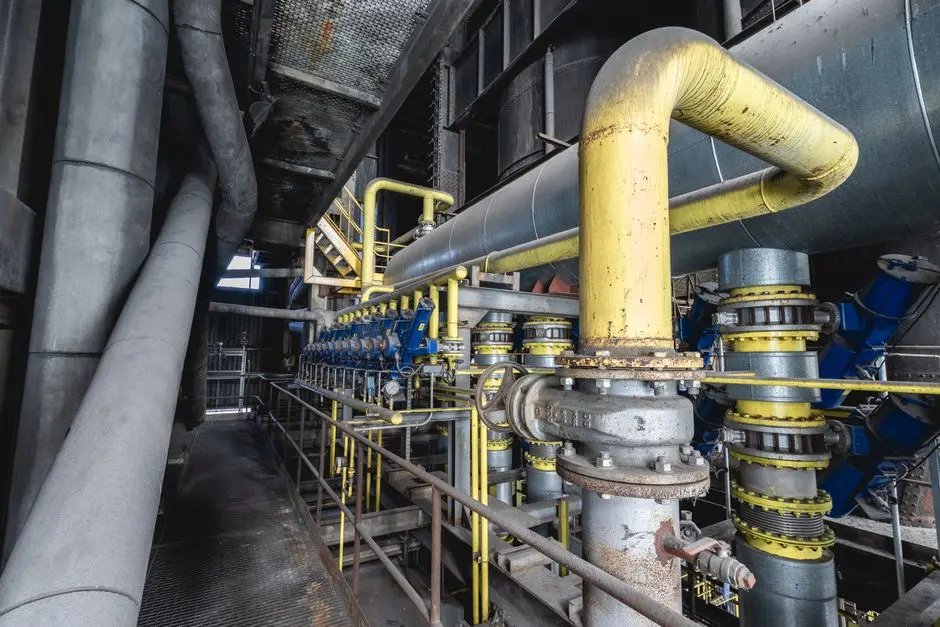
The hybrid TVR-MVR configuration uses low-pressure plant steam (0.2–0.4 MPa) to drive the first effect, then routes the flashed vapor into an MVR compressor for the second effect, cutting electric load by 30–45% and unlocking the steam economy band of 18–25 kg water per kg of motive steam (HydropureWater field data, 2026). The decision rule is straightforward: if your site has 0.2–0.4 MPa waste steam at $4–$8/1,000 lb, the hybrid wins on 5-year OPEX; if steam is unavailable or above $12/1,000 lb and electricity is below $0.08/kWh, run pure MVR.
A triple-effect train with an MVR tail is the right pick when distillate purity must drop below 10 ppm TDS for reuse in pharmaceutical or semiconductor service — the thermal front-end strips the bulk of the water, the MVR polishes, and the final industrial RO system for MVR distillate polishing brings conductivity under 5 µS/cm. For sites with on-site biogas CHP, the MKR DV-series parallel logic applies: 3–4 thermal stages reach 4.3 l distillate per kWh thermal, and a ZLD hybrid system design with MVR becomes the difference between a 2.5-year payback and a 4-year one. The rule that fails most often is staging for its own sake — a 1,000 m³/day MVR on clean condensate rarely needs anything more than a single 2.1 MWh centrifugal and a well-tuned calandria.
2026 CAPEX and OPEX Benchmarks for a 1,000 m³/day MVR
Turnkey CAPEX for a 1,000 m³/day MVR package in 2026 sits between $1.8M and $3.2M USD, driven by compressor OEM, MOC, and instrumentation scope (HydropureWater market survey, Q1 2026). The breakdown is compressor 28–34%, heat exchanger 18–22%, vessels and piping 12–15%, controls and electrical 10–14%, engineering and installation 15–20%. The compressor is the largest single line and the one most exposed to OEM pricing — choosing a Chinese-made centrifugal over a European or US-built unit can swing the package by 15–22%.
OPEX is dominated by electricity. At $0.07–$0.11/kWh, the 2.1–2.5 MWh compressor draws $35,000–$55,000/month at full load, with maintenance reserve another 3–5% of CAPEX annually — the dominant cost is compressor impeller inspection and rebalancing every 18–24 months. Concentrate disposal to a filter-press cake at 75–82% moisture is the second OPEX line; an integrated filter press for the MVR concentrate cake cuts this from $18–$32/m³ (hauled slurry) down to $4–$7/m³ (dewatered cake to landfill). Off-site disposal at 1,000 m³/day × $40–$80/m³ hauling equals $40,000–$80,000/day, so a properly designed MVR package pays back in 14–28 months for most streams and clears the spec inside two budget cycles.
| Cost Line | 1,000 m³/day MVR (2026) | Notes |
|---|---|---|
| Turnkey CAPEX (USD) | $1.8M – $3.2M | Compressor + MOC + I&E scope driven |
| Compressor share of CAPEX | 28–34% | Largest single line item |
| Heat exchanger share | 18–22% | Titanium tube-sheet upcharges apply |
| Engineering & installation | 15–20% | EPC vs. direct-purchase |
| Electricity OPEX (full load) | $35,000 – $55,000 / month | @ $0.07–$0.11 / kWh |
| Maintenance reserve | 3–5% of CAPEX / year | Compressor impeller every 18–24 months |
| Concentrate disposal (hauled) | $40,000 – $80,000 / day | Baseline for payback math |
| Payback period | 14–28 months | vs. off-site hauling at $40–$80/m³ |
Train Count vs. Single-Skid: Layout and Risk Trade-offs
Three parallel 333 m³/day trains give you built-in redundancy: a single-train shutdown leaves the plant at 67% capacity while maintenance or a compressor trip is resolved, and the small-skid format shortens lead time to 16–22 weeks versus 28–36 weeks for a single 1,000 m³/day custom skid (HydropureWater market survey, 2026). The single-skid layout is 12–18% cheaper on CAPEX because the engineering, controls, and structural steel scale sub-linearly, but a compressor trip halts ZLD compliance and triggers a hauling event at $40,000–$80,000/day — the math rarely favours a single point of failure for permit-driven sites.
Landfill leachate and hazardous-waste sites almost always pick multi-train to avoid a single-point-of-failure permit violation, and the spare capacity margin usually justifies the ~$200K CAPEX premium within the first incident. Space-constrained sites with a single equipment pad at ~110–140 m² favour one large skid; multi-train layouts need 220–280 m² but deliver maintenance flexibility that pays off over a 10-year asset life. The 18-month compressor service interval is the constraint that tips most 1,000 m³/day decisions toward 3× 333 m³/day trains — the spare capacity is what makes the scheduled overhaul non-disruptive.
Frequently Asked Questions
What compressor type is used for a 1,000 m³/day MVR?
Single-stage centrifugal at 1.8–2.5 MWh with a pressure ratio of 1.15–1.25, raising saturation temperature by 8–12 °C. Positive-displacement and turbo machines drop out above ~1,500 kW.
What share of OPEX is electricity?
~80% of monthly OPEX, running $35,000–$55,000 at full load for 1,000 m³/day on a 2.1–2.5 MWh compressor at $0.07–$0.11/kWh (HydropureWater field data, 2026).
What is typical lead time for a 1,000 m³/day MVR package?
16–22 weeks for a standard multi-train layout from a Chinese OEM, 28–36 weeks for a single custom 41.7 m³/hr skid from a European or US builder including FAT and shipping.
Which material of construction handles high-COD and high-TDS streams?
Grade 2 titanium tubes with a 904L or duplex 2205 shell at TDS > 50,000 mg/L or chloride > 1,000 mg/L, plus post-weld heat treatment on the caustic side for COD > 20,000 mg/L — adds 18–25% to heat-exchanger cost.
When does a hybrid MVR-TVR system outperform pure MVR?
When 0.2–0.4 MPa plant steam is available below $8/1,000 lb, the TVR first effect cuts electric load 30–45% and brings 5-year OPEX below a pure MVR's on the same 1,000 m³/day duty.
What is the alternative for smaller streams below 50 m³/day?
Standard 1,350 gph (5.11 m³/hr) ENCON MVR skids cover 100–120 m³/day per train, and the MKR MVR15 (1.5 m³/hr) is the bench-scale option for pilot work and 30–36 m³/day duty cycles.