Why 'Price Per Piece' Misleads Hospital Wastewater Budgets
The 2021 Made-in-China catalog still ranks at the top of Google for hospital wastewater queries with a US$2,100–$44,000/piece FOB band (Shandong Tianlang, listed 2021-10), and that number is what most procurement managers paste into a first-pass budget — then discover, six months later, that the installed plant costs three to six times more. The figure is ex-works equipment only: no concrete tanks, no buried pipework, no blower room, no PLC, no commissioning, and no ten years of electricity, chemicals, and membrane swaps.
Four cost drivers decide what a hospital project actually spends: (1) the equipment skid itself, (2) civil works and installation (tanks, building, electrical), (3) the disinfection stage sized to the discharge standard, and (4) OPEX accumulated over the asset's life. The unit convention used in this article is $/m³/day for CAPEX, $/m³ for OPEX, and $/bed for high-level budgeting. I have escalated the 2021 Made-in-China band by ~35% (industrial water equipment index running 6–8% CAGR from 2021 to 2026) to land on a defensible 2026 equipment-only band of roughly $9,500–$60,000 for a single skid. Multiply that by 3–5× to get a turnkey project, and you arrive at the $8,000 (1 m³/day clinic) to $1.2 million (500-bed MBR) range quoted in the opening. For a compact clinic skid in this band, see the medical wastewater treatment system.
Hospital Wastewater Treatment Plant Price by Bed Count (2026)
Bed count is the single most defensible sizing input a procurement manager can put in front of a finance director, because it converts directly to hydraulic load. WHO Healthcare Wastewater guidance puts hospital generation at 0.6–1.2 m³/bed/day, and a 1.5–2.0 peaking factor is standard practice for plant sizing to absorb morning surgical wash-down and evening bedpan cycles.
| Hospital Tier | Beds | Avg. Flow (m³/day) | Peaked Flow (m³/day) | 2026 Equipment-Only (USD) | 2026 Turnkey Installed (USD) |
|---|---|---|---|---|---|
| Day clinic / dental | 20 | 12–24 | 20–40 | $9,500–$22,000 | $35,000–$95,000 |
| Small private clinic | 50 | 30–60 | 50–100 | $15,000–$32,000 | $60,000–$160,000 |
| District hospital | 100 | 60–120 | 100–200 | $22,000–$45,000 | $95,000–$280,000 |
| General hospital | 200 | 120–240 | 200–400 | $32,000–$60,000 | $180,000–$520,000 |
| Tertiary / university hospital | 500 | 300–600 | 500–1,000 | $60,000+ | $420,000–$1,200,000 |
The equipment-only column is the 2021 Made-in-China $7K–$44K band escalated by ~35%; the turnkey column multiplies by 3–5× to cover civil works, installation, disinfection, and commissioning. Hospitals with on-site laundry, an ICU block, or a hemodialysis unit push the upper end of each band by 20–40% because those services generate high-temperature, high-BOD, and often microplastic-laden streams that need pretreatment. A 100-bed project typically budgets for 200 m³/day peaked capacity, not the 120 m³/day average.
Technology Comparison: MBR vs WSZ Package vs Ozone System
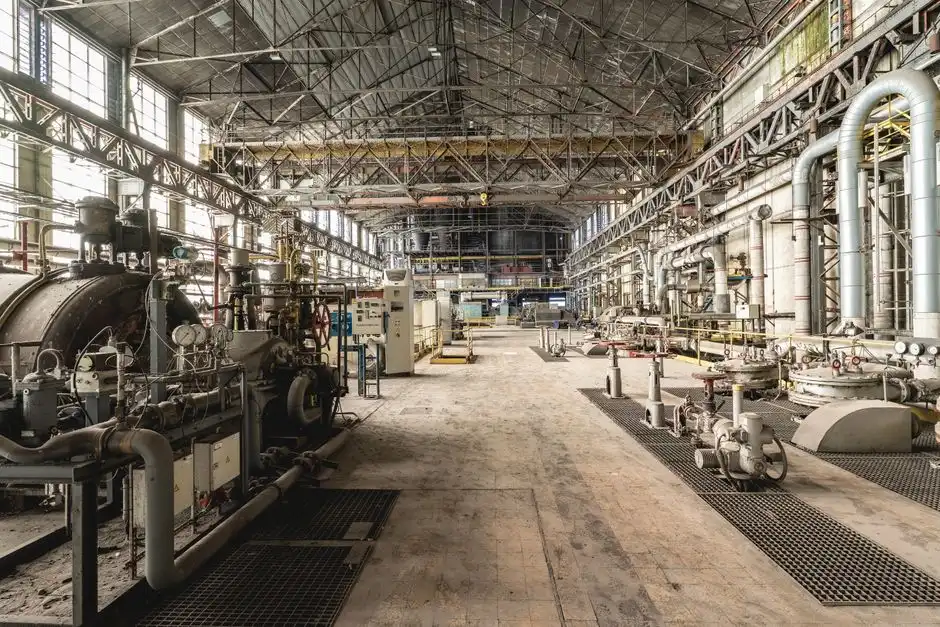
Three product lines cover almost every hospital bid I see. The MBR membrane bioreactor hospital system runs 10–2,000 m³/day, produces reuse-quality effluent below 1 μm turbidity, and cuts footprint by roughly 60% versus conventional activated sludge. The WSZ underground package plant buries the full A/O + sedimentation + disinfection train and is visually invisible above grade, but tops out at 80 m³/h per single unit. The medical wastewater treatment system is a sub-0.5 m² footprint ozone skid delivering 99%+ pathogen kill, compliant with EPA hospital effluent guidance and EU 91/271/EEC, and is sized for clinics and dental practices under 5 m³/day.
| Parameter | MBR Membrane Bioreactor | WSZ Underground Package | Ozone System |
|---|---|---|---|
| Flow range | 10–2,000 m³/day | 1–80 m³/h (single unit) | ≤5 m³/day (clinic/dental) |
| CAPEX (per m³/day) | $280–$520 | $120–$260 | $200–$400 |
| Effluent TSS / turbidity | <1 mg/L / <1 NTU | <20 mg/L | Disinfection only (no biological stage) |
| Energy (kWh/m³) | 0.4–0.8 | 0.25–0.45 | 0.3–0.5 |
| Membrane / consumable life | 5–8 years at $30–$60/m² | No membranes | UV lamp 8,000–12,000 h; ozone cell 3–5 years |
| Footprint | Compact (60% of CAS) | Buried, zero above-grade | <0.5 m² |
Decision rule I use on bid reviews: flows below 10 m³/day go to the compact medical wastewater system or a packaged WSZ underground package plant; 10–500 m³/day is a WSZ-versus-MBR call driven by whether the site can spare the land area; above 500 m³/day, an MBR or full SBR/MBBR train is the only realistic option. The compact medical wastewater system has no biological stage, so it should not be specified for high-BOD general hospital waste on its own — it pairs with a primary WSZ or MBR when used on a 100-bed+ site.
OPEX Breakdown: What $0.18–$0.65 per m³ Actually Buys
A procurement manager who optimizes on CAPEX alone usually pays for it in years three through ten. The ten-year OPEX band of $0.18–$0.65 per m³ decomposes into five line items, and the dominant one changes with technology: energy is 45–55% of the bill for MBR, while chemicals climb to 25% for plants running chlorination plus dechlorination. Sludge handling sits at 10–15%, labor at 10–20%, and membrane or consumable replacement at 5–10%.
| OPEX Line Item | Share of OPEX | MBR | WSZ | Compact Medical Wastewater System |
|---|---|---|---|---|
| Energy (blowers, pumps, UV/ozone) | 45–55% | 0.4–0.8 kWh/m³ | 0.25–0.45 kWh/m³ | 0.3–0.5 kWh/m³ |
| Chemicals / disinfection consumables | 15–25% | $0.03–$0.06/m³ | $0.02–$0.05/m³ | $0.05–$0.08/m³ (ozone) |
| Sludge handling & disposal | 10–15% | Higher (low F/M) | Moderate | Negligible (upstream) |
| Labor (operator hours) | 10–20% | Higher-skilled | Lower (buried, automated) | Lowest |
| Maintenance / membrane swap | 5–10% | $30–$60/m² every 5–8 yr | Minimal | Lamp/cell replacement |
For hospitals concerned about trihalomethane (THM) formation from bulk chlorine, an on-site chlorine dioxide generator in the 50 g/h to 20,000 g/h range produces ClO₂ on demand and avoids the storage and THM issues of chlorine gas or hypochlorite. The 10-year OPEX for a 100 m³/day plant lands at roughly $65,000–$237,000, which is 40–70% of total cost of ownership — large enough that the technology choice in the previous section decides the finance case.
Compliance Cost: WHO, EPA, and EU 91/271/EEC Compared
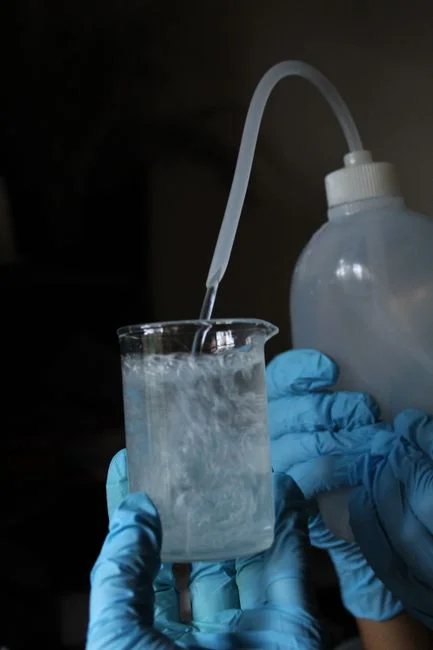
Three standards dominate hospital bids. The WHO 2006 Safe Use of Wastewater guidelines set a benchmark of <200 CFU/100 mL fecal coliform for restricted irrigation, and many developing-economy hospital specs default to this. The EU Urban Waste Water Treatment Directive 91/271/EEC, applied to hospital effluent by member-state regulators, drives toward bathing-water-derived <10 CFU/100 mL E. coli — a roughly 1.5-log tightening that adds 18–30% to the disinfection-stage CAPEX. EPA hospital effluent guidance is similar to WHO but with a stronger emphasis on log-4 to log-5 virus reduction, which usually forces a UV or ozone stage on top of chlorination.
The cost ladder is concrete: chlorination alone handles WHO <200 CFU; chlorination plus UV handles EPA log-4 virus; ozone or ClO₂ followed by UV is what gets you consistently under 10 CFU/100 mL at the EU limit. The medical wastewater treatment system delivers the 99%+ ozone kill rate that positions an EU-bound buyer at the tightest end of that ladder without a second disinfection reactor in series. A buyer chasing EU 91/271/EEC compliance should not budget for anything less than a two-barrier disinfection train.
10-Year Total Cost of Ownership: A Worked Example
A 100-bed district hospital at 100 m³/day average, 200 m³/day peaked, electricity at $0.10/kWh, is the worked example I use most often because it sits in the middle of every technology range. Below is a side-by-side over 10 years including one mid-life membrane replacement for the MBR case at year 6.
| Cost Line (10-Year) | WSZ Package | MBR Membrane Bioreactor | Compact Medical Wastewater System + Polishing |
|---|---|---|---|
| CAPEX (turnkey, 200 m³/day peaked) | $95,000–$180,000 | $180,000–$320,000 | $120,000–$210,000 (ozone + WSZ polish) |
| Energy (10 yr × 365 d × 100 m³) | $27,000–$49,000 | $44,000–$87,000 | $33,000–$55,000 |
| Chemicals / consumables | $7,000–$18,000 | $11,000–$22,000 | $18,000–$29,000 (ozone) |
| Sludge disposal | $11,000–$18,000 | $14,000–$22,000 | $7,000–$11,000 |
| Labor | $22,000–$36,000 | $29,000–$44,000 | $15,000–$22,000 |
| Membrane / cell replacement | — | $40,000–$80,000 (mid-life) | $11,000–$18,000 (ozone cell) |
| Water reuse offset (8–15% OPEX) | Negligible | −$13,000 to −$24,000 | Negligible |
| 10-Year TCO | $165,000–$300,000 | $305,000–$550,000 | $205,000–$345,000 |
The MBR scenario is the most expensive in year one but the cheapest in years five through ten once toilet-flushing and irrigation reuse credits offset 8–15% of OPEX. The single line a CFO can quote from this table: a 100-bed hospital should budget $0.5M–$0.9M turnkey for the first 10 years, with technology choice driving a ±40% spread inside that range. For a deeper dive on regional cost benchmarks, the medical wastewater treatment system cost guide cross-checks these numbers against recent B2B quotations, and the hospital wastewater treatment in Bali case study shows the same model applied to a tropical clinic site.
Frequently Asked Questions
How much does a hospital wastewater treatment plant cost in 2026?
Turnkey installed pricing runs from roughly $35,000 for a 20-bed clinic skid to $1.2 million for a 500-bed MBR hospital, with equipment-only skids falling in a $9,500–$60,000 band after 2021–2026 escalation.
What is the price per bed for hospital sewage treatment?
High-level budgeting works out to $1,800–$4,000 per bed for turnkey CAPEX at a 100–200-bed hospital, dropping toward $1,200–$2,000 per bed at the 500-bed scale where civil works are amortized.
How much does MBR cost for hospital wastewater per m³/day?
MBR hospital systems price at $280–$520 per m³/day CAPEX, with OPEX of $0.32–$0.65 per m³ over a 10-year horizon including one membrane replacement at $30–$60 per m².
What is the cheapest packaged hospital wastewater plant?
A WSZ underground package plant at $120–$260 per m³/day CAPEX is the lowest-cost buried option, capped at 80 m³/h per single unit.
How much does hospital effluent disinfection cost to meet EU 91/271/EEC?
Meeting the <10 CFU/100 mL E. coli limit adds 18–30% to the disinfection-stage CAPEX, typically an ozone or ClO₂ reactor followed by UV, and roughly $0.05–$0.08 per m³ to ongoing chemical OPEX.
What is the 10-year TCO for a 100-bed hospital wastewater plant?
A 100-bed, 100 m³/day hospital should budget $0.5M–$0.9M turnkey over the first 10 years, with technology choice (WSZ vs MBR vs ozone-hybrid) driving a ±40% spread inside that range.