A medical wastewater treatment system cost price in 2025 spans roughly $2,000 for a compact clinic-scale ozone skid to $250,000+ for an integrated MBR plant at a large hospital. Capacity drives the biggest swing: a 1–5 m³/h clinic unit sits between $3,500 and $10,000, while a 50+ m³/h hospital plant starts near $50,000. Compliance with EPA hospital discharge rules or EU Directive 91/271/EEC typically adds 10–15% to the equipment price. Directive (EU) 2024/3019 entered into force on 1 January 2025; Member States still report under 91/271/EEC through 2028 (European Commission).
What Drives Medical Wastewater Treatment System Cost Price?
Medical wastewater treatment system cost price is set by four variables: flow rate, treatment technology, compliance scope, and installation type. Flow rate is the dominant driver — a clinic at 1–5 m³/h pays an order of magnitude less than a hospital at 50+ m³/h, and the curve is roughly linear above 10 m³/h (HydropureWater field data, 2025).
Technology choice shifts the baseline by 30–50%. Ozone disinfection systems cost less than Membrane Bioreactor (MBR) systems for sub-10 m³/h applications because they need fewer skids, less civil work, and no chemical dosing. MBR systems price higher up front but deliver sub-1 μm effluent suitable for non-potable reuse, which can offset the premium where reuse is mandated.
Compliance scope adds 10–15% to the total. An EPA- or EU 91/271/EEC-aligned package usually means extra filtration, UV polishing, or enhanced sludge handling, plus the monitoring hardware to document it. On a $100,000 MBR line item, that is a $10,000–$15,000 adder for instrumentation alone.
Installation type moves the total by another 15–25%. Containerized or above-ground skids cut civil works and commissioning time; underground concrete tanks add excavation, waterproofing, and access shafts. Most hospitals we size for retrofit work choose containerized MBRs to keep the clinical footprint clean.
Ozone vs MBR: Cost and Performance Side by Side
Ozone systems such as HydropureWater's typically run $2,000–$15,000 installed and clear more than 99% of pathogens without chemical dosing, since the ozone is generated on-site from ambient air. That makes them a strong fit for clinics, dental offices, and labs that need chemical-free wastewater treatment in a small footprint.
Integrated MBR systems for hospitals sit between $50,000 and $200,000+, with high-capacity builds reaching $250,000 once pre-treatment is included. They produce effluent under 1 μm — clean enough for cooling-tower make-up or toilet flushing — but draw roughly 2.5× the power of an ozone-only system, around 2.5–4 kWh/m³.
Total Cost of Ownership (TCO) favors ozone where reuse is not required. Ozone has zero chemical cost and an annual electrode check at roughly $300. MBR systems need chemical cleaning every 3–6 months and membrane replacement at $8,000–$20,000 every 5–7 years on top of higher energy bills.
| Feature | Ozone System | MBR System (Integrated) |
|---|---|---|
| Upfront Cost (Equipment) | $2,000 – $15,000 | $50,000 – $200,000+ |
| Target Facilities | Clinics, Dental Offices, Labs | Hospitals, Large Medical Centers |
| Effluent Quality | 99%+ pathogen kill, meets discharge limits | <1 μm, suitable for reuse |
| Chemical Use | Zero (ozone generated on-site) | Chemical cleaning, periodic membrane replacement |
| Energy Consumption | Low (1.5–3 kWh/m³) | Moderate-High (2.5–4 kWh/m³), 2.5× higher than ozone |
| Footprint | Very Compact (as low as 0.5 m²) | Compact (60% smaller than conventional) |
| Maintenance | Annual electrode check | Membrane cleaning, replacement every 5–7 years |
Compact Treatment Units for Clinics and Small Hospitals
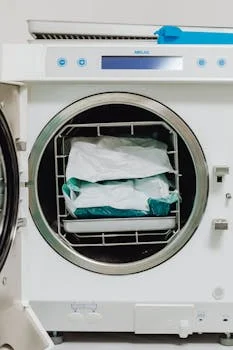
The compact medical wastewater system is sized for 1–5 m³/h flows and lists between $3,500 and $9,800, putting it inside most clinic capital budgets. The skid is engineered to meet EPA discharge standards, so a small hospital or dental group does not need a parallel compliance package.
Footprint is a quiet but real advantage: the unit can sit on as little as 0.5 m² of floor, which matters in retrofits where the only available room is a former sterilizer bay. Less civil work means a faster install and a lower overall project cost than a poured-concrete alternative.
PLC control handles dosing, contact time, and alarms without a dedicated operator, which is what most small facilities actually need from an automated clinic treatment line. Ozone generation happens on-site from air, so there is no chlorine drum to store, no THMs in the discharge, and no secondary pollution to manage.
Site installation typically wraps in 3–5 days, so clinical operations are not shut down for long. Specifications and sizing options are on the Medical & Hospital Wastewater Treatment System product page.
Large-Scale Medical and Hospital Systems: MBR and DAF Integration
An integrated MBR line for a 50–2,000 m³/day hospital runs $50,000–$250,000 before pre-treatment. Surgical and lab streams carry variable BOD and occasional solvent traces, so the design usually pairs equalization, fine screening, and disinfection around the membrane tank.
Where influent carries FOG or high suspended solids — kitchen waste, autopsy suites, some dialysis loops — Dissolved Air Flotation (DAF) pre-treatment is the standard add-on, contributing $20,000–$80,000 to the total. DAF strips the floatables before they foul the membranes and lets the biological stage run at design MLSS.
Containerized 40 ft MBR plants handle up to 20 m³/h and price around $120,000–$180,000. They are pre-piped and pre-wired, so commissioning can wrap in about two weeks — useful for surge capacity, COVID-style expansions, or remote clinic compounds. Modern PLC panels cover influent pumping, aeration DO control, and membrane backwash, so labor stays low once the plant is live. Plant-wide MBR details sit on the high-efficiency MBR system for hospitals page, and DAF sizing is on the Dissolved Air Flotation (DAF) machine page.
How to Calculate Total Cost of Ownership
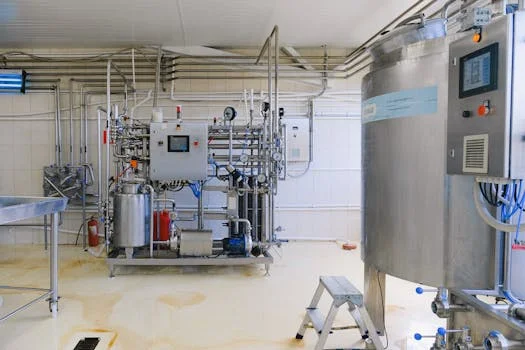
TCO folds energy, maintenance, consumables, and lifespan into a single number that procurement can compare against the upfront price. On a 100 m³/day plant, the gap between ozone and MBR can reach several thousand dollars a year in power alone.
Energy: ozone sits at 1.5–3 kWh/m³; MBR sits at 2.5–4 kWh/m³. At an industrial tariff of $0.10/kWh, that is a $3,650–$7,300 annual swing per 100 m³/day just for aeration and recirculation.
Maintenance: ozone needs an annual electrode check at roughly $300; MBR needs chemical cleaning every 3–6 months and membrane replacement at $8,000–$20,000 every 5–7 years. Skipping either shortens membrane life by 30–40% in our field experience.
Lifespan: a well-maintained ozone skid runs 10–12 years; MBR membrane modules last 5–7 years, while the surrounding tanks and blowers run 15–20 years. Net of replacements, ozone TCO pays back its capital within 2–3 years for most sub-10 m³/h clinics we audit.
Who This Is For and Next Step
Use an ozone skid when flow is under 5 m³/h, reuse is not required, and chemical storage is undesirable. Use an integrated MBR — with DAF if FOG is present — when flow is 10 m³/h and above or when the facility needs reuse-grade effluent. Procurement managers should compare 10-year TCO, not sticker price, and confirm compliance scope (EPA, EU 91/271/EEC and Directive (EU) 2024/3019) before sizing. Send flow rate, peak load, and discharge target through the request-a-quote form to get a sized proposal and price band within two business days.
Frequently Asked Questions
What is the average cost of a medical wastewater treatment system?
Compact ozone systems run $3,500–$15,000 for clinics and small hospitals, while integrated MBR systems for large hospitals run $50,000–$250,000 depending on capacity, pre-treatment, and compliance scope. The price gap reflects footprint, effluent quality, and whether reuse is required.
Is ozone better than chlorine for hospital wastewater?
Ozone achieves more than 99% pathogen kill, generates no chlorine disinfection byproducts, and removes the need for on-site chemical storage. It is generally preferred for small to mid-size facilities where chemical handling logistics are a concern.
How much space does a small medical treatment unit need?
An ozone skid fits on as little as 0.5 m² of floor area, which makes it practical for retrofits in existing clinic rooms. Containerized MBR plants need more space but are still roughly 60% smaller than conventional activated sludge.
Do MBR systems require skilled operators?
Modern MBR systems run on PLC automation covering pumping, aeration, and membrane backwash, so day-to-day operation does not require a dedicated skilled operator. Membrane cleaning and replacement still need a service visit every 3–6 months.
Can a medical wastewater system be installed underground?
Yes, both ozone skids and MBR systems can be specified for underground installation, though underground builds typically add 15–25% to total cost due to excavation and structural work. Above-ground containerized units are faster to install and easier to service.
Further Reading
Explore these in-depth articles on related wastewater treatment topics: