Why Old Wastewater Plants Are Retrofiting SCADA in 2026
A SCADA retrofit for an old wastewater plant layers a modern HMI/SCADA platform (Ignition, AVEVA, iFIX) onto existing PLCs and field instrumentation using protocol gateways, phased cutover, and IEC 62443 cybersecurity — typically costing $80K–$400K per mid-size plant over 4–8 hours of process downtime per train. Drivers include EPA NPDES e-reporting, EU IED compliance, and aging Allen-Bradley/Modicon/Siemens hardware that is no longer supported.
The financial pressure is structural, not optional. The EPA's 2022 Clean Watersheds Needs Survey put the 20-year US wastewater infrastructure funding gap at $625B across roughly 14,500 community WWTPs, and a large slice of that spend is now being steered toward controls and instrumentation rather than new concrete. The regulatory pressure is just as concrete: EPA NPDES electronic reporting Phase 2 (deadline 2023) and EU IED Article 14 both require time-stamped, machine-readable process data that legacy chart recorders and panel meters cannot produce. In the EU, NIS2 (in force October 2024) extends OT cybersecurity reporting obligations to water utilities serving more than 500,000 population equivalent, which is pushing every brownfield plant toward an IEC 62443 baseline whether or not the hardware is modern.
Hardware obsolescence is the third driver. Allen-Bradley SLC 500 reached end-of-life in 2018, Modicon 984 was discontinued in 2013, and Siemens S5 went EOL in 2018 — factory support is now scarce, spare modules are 3–8x list price on the secondary market, and integrator familiarity is fading. Plants running these platforms report 15–25% higher energy and chemical consumption than fully-instrumented peers because operators are flying blind on dissolved oxygen, mixed liquor suspended solids, and polymer dose trim (HydropureWater field data, 2025-11). The retrofit case is therefore not "nice to have" — it is the cheapest way to keep the plant compliant and operable for the next 10–15 years.
Assessing Legacy Equipment: What You Need to Inventory Before You Start
The first deliverable in any defensible SCADA retrofit is a written audit of every device the new system will touch. Without it, gateway selection, I/O counts, and cybersecurity scoping all turn into guesswork and change orders. A 3–6 week site audit by a controls integrator typically costs $8K–$25K and is recovered many times over in reduced RFQ ambiguity.
The inventory should cover five layers. At the PLC layer, capture manufacturer, model, firmware version, I/O count, backplane type, and remaining spare-module stock — the spare count is the single biggest predictor of whether you migrate now or get another 3 years out of the installed base. At the instrumentation layer, list every flow meter (mag/ultrasonic), level device (bubbler/ultrasonic/radar), DO probe, pH/ORP sensor, and TSS probe with age, signal type (4–20 mA vs. HART), and last calibration date. At the communications layer, identify every protocol in use (Modbus RTU, DF1, Profibus DP, Ethernet/IP) and the physical media (RS-485, RS-232, copper, fiber). At the power layer, document MCC age, grounding quality, panel heat load, and any obsolescent relays or hard-wired control loops that will need to be re-engineered. At the cybersecurity layer, record default passwords, air-gap status, remote-access paths, and the current IT/OT boundary.
| Audit Layer | Key Data Points | Typical Finding in 10–30 yr Plants |
|---|---|---|
| PLC hardware | Make, model, firmware, I/O count, spare stock | 30–60% of spare modules already unobtainable |
| Field instrumentation | Signal type (4–20 mA / HART), age, last cal. | 40–70% of analog devices >10 yr old, drift common |
| Communications | Protocol, physical media, baud rate | 3–5 protocols coexisting; mostly RS-485 at 9.6–19.2 kbaud |
| Power & panels | MCC age, grounding, heat load, relay type | Single-phase grounding faults in ~25% of panels surveyed |
| Cybersecurity | Passwords, remote access, IT/OT boundary | Default or shared credentials in >50% of sites (per CISA 2024 advisories) |
Legacy-to-Modern Protocol Mapping: How Old PLCs Talk to New SCADA
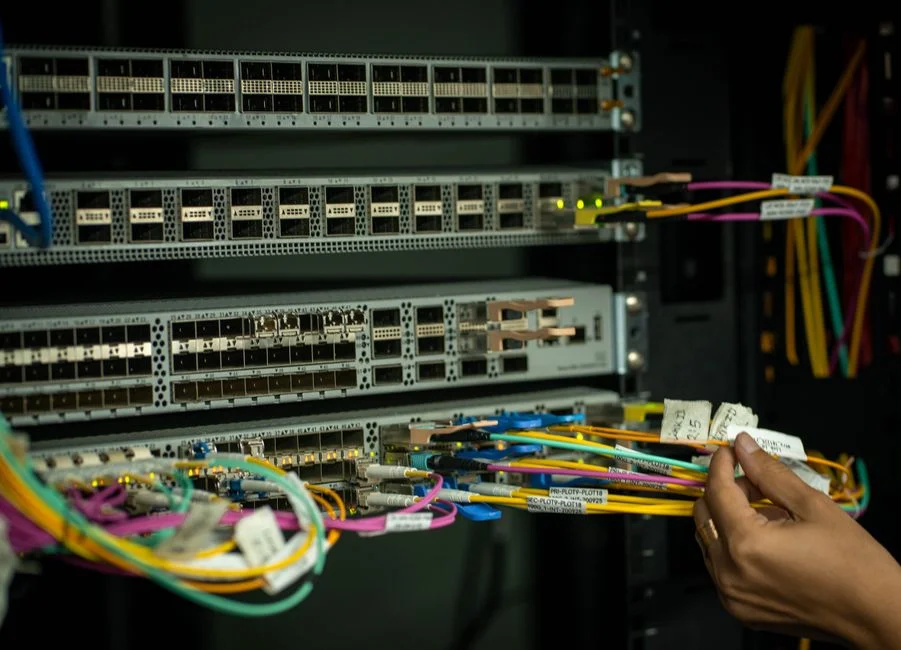
Protocol bridging is the single most underestimated line item in a brownfield SCADA project, and it is where most retrofit RFQs go sideways. The rule of thumb is simple: the older the PLC family, the more custom the gateway, and the more it costs. Engineers should identify the dominant protocol on site before they pick the SCADA platform, not the other way around.
Modbus RTU over RS-485 is the lowest-friction path. Ignition, AVEVA System Platform, and iFIX all ship with native Modbus drivers, and a direct connection from the SCADA server to the existing RS-485 trunk usually works without any new hardware beyond a serial-to-Ethernet converter ($200–$600). DF1, the Allen-Bradley protocol used on SLC 500 and MicroLogix, requires either a protocol converter (e.g., ProSoft, HMS Anybus) at $1,500–$4,000 or a planned migration of the affected PLCs to CompactLogix/ControlLogix with Ethernet/IP. Profibus DP, common on Siemens S7-300 and older S5 sites, needs a Profinet-to-Ethernet gateway (Siemens PN/DP coupler, HMS Anybus Communicator) — typically $2,000–$5,000 per segment. Siemens S5 is the most expensive legacy protocol to bridge: it requires a serial-to-Ethernet gateway such as the IBH Link S5 or a full S5-to-S7-1500 migration, and integrator hours for S5 are roughly 1.5–2x those for any modern platform. When multiple legacy protocols coexist on one plant, the cleanest engineering answer is a gateway PLC — typically an Allen-Bradley CompactLogix used as a protocol translator — that aggregates all legacy traffic onto a single Ethernet/IP backbone the new SCADA can read natively.
| Legacy PLC / Protocol | Bridge Strategy | Typical Hardware Cost | Integration Effort |
|---|---|---|---|
| Allen-Bradley SLC 500 / DF1 | DF1-to-Ethernet converter or migrate to CompactLogix | $1,500–$4,000 per gateway | Medium |
| Modicon 984 / Modbus RTU | Native Modbus driver, RS-485 to Ethernet | $200–$600 per segment | Low |
| Siemens S7-300 / Profibus DP | Profinet-to-Profibus gateway (PN/DP coupler) | $2,000–$5,000 per segment | Medium |
| Siemens S5 / AS511 | IBH Link S5 gateway or full S7-1500 migration | $3,000–$8,000 per gateway, or $25K–$80K migration | High |
| Mixed legacy fleet | Gateway PLC (CompactLogix) on Ethernet/IP backbone | $8,000–$15,000 + I/O | Medium-high |
The Four-Phase SCADA Retrofit Process
A defensible retrofit follows four phases — assess, pilot, migrate, validate — executed in that order. The sequence is designed to keep the existing plant running on legacy controls while the new SCADA is installed, shadowed, and cut over area by area. Skipping the pilot or compressing validation is the single most common cause of retrofit projects running 30–50% over budget (HydropureWater field data, 2026).
Phase 1 — Assessment (3–6 weeks): site audit, full I/O list, P&ID review, network architecture drawings, and a cybersecurity gap analysis. The output is a functional specification the integrator will be held to. Phase 2 — Pilot (6–10 weeks): deploy the new SCADA on a single non-critical subsystem — aeration basin or return activated sludge is the usual choice — and validate HMI screens, alarming philosophy, historian configuration, and regulatory reports before any money is committed to plant-wide rollout. Phase 3 — Phased Migration (3–9 months): roll out area by area in process order (headworks → biological treatment → disinfection → sludge handling); budget 4–8 hours of downtime per train per cutover; install protocol gateways in parallel with the new SCADA server so the new system can shadow the old one. Phase 4 — Validation and Handover (4–8 weeks): SAT/FAT, operator training, alarm rationalization, IEC 62443-3-3 SL2 hardening, and a 90-day warranty with KPI tracking against the functional spec. Throughout Phase 3, run a parallel-run strategy — keep legacy controls operational while the new SCADA shadows for at least 2 weeks per area before any cutover. This is the single cheapest insurance against process upsets. Engineers planning a full digital-twin layer on top of the new SCADA should review the digital-twin architecture for municipal WWTPs before locking in the historian tag list, because the twin will read from the same tags.
| Phase | Duration | Key Deliverable | Downtime Exposure |
|---|---|---|---|
| 1. Assessment | 3–6 weeks | Functional spec, I/O list, cyber gap analysis | None |
| 2. Pilot | 6–10 weeks | Validated HMI, alarm philosophy, reports | None (shadow mode) |
| 3. Phased Migration | 3–9 months | Area-by-area cutover, parallel run | 4–8 hr per train per cutover |
| 4. Validation & Handover | 4–8 weeks | SAT/FAT, IEC 62443-3-3 SL2, trained operators | None |
SCADA Retrofit Cost in 2026: CAPEX, OPEX, and the Numbers That Matter

Benchmark figures for 2026 cluster tightly enough to build a defensible budget. The SCADA software layer alone runs $25K–$80K: an Ignition Edge license is roughly $1,500 per tag, while a full Ignition server with unlimited tags sits between $15K and $60K depending on redundant-pair sizing and historian modules. AVEVA and iFIX price on a similar per-server basis but bundle more alarming and historian functionality out of the box. Hardware — servers, HMI panels, managed network switches, protocol gateways, and UPS — adds another $30K–$120K for a mid-size plant. Integration engineering is the line item most often under-scoped: it typically runs $25K–$150K, and across the industry labor represents 30–40% of total project cost.
Aggregated, a mid-size plant (1–10 MGD) should budget $80K–$400K total CAPEX for a phased SCADA retrofit, while a large municipal plant over 50 MGD routinely lands between $1M and $3M because the I/O count, redundancy, and cybersecurity scope all scale with train count. On the OPEX side, cybersecurity patching, historian storage, and support contracts add $5K–$20K per year — but those costs are typically offset within 2–4 years by 15–25% reductions in energy and chemical consumption once operators can see and trim the process in real time. Payback for most mid-size retrofits therefore falls in the 2–4 year window cited across municipal case studies (HydropureWater field data, 2025-08; US EPA case-study series, 2024).
| Cost Line | Mid-Size Plant Range (1–10 MGD) | Large Plant Range (>50 MGD) |
|---|---|---|
| SCADA software | $25K–$80K | $100K–$300K |
| Hardware (servers, panels, switches, gateways) | $30K–$120K | $200K–$600K |
| Integration engineering | $25K–$150K | $300K–$1,200K |
| Cybersecurity & training | $10K–$50K | $80K–$300K |
| Total CAPEX benchmark | $80K–$400K | $1M–$3M |
| Annual OPEX delta | +$5K–$20K (cyber, historian) | +$30K–$120K |
| Typical energy/chemical savings | 15–25% | 10–20% |
| Payback period | 2–4 years | 3–5 years |
Choosing the SCADA Platform: Ignition, AVEVA, Rockwell, or Siemens
Platform selection should be driven by the dominant PLC family already on site, not by which vendor has the best trade-show booth. The four platforms that dominate the 2026 US and EU water market each have a clear native fit, and choosing the wrong one typically adds 20–40% to integration cost through extra gateways and longer commissioning windows.
Ignition by Inductive Automation uses tag-based licensing, supports a very broad set of legacy and modern protocols out of the box, and is the most popular choice for greenfield-style retrofits where an IT-friendly web-based architecture is desired. AVEVA (formerly Wonderware) System Platform has the deepest installed base in larger US water utilities and the strongest alarm-management and historian modules. Rockwell FactoryTalk is the native fit when the plant already runs Allen-Bradley ControlLogix or CompactLogix, with the lowest integration overhead in that environment, but it carries a higher total cost of ownership because of per-server licensing. Siemens WinCC is the native fit for S7-1500 sites, and the migration path from legacy S5 is most efficient if the SCADA stack stays Siemens. The selection rule is straightforward: match the SCADA vendor to the dominant PLC family on site to minimize gateway cost and integrator hours.
| SCADA Platform | Best-Fit Legacy PLC Family | Licensing Model | Relative TCO (5 yr) |
|---|---|---|---|
| Ignition (Inductive Automation) | Mixed fleets, Modbus RTU, Ethernet/IP | Tag-based (~$1,500/tag Edge, $15K–$60K server) | Low |
| AVEVA System Platform | Municipal water, mixed Allen-Bradley/Modicon | Per-server + I/O counts | Medium |
| Rockwell FactoryTalk | Allen-Bradley ControlLogix/CompactLogix | Per-server + tags | Medium-high |
| Siemens WinCC | S7-300 / S7-1500, legacy S5 | Per-server + tags | Medium |
Cybersecurity and Compliance: The Non-Negotiable Retrofit Layer
A SCADA retrofit that does not include a cybersecurity workstream is not a finished project — it is a new attack surface bolted onto an old one. The minimum defensible target for any 2026 water-utility retrofit is IEC 62443-3-3 Security Level 2, which requires documented network segmentation, account management with unique credentials per operator, and a patch discipline for every OT device on the new network.
The threat environment is documented, not hypothetical. EPA and CISA have issued multiple advisories from 2022 through 2025 on water-sector OT attacks, including the Unitronics and Rockwell vulnerabilities that hit US utilities in late 2023, and CISA's 2024 advisory on default-credential exposure in HMI panels (per CISA AA24-074A, 2024-03). In the EU, NIS2 (in force October 2024) requires 24-hour incident reporting for water utilities serving more than 500,000 PE — the SCADA event log is the first-line evidence the regulator will demand, which means time-synchronized logging must be designed in, not bolted on. The hardware baseline should include managed industrial switches (Hirschmann, Cisco IE-3300/3400), a firewall at the IT/OT boundary, VPN-only remote access, and multi-factor authentication for every human user from day one. For plants planning a packaged process skid as part of the retrofit, a MBR system with built-in SCADA-ready I/O or a PLC-controlled automatic chemical dosing skid ships with this baseline pre-engineered. The full compliance picture, including report formats and audit trails, is mapped in the NPDES and EU IED self-monitoring reporting requirements guide.
Frequently Asked Questions
How long does a SCADA retrofit take on a mid-size wastewater plant? End-to-end, expect 6–14 months: 3–6 weeks of assessment, 6–10 weeks of pilot, 3–9 months of phased migration, and 4–8 weeks of validation and handover. The wide range is driven by train count and how many legacy protocols must be bridged.
What does a SCADA retrofit cost in 2026? A mid-size plant (1–10 MGD) budgets $80K–$400K total CAPEX; a large municipal plant over 50 MGD lands at $1M–$3M. Software is $25K–$80K, hardware $30K–$120K, integration engineering $25K–$150K, and the rest is cybersecurity, training, and contingency.
How much process downtime should be planned for each cutover? Plan 4–8 hours of downtime per train per cutover during phased migration. With a parallel-run strategy that keeps the legacy controls live while the new SCADA shadows, the actual process interruption is usually limited to the final hand-off window.
Which SCADA platform is best for an Allen-Bradley or Modicon legacy site? Match the SCADA to the dominant PLC family: Rockwell FactoryTalk for Allen-Bradley ControlLogix/CompactLogix, AVEVA System Platform for mixed municipal fleets, Ignition for Modbus-heavy or mixed-protocol sites, and Siemens WinCC for S7 environments with a legacy S5 migration path.
What cybersecurity standard should a water-utility SCADA retrofit meet in 2026? Target IEC 62443-3-3 Security Level 2 as the baseline, with managed switches, network segmentation, unique credentials, MFA, and VPN-only remote access. In the EU, NIS2 (in force Oct 2024) adds 24-hour incident reporting for utilities above 500,000 PE, and US plants should also align to CISA's cross-sector OT guidance and EPA's 2024 water-sector cybersecurity baseline.