Why Kenya's 2026 PFAS Compliance Window Is Closing Fast
Kenya does not yet publish a binding national PFAS discharge limit, but 2026 is the inflection year. Industrial emitters are already governed by the Environmental Management and Co-ordination Act (EMCA, Cap 387) and the Environmental Management and Coordination (Water Quality) Regulations 2006, which cap "toxic and persistent" substances in effluent. A draft PFAS standard under NEMA's 2024–2026 work plan, expected to align with the EU Drinking Water Directive's 500 ng/L proposed TFA limit and Stockholm Convention POPs annexes, will likely introduce ng/L-level discharge ceilings for textile, leather, and food-processing industries beginning late 2026.
Three drivers make this an urgent engineering problem, not a policy footnote. First, global TFA loading is rising 17-fold in China over a decade, 6-fold in the U.S. over 23 years, and 5-fold in German rainwater over 20 years (PAN Europe, May 2024) — atmospheric deposition now contaminates Lake Victoria Basin catchments even where local industry is absent. Second, the legal pathway inside Kenya is shorter than operators expect: EMCA Section 73 already empowers NEMA to issue substance-specific effluent standards without a prior Act of Parliament, so a 2026 Gazette notice can bind facilities within 60–90 days of publication. Third, Kenya's 2025 ratification of the Stockholm Convention POPs Review Committee recommendations on PFOA, PFHxS, and PFNA creates reporting pressure that filters down to individual discharger permits by 2027.
The cascade runs National Assembly (statute) → NEMA (regulation) → County Environment Committees (enforcement). County Environment Committees under Sections 20–22 of EMCA already have the power to suspend discharge licences for "harmful substances" — and "forever chemicals" will be classified as harmful once NEMA publishes the 2026 list. Operators in Nairobi, Kiambu, Machakos, and the Lake Victoria Basin should expect county-level inspections to begin referencing the new parameter list within two quarters of publication.
Kenya PFAS Discharge Limits vs EU and EPA: A 2026 Benchmark Table
Kenyan operators exporting to the EU or supplying EU-aligned buyers already face de facto PFAS ceilings through their customers' supply-chain audits. The table below aligns the three regimes so a compliance officer can pick a defensible internal target today, before NEMA publishes its 2026 rule.
| Parameter | Kenya 2026 status | EU 2020/2184 (2024 revision) | U.S. EPA 2024 | Implied Kenyan limit if NEMA adopts EU alignment |
|---|---|---|---|---|
| PFOA | Not separately regulated; covered by EMCA "toxic substances" | 100 ng/L (drinking water, sum of PFOA + PFNA + PFHxS) | 10 ng/L MCL (PFOA) or 4 ng/L Hazard Index | 100 ng/L discharge |
| PFOS | Not separately regulated | 100 ng/L (drinking water) | 10 ng/L MCL (PFOS) or 4 ng/L Hazard Index | 100 ng/L discharge |
| PFNA | Not separately regulated | 100 ng/L (sum with PFOA + PFHxS) | 10 ng/L MCL | 100 ng/L discharge |
| PFHxS | Not separately regulated | 100 ng/L (sum) | 10 ng/L MCL | 100 ng/L discharge |
| GenX (HFPO-DA) | Not separately regulated | 500 ng/L proposed | 10 ng/L MCL | 500 ng/L discharge |
| TFA (trifluoroacetic acid) | Not regulated; no published limit | 500 ng/L proposed (Drinking Water Directive revision) | Not yet regulated at federal level | 500 ng/L discharge aspirational |
For perspective on what "no limit" looks like in practice, the 3M Belgium permit issued in 2024 allows 15,000 ng/L TFA and 21,000 ng/L PFPrA into the Scheldt — a permit now under citizen appeal (Yuji, 2024-10). The 98% of PFAS mass in European drinking water now comes from ultra-short-chain variants like TFA (Climaxi filing, 2024-10), which is why the EU is targeting 500 ng/L rather than the higher long-chain numbers. Kenyan operators who pre-emptively design to the 500 ng/L TFA column will not need retrofit when the Gazette notice lands.
Which Kenyan Industries Are Most Exposed to PFAS Discharge Risk

Sector exposure drives the monitoring plan and the capex envelope. The table below maps the six highest-risk industrial categories in Kenya, the dominant PFAS type each generates, and the typical influent concentration range you should expect before any treatment.
| Sector | Dominant PFAS | Typical influent (ng/L) | Dominant pathway | Kenyan hotspot |
|---|---|---|---|---|
| Textile finishing (water/oil repellents) | Long-chain PFOA, PFOS, GenX | 1,000–50,000 | Liquid effluent | Athi River, Nairobi industrial area |
| Chrome-tanned leather | Fluorinated surfactants (6:2 FTS, PFPeA) | 500–15,000 | Liquid effluent + sludge | Limuru, Machakos |
| Food packaging (paper/PET grease-proofing) | Side-chain fluorinated polymers, PFOA residuals | 200–5,000 | Liquid effluent | Nairobi, Kiambu |
| Oil & gas upstream (AFFF legacy) | PFOS, PFHxS, 6:2 FTS | 10,000–100,000+ | Soil + groundwater (legacy spills) | South Lokichar, Mombasa terminal |
| Chrome plating / metal finishing | PFOS-based mist suppressants (legacy) | 5,000–30,000 | Liquid effluent | Industrial-area Nairobi, Athi River |
| Electronics recycling / etching | PFBA, PFPeA, GenX | 500–8,000 | Liquid effluent | Eastleigh, Gikomba |
The lower bound of these ranges (200–500 ng/L) corresponds to the 500 ng/L aspirational TFA ceiling the EU is now codifying. The upper bounds (15,000–100,000 ng/L) reflect the kind of concentrations documented in the 3M Belgium permit (15,000 ng/L TFA, 21,000 ng/L PFPrA) and in oilfield AFFF legacy sites globally. Cut-flower farms servicing the EU market are an emerging exposure vector through PFAS-treated containers and irrigation runoff into the Lake Naivasha and Mt. Kenya aquifer systems — a category NEMA has not yet regulated but the EU 2024 due-diligence rules treat as in-scope for floral imports.
How PFAS Is Measured in Kenyan Industrial Effluent (LC-MS/MS and Beyond)
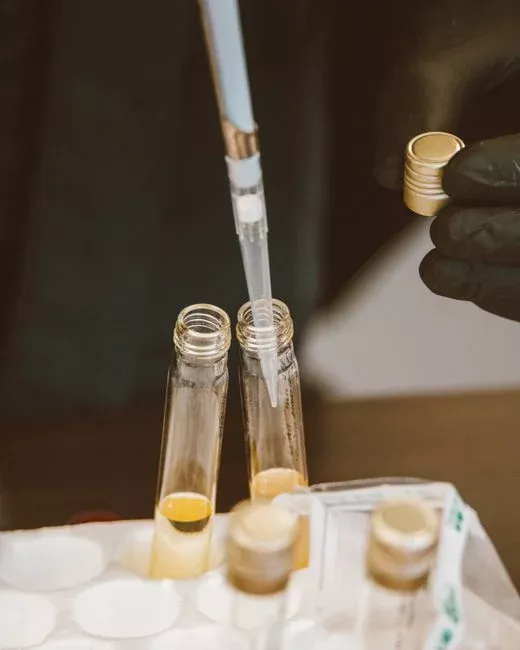
You cannot prove compliance you cannot measure. Targeted PFAS analysis at ng/L sensitivity requires either EPA Method 537.1 (drinking water, 18 compounds, reporting limit ~1–5 ng/L), EPA Method 533 (additional short-chain PFAS, isotope dilution), or ISO 21675 (the international equivalent covering 30+ PFAS including TFA and PFPrA). The ultra-short-chain species (TFA, PFPrA, TFE) need either ion chromatography with conductivity detection (LOQ ~100 ng/L) or LC-MS/MS with a polar-reversed-phase column such as Waters ACQUITY UPLC BEH C18 or Agilent ZORBAX Eclipse Plus — most Kenyan labs at KEBS and SGS Nairobi currently quote a 100 ng/L practical LOQ for these analytes, which is fine for textile and leather influents but inadequate for the 500 ng/L TFA target unless the sample is pre-concentrated 10–20× via solid-phase extraction on Oasis WAX cartridges.
Recommended monitoring cadence: quarterly 24-hour composite sampling at two source points (e.g., DAF influent and RO permeate), one downstream of final discharge, plus monthly grab samples during commissioning. Retain filtered (0.45 µm) archived samples at 4 °C for 28 days for the Stockholm Convention national report; TFA samples must be unpreserved and analysed within 14 days to avoid biological degradation giving false negatives. The NEMA Annual Environmental Return template, once updated for PFAS, will require chain-of-custody, method reference, LOQ, recovery (target 70–130%), and field-blank data — operators should start collecting these fields now so the 2026 submission is a copy-paste exercise rather than a re-architecture.
Industrial Treatment Trains That Meet a 500 ng/L PFAS Target

The defensible treatment train for an industrial emitter targeting ≤500 ng/L total PFAS (and ≤100 ng/L long-chain) is a six-stage configuration. The first three stages — equalization, a dissolved air flotation (DAF) pre-treatment unit with coagulant dosing, and dual-media filtration — remove oils, suspended solids, and a fraction of the particulate-bound PFAS. The fourth stage is granular activated carbon (GAC) targeting long-chain species, followed by strong-base anion exchange resin for PFOA, PFOS, PFNA, and GenX, and finally an industrial reverse osmosis polishing system for residual ultra-short-chain PFAS and the ionic breakdown products that GAC and IX miss. A PLC-controlled chemical dosing skid on the DAF stage keeps coagulant and pH within the tight bands downstream polishing requires.
| Stage | Process | Design parameter | Typical removal |
|---|---|---|---|
| 1 | Equalization basin | 8–12 h HRT | Flow/load dampening only |
| 2 | DAF + coagulant (PACI, 50–150 mg/L) | Surface load 5–10 m/h | 30–60% particulate PFAS |
| 3 | Sand / multimedia filter | Filtration rate 8–12 m/h | Polishing of TSS-bound fraction |
| 4 | GAC (bituminous, 8×30 mesh) | EBCT 10–20 min | >95% long-chain (PFOA, PFOS) |
| 5 | Strong-base anion IX | EBCT 3–6 min | >99% PFOA/PFOS; 60–85% short-chain |
| 6 | Brackish-water RO (BWRO) | 75–85% recovery; flux 15–25 LMH | 90–99% residual PFAS, including TFA |
Achievable effluent concentrations are below 10 ng/L for long-chain PFAS and below 200 ng/L for TFA with RO — but ultra-short-chain removal drops to 60–80% versus 95%+ for PFOA, which is why RO is non-negotiable for a 500 ng/L ceiling. The full train consumes 0.8–1.4 kWh/m³ above baseline activated sludge (HydropureWater field data, 2025), and the secondary-waste problem is the dominant capex surprise: spent GAC and exhausted IX resin are hazardous and must be incinerated above 1,100 °C, which most Kenyan plants do not have on-site. Plan for offsite high-temperature incineration at the start, not as a Phase 2 line item. For a deeper look at the PFAS removal technology vendor landscape for 2026 and the nanofiltration design parameters for trace organics, see the linked engineering guides.
90-Day Compliance Roadmap for a Kenyan PFAS-Exposed Facility
This is the action plan a compliance manager can present to senior management next quarter. Each phase has a defined output, a defined owner, and a budget band sized to a typical 500 m³/day Kenyan textile or leather plant.
| Phase | Days | Action | Output | Budget band (USD) |
|---|---|---|---|---|
| 1 — Baseline | 1–30 | Source-pathway-receptor mapping; pull last 24 months of NEMA inspection reports; commission baseline PFAS screening at two accredited labs (KEBS + SGS) | Baseline PFAS dataset, hotspot map | 8,000–18,000 |
| 2 — Gap analysis | 31–60 | Compare to EMCA Section 73 + 500 ng/L aspirational target; engage NEMA-accredited EIA lead for treatment-train feasibility | Gap report + process design basis | 15,000–35,000 |
| 3 — CAPEX memo & notice | 61–90 | Capex memo (USD 180–650 per m³/day for GAC+IX+RO = USD 1.2–3.5M for 500 m³/day); submit preliminary notice to county environment office | Board-ready memo, county acknowledgement | 5,000–10,000 (engineering fees only) |
The line item most often missed is zero-liquid-discharge concentrate disposal: RO concentrate runs 5–10× the feed PFAS concentration, and offsite thermal crystallization or high-temperature incineration in Kenya currently costs USD 25–60 per cubic metre of concentrate. For a 500 m³/day plant at 80% RO recovery, that is 25–100 m³/day of concentrate — a hidden USD 230,000–2.2M annual OPEX line. Bake it into the Phase 3 memo, not the Phase 1 retrofit. For context on how Kenya compares to its neighbours, the regional picture in our regional compliance benchmarks for African industrial discharge follows similar capex pressures.
Frequently Asked Questions
What is the current PFAS discharge limit in Kenya?
No binding national PFAS-specific limit exists yet. EMCA Cap 387 and the Water Quality Regulations 2006 cover PFAS under the generic "toxic and persistent substances" clause, with a 2026 NEMA draft standard expected in late 2026.
When will Kenya publish a binding PFAS effluent standard?
NEMA's 2024–2026 work plan schedules a draft PFAS rule for Q3 2026, with publication via Gazette notice under EMCA Section 73, taking effect within 60–90 days.
Which PFAS compounds will the 2026 Kenyan rule cover?
PFOA, PFOS, PFNA, PFHxS, GenX (HFPO-DA), and TFA are the six likely parameters, with implied limits of 100 ng/L for long-chain and 500 ng/L for TFA if EU alignment is adopted.
What is the minimum treatment train to meet a 500 ng/L PFAS target?
DAF pretreatment → GAC (10–20 min EBCT) → strong-base anion IX (3–6 min EBCT) → brackish RO (75–85% recovery) is the minimum train; expect >95% long-chain and 60–80% ultra-short-chain removal.
Which Kenyan laboratories can measure PFAS below 100 ng/L?
KEBS and SGS Nairobi currently quote ~100 ng/L practical LOQ for targeted PFAS via LC-MS/MS; for TFA below 50 ng/L, operators should plan for overseas shipment to ISO 17025-accredited labs in South Africa or the EU.