Why Industrial Wastewater in Yaounde Needs a Different Rulebook
Cameroon Law 96/12 of 5 August 1996 on environmental management is the controlling framework for any industrial discharge in Yaoundé, and the Ministry of Environment, Nature Protection and Sustainable Development (MINEPDED) is the permitting authority that issues, monitors, and can revoke the discharge authorization your plant needs before commissioning. MINEPDED is the regulatory body within the Government of Cameroon responsible for setting effluent quality standards, conducting environmental audits, and enforcing the sectoral annexes that tighten limits for tanneries, abattoirs, and textile dyehouses beyond the generic industrial column. The 2001 MIE (Ministère des Industries et de l'Énergie) implementing text layers in sector-specific conditions on top of that framework, which is why a "standard" discharge permit in Yaoundé is never actually standard.
Generic "Sub-Saharan Africa" treatment advice fails here because almost every English-language search result for Yaoundé wastewater points at the Camp SIC Cité-Verte plant — a 1975 domestic facility serving 9,000 residents over 50 ha in the Mfoundi department, with tertiary coagulation-sand filtration polishing for toilet flush reuse at 0.73 mg/L free chlorine and 90.48% turbidity reduction (Mbouombouo et al., 2025). That work is useful as a reuse-quality benchmark, but its influent is domestic sewage at BOD 250–400 mg/L, not industrial effluent at 1,500–25,000 mg/L. Treating industrial and domestic streams with the same equipment sizing is a routine EPC error in Central Africa.
The other local evidence base is the Ngounouno Ayiwouo et al. (2023) malfunction assessment of the same Cité-Verte plant (JARWW 10, 29–35), whose Pareto diagram attributes 80% of WWTP malfunction to a small cluster of operational and energy causes — primarily power interruption, poor maintenance, and undersized sludge handling. That finding translates directly into industrial design: a biological stage that loses aeration for 4 hours loses its nitrification capacity for 7–10 days, so a 28–32 °C tropical ambient that doubles biodegradation kinetics is wasted if the blowers sit idle during a grid outage. Plan for 60–75% grid uptime and 8–12 h of UPS or diesel buffer on every aerated basin, and you avoid the same Pareto failure mode the 2023 study documented.
Cameroon MINEPDED Discharge Limits by Parameter and Sector
The headline numbers every Yaoundé industrial permit references are BOD ≤ 40 mg/L, COD ≤ 120 mg/L, TSS ≤ 50 mg/L, oil and grease ≤ 20 mg/L, total nitrogen ≤ 30 mg/L, total phosphorus ≤ 10 mg/L, and pH 6.5–8.5 for surface discharge under the Law 96/12 / MINEPDED framework. Sectoral annexes tighten these for tanneries (total chromium ≤ 2 mg/L, sulfide ≤ 1 mg/L), textile dyehouses (color ≤ 100 Pt-Co on the 436 nm wavelength after filtration, plus Cu and Zn limits), and abattoirs (fecal coliform ≤ 200 CFU/100 mL for any reuse pathway). Three compliance paths exist under the 2001 MIE implementing text — discharge to surface water in the Mfoundi River watershed, discharge to municipal sewer, and on-site reuse — and the parameter set is identical but the sampling frequency and self-monitoring reporting cadence differ. The reuse path is anchored to the 0.73 mg/L free chlorine / zero coliform benchmark demonstrated at Cité-Verte (Mbouombouo, 2025) and is the most operationally demanding because it triggers a quarterly third-party audit on top of the standard annual self-monitoring report.
| Parameter | Surface discharge (Law 96/12) | Discharge to sewer | On-site reuse (irrigation) |
|---|---|---|---|
| BOD₅ | ≤ 40 mg/L | ≤ 500 mg/L | ≤ 30 mg/L |
| COD | ≤ 120 mg/L | ≤ 1,000 mg/L | ≤ 90 mg/L |
| TSS | ≤ 50 mg/L | ≤ 600 mg/L | ≤ 30 mg/L |
| Oil & grease | ≤ 20 mg/L | ≤ 150 mg/L | ≤ 10 mg/L |
| Total nitrogen | ≤ 30 mg/L | ≤ 60 mg/L | ≤ 15 mg/L |
| Total phosphorus | ≤ 10 mg/L | ≤ 20 mg/L | ≤ 5 mg/L |
| pH | 6.5–8.5 | 5.5–9.5 | 6.5–8.0 |
| Fecal coliform | — | — | < 200 CFU/100 mL |
| Free chlorine residual | — | — | 0.5–1.0 mg/L |
For the reuse column, the Mbouombouo 2025 dataset validates a coagulation-sand filtration-chlorination train reaching 0.73 mg/L free chlorine with total bacterial elimination — a defensible reference for any industrial reuse design submitted to MINEPDED.
Influent Reality: The Four Industrial Streams Dominating Yaoundé

Process selection is governed by what actually arrives at the inlet, not by textbook averages. Breweries around Yaoundé typically discharge at 30–40 °C with BOD 1,500–3,000 mg/L, TSS 500–1,200 mg/L, and a carbohydrate-rich profile that demands 6–10 hours of equalization to flatten the diurnal peak from CIP and fermentation washing cycles. Palm oil mills are the most aggressive stream in the Cameroonian industrial footprint: raw POME at BOD up to 25,000 mg/L, oil and grease 6,000–15,000 mg/L, and pH 4–5 — DAF is the load-bearing first step because no biological stage can metabolize that FOG load without upfront skimming. Textile dyehouses present COD 1,500–5,000 mg/L, color above 2,000 Pt-Co, and temperature-sensitive reactive dyes that demand coagulation plus Fenton oxidation or ozonation for the color train; biological alone will not decolorize most azo dyes. Slaughterhouses deliver BOD 800–4,000 mg/L and TSS 700–3,000 mg/L with blood and paunch manure — fine screening plus slaughterhouse wastewater treatment via DAF is the standard pairing, and blood recovery as blood meal can offset 8–15% of OPEX in plants above 200 m³/day.
| Sector | Typical BOD (mg/L) | Typical TSS (mg/L) | FOG (mg/L) | Temperature | Recommended first stage |
|---|---|---|---|---|---|
| Brewery | 1,500–3,000 | 500–1,200 | 100–400 | 30–40 °C | Equalization + cooling + A/O |
| Palm oil mill | 10,000–25,000 | 4,000–8,000 | 6,000–15,000 | 55–80 °C raw | Cooling + DAF + anaerobic |
| Textile dyehouse | 800–2,000 (BOD); 1,500–5,000 (COD) | 300–900 | < 50 | 25–45 °C | Coagulation + Fenton/O₃ + biological |
| Slaughterhouse | 800–4,000 | 700–3,000 | 200–800 | 20–35 °C | Screening + DAF + biological |
Selecting the Right Treatment Train: Package Plant, MBR, or DAF + Conventional
The defensible equipment choice is driven by influent strength, target effluent, and site constraints — not by which vendor walks into your office first. For low-to-medium strength streams under 1,000 m³/day with tight site footprints, a WSZ package sewage treatment plant in the 1–80 m³/h range delivers A/O + sedimentation + disinfection in a buried skid, with a small operator footprint and a CAPEX band of US$180–450 per m³/day. Where the project targets reuse-quality effluent, an MBR membrane bioreactor system using submerged 0.1 μm PVDF flat sheet modules produces <1 NTU turbidity and BOD <5 mg/L at 10–20× lower energy than external cross-flow configurations — the right call for brewery and textile reuse loops but not for streams above 5,000 mg/L FOG. For high-flow (>2,000 m³/day) FOG-heavy streams, a DAF system sized at 4–300 m³/h skimming capacity followed by conventional activated sludge is the most economical layout, particularly with the optional MBR membrane bioreactor module added as a polish step if reuse is the target.
| Parameter | WSZ package A/O | Submerged MBR (PVDF) | DAF + conventional AS |
|---|---|---|---|
| Flow range | 1–1,920 m³/day | 50–5,000 m³/day | 100–7,200 m³/day |
| Influent BOD tolerance | ≤ 1,000 mg/L | ≤ 2,500 mg/L | ≤ 25,000 mg/L (with equalization) |
| Effluent BOD | ≤ 20 mg/L | < 5 mg/L | ≤ 20 mg/L |
| Effluent TSS | ≤ 30 mg/L | < 1 mg/L | ≤ 30 mg/L |
| Footprint | 0.15–0.3 m² per m³/day | 0.25–0.4 m² per m³/day | 0.4–0.7 m² per m³/day |
| Energy use | 0.2–0.5 kWh/m³ | 0.4–1.2 kWh/m³ | 0.3–0.8 kWh/m³ |
| Operator skill | Low–medium | Medium–high (membrane care) | Medium |
| CAPEX band (2026) | US$180–450/m³/day | US$400–650/m³/day | US$220–400/m³/day |
Regardless of the train, every biological stage needs 8–12 h of UPS or diesel buffer to ride out Yaoundé outage patterns. The Ngounouno Ayiwouo et al. 2023 Pareto placed power interruption at the top of the malfunction cause list; sizing the backup to 12 h rather than 4 h typically adds 4–7% to CAPEX but eliminates the most common cause of permit non-compliance.
Sizing for Tropical Conditions and Reuse Targets
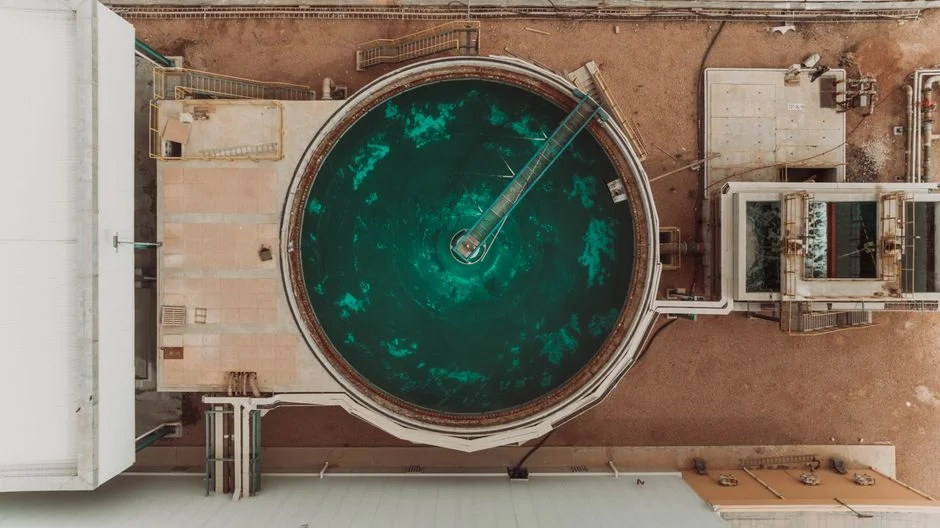
Copying a European or South African design into Cameroon is the most common cause of oversized — or worse, underperforming — biological stages. At 28–32 °C ambient, activated sludge rate constants roughly double versus 10–15 °C temperate designs, so HRT can be cut by 30–40% and SRT held at 12–18 days for nitrification; sizing as if the reactor sits at 20 °C wastes tank volume and energy. For MBR, design flux at 28–32 °C is 15–25 LMH for 0.1 μm PVDF flat sheet modules versus 10–18 LMH at 20 °C — a 2026 best-practice range for tropical service, with the upper end requiring reliable pre-screening to protect membrane integrity. Reuse targets should be tied to ISO 16075 and the MINEPDED reuse annex: irrigation requires BOD <30 mg/L and fecal coliform <200 CFU/100 mL, while industrial cooling demands TDS <500 mg/L and a Langelier Saturation Index below zero to prevent scaling in heat exchangers. A reverse osmosis polishing step at 95% recovery only becomes justified when the target is boiler-feed or pharmaceutical-grade reuse — the 0.8–1.5 kWh/m³ energy penalty is otherwise hard to recover. For pathogen barrier, a chlorine dioxide generator at 0.5–1.0 mg/L residual is more tolerant of high pH and ammonia than sodium hypochlorite and is the preferred reuse-path disinfection in MINEPDED submissions.
2026 CAPEX and OPEX Benchmarks for Yaoundé Industrial Plants
Budget defensible numbers for 2026 Central Africa projects sit at US$180–450 per m³/day CAPEX for a WSZ package, US$400–650 per m³/day for MBR, and US$220–400 per m³/day for DAF-led conventional activated sludge (HydropureWater field data, 2026). OPEX lands in the US$0.08–0.32 per m³ treated range, dominated by energy at 0.4–1.2 kWh/m³ for MBR and 0.2–0.5 kWh/m³ for A/O trains, plus chemical dosing for PAC, polymer, and chlorine dioxide at typical consumption of 50–150 mg/L coagulant, 1–5 mg/L polymer, and 2–8 mg/L ClO₂. Because Yaoundé plants spend 25–40% of annual hours on grid outage in many districts, budget 12–18% of annual OPEX for diesel backup generation — this is a real line item, not a contingency. Sludge dewatering is the second-largest OPEX block: a plate and frame filter press with 1–500 m² filtration area is the typical Yaoundé dewatering choice, producing 20–25% dry solids cake at US$8–25 per m³ of sludge, with an automatic chemical dosing system ahead of the press to keep polymer consumption in the 2–4 kg per ton dry solids range.
| Cost line | WSZ package | Submerged MBR | DAF + conventional AS |
|---|---|---|---|
| CAPEX (US$/m³/day) | 180–450 | 400–650 | 220–400 |
| OPEX (US$/m³ treated) | 0.08–0.18 | 0.18–0.32 | 0.10–0.22 |
| Energy (kWh/m³) | 0.2–0.5 | 0.4–1.2 | 0.3–0.8 |
| Diesel backup share of OPEX | 10–14% | 12–18% | 11–16% |
| Sludge dewatering (US$/m³) | 8–18 | 10–25 | 8–20 |
Implementation Checklist and Compliance Documentation
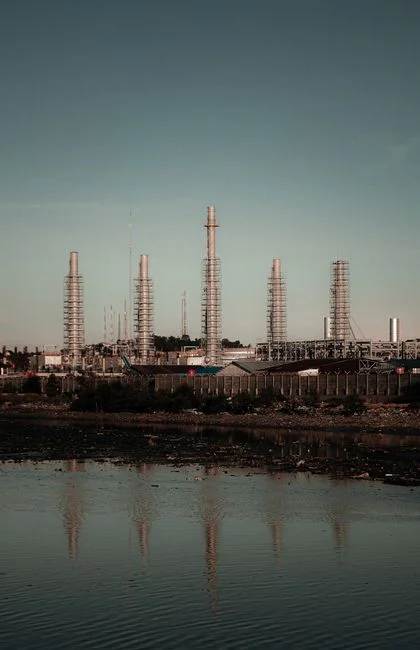
The Cameroonian permit sequence is fixed: an environmental impact assessment (EIA) is filed with MINEPDED, the discharge authorization is issued under Law 96/12, an annual self-monitoring report is submitted each year, and a third-party compliance audit is required every 24 months. In the design phase, run a 7-day influent characterization capturing diurnal peaks, run a grid-availability study over at least 30 days to size the backup correctly, and pilot test any influent above 10,000 mg/L BOD or 5,000 mg/L FOG before committing CAPEX. At commissioning, execute side-by-side DAF jar tests versus pilot operation, perform an MBR membrane integrity test (pressure decay ≤30 kPa/min for 0.1 μm PVDF per standard module manufacturer protocol), and run a 30-day performance test against the MINEPDED parameter table with all samples analyzed at an ISO 17025-accredited lab. Operating discipline is straightforward once it is written down: weekly BOD/COD, daily TSS and pH, online DO and turbidity on the MBR with alarm setpoints tied to the SCADA, and a SCADA monitoring architecture for wastewater plants that logs every parameter shift for the MINEPDED audit trail. For comparable budget benchmarks across the region, the Uganda 2026 buyer's guide provides a useful neighboring East/Central Africa supplier comparison for EPC bidders.
Frequently Asked Questions
Q1. What permits are required to operate an industrial wastewater plant in Yaoundé in 2026? An environmental impact assessment filed with MINEPDED, followed by a discharge authorization issued under Law 96/12, an annual self-monitoring report, and a third-party audit every 2 years.
Q2. How much does an industrial wastewater treatment plant cost in Cameroon in 2026? CAPEX sits between US$180 and US$650 per m³/day depending on the train — WSZ package at the low end, submerged MBR at the high end, DAF-led conventional in the middle.
Q3. Can treated industrial effluent be reused for irrigation in Yaoundé? Yes, when BOD is below 30 mg/L and fecal coliform is below 200 CFU/100 mL per the MINEPDED reuse annex, with a 0.5–1.0 mg/L free chlorine residual on the discharge line.
Q4. Which treatment handles palm oil mill wastewater most economically in Central Africa? DAF pre-treatment for FOG removal followed by anaerobic and aerobic biological stages, sized for raw BOD of 25,000+ mg/L and equipped with equalization for the diurnal flow peaks.
Q5. How is Cameroon's grid reliability factored into plant design? An 8–12 h UPS or diesel buffer is standard practice for any biological stage, with 12–18% of annual OPEX budgeted for backup generation given 25–40% of hours on grid outage in many Yaoundé districts.