Why Chilean industrial buyers are reopening their WWTP supplier shortlist in 2026
Chilean industrial operators entered 2026 under three converging pressures that have made incumbent local-integrator relationships harder to justify. First, the Superintendencia del Medio Ambiente (SMA) is enforcing DS N°90/2000 (Reglamento de Vertimientos) more strictly, with 2024 MINSEGPRES resolutions tightening caps on heavy metals, total nitrogen, and total phosphorus across industrial discharge permits. Second, water demand in Chilean copper mining exceeds 18 m³/s, and Cochilco's 2024 sector outlook points to reuse of more than 75% of process water as a permitting condition for new concentrator expansions — a target that conventional activated-sludge designs cannot meet without polishing. Third, 2024–2026 ocean freight normalisation and CLP/USD currency movement have narrowed the landed-cost gap between Asian OEMs and local integrators by roughly 15–25%, while European OEMs have held or raised list prices.
For a procurement manager in Santiago, Antofagasta, or Puerto Montt, the practical question is no longer "who is closest?" but "who can deliver a plant that is designed to EN 12255-10:2001 safety principles, documented in Spanish, shipped to San Antonio or Quintero inside 8–14 weeks, and commissioned with a performance guarantee that survives an SMA audit?" The four sections that follow give you the data to answer that question defensibly.
Process technologies Chilean buyers should evaluate from any WWTP supplier
Process selection comes before vendor selection — get this wrong and the cheapest supplier quote still produces a non-compliant plant. The four families that cover roughly 90% of Chilean industrial flows are summarised below.
Activated sludge (conventional, SBR, MBBR). The workhorse for municipal sewage and biodegradable industrial effluent. Well-operated systems deliver BOD5 removal of 85–95% with effluent BOD5 typically below 30 mg/L (per ScienceDirect review of activated-sludge design). Sequencing batch reactors (SBR) suit low-to-medium flows with intermittent staffing, and moving-bed biofilm reactors (MBBR) tolerate toxicity spikes from mining or agro effluents better than conventional designs.
Membrane bioreactor (MBR). A submerged PVDF MBR system with 0.1 μm pore membranes delivers effluent TSS below 1 mg/L and BOD5 below 5 mg/L — clean enough to feed an RO polisher for process-water reuse. MBR footprint is typically 60% smaller than a comparable conventional plant, which is the deciding factor for inner-city food plants and constrained salmon-smolt sites. Energy intensity runs 0.5–1.2 kWh/m³ versus 0.3–0.6 kWh/m³ for conventional activated sludge — a real cost driver at Chilean industrial tariffs.
Dissolved air flotation (DAF) as primary or pre-treatment. A dissolved air flotation unit in the 4–300 m³/h range is the standard pre-treatment for high-FOG streams from dairy, fish-meal, and slaughterhouse operations, and for suspended-solids reduction upstream of an MBR in pulp effluent. DAF alone will not meet DS N°90/2000 metals or nitrogen caps, so it is a front-end, not a complete solution.
Package / containerized / skid-mounted plants. For remote sites a WSZ packaged sewage treatment plant at 1–80 m³/h or a containerized MBR at 10–2,000 m³/day offers plug-and-play installation with 6–10 week delivery and no civil-build permit on a mining camp or salmon farm. The trade-off is limited hydraulic flexibility and higher per-m³ cost at the upper flow end.
| Process family | Typical effluent BOD5 | Effluent TSS | Footprint vs conventional | Energy intensity | Best-fit Chilean sectors |
|---|---|---|---|---|---|
| Activated sludge (CAS / SBR / MBBR) | <30 mg/L | <30 mg/L | 1.0× (baseline) | 0.3–0.6 kWh/m³ | Municipal, food, agro |
| MBR (submerged PVDF) | <5 mg/L | <1 mg/L | ~0.4× (60% smaller) | 0.5–1.2 kWh/m³ | Salmon, mining reuse, food |
| DAF (pre-treatment only) | 40–60% removal | 60–90% removal | Compact unit | 0.05–0.1 kWh/m³ | Dairy, fishmeal, slaughter |
| Package / containerized (WSZ, skid MBR) | <30 mg/L (WSZ) / <5 mg/L (MBR skid) | Matches process | Smallest civil footprint | Process-dependent | Remote mining camps, salmon farms |
Chilean discharge limits (DS N°90/2000 + 2024 MINSEGPRES caps) by industry sector
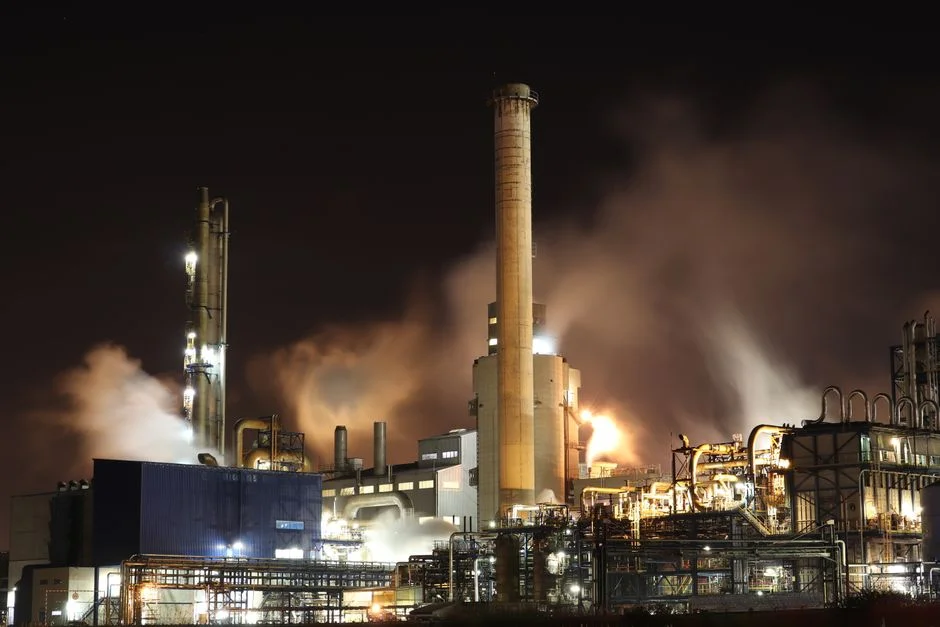
DS N°90/2000 sets the umbrella framework for industrial effluent discharge to water bodies (cursos de agua) and to sewerage systems (alcantarillado), and 2024 MINSEGPRES resolutions tightened specific caps on heavy metals (Cu, Zn, Fe, Mn, Al, As), total nitrogen, and total phosphorus for industrial sources. Rather than list every parameter, the table below maps the effluent profiles you will see from each major Chilean industry to the cap families the SMA now enforces — this is the matrix to hand to a supplier in the first technical call.
| Sector | Typical influent profile | Critical caps to engineer for | Permitting instruments |
|---|---|---|---|
| Copper mining (concentrator, SX-EW) | High TDS, acid drainage risk, residual metals, low BOD | Cu, Zn, Fe, Mn, Al, As, pH, TSS | RCA + sectoral PAS (MINSEGPRES) |
| Salmon processing (smolt, harvest, secondary) | BOD5 1,500–5,000 mg/L, high oil & grease, N, P | O&G, BOD5, TSS, total N, total P | RCA + SMA monitoring plan |
| Pulp & paper | High COD, colour, AOX, slowly biodegradable | COD, colour, AOX, TSS | RCA + DAA ( Declaración de Impacto Ambiental) |
| Wineries & fruit processing | Seasonal peaks, BOD5 2,000–10,000 mg/L, acidic | BOD5, COD, pH, TSS | RCA or PAS depending on flow |
| Dairy & agro-industry | High BOD, FOG, nitrogen (milk, cheese) | BOD5, O&G, total N, total P | RCA or PAS |
For any foreign-built WWTP, EN 12255-10 is now broadly accepted by Chilean auditors as proof that safety principles in design, electrical, and confined-space access have been considered; pair it with ISO 9001 and ISO 14001 certification and a Spanish-language operations manual. The SMA permitting flow itself is not one document — it is the RCA (Resolución de Calificación Ambiental) plus any applicable sectoral Permisos Ambientales Sectoriales (PAS) and, for smaller expansions, a Declaración de Impacto Ambiental (DIA). A supplier that has not navigated this paperwork before will cost you months.
2026 CAPEX and OPEX benchmarks for WWTPs delivered to Chile
The figures below are 2026 USD benchmarks for industrial WWTPs delivered CIF San Antonio, Valparaíso, or Antofagasta. Use them as the first-pass budget envelope; refine with vendor quotes after the technical questionnaire.
| System type / flow range | CAPEX (USD, installed) | OPEX drivers (share of total) | Typical lead time |
|---|---|---|---|
| Containerized / package WWTP, 50–500 m³/day | $250,000–$1,200,000 turnkey | Energy 40–60%, chemicals 10–20%, sludge 10–25% | 8–14 weeks ex-works |
| Skid MBR, 100–2,000 m³/day | $400–$900 per m³/day installed | Energy 50–65%, membrane replacement 5–10%, chemicals 10–15% | 10–18 weeks ex-works |
| Civil-build conventional activated sludge, 500–5,000 m³/day | 1.5–2.5× equivalent containerized cost | Energy 35–50%, sludge 15–30%, labour 15–20% | 9–14 months including civil works |
| RO polishing for reuse, 50–2,000 m³/day (paired with MBR) | Add $300–$800 per m³/day (industrial RO system) | Energy 60–75%, membrane replacement 8–15% | 8–12 weeks |
Logistics cost adder: a 40 ft high-cube container from Shanghai or Qingdao to San Antonio currently lands at roughly USD $4,000–$12,000 ocean freight, plus 8–12% CIF duty on the typical HS 8421.21 classification for filtering or purifying machinery — confirm the exact line with your customs broker before locking the budget. Add inland transport from San Antonio to site (Santiago 1 day, Antofagasta 24 hours, Puerto Montt 12 hours).
Payback math: at avoided potable-water cost of CLP 800–1,500/m³ (about USD 0.85–1.60/m³ at 2026 rates), a 500 m³/day reuse loop typically delivers 2–5 year ROI for a copper operation or a salmon processor, before any regulatory non-compliance fine is priced in.
How to compare wastewater treatment plant suppliers in Chile: 7-criteria scoring framework
Use the weighted scorecard below in your next supplier meeting. Weight the criteria to match your project's risk profile — for a remote mining camp, weight "logistics" and "local service" higher; for a salmon farm on a coastline, weight "process guarantees" higher.
| # | Criterion | What to ask for (evidence) | Suggested weight |
|---|---|---|---|
| 1 | Technical capability | Documented references in copper, salmon, agro, or municipal sector; pilot test data; influent/effluent guarantee with liquidated damages | 25% |
| 2 | Regulatory documentation | CE / EN 12255 compliance, ISO 9001, ISO 14001, willingness to support RCA documentation in Spanish | 15% |
| 3 | Manufacturing capacity | Factory audit reports, annual WWTP delivery volume, in-house automation and membrane fabrication | 15% |
| 4 | Local service | Spanish-speaking commissioning engineer, parts warehouse in Santiago or Antofagasta, mean response time <72 h | 15% |
| 5 | Commercial terms | Payment 30% T/T + 70% before shipping (or L/C at sight), warranty 12–24 months, optional performance bond | 10% |
| 6 | Logistics | Experience shipping to San Antonio, Quintero, or Antofagasta; INCURA import support; on-site installation crew | 10% |
| 7 | Lifecycle support | Remote SCADA for municipal wastewater plant monitoring, remote sludge dewatering monitoring, operator training, 5-year spare-parts package | 10% |
Any supplier scoring below 60% on this matrix should be eliminated before commercial negotiation begins, regardless of headline price.
Step-by-step supplier qualification workflow for Chilean WWTP purchases
This is the workflow to hand to procurement on Monday morning. It runs from first RFQ to plant handover in seven discrete steps.
- Define effluent target against DS N°90/2000 and the 2024 MINSEGPRES caps for your specific industry sector. Without this, every quote is apples-to-oranges.
- Issue a technical questionnaire (TQ) covering design flow, influent matrix, footprint constraint, automation level (PLC vs upgrading legacy wastewater automation to cloud SCADA), and reuse requirements.
- Shortlist three suppliers — one local integrator, one European OEM, one Chinese or Turkish manufacturer — and request indicative offers on a like-for-like scope.
- Desktop-score the three using the 7-criteria framework above. Reject any offer missing influent/effluent guarantees or liquidated-damages language.
- Factory audit or virtual FAT for the two highest scorers. Audit items: welding QC records, membrane test reports (for MBR suppliers), PLC code review, and witness-test of the control panel.
- Negotiate commercial terms, performance guarantees, and liquidated damages. A standard structure is 30% T/T down, 60% against FAT/shipping documents, 10% retention against the 30-day performance test.
- Issue the purchase order with milestone payments tied to FAT, on-board vessel, on-site commissioning, and a 30-day performance test against the guaranteed effluent values — not against calendar dates.
Frequently Asked Questions
What is the typical 2026 cost of a wastewater treatment plant in Chile? Containerized and package plants at 50–500 m³/day installed run USD $250,000–$1,200,000 turnkey. Skid MBR systems at 100–2,000 m³/day run USD $400–$900 per m³/day installed. Civil-build conventional activated sludge at 500–5,000 m³/day costs 1.5–2.5× the equivalent containerized system once civil works are included.
Which technology is best for salmon processing effluent in Chile? A DAF pre-treatment feeding a submerged PVDF MBR handles the BOD5 1,500–5,000 mg/L and high oil & grease loads from smolt and harvest plants, delivers TSS <1 mg/L and BOD5 <5 mg/L, and the MBR effluent can feed an RO loop for process-water reuse.
How do DS N°90/2000 and the 2024 MINSEGPRES caps affect industrial discharge permits? DS N°90/2000 sets the overall framework for industrial effluent discharge to water bodies and sewerage, and the 2024 MINSEGPRES resolutions tightened heavy-metal, total-nitrogen, and total-phosphorus caps for industrial sources. Foreign-built plants are accepted when they are designed to EN 12255-10 safety principles and accompanied by Spanish-language documentation.
What is the lead time from China to Chile for a containerized WWTP? Production is typically 6–10 weeks, ocean freight from Shanghai or Qingdao to San Antonio is 25–35 days, plus 1–2 weeks for customs clearance and inland transport. Plan 10–14 weeks from purchase order to on-site delivery.
What should I check when comparing Chinese versus local Chilean WWTP integrators? Score them on the seven criteria above: technical references, regulatory documentation (CE / EN 12255), manufacturing capacity, Spanish-speaking local service, commercial terms, logistics experience with San Antonio or Antofagasta, and lifecycle support including remote monitoring.
What is the typical ROI for a water-reuse WWTP in Chilean mining or salmon processing? At avoided potable-water cost of CLP 800–1,500/m³ (USD 0.85–1.60/m³), a 500 m³/day reuse loop typically delivers 2–5 year ROI for a copper operation or salmon processor, before any SMA non-compliance fine is priced in. Reuse-driven MBR + RO plants are now a permitting expectation, not an option.