Why Industrial Wastewater is Driving the 2026 Digital Water Boom
Industrial wastewater now represents 65% of the $12.3B digital water market in 2026, up from 55% in 2023 (McKinsey 2026), a shift driven by tightening effluent standards, rising OPEX, and water-scarcity pressure in manufacturing hubs. A 2025 textile plant in Bangladesh reduced non-compliance fines by 40% within nine months of deploying IoT-enabled real-time effluent monitoring, the kind of measurable result that is pulling capital expenditure budgets toward digital water systems (BlueTech Research 2026).
Three forces are converging. First, regulators are tightening discharge permits: the EU Industrial Emissions Directive (2010/75/EU) BAT-AEL updates issued through 2025 impose stricter COD, total nitrogen, and micropollutant limits across chemicals, textiles, and food processing. Second, OPEX pressure—energy, coagulants, polymer dosing, and sludge disposal—now consumes 18-25% of plant operating budgets in heavy-industry sectors, and AI-driven process control targets a 20-30% reduction in those costs. Third, physical water scarcity is forcing reuse: semiconductor fabs in Taiwan, Arizona, and Germany are designing for 70-85% water reclaim rates, which is only achievable with continuous monitoring and adaptive control.
The shift from reactive to predictive maintenance is a core driver. AI models trained on pump vibration, membrane flux decline, and aeration-blower load profiles now flag failure precursors 48-72 hours in advance, reducing unplanned downtime by 25-35% (Siemens 2026 whitepaper). For a 50,000 m³/d industrial plant, that translates to 150-300 hours of avoided downtime per year—enough to change the economics of capacity planning.
Digital Water Market 2026: Size, Growth, and Segmentation by Industry
The digital water market is projected to reach $12.3B in 2026, up from $8.1B in 2023, a 12.7% CAGR (BlueTech Research 2026). Growth is concentrated in industrial applications, where capital is being deployed faster than municipal utilities can procure and integrate equivalent systems.
Segmentation by application skews heavily industrial: industrial 65%, municipal 25%, commercial/residential 10%. By component, hardware—sensors, controllers, edge gateways—accounts for 45%; software platforms (SCADA historians, AI/ML suites, digital twin environments) 35%; and integration/services 20%. Geographically, North America leads at 35% of revenue, followed by Europe (30%), Asia-Pacific (25%), and the rest of the world (10%).
Industry-specific adoption rates reflect wastewater complexity and reuse intensity:
| Industry Vertical | Share of Industrial Digital Water Spend (2026) | Primary Digital Use Case |
|---|---|---|
| Food & beverage | 22% | Real-time COD/BOD monitoring, CIP optimization |
| Chemicals | 18% | Shock-load detection, hazardous effluent tracking |
| Textiles | 15% | Color/pH monitoring, dye-bath reuse |
| Pharmaceuticals | 12% | API trace detection, ZLD system control |
| Pulp & paper | 10% | Black liquor recovery, energy optimization |
| Other (metals, electronics, etc.) | 23% | Heavy metals monitoring, ultrapure reclaim |
APAC growth is particularly aggressive: China's "Digital Twin for Water" initiative and India's Smart Cities Mission have driven IoT sensor deployments in wastewater treatment plants up by an estimated 40-60% year-over-year since 2024. Procurement teams in these regions should expect faster technology refresh cycles (3-5 years) than the 7-10 year norm in mature markets.
Core Technologies Powering Digital Water in Industrial Wastewater
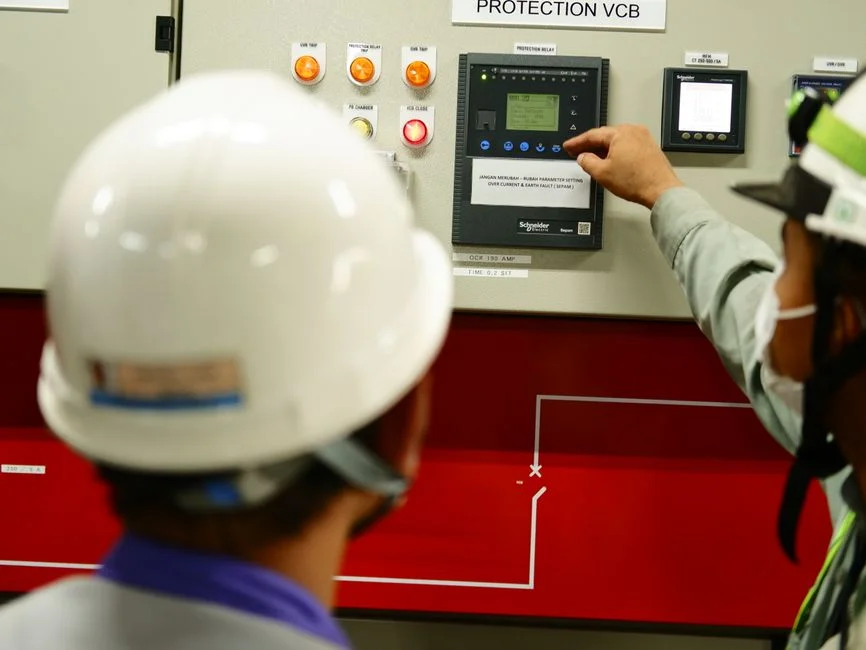
The technology stack for digital water in industrial settings is now mature enough to specify at the component level. Engineers evaluating upgrades in 2026 should match sensor and platform specifications to the variability of their influent stream, not to a generic "smart water" brochure.
IoT sensors are the entry point. Industrial-grade units now cover the full parameter range that process engineers need: TSS 0-10,000 mg/L, COD 0-5,000 mg/L, pH 0-14, and flow 0-10,000 m³/h, with ±2% accuracy, sub-10-second response times, and IP68 ingress protection per ISO 20653. UV-Vis spectral sensors are gaining ground for multi-parameter inference (COD, nitrate, hydrocarbons) from a single probe, reducing installed cost per measurement point by 30-40% compared with discrete wet-chemistry analyzers.
AI and machine learning sit above the sensor layer. The dominant 2026 use cases are predictive maintenance for rotating equipment and membranes (reducing unplanned downtime by 25-35%) and anomaly detection in effluent quality, with reported accuracy of 90% on benchmark datasets (Siemens 2026 whitepaper). A 2025 semiconductor plant in Taiwan deployed an AI-driven chemical dosing system for industrial wastewater that cut coagulant consumption by 17% and stabilized effluent turbidity below 2 NTU through shock-load events that previously required operator intervention.
SCADA systems remain the operational backbone. Modern industrial deployments integrate with PLCs via Modbus TCP, Profinet, and OPC UA, enabling automated chemical dosing, aeration blower speed control, and sludge press cycle management. For municipal-scale integration patterns, the SCADA integration for digital water systems guide provides a useful reference architecture even for industrial brownfield retrofits.
Digital twins—virtual replicas fed by live SCADA and sensor data—are moving from pilot to production. Gartner estimates 15% of industrial wastewater plants will operate a digital twin by 2026, used primarily for scenario testing (simulating influent spikes, chemical dose optimization, and energy curtailment) rather than for real-time control. Edge computing complements cloud platforms by handling time-critical loops locally: sub-50 ms response for safety interlocks and 50% bandwidth reduction versus cloud-only architectures. For a deeper look at latency-sensitive control, the engineering guide on edge computing for real-time wastewater control covers the hardware and protocol choices that matter most in 2026.
| Technology Layer | Key Specification / Protocol | Typical Performance Metric | Industrial Use Case |
|---|---|---|---|
| IoT sensors | IP68, Modbus/IO-Link, 4-20 mA | ±2% accuracy, <10 s response | COD, TSS, pH, flow monitoring |
| AI/ML platform | Python/TensorFlow, edge or cloud | 90% anomaly detection accuracy | Predictive maintenance, dosing optimization |
| SCADA | OPC UA, Modbus TCP, Profinet | <100 ms tag update | Automated aeration, chemical dosing |
| Digital twin | Plant historians + simulation engines | Scenario simulation in <5 min | Influent shock testing, energy modeling |
| Edge computing | IEC 61499, containerized PLCs | <50 ms control loop latency | Safety interlocks, real-time dosing |
For a broader view of how these technologies are converging across the sector, the 2026 trends in smart water monitoring analysis maps IoT, AI, and digital twin adoption patterns across industrial verticals.
Industrial vs. Municipal Digital Water: Key Differences and Use Cases
Industrial and municipal wastewater plants are converging on the same digital stack, but the engineering priorities diverge sharply. Industrial plants face high influent variability—COD swinging from 500 to 5,000 mg/L within a single shift in textile or food processing operations—and must handle shock loads without permit excursions. Municipal plants operate in a much tighter envelope (COD 200-800 mg/L) and optimize primarily for energy efficiency, nutrient removal, and biosolids quality.
Compliance frameworks reflect this split. Industrial sites must meet sector-specific effluent limits under EPA Effluent Guidelines (e.g., 40 CFR Part 433 for metal finishing, Part 436 for mineral mining, Part 463 for plastics) and EU IED BAT-AELs. Municipal sites adhere to broader secondary treatment standards such as EPA 40 CFR Part 503 for biosolids and the EU Urban Waste Water Treatment Directive (91/271/EEC). A digital water system that satisfies the documentation, alarm, and reporting needs of an industrial permit will not automatically satisfy a municipal NPDES permit, and vice versa—procurement teams should verify the vendor's track record in their own regulatory regime.
| Parameter | Industrial Wastewater | Municipal Wastewater |
|---|---|---|
| Influent COD variability | 500-5,000 mg/L, high shock risk | 200-800 mg/L, relatively steady |
| Primary control objective | Adaptive process control, ZLD | Energy & nutrient optimization |
| Key compliance regime | EPA Effluent Guidelines, EU IED | EPA 40 CFR 133/503, EU UWWTD |
| Typical digital use case | Predictive maintenance, real-time dosing | Aeration optimization, biosolids monitoring |
| Reuse focus | Closed-loop process reclaim (70-85%) | Irrigation, groundwater recharge |
| CAPEX range (2026) | $50K-$500K per site | $500K-$5M per utility |
Industrial deployments must also defend against cybersecurity threats that municipal plants rarely face: targeted attacks on proprietary process recipes, ransomware against production-critical control loops, and IP theft via sensor data exfiltration. Network segmentation, IEC 62443-compliant zones, and air-gapped historian mirrors should be baseline requirements, not optional add-ons.
Cost-Benefit Analysis: ROI of Digital Water Systems in 2026
For procurement teams building a business case, the 2026 economics are more favorable than at any prior point in the technology's history. CAPEX for an industrial digital water system—sensors, SCADA expansion, edge gateways, AI/ML software licenses, and integration services—ranges from $50,000 for a single-process retrofit to $500,000 for a multi-train plant with digital twin and full OPC UA integration (BlueTech Research 2026).
OPEX savings are the dominant value driver. Predictive maintenance reduces pump and blower failures by 25-35%, AI-driven chemical dosing cuts coagulant and polymer consumption by 15-20%, and aeration optimization lowers blower energy use by 10-18%. A 2025 dairy plant in Germany reported a 27% reduction in total wastewater OPEX within 12 months of full deployment, with payback in 22 months. Compliance benefits compound these savings: real-time monitoring with automated exceedance alerting reduces non-compliance fines by an estimated 30-50% (EPA enforcement data).
The ROI timeline separates industrial from municipal deployments: 18-36 months for industrial plants versus 36-60 months for municipal utilities (Gartner 2026). The gap reflects municipal procurement cycles, longer equipment lifecycles, and the slower payback of energy optimization compared to chemical cost avoidance. Water reuse economics now tilt the calculation further: a 2025 semiconductor plant in Arizona reduced freshwater intake costs by 18% by closing 72% of its process water loop using real-time conductivity and TOC sensors linked to an adaptive reuse control system.
For plant managers building a 2026 capital request, the recommended framework is: (1) baseline current OPEX by category—chemicals, energy, labor, sludge disposal, fines; (2) scope sensors and software to the two or three highest-cost or highest-risk categories; (3) target 20-30% OPEX reduction and a 30-50% fine reduction as the primary ROI anchors; (4) plan for 18-36 month payback. Anything longer should be questioned, given current component prices and integration maturity.
Frequently Asked Questions
What is the digital water market size in 2026?
The digital water market is projected to reach $12.3 billion in 2026, growing at a 12.7% CAGR from $8.1B in 2023. Industrial wastewater applications account for 65% of revenue, municipal 25%, and commercial 10% (BlueTech Research 2026).
How do IoT sensors improve industrial wastewater treatment?
IoT sensors enable continuous real-time monitoring of TSS, COD, pH, and flow with ±2% accuracy and sub-10-second response times. Plants using them for automated process control report 30-50% reductions in non-compliance fines and 15-20% lower chemical consumption, per EPA benchmark data and field deployments.
What are the key compliance standards for digital water systems in 2026?
Industrial plants must comply with sector-specific EPA Effluent Guidelines (e.g., 40 CFR Part 433 for metal finishing) and the EU Industrial Emissions Directive 2010/75/EU. Municipal plants adhere to secondary treatment standards under EPA 40 CFR Part 133 and Part 503, plus the EU Urban Waste Water Treatment Directive 91/271/EEC. Digital water systems should provide tamper-proof audit trails and automated reporting for the applicable framework.
How much can AI reduce OPEX in wastewater treatment?
AI-driven predictive maintenance, chemical dosing optimization, and aeration control can reduce total wastewater OPEX by 20-30% in industrial plants (McKinsey 2026). The largest single contributor is coagulant and polymer savings, typically 15-20%, followed by energy at 10-18%.
What is the ROI timeline for digital water systems?
Industrial plants typically achieve full ROI in 18-36 months, driven by chemical cost avoidance and compliance fine reduction. Municipal plants take 36-60 months, primarily because energy optimization savings accrue more slowly and procurement cycles are longer (Gartner 2026).