Why Hospital Wastewater Compliance in Gujarat Is Non-Negotiable in 2026
Gujarat hospitals generating more than 10 KLD of effluent or exceeding BOD/COD thresholds must hold a valid Consent to Operate under the Water Act, 1974, administered by the Gujarat Pollution Control Board (source: GPCB Water Pollution Control guidance, 2024). The base effluent standard is CPCB Schedule VI: BOD ≤30 mg/L, COD ≤250 mg/L, TSS ≤100 mg/L, and Fecal Coliform ≤1,000 MPN/100 mL for discharge into surface water (source: CPCB Schedule VI, adopted uniformly by GPCB). Between 2023 and 2025, GPCB increased unannounced inspections of multi-specialty hospitals in Ahmedabad and Surat; non-compliant plants have been issued show-cause notices with penalties of ₹1 lakh–₹5 lakh per month and operating-license suspension risk (source: GPCB enforcement notices, 2023-2025). NABH 5th Edition accreditation (2025) now requires tertiary disinfection as part of infection-control effluent handling, which is why chlorination alone no longer satisfies a 200+ bed facility. Under-specifying the plant to save ₹10–₹15 lakh on CAPEX typically costs more in penalties and license risk than the original equipment budget.
What Gujarat Hospital Wastewater Actually Contains
Raw hospital sewage in India typically runs COD 250–500 mg/L, BOD 150–300 mg/L, TSS 100–250 mg/L, Fecal Coliform 10⁶–10⁸ MPN/100 mL, and pH 6.5–8.0 (source: Hospital Wastewater Treatment scenario chapter, July 2022; corroborated by Springer 2024 Chlorella sp. LH2 study). The BOD₅:COD ratio of 0.77 measured in the 2024 Springer study is the single most useful design number: it confirms hospital wastewater is highly biodegradable, so biological treatment (MBR, MBBR, SBR) outperforms physico-chemical schemes on both CAPEX and OPEX. Emerging 2026 contaminants include pharmaceutical residues, iodinated and gadolinium-based contrast media from radiology, and antibiotic-resistant bacteria such as VIM-2-producing Pseudomonas aeruginosa ST235/O11 (source: Zagui et al., 2024). Pathogen load is the reason terminal disinfection is non-negotiable: 10⁶–10⁸ CFU/100 mL total coliforms in raw sewage will not meet the 1,000 MPN/100 mL Fecal Coliform limit without a dedicated disinfection stage.
| Parameter | Raw Hospital Sewage (Typical India) | GPCB/CPCB Discharge Limit |
|---|---|---|
| COD | 250–500 mg/L | ≤ 250 mg/L |
| BOD₅ | 150–300 mg/L | ≤ 30 mg/L |
| TSS | 100–250 mg/L | ≤ 100 mg/L |
| Fecal Coliform | 10⁶–10⁸ MPN/100 mL | ≤ 1,000 MPN/100 mL |
| pH | 6.5–8.0 | 6.5–9.0 |
| BOD₅:COD ratio | 0.77 | — (design indicator) |
Sizing Your Hospital STP: Bed Count to KLD Logic for Gujarat
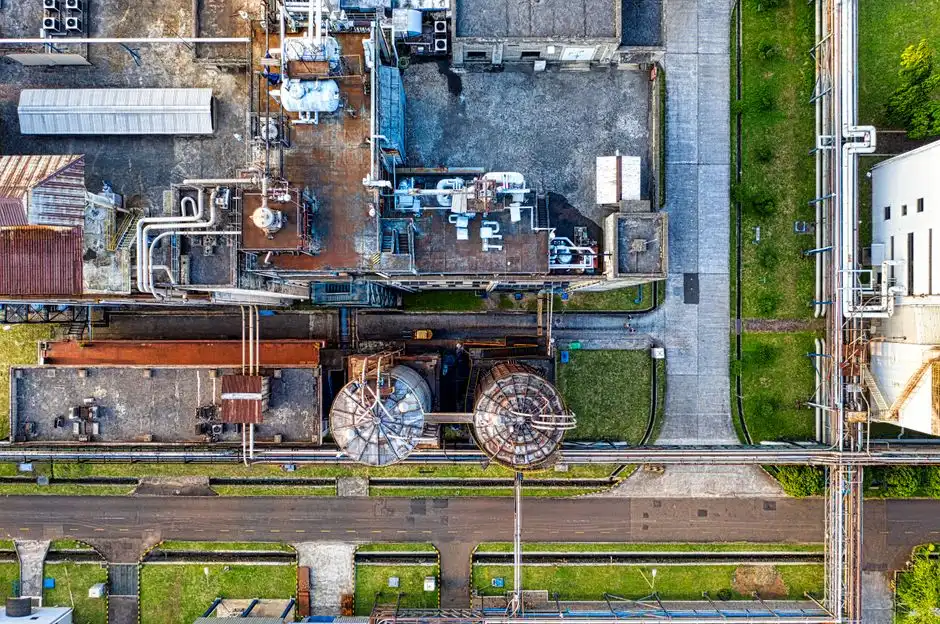
CPHEEO's Manual on Sewerage and Sewage Treatment (2013, reaffirmed for hospital design) sets the baseline at 400–500 litres per bed per day (LPD) for hospitals without in-house laundry, plus 100–150 LPD/bed if laundry discharges to the ETP. Worked example: 200 beds × 450 LPD = 90 KLD average; apply a 15% peak factor for morning shift overlap, and the design flow rounds to 100 KLD. Outpatient load adds roughly 0.05 KLD per daily OPD patient — a hospital seeing 500 OPD/day adds 25 KLD to the base design and that load is routinely forgotten in Gujarat retrofits. Specialty streams must be inventoried before vendor selection: dialysis +2–3 KLD per unit, ICU +1 KLD per 10 beds, kitchen +1 KLD per 100 meals/day, pathology lab +0.5 KLD. Under-sizing the laundry stream is the single most common cause of STP underperformance in Ahmedabad retrofits (source: HydropureWater field audits, 2025); a 200-bed hospital with captive laundry should size at 130–150 KLD, not 100 KLD.
| Bed Count | Domestic Flow (LPD) | + Laundry (LPD) | + OPD/Specialty (KLD) | Design KLD (with 15% peak) |
|---|---|---|---|---|
| 50 beds | 22,500 | 27,500 | +5 | 30–35 KLD |
| 100 beds | 45,000 | 55,000 | +10 | 60–70 KLD |
| 200 beds | 90,000 | 110,000 | +25 | 100–130 KLD |
| 500 beds | 225,000 | 275,000 | +60 | 250–320 KLD |
Comparing Treatment Processes: MBR vs MBBR vs SBR vs Package STP
Four technologies dominate Gujarat hospital installations: MBR (membrane bioreactor with submerged PVDF 0.1–0.4 µm hollow fibre), MBBR (moving-bed biofilm reactor with HDPE carriers), SBR (sequencing batch reactor), and conventional package STP with extended aeration. MBR delivers the best effluent — TSS <5 mg/L and Fecal Coliform <100 MPN/100 mL — which directly enables 70–80% reuse for toilet flushing and gardening; MBBR typically achieves TSS 15–25 mg/L, so reuse-grade reuse needs tertiary filtration. Footprint: MBR takes roughly 60% of the area of conventional activated sludge, MBBR is mid-range, and SBR needs about 2× the MBR footprint but lower upfront cost. For a 200-bed Gujarat hospital evaluating a 100 KLD system, an MBR membrane bioreactor for 200-500 bed hospitals is the typical specification; a smaller facility usually fits an underground package STP for 50-150 bed hospitals instead.
| Process | Effluent TSS | Footprint vs CAS | CAPEX (₹/KLD, 2026 Gujarat) | OPEX (₹/KLD) | Best Fit |
|---|---|---|---|---|---|
| Package STP (Extended Aeration) | 20–30 mg/L | 1.0× | 30,000–45,000 | 12–18 | ≤100 beds, budget-driven |
| SBR | 15–25 mg/L | 2.0× | 35,000–50,000 | 10–16 | 100–200 beds, intermittent flow |
| MBBR | 15–25 mg/L | 0.8× | 40,000–60,000 | 8–14 | 100–300 beds, reuse with filtration |
| MBR | <5 mg/L | 0.4× | 55,000–80,000 | 14–22 | 300+ beds, mandated reuse |
Decision rule: ≤100 beds → package STP or SBR; 100–300 beds → MBBR; 300+ beds or any project with a written water-reuse mandate → MBR. OPEX assumes Ahmedabad operator cost of ₹15,000–₹25,000/month per shift, which the table accounts for via the per-KLD range.
Disinfection: Why Chlorine Is Being Replaced in Gujarat Hospitals
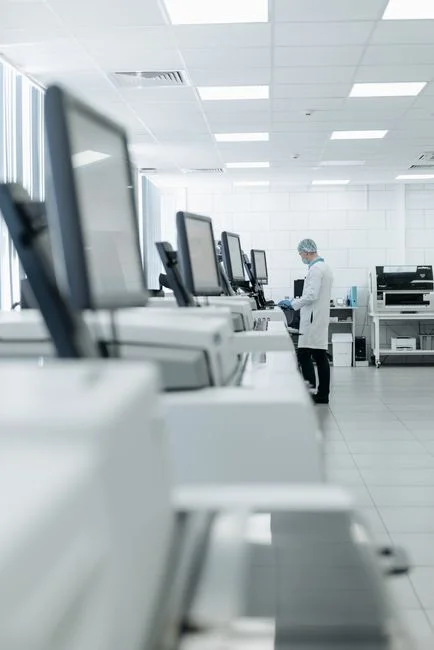
Most Gujarat hospitals still dose chlorine gas or sodium hypochlorite. The 88.92% E. coli kill over 7 days measured in the 2024 Springer algae study shows that biological polishing alone cannot replace chemical disinfection; chlorination at 30–45 minute contact time is faster, but chlorine reacts with iodinated contrast media to form trihalomethanes (THMs), which is now a flagged concern in the 2024–2026 GPCB review. Ozone (O₃) at 0.5–1.5 mg/L residual achieves 99.9% kill of E. coli and antibiotic-resistant bacteria in 15 minutes with no THM formation, at the cost of higher power draw. Chlorine dioxide (ClO₂) at 1–2 mg/L hits 99.99% pathogen kill including chlorine-resistant Giardia and Cryptosporidium cysts in 30 minutes; pairing an MBR with a ClO2 generator for hospital effluent disinfection is the 2026 default for multi-specialty facilities. UV at 40 mJ/cm² works only on clear effluent (TSS <5 mg/L), so it is viable post-MBR or post-filtration, not as a standalone. Smaller clinics and pathology labs often skip chlorination entirely with a compact medical wastewater system for clinics and small hospitals that integrates disinfection into a single skid.
| Disinfection Method | Dose / Intensity | Contact Time | Pathogen Kill | Key Limitation in Gujarat Hospitals |
|---|---|---|---|---|
| Sodium Hypochlorite | 2–5 mg/L free Cl₂ | 30–45 min | 99.9% bacteria | THM formation with contrast media |
| Ozone (O₃) | 0.5–1.5 mg/L residual | 15 min | 99.9% bacteria + viruses | Higher power cost; no residual |
| Chlorine Dioxide (ClO₂) | 1–2 mg/L | 30 min | 99.99% incl. Giardia/Crypto | On-site generation required |
| UV | 40 mJ/cm² | Seconds | 99.9% (clear water only) | Ineffective if TSS >5 mg/L |
2026 CAPEX and OPEX for Hospital STP in Ahmedabad, Surat, and Vadodara
2026 Gujarat price benchmarks: a 50-bed hospital package STP runs ₹7.5 lakh–₹12 lakh, anchored by Reciclar Technologies' ₹745,000 Ahmedabad listing (2025-08). A 200-bed MBBR system lands in the ₹18 lakh–₹30 lakh band, and a 500-bed MBR plant falls between ₹35 lakh and ₹50 lakh. OPEX follows a ₹8–₹28 per KLD rule of thumb, dominated by disinfection technology choice: chlorine at the low end, ozone or ClO₂ at the upper end. Labor runs 1 operator per 8-hour shift × 2 shifts at Ahmedabad market rates of ₹15,000–₹25,000/month each. Power draw is 1.2–1.8 kWh per KLD treated, and sludge disposal costs ₹2,500–₹4,000 per ton in Gujarat. Vendor quotes routinely omit civil works (₹4 lakh–₹8 lakh for a 100 KLD underground tank), GPCB consent-to-operate fees (₹25,000–₹1,00,000 depending on bed count), and the annual O&M contract at 12–18% of CAPEX. The total cost of ownership analysis for hospital STPs walks through these line items in detail. A 100 KLD hospital reusing 70% of effluent saves ₹4 lakh–₹6 lakh per year in fresh-water charges (AMC municipal rate plus groundwater extraction), giving a typical 3–5 year payback on an MBR-plus-reuse design.
| Hospital Size | Recommended Process | CAPEX (2026 Gujarat) | Annual OPEX | 5-Year TCO |
|---|---|---|---|---|
| 50 beds / 30 KLD | Package STP + Hypochlorite | ₹7.5–12 L | ₹1.5–2.5 L | ₹15–25 L |
| 100 beds / 60 KLD | SBR or MBBR + ClO₂ | ₹15–22 L | ₹3–5 L | ₹30–47 L |
| 200 beds / 100 KLD | MBR + ClO₂ / Ozone | ₹25–40 L | ₹5–8 L | ₹50–80 L |
| 500 beds / 300 KLD | MBR + Ozone + Reuse | ₹35–50 L | ₹10–18 L | ₹85–140 L |
The cost of non-compliance — ₹1 lakh–₹5 lakh per month in GPCB penalties plus license suspension — exceeds the entire 5-year TCO of a 200-bed MBR plant. That arithmetic is the strongest argument for sizing correctly rather than under-specifying.
Choosing a Hospital STP Supplier in Gujarat: 7-Point Checklist

Use this checklist when shortlisting vendors in Ahmedabad, Surat, or Vadodara:
- Verify GPCB consent-to-establish track record and ask for at least 3 Gujarat hospital references visit-able in person, not just project lists.
- Demand treated-water test reports from a NABL-accredited lab on an operating site, never pilot data or factory test certificates.
- Check membrane warranty terms: PVDF membranes should carry a 5+ year prorated warranty; reject 1–2 year warranties that are voided by chemical-cleaning clauses.
- Confirm local service: 24-hour response within 100 km of Ahmedabad, Surat, or Vadodara. Chinese-supplied systems with 5–10 day parts lead time fail this test.
- Insist on PLC/SCADA with remote monitoring — manual-only systems underperform in hospitals where operators rotate every 8 hours.
- Validate that civil design drawings are signed by a Gujarat-registered structural engineer familiar with high groundwater-table conditions along the Sabarmati and Tapi floodplains.
- Ask for an O&M quotation separate from CAPEX. Vendors willing to unbundle O&M are usually more accountable than those who bundle it.
For a 100 KLD retrofit, an MBR membrane bioreactor for 200-500 bed hospitals paired with the hospital ETP maintenance protocol for 99% uptime typically clears all 7 points. For Southeast Asia comparisons outside Gujarat, the hospital wastewater treatment in Da Nang for SE Asia benchmarks guide provides useful reference data.
Frequently Asked Questions
Q1: What are the 2026 GPCB discharge limits for hospital wastewater in Gujarat?
GPCB adopts CPCB Schedule VI for hospitals: BOD ≤30 mg/L, COD ≤250 mg/L, TSS ≤100 mg/L, Fecal Coliform ≤1,000 MPN/100 mL, and pH 6.5–9.0 for surface-water discharge. Plants generating >10 KLD must hold a Consent to Operate under the Water Act, 1974.
Q2: How do I convert bed count to KLD when sizing a hospital STP?
Apply 400–500 LPD per bed, add 100–150 LPD per bed if laundry is captive, then add OPD load at 0.05 KLD per daily outpatient and specialty streams (dialysis, ICU, kitchen, lab). Apply a 15% peak factor and round up to the next standard KLD.
Q3: For a 200-bed hospital, is MBR worth the higher CAPEX versus MBBR?
MBR costs ₹55,000–₹80,000 per KLD versus MBBR at ₹40,000–₹60,000 per KLD, but MBR delivers TSS <5 mg/L and enables 70–80% reuse, which on a 100 KLD plant saves ₹4–₹6 lakh per year and gives a 3–5 year payback on the CAPEX premium.
Q4: Should we use ozone or chlorine for hospital disinfection in Gujarat?
Ozone at 0.5–1.5 mg/L achieves 99.9% pathogen kill in 15 minutes with no THM formation, while chlorine risks THMs when iodinated contrast media is present. For NABH 5th Edition compliance, ozone or ClO₂ is now the safer specification.
Q5: Can a 50-bed nursing home in Ahmedabad use a ₹7.5 lakh package STP?
Yes, for 50 beds at 30–35 KLD a packaged extended-aeration STP with hypochlorite disinfection at ₹7.5–12 lakh is the standard Gujarat specification, but the plant must still hold GPCB consent and meet the 30/250/100/1,000 discharge thresholds, so insist on a NABL test report from an operating site before purchase.