Why Online BOD Monitoring Replaces the Five-Day Wait
The standard BOD5 laboratory method requires a 5-day incubation in a 2 mL BOD bottle with dilution water and a dissolved oxygen probe, resulting in a 5–7 day turnaround between sample collection and reported results (per Standard Methods 5210B). Aeration blowers, nutrient dosing pumps, and equalization transfers cannot respond to an organic upset until days after the slug has already moved through the biological stage and into the clarifier. An online BOD analyzer for wastewater collapses that decision window from days to minutes by streaming a BOD-related signal at 1–15 minute intervals directly into the plant's PLC, where it can drive alarm setpoints, aeration trim loops, and discharge compliance trending in real time.
The operational gain is not just faster reporting. Continuous influent organic load monitoring lets the control system pre-empt dissolved-oxygen crashes, reduce effluent ammonia excursions, and cut unnecessary blower runtime. For a 20,000 m³/d industrial WWTP running 2–3 diurnal BOD swings, the difference between a five-day-old lab number and a five-minute-old online reading is the difference between documenting a violation and preventing one.
Three Measurement Philosophies Disguised as One Product
The term "online BOD analyzer" covers three fundamentally different instruments, and treating them as interchangeable is a common specification mistake.
The respirometric method uses a chamber of immobilized live biomass whose oxygen consumption is measured and reported as "total BOD." The Process Insights BioMonitor is the canonical example, capable of pairing with an automated sampler for unattended operation and flagging toxicity events when respiration collapses to baseline.
The UV-spectral correlation method measures UV254 absorbance in a flowing sample and derives a BOD-equivalent from a calibrated correlation. The HORIBA UV500 uses a 2048-pixel spectrograph scanning 180–750 nm and reports BOD-equivalent alongside COD, TOC, NO3, PO4, colour, and Cr VI from a single hydraulic circuit (per HORIBA UV500 product datasheet).
The multi-parameter IoT probe method bundles BOD, COD, and TSS into a single compact sensor with an RS485 Modbus output for direct PLC hand-off. Per 2026 Made-in-China listings, the entry-level integrated unit sits in a USD 1,599–2,599 price band.
The data-interpretation trap that catches unwary buyers: respirometric "total BOD" is not numerically equal to BOD5 because it captures the slowly biodegradable fraction that BOD5 misses; UV-spectral BOD-equivalent is a correlation, not a direct measurement, and breaks down when influent composition shifts; only laboratory BOD5 is legally defensible for most discharge permits. Buyers planning digital-twin integration of online analyzers need to track which metric their model ingests.
| Philosophy | Working principle | Reported metric | Legally defensible as BOD5? |
|---|---|---|---|
| Respirometric | Live biomass consumes O₂; depletion rate measured | Total BOD (respiration-based) | No — requires correlation |
| UV-spectral | UV254 absorbance correlated to organics | BOD-equivalent | No — correlation only |
| Multi-parameter IoT probe | Optical/electrical proxy bundled into one probe | BOD/COD/TSS estimate | No — proxy reading |
| Laboratory BOD5 | 5-day dilution bottle, DO probe | BOD5 | Yes (per Standard Methods 5210B) |
Matching Analyzer Type to Your Influent

UV-spectral analyzers return the best multi-parameter ROI for stable, low-toxicity influents with modest variability, such as municipal-style flow or food processing wastewater within a tight product mix. One unit covers COD, BOD-equivalent, TOC, NO3, PO4, and colour from a single hydraulic circuit, eliminating four to six dedicated probes.
For high-variability industrial streams such as food processing batch dumps, pulp and paper white-water, or textile dye-bath discharges, respirometric biosensors track organic load swings in real time and double as a toxicity alarm when respiration falls to baseline. The same logic applies to AI process control for variable-load industrial lines, where the live BOD signal feeds a feedforward loop ahead of the aeration basin.
For hazardous or inhibitory streams—such as petrochem, coking, or landfill leachate—the respirometric unit's toxicity alarm function is a genuine safety feature. A slug of solvent or phenol will collapse microbial respiration within minutes, whereas a UV correlation reading will simply shift upward as the solvent itself absorbs UV254, producing a falsely high BOD-equivalent. Coking plants evaluating reuse and zero-discharge compliance should weight this distinction heavily.
For budget-constrained retrofits with a simple SCADA stack, multi-parameter IoT probes with RS485 output and 4–20 mA loops integrate fastest, accepting a lower accuracy envelope and shorter calibration interval.
2026 Spec and Price Comparison
The following table consolidates the specification, output, indicative 2026 USD price, and maintenance interval for each analyzer class. Prices reflect vendor list pricing and 2026 Made-in-China listings where applicable; turnkey installation typically adds the sample conditioning panel cost noted below.
| Method | Measured parameter | Reported metric | Sample type | Output protocols | Indicative 2026 price (USD) | Maintenance interval |
|---|---|---|---|---|---|---|
| Respirometric (BioMonitor-class) | O₂ depletion by immobilized biomass | Total BOD, respiration, toxicity | Side-stream with auto-sampler | 4–20 mA, Modbus, Profibus | $12,000–18,000 | Membrane and biomass replacement every 6–12 months |
| UV-spectral (HORIBA UV500-class) | UV254 absorbance 180–750 nm | BOD-equivalent, COD, TOC, NO3, PO4, colour, Cr VI | In-line side-stream | 4–20 mA, Modbus TCP, Ethernet | $18,000–28,000 | Cleaning solution refill monthly; lamp life multi-year |
| Multi-parameter IoT probe (entry-level) | Optical/electrical proxy | BOD/COD/TSS combined | In-pipe or side-stream | RS485 Modbus | $1,599–2,599 | Wiper cleaning every 2–4 weeks |
The IoT-probe price band excludes the engineering cost of a sample conditioning panel, which typically adds $3,000–6,000 to a turnkey installation. Buyers who quote the headline $1,599 figure without the conditioning scope frequently blow their installation budget by 200–300%.
Integrating an Online BOD Analyzer with Your Plant
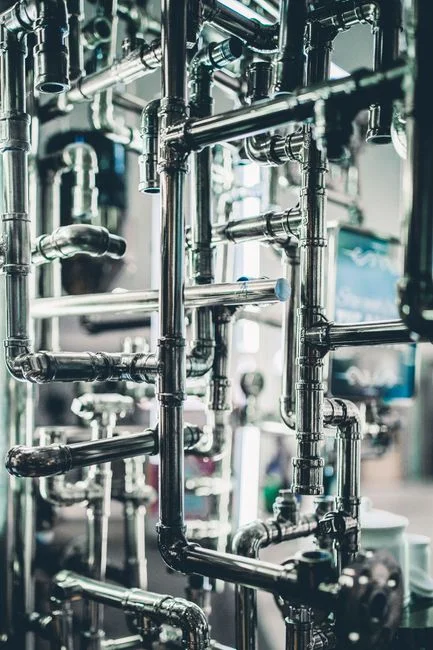
Sample conditioning is a mandatory requirement for accurate measurement. A side-stream strainer (1–2 mm), temperature stabilization to within ±2 °C, and an air-gap return to the process tank are minimum requirements; foam carry-over from the aeration basin will otherwise produce false readings on both UV and respirometric units. Many buyers overlook this scope until commissioning, when it becomes the dominant line item.
For PLC tag mapping, plan on at least four tags per analyzer—the BOD reading, sample temperature, instrument health, and a maintenance flag—plus alarm setpoints wired into the aeration blower trim loop. RS485 Modbus RTU is the de facto industrial standard, but legacy plants on older PLC-controlled chemical dosing skids may need a 4–20 mA gateway.
Calibration cadence varies by analyzer class: respirometric units need weekly reference-checks against a Winkler titration, UV-spectral units need quarterly multi-point calibration with standard solutions, and IoT probes need a monthly two-point check. Plan a 2–4 week commissioning window from first power-on to trusted live data, longer if the influent matrix is novel. Surface this in the CAPEX justification as a known project risk, not a vendor surprise.
Total Cost of Ownership and ROI in 2026
The 2026 CAPEX envelope by analyzer class is: IoT probe $1,600–2,600 plus a $3,000–6,000 conditioning panel, respirometric $12,000–18,000 turnkey, and UV-spectral $18,000–28,000 turnkey. OPEX drivers include reagent and consumable cost (UV-spectral cleaning solution runs $200–400/year), calibration labor at 1–2 hours/week, and biomass or membrane replacement on respirometric units at $800–1,500/year.
Labor savings are a primary driver for plant managers. Replacing daily BOD5 sampling with continuous online data typically frees 6–10 hours of lab technician time per week, worth $15,000–25,000/year at 2026 industrial lab rates (HydropureWater field data, 2026). The aeration energy line is larger still: blower trim on continuous BOD-equivalent feedback typically cuts aeration kWh by 10–18% on overloaded biological stages, which is the same order of magnitude as the savings cited in the MABR aeration energy savings in 2026 analysis, and well within the range quantified in the 2026 TCO breakdown for wastewater plants.
For a 20,000 m³/d industrial plant running a $0.08/kWh aeration bill of roughly $400,000/year, a 12% blower trim returns $48,000/year, which pays back a mid-range UV-spectral turnkey installation inside 18 months even before the labor offset is counted.
Selection Checklist Before You Sign the PO
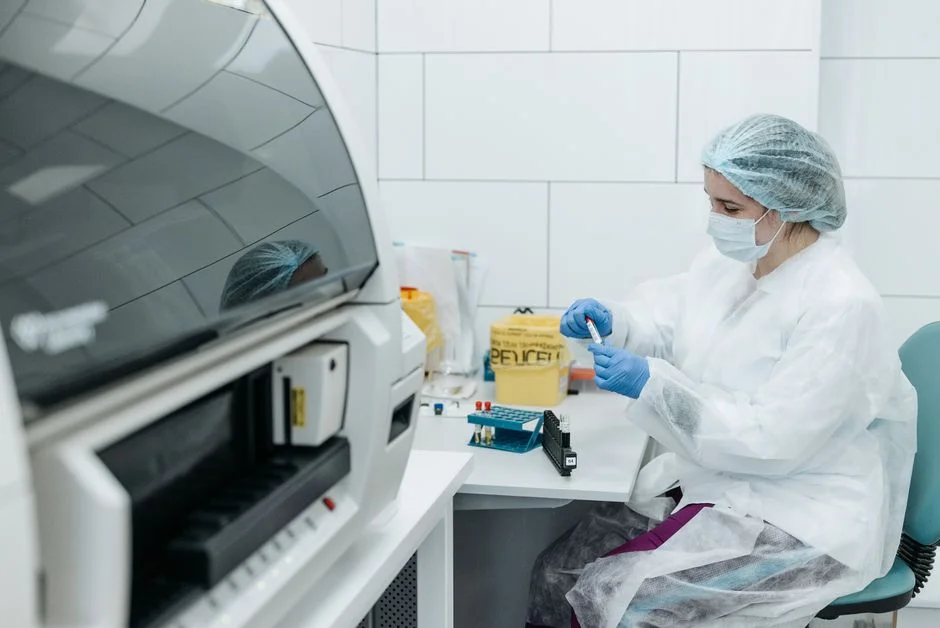
- Confirm the analyzer reports the metric your discharge permit requires—for BOD5-style reporting, plan a quarterly lab cross-check regardless of analyzer class, since no online instrument is a legal substitute for Standard Methods 5210B.
- Verify output protocols against your existing SCADA—RS485 Modbus is standard, but legacy plants may need a 4–20 mA gateway.
- Request a site-specific correlation study from the vendor against your actual influent for at least 4 weeks before acceptance, particularly for UV-spectral units where the correlation slope is matrix-dependent.
- Negotiate a 12-month service contract with guaranteed response time, since the analyzer becomes a compliance-critical instrument the day it goes live.
Frequently Asked Questions
Is online BOD legally defensible for discharge reporting?
No. Online BOD analyzers report total BOD, BOD-equivalent, or proxy readings—none of which satisfy Standard Methods 5210B. Most permits still require a laboratory BOD5 result for compliance, with online data used for process control and alarm trending only (per EPA 40 CFR 133 general pretreatment expectations).
How often does each analyzer class need calibration?
Respirometric units: weekly reference-check against a Winkler titration. UV-spectral units: quarterly multi-point calibration with standard solutions. Multi-parameter IoT probes: monthly two-point check (