

Why Seattle Fabricated Metals Shops Re-evaluate DAF vs Clarifier in 2026
A typical Seattle job-shop or aerospace Tier-2 wastewater stream in 2026 carries stamping lube, drawing compound, water-soluble coolant, parts-washer aqueous detergent, occasional alkaline cleaner rinse water, and — in shops running hex-chrome passivation — chromate-bearing rinsewater that triggers 40 CFR 437 Subpart A applicability for Metal Finishing (per EPA 40 CFR 437). The dominant pollutant load is free and emulsified oil plus fine metal fines, not heavy grit or sand, which is the exact stream chemistry where a Dissolved Air Flotation (DAF) clarifier outperforms a gravity clarifier.
Seattle Public Utilities, operating through the King County Industrial Waste Program (IWG), enforces local discharge limits layered on top of 40 CFR 437 federal categorical standards, so a separator that hits 85% TSS but only 70% oil/grease will trip an excursion on the very first composite sample. Add 2026 driver pressure: Boeing D6-51991 supplier expectations and broader Nadcap audit pressure on closed-loop water reuse and zero-discharge goals. Engineers at SODO, Georgetown, Ballard industrial, and Renton shops are re-evaluating their primary separator this year because the gap between "compliant" and "audit-ready" now sits in the FOG removal number, not the TSS number.
How Each Technology Works — DAF Microbubbles vs Gravity Settling
DAF works by pressurizing a recycle stream of clarified effluent with air in a saturation vessel, then releasing that stream through a pressure-relief valve near the eye of the tank. The pressure drop nucleates a cloud of 30–50 μm microbubbles (per SigmaDAF/Clearwater) or 20–40 μm bubbles (per the DAF Corp Micro Bubble Generator) that attach to oil droplets, floc, and fine suspended solids and lift them to the surface, where a paddle or scoop skimmer scrapes the float layer into a sludge trough. A bottom auger collects heavier settleables that bypass the bubble cloud (per SigmaDAF design, Clearstream engineering note, and DAF Corp FC Maximizer data).
A conventional gravity clarifier is a quiescent tank where heavy particles settle to a sludge bed under a low surface-loading rate. Lamella-plate or inclined-tube settlers shorten the effective settling path for finer solids, which is why lamella designs dominate fabricated-metals projects where floor area is constrained. A typical HydropureWater lamella clarifier operates at 20–40 m/h surface loading — fast for a clarifier, but still a fraction of equivalent DAF hydraulic throughput per unit footprint. These physical differences dictate which system manages specific metal-shop pollutants most effectively.
DAF vs Clarifier Parameter Comparison for Fabricated Metals
Engineers can use the following table for 2026 CAPEX justification decks, with data drawn from manufacturer specifications and the Ecologix 2026 selection guide.
| Parameter | DAF (round FC-style / skid) | DAF (rectangular / compact) | Lamella Clarifier |
|---|---|---|---|
| TSS removal | 92–98% (DAF Corp FC Maximizer, 10–11,000 GPM range) | 95%+ with coagulation (SigmaDAF FPAC) | 80–95% (plate spacing dependent) |
| Oil & grease removal | ~95% with chemistry (Ecologix 2026 selection guide example) | ~95% with chemistry | ~70% (Ecologix 2026 selection guide example) |
| Footprint for 100 GPM | 6–15 ft circular, skid-mounted | Compact rectangular, single skid ≤66 GPM (SigmaDAF Compact DAF) | Larger basin + plate pack; deeper civil work |
| Hydraulic capacity | 10–11,000 GPM circular (DAF Corp) | 4–300 m³/h across 13 models | 10–1,000 GPM rectangular |
| Sludge dryness | 2–4% thickened sludge (DAF Corp) | 2–4% thickened sludge | 1–2% underflow typical |
| Energy / moving parts | Saturation pump, air compressor, skimmer drive | Same as round, plus PLC-controlled dosing | Sludge rake/torque tube, periodic pump-out |
| Materials (metalworking) | 304SS standard; 316SS for chloride rinse baths (per SigmaDAF) | Same | 304SS / FRP / concrete with liner |
| Best fit stream | Free + emulsified oil, coolant, FOG | Same, indoor / skid installs | Heavy swarf, grinding fines, low oil |
For a Seattle fab plant at 50–500 GPM, a HydropureWater DAF system in 304SS is the closest direct equivalent to the DAF Corp FC-150 (500 GPM) reference unit. Where the stream is heavily swarf-dominated with low oil — a grinding shop, a precision machining cell with chip-pan overflow — the lamella clarifier is the cheaper pre-thickener before DAF polish or filter-press dewatering.
40 CFR 437, King County IWG, and 2026 Compliance Reality
40 CFR 437 (Metal Finishing Point Source Category) sets categorical pretreatment limits that any Seattle metal-fab shop discharging to the King County IWG sewer system must meet. Key controls are oil & grease, total metals (zinc, nickel, chromium including hex), TSS, and pH — with both daily-max and monthly-average limits. 40 CFR 437 Subpart A covers most fab, stamping, and machining operations and is the relevant applicability citation for a Seattle job-shop coater or aerospace Tier-2 parts maker without dedicated plating lines (per EPA 40 CFR 437).
Local King County IWG limits often run more stringent than the federal categorical minima — for example, oil & grease at 100 mg/L daily max is a typical local ceiling even where 40 CFR 437 allows a higher number, and metals are tracked on a case-by-case basis through the discharge permit. The standard process train to hit both: free-oil skim first, then DAF with chemical conditioning (coagulant + flocculant) for emulsified oil and TSS, then precipitation or ion exchange for dissolved metals.
The 2026 trend reshaping the spec sheet involves increased regulator and customer scrutiny on PFAS in metalworking fluids and on zinc/nickel breakthrough to the receiving plant, which pushes buyers toward DAF-as-pre-treatment ahead of RO or ion-exchange polish. A standalone clarifier rarely delivers the FOG removal floor that downstream polish equipment needs to stay online.
Seattle-Specific Factors: Footprint, Climate, Permitting
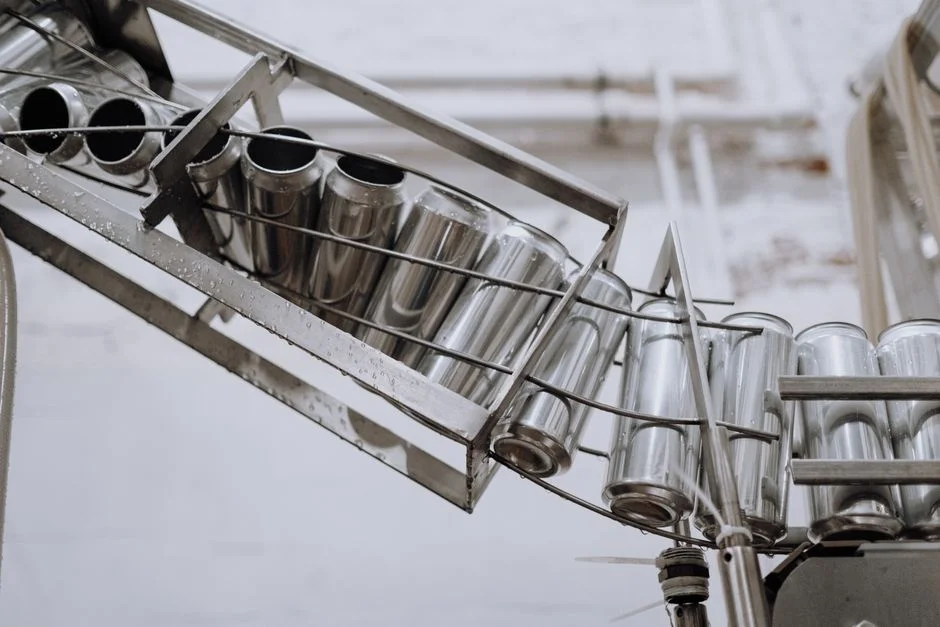
Seattle industrial parcels in SODO, Georgetown, Ballard, and Renton are small, expensive, and increasingly covered by indoor-use covenants from neighboring residential and commercial redevelopment. A skid-mounted Compact DAF or a DAF unit drops into a corner of an existing bay; a cast-in-place clarifier basin eats floor area, requires deeper civil work, and triggers a longer King County plan-review clock. The Compact DAF single-skid threshold of 66 GPM (per SigmaDAF) maps cleanly onto the flow profile of a 20–40-employee job shop, which is the median Seattle fab employer.
Pacific Northwest cold tap water (5–15 °C in winter) is the second climate variable that matters. Cooler water increases oil viscosity, which hurts a gravity clarifier more than a DAF — DAF microbubble attachment is far less temperature-sensitive because the bubble does the lifting work, not the oil density differential. For a DAF, the design is largely the same in January as in July; for a clarifier, expect winter performance drift on FOG and floating oil that does not show up on summer composite samples. These environmental constraints favor the DAF for consistent performance in local facility conditions.
NPDES and Puget Sound discharge sensitivity also weighs in. DAF effluent to the King County IWG sanitary sewer is easier to defend in a permit renewal conversation than clarifier overflow, which typically carries a higher residual FOG signature. Indoor installation with covers is straightforward on a DAF (air-saturation pumps run quieter than a continuously raked clarifier drive), and noise becomes a non-issue for the surrounding tenancy.
When a Clarifier Still Wins — Hybrid System Design
A lamella clarifier still wins when the dominant load is heavy swarf and grinding sludge with low free-oil content — think a precision machining cell running chip-pan overflow and a coolant-sump blowdown, where most of the mass is settleable metal fines. In that case, a cheap lamella basin pre-thickens the stream and a downstream DAF polishes; the clarifier is doing the work it's good at, and the DAF is not overloaded with grit that would scour its bubble cloud.
The honest counter-case for a Seattle engineer: a hybrid DAF + lamella clarifier + filter press train is the right answer when the goal is closed-loop water with sub-20 ppm TSS for CNC reuse (sub-20 ppm filterable solids is the DAF Corp performance benchmark for properly conditioned DAF effluent). Stack the train as: DAF primary (FOG + most TSS), lamella polish (drop residual TSS below 20 ppm), then a plate-and-frame filter press on the combined sludge to drop disposal volume, with automatic coagulant and flocculant dosing between the DAF and the lamella to control polymer cost. This hybrid approach allows facilities to optimize for both heavy solids and emulsified oils.
The single most common Seattle fab mistake: using a clarifier as the standalone primary on emulsified coolant. That configuration is the top cause of 40 CFR 437 excursions in the local pretreatment audit record and is the configuration any 2026 CAPEX memo should rule out by name.
2026 Selection Framework: Which One Should Your Shop Buy?
Run these four questions against your stream profile before you spec a vendor:
- Is free or emulsified oil consistently above 100 mg/L in your composite? → DAF primary.
- Do you need closed-loop water with <20 ppm TSS for CNC or wash operations? → DAF + lamella polish.
- Is your stream mostly heavy swarf, low oil, and do you have a large outdoor pad? → Lamella clarifier, lower CAPEX.
- Tight indoor footprint, King County IWG discharge permit, indoor noise constraints? → Skid-mounted DAF.
For ≥80% of Seattle fabricated-metals shops in 2026, the answer is DAF — specifically, a HydropureWater DAF in 304SS paired with automatic chemical dosing. The remaining 20% are grinding-heavy machining operations where a lamella pre-thickener is the right call, almost always followed by a DAF polish stage.
Frequently Asked Questions
What oil and grease removal efficiency can a DAF hit on fabricated metals wastewater?
A properly conditioned DAF with coagulant and floc dosing delivers ~95% oil and grease removal on a typical fab stream, comfortably under the 40 CFR 437 Metal Finishing and King County IWG limits (per Ecologix 2026 selection guide example data).
How do DAF and clarifier TSS removal compare for metalworking wastewater?
DAF systems hit 92–98% TSS on a circular unit (DAF Corp FC Maximizer) and 95%+ on a rectangular unit with coagulation (SigmaDAF). Conventional rectangular and lamella clarifiers typically deliver 85–90% on the same stream, which is often not enough to meet tightened 2026 local discharge ceilings.
What flow range can a skid-mounted DAF cover for a Seattle fab shop?
The HydropureWater DAF spans 4–300 m³/h across 13 models — roughly 18–1,320 GPM — and the SigmaDAF Compact DAF single-skid threshold is ≤66 G