Why Coking Wastewater Reuse Is Now a 2026 Compliance Issue, Not a Choice
Coking wastewater reuse compliance moved from a sustainability talking point to a hard 2026 permit requirement when China's Action Plan for Zero Discharge of Industrial Wastewater (2025) began cascading through provincial quotas in late 2025 and early 2026. Plants that still depend on surface-water discharge now face dual pressure: tighter COD and ammonia-nitrogen caps on effluent under GB 8978, and chloride/TDS ceilings on recirculation cooling-water makeup that can only be met by reusing polished wastewater instead of bleeding fresh river water. A modern coking plant routes 60–80% of its reclaimed water to the recirculation cooling system and to wet flue-gas desulfurization (FGD) makeup; the rest is recycled for coke-quench suppression, slag handling, or coal-handling dust control. "Coking wastewater" in this context is the combined stream from the ammonia still, the phenol–oil separator, the final cooler, and coal-handling runoff, plus — in coal-chemical or tar-processing sites — a high-salinity sidestream (often 8,000–15,000 mg/L TDS) that is the focus of the high-salinity coking wastewater reuse case (Scientific.Net, paper 953). Together these streams make reuse the only path that simultaneously closes the water balance, satisfies cooling-tower chemistry, and keeps the plant inside its discharge envelope.
Coking Wastewater Influent Profile and Why Bio Treatment Alone Fails Reuse
Raw coking wastewater is one of the most refractory industrial streams a process engineer will ever balance: COD 27,000–30,000 mg/L, NH3-N 2,500–3,000 mg/L, plus phenols, thiocyanate (SCN⁻), free and complexed cyanide, polycyclic aromatic hydrocarbons, and color measured in the thousands of Pt-Co units (per the Saccharomyces/Torula yeast bench study on coking wastewater, Scientific.Net, paper 953). Conventional A/O or A2/O biological treatment removes 60–85% of COD and 70–90% of NH3-N, which is the right first move but still leaves a bio effluent that runs hundreds of mg/L COD, tens of mg/L NH3-N, and — in the coal-chemical variant — 8,000–15,000 mg/L TDS. That residual breaches the GB 50050 cooling-water Cl⁻ ceiling (≤ 300 mg/L for carbon-steel systems) and the ammonia-nitrogen limit on the makeup stream. Ozone pretreatment was already shown in 2015 to raise the BOD/COD ratio of coking wastewater by breaking recalcitrant aromatics, which improves downstream bio kinetics and reduces the oxidant demand of downstream advanced oxidation (Wang, Atlantis Press, 2015). The takeaway for a 2026 design: bio is the workhorse for organics and ammonia, but the reuse envelope — especially chloride, TDS, and residual refractory COD — is set by the polishing train downstream of bio.
| Parameter | Raw coking wastewater | A/O or A2/O bio effluent (typical) | GB 50050 reuse limit (cooling-tower makeup) |
|---|---|---|---|
| COD (mg/L) | 27,000–30,000 | 300–800 | ≤ 30–60 (system-dependent) |
| NH3-N (mg/L) | 2,500–3,000 | 30–150 | ≤ 5–10 (makeup) |
| Phenols (mg/L) | 200–1,500 | 5–20 | ≤ 0.5 |
| SCN⁻ (mg/L) | 200–800 | 50–150 | ≤ 1 (interpretive) |
| TDS (mg/L, high-salinity variant) | 8,000–15,000 | 7,500–14,500 | ≤ 1,000–1,500 in makeup; controlled to cooling cycle |
| Cl⁻ (mg/L, high-salinity variant) | 3,000–7,000 | 2,800–6,800 | ≤ 300 (carbon-steel systems) |
The 2026 Reuse-Grade Treatment Train, Step by Step
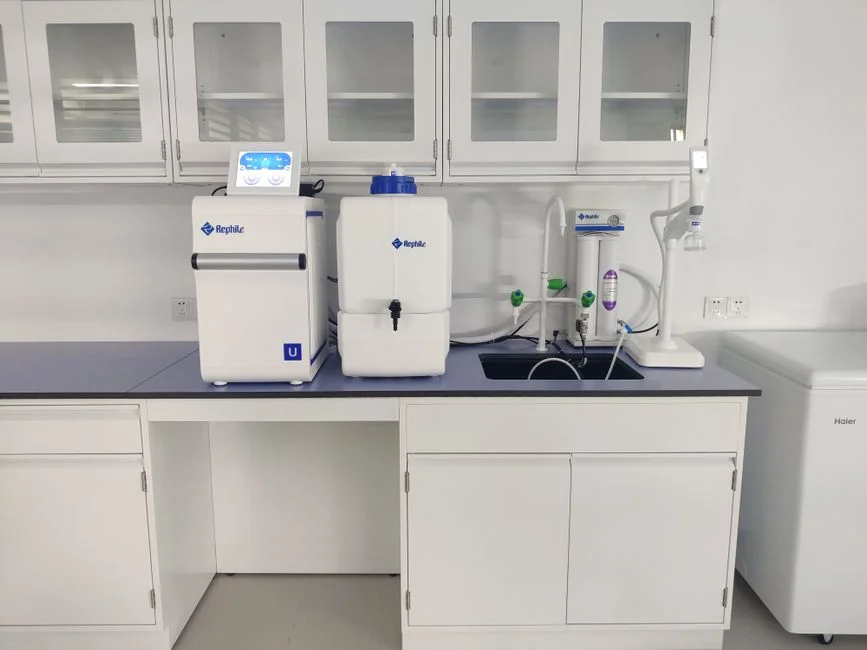
A 2026 reuse-grade train is a sequence of unit operations, each justified by what the previous step cannot remove. The reference flow is: equalization + primary clarification → A/O or A2/O bio → advanced oxidation → softening and multimedia filtration → UF → two-pass RO → concentrate management. The numbers below reflect operating bands used in coal-chemical and steel coking plants now in commissioning (HydropureWater field data, 2025–2026).
Step 1 — Equalization and primary clarification. Raw wastewater from the ammonia still, phenol-oil separator, and final cooler is equalized in a basin sized for 12–24 h HRT to dampen load swings, then passed through a dissolved air flotation (DAF) unit for coking wastewater oil and tar removal to strip emulsified oil, tars, and light phenols before they poison downstream biology. DAF has a long track record in petrochemical duty and reliably drops oil and grease below 10–20 mg/L.
Step 2 — Biological treatment. A/O or A2/O with 36–72 h HRT is the standard removal step for COD and NH3-N. A hybrid yeast-augmented bio train can add 24–32% further COD removal and 63.5–69.6% NH3-N removal on top of conventional bio, per the bench-scale mixed-culture work (Scientific.Net, paper 953). For plants that want to drop sludge yield and tighten effluent, a side-stream MBR bioreactor for coking wastewater biological treatment replaces the secondary clarifier, holds MLSS at 8,000–12,000 mg/L, and produces a low-SS effluent ready for oxidation.
Step 3 — Advanced oxidation. Fenton (Fe²⁺/H2O2) or O3/H2O2 breaks residual thiocyanate, color, and refractory aromatics that bio cannot touch, and it is the single most important step for protecting RO membranes from organic fouling. Dosing is metered through an automatic chemical dosing system for Fenton, anti-scalant and softening reagents so that H2O2 residual stays inside the band the downstream bio polish can absorb.
Step 4 — Softening and multimedia filtration. Lime-soda or Na-carbonate softening drops Ca²⁺, Mg²⁺, and reactive silica to levels the RO can tolerate, after which a multi-media filter for RO pretreatment in coking wastewater reuse polishes residual TSS to below 1–2 mg/L.
Step 5 — UF pre-RO. Hollow-fiber UF with nominal 0.01–0.05 µm pore size drops the silt density index (SDI) to below 3, which is the standard RO feed-water requirement and the only credible way to keep an RO train on its cleaning interval.
Step 6 — Two-pass RO. A two-pass BWRO train is the 2026 default: first pass drives recovery to 65–80% and the second pass polishes the permeate to the GB 50050 envelope. For high-salinity coal-chemical feeds (TDS > 10,000 mg/L), an electrodialysis stage upstream of RO reduces scaling and lifts overall recovery, mirroring the train documented in the high-salinity coking wastewater reclamation case (Scientific.Net, paper 953). The permeate side feeds the reuse loop through an industrial reverse osmosis (RO) system for coking wastewater reuse.
Step 7 — Concentrate management. The 20–35% of feed that leaves the RO as concentrate is routed to FGD reuse (lowest cost), then to an evaporation pond, then to mechanical vapor recompression (MVR), and finally to crystallization for full near-zero liquid discharge. Plant designers should pick the concentrate destination in step 1, not step 7, because the concentrate envelope drives the choice of antiscalant, recovery ratio, and pretreatment intensity.
| Step | Unit operation | Design parameter / 2026 band | Function in the reuse train |
|---|---|---|---|
| 1 | Equalization + DAF | HRT 12–24 h; oil & grease < 10–20 mg/L out | Load damping, oil/tar removal |
| 2 | A/O or A2/O (± MBR) | HRT 36–72 h; MLSS 8,000–12,000 mg/L (MBR) | COD, NH3-N, phenol removal |
| 3 | Fenton or O3/H2O2 | H2O2/COD 1.0–2.0; O3 20–60 mg/L | Refractory organics, SCN⁻, color |
| 4 | Softening + multi-media filter | Ca²⁺ < 20 mg/L; TSS < 2 mg/L | RO scaling and fouling control |
| 5 | UF (hollow fiber) | SDI < 3; flux 40–60 L/m²·h | RO feed conditioning |
| 6 | Two-pass BWRO | Recovery 65–80% (standard), 50–60% (high-salinity) | Reuse permeate production |
| 7 | Concentrate management | FGD reuse → pond → MVR → crystallizer | Near-zero liquid discharge |
GB 50050 and the 2026 Compliance Checklist for Coking Wastewater Reuse
GB 50050 ("Code for design of industrial recirculation cooling water treatment") is the binding standard for any coking plant that wants to call its polished wastewater "reclaimed water" rather than "discharge." The key parameters for recirculation cooling makeup in carbon-steel systems are pH 6.5–9.0, COD ≤ 30–60 mg/L (system-dependent, lower for higher cycles of concentration), BOD5 ≤ 10 mg/L, SS ≤ 10 mg/L, ammonia-nitrogen ≤ 5–10 mg/L, and chloride ≤ 300 mg/L with TDS controlled to the cooling cycle. Residual discharge — the bleed from the cooling tower and the concentrate the plant cannot reuse — still falls under GB 8978, while any cross-application to non-industrial reuse should track GB/T 19923. The 2026 enforcement overlay is digital: provincial ECI servers now expect online pH, conductivity, Cl⁻, and NH3-N at the reuse reservoir inlet, with data retention that supports audit replay — a baseline we have covered in detail in digital monitoring for environmental compliance in reuse systems. A 2026 readiness checklist, written for an EPC hand-off, runs:
- Influent characterization across at least one full production cycle (COD, NH3-N, phenols, SCN⁻, CN⁻, TDS, Cl⁻, hardness, silica, oil).
- Bench- or pilot-scale treatability on the proposed train, including 30-day RO membrane trial.
- Documented RO recovery assumption (65–80% standard, 50–60% high-salinity) with antiscalant model.
- Concentrate disposal route confirmed in writing by the site EHS team (FGD, pond, MVR, crystallizer, or shared ZLD hub).
- Online monitoring at reuse reservoir inlet for pH, conductivity, Cl⁻, NH3-N with retention of 12 months minimum.
- Documentation pack: mass balance, P&ID, HAZOP, and GB 50050 compliance matrix.
- Zero-discharge contingency plan covering MVR failure, RO CIP downtime, and seasonal cooling load variation.
| Parameter (cooling-tower makeup) | GB 50050 limit | Monitoring frequency (2026 best practice) |
|---|---|---|
| pH | 6.5–9.0 | Online, continuous |
| COD | ≤ 30–60 mg/L | Daily composite |
| BOD5 | ≤ 10 mg/L | Weekly |
| SS | ≤ 10 mg/L | Daily |
| NH3-N | ≤ 5–10 mg/L | Online, continuous |
| Cl⁻ (carbon-steel system) | ≤ 300 mg/L | Online, continuous |
| TDS | Controlled to cooling cycle | Online conductivity |
Choosing a 2026 Reuse Strategy by Plant Size and Discharge Goal
Strategy selection is driven by three site-specific variables: feedwater TDS, land available for evaporation ponds, and whether the local regulator is enforcing the 2025 action plan as "near-zero discharge" or full "zero liquid discharge." Strategy A (reuse only, ≤ 1,000 m³/day) suits smaller coking plants or plants with a co-located shared ZLD hub: bio + AOP + RO with concentrate routed to FGD or to a neighbouring evaporation pond. Strategy B (reuse + near-zero discharge, 1,000–3,000 m³/day) is the 2026 default for mid-size coking and coal-chemical plants: the full train in Section 3 plus an MVR block, with 2026 turnkey CAPEX in the USD 1.8–4.5M range for 500–2,000 m³/day capacity (HydropureWater project data, 2025–2026). Strategy C (high-salinity coal chemical, influent TDS > 5,000 mg/L) inserts electrodialysis upstream of RO to control scaling — the configuration that the high-salinity coking wastewater reclamation project validated at full scale (Scientific.Net, paper 953). For context on how reuse fits into broader plant-side water economics, see resource recovery from wastewater 2026 technologies and ROI, and for the market and regulatory backdrop, 2026 industrial wastewater treatment market trends and buyer outlook.
| Strategy | Plant size | Train scope | Concentrate destination | Typical 2026 CAPEX (USD) |
|---|---|---|---|---|
| A — Reuse only | ≤ 1,000 m³/day | Bio + AOP + RO | FGD scrubber or shared ZLD hub | 0.6–1.5M (turnkey) |
| B — Reuse + near-zero discharge | 1,000–3,000 m³/day | Bio + AOP + softening + UF + 2-pass RO + MVR | Evaporation pond, MVR | 1.8–4.5M (500–2,000 m³/day) |
| C — High-salinity coal chemical | Any, TDS > 5,000 mg/L | Bio + AOP + ED + RO (+ MVR if mandated) | Crystallizer or off-site salt recovery | 2.5–6.0M (turnkey, 1,000 m³/day class) |
2026 CAPEX, OPEX and Payback for Coking Wastewater Reuse Plants
Turnkey CAPEX for 2026 coking wastewater reuse projects sits in the USD 1,800–4,500 per m³/day band for 500–2,000 m³/day systems; adding an MVR or crystallizer block pushes the figure 20–40% higher, mainly because of the evaporator metallurgy and the heat-source integration. OPEX runs USD 0.35–0.70 per m³ treated, with energy dominating at 40–55% of OPEX — the RO high-pressure pump and the MVR compressor are the two largest line items. Chemical costs (Fenton reagents, lime, soda, antiscalant, CIP chemicals) typically land at 15–25% of OPEX, membrane replacement at 5–10%, and labor at 10–20%. The business case rests on three revenue lines: avoided freshwater purchase (industrial tariff typically USD 0.30–0.80/m³), avoided discharge penalties under the 2025 action plan, and water-resource tax credits where applicable. Realistic 2026 payback windows are 4–7 years for reuse-only and 6–10 years once MVR or crystallization is added for full near-zero discharge (HydropureWater project data, 2025–2026).
| Cost line | Reuse-only (Strategy A) | Reuse + near-zero (Strategy B) | High-salinity (Strategy C) |
|---|---|---|---|
| CAPEX (USD/m³/day) | 1,800–3,000 | 3,000–4,500 (+ 20–40% with MVR) | 2,500–6,000 |
| OPEX (USD/m³ treated) | 0.35–0.55 | 0.50–0.70 | 0.45–0.65 |
| Energy share of OPEX | 40–50% | 50–55% | 45–55% |
| RO recovery | 70–80% | 65–75% | 50–60% |
| Payback window | 4–7 years | 6–10 years | 7–10 years |
Frequently Asked Questions
What GB standard governs coking wastewater reuse in 2026? GB 50050 sets the reclaimed-water limits for industrial recirculation cooling makeup; GB 8978 still governs any residual discharge, and GB/T 19923 covers cross-sector reuse applications.
Can a conventional A2/O system alone meet reuse standards? No. A2/O typically leaves COD in the hundreds of mg/L, NH3-N in the tens of mg/L, and — for high-salinity feeds — TDS essentially unchanged, so advanced oxidation plus RO (and often softening) are required to reach the GB 50050 envelope.
What is a realistic RO recovery rate for coking wastewater? Two-pass BWRO reaches 65–80% recovery on standard coking bio effluent and 50–60% on high-salinity coal-chemical feeds where electrodialysis is used upstream to control scaling.
How is RO concentrate handled at a near-zero-discharge coking plant? Concentrate is first pushed to the FGD scrubber as a low-cost water source, then to an evaporation pond, then to mechanical vapor recompression (MVR), and finally to crystallization for full ZLD when mandated.
Is near-zero discharge mandatory for coking plants in 2026? Provincial enforcement is tightening, especially in the Yellow River and Yangtze basins under the 2025 national action plan, and effectively pushes every coking and coal-chemical plant to plan and budget for near-zero discharge even where the formal mandate is not yet in writing.
Related Equipment
- industrial reverse osmosis (RO) system for coking wastewater reuse — specifications, capacity range, and technical data