What a Kazakhstan Buyer Should Demand from a Package Sewage Treatment Plant Supplier in 2026
A package sewage treatment plant supplier in Kazakhstan in 2026 should provide a factory-tested, containerized or skid-mounted unit rated for 5-500 m³/day with effluent compliant to Kazakhstan SanPiN 2.1.5.980-00 (BOD₅ ≤ 10 mg/L, residual chlorine 0.3-0.5 mg/L). HydropureWater's WSZ buried package STP and skid-mounted MBR package plant deliver 1-80 m³/h capacity, ship FOB Qingdao in 40HQ containers, and clear EAEU customs in 7-10 days at Khorgos for typical 25-35 day door-to-door delivery to Almaty.
For a 2026 tender committee, that sentence is the disqualification filter. Anything a supplier cannot back with a Factory Acceptance Test (FAT) video, a CE or EAC mark, and at least two Central Asian or CIS reference projects should be cut from the shortlist on day one. The procurement reality in 2026: Chinese OEM exporters dominate the 1-200 m³/day segment by landed cost, with the entry-tier Shandong Haipuou benchmark sitting at US$8,000-10,000 per unit FOB Qingdao (per top-3 Made-in-China listing). Above that tier, local EPC integrators, Turkish skid builders, and European premium vendors compete, but Chinese skids remain the value-engineered default for municipal tenders in Almaty, Astana, Shymkent, and the regional oil-and-gas camps.
A credible 2026 supplier must also cold-rate its blowers, diffusers, and membrane cassettes for -30 °C operation, hold an ISO 9001:2015 certificate, and provide a complete bilingual (English/Russian) engineering drawing stamped by a licensed P.E. If the quotation does not include a membrane or blower OEM brand, a warranty document with named exclusions, and a spare-parts list with part numbers, the unit price is meaningless.
Kazakhstan Discharge and Reuse Standards Every Package STP Must Meet
Kazakhstan enforces SanPiN 2.1.5.980-00 for discharge to surface water bodies and SanPiN 2.1.7.573-96 for wastewater reuse in irrigation, with municipal influent BOD₅ typically 200-500 mg/L and treated effluent BOD₅ required at ≤ 10 mg/L for discharge and ≤ 3 mg/L for reuse. Compliance is enforced locally by Basin Water Inspectorates (Ili, Aral-Syrdarya, Ural-Caspian), and 2026 new installations in Almaty and Astana must also align with SN RK 4.01-101-2012 for urban wastewater infrastructure.
For industrial parks in Karaganda, Pavlodar, and Atyrau — oil and gas, mining, and food processing — the regulatory bar rises sharply: an MBR or MBBR train followed by ozonation is required to drop COD below 50 mg/L and ammonia to ≤ 1.5 mg/L. A WSZ buried A/O unit alone cannot meet those limits and will fail a basin inspector's sampling round. Across all categories, the EAC certificate under TR TS 010/2011 (machinery safety) and TR TS 004/2011 (low voltage) is mandatory for customs clearance at Khorgos and for internal Kazakh operation; non-EAC goods are blocked at the border or face 5% duty plus 12% VAT penalties.
| Standard / Certificate | Scope | 2026 Limit / Requirement | Buyer Action |
|---|---|---|---|
| SanPiN 2.1.5.980-00 | Discharge to water bodies | BOD₅ ≤ 10 mg/L, residual Cl₂ 0.3-0.5 mg/L | Verify in supplier effluent test report |
| SanPiN 2.1.7.573-96 | Reuse for irrigation | BOD₅ ≤ 3 mg/L, fecal coliform < 100 CFU/100 mL | Specify reuse target in RFQ |
| SN RK 4.01-101-2012 | Urban wastewater systems | Almaty / Astana alignment | Confirm with municipal design institute |
| EAC TR TS 010/2011 + 004/2011 | Customs + operation | Mandatory certificate | Request EAC number at quotation stage |
| Basin Inspectorate (Ili, Aral-Syrdarya, Ural-Caspian) | Local enforcement | Basin-specific effluent limits | Confirm discharge basin before tender |
Four Package STP Technologies Compared: MBR vs MBBR vs WSZ vs SBR
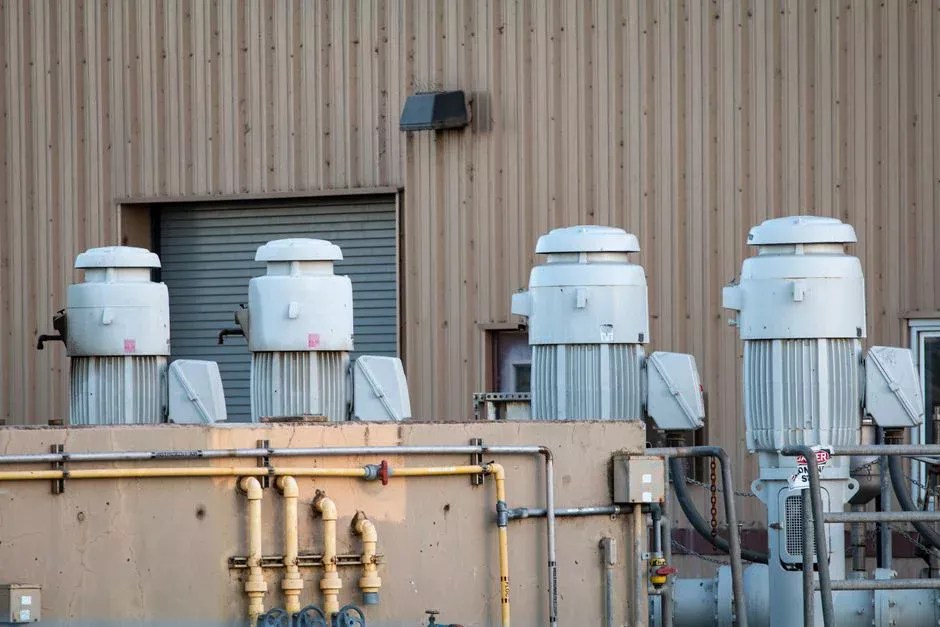
The four process trains a Kazakhstan buyer will encounter in 2026 are WSZ (buried A/O contact oxidation), MBR (membrane bioreactor with submerged PVDF hollow fiber), MBBR (moving bed biofilm reactor), and SBR (sequencing batch reactor). Each carries a different balance of CAPEX, footprint, effluent quality, and cold-climate tolerance, and matching the train to the discharge target is the single most consequential engineering decision in the package.
A WSZ buried A/O package STP integrates screening, biological contact oxidation, sedimentation, and chlorination inside one buried carbon-steel tank. CAPEX runs US$8,000-25,000 for 5-50 m³/day, footprint is the smallest of the four (the tank sits below grade), but effluent BOD₅ typically lands at 20-30 mg/L — adequate for SanPiN discharge but above the 3 mg/L reuse threshold.
An MBR package plant adds 0.1-0.4 µm PVDF hollow-fiber membranes after the aeration tank, producing effluent BOD₅/TSS ≤ 5 mg/L suitable for reuse, at CAPEX US$35,000-120,000 for 10-100 m³/day, with roughly 60% smaller footprint than a conventional activated-sludge system of equal capacity. MBBR uses floating PE biofilm carriers in a single-pass aerated reactor with no sludge recycle, tolerates hydraulic and load swings better than the other trains, and is the most cold-resilient option — favorable for Kazakhstan's -25 to -30 °C winters if the reactor is buried or housed. CAPEX sits at US$25,000-80,000 for 20-200 m³/day. SBR cycles fill-react-settle-decant in a single tank, is flexible for low-flow resorts and remote military bases, costs US$20,000-60,000, but demands a SCADA system and trained operator for cycle control.
| Parameter | WSZ (A/O buried) | MBR | MBBR | SBR |
|---|---|---|---|---|
| Effluent BOD₅ (mg/L) | 20-30 | ≤ 5 | 10-20 | 10-20 |
| Effluent TSS (mg/L) | 20-30 | ≤ 5 | 15-25 | 15-25 |
| Reuse-compliant | No | Yes | Marginal | Marginal |
| Footprint (relative) | Smallest (buried) | Small (~60% of CAS) | Medium | Medium-Large |
| Energy (kWh/m³) | 0.4-0.6 | 0.8-1.2 | 0.5-0.8 | 0.6-0.9 |
| CAPEX range (USD) | 8,000-25,000 | 35,000-120,000 | 25,000-80,000 | 20,000-60,000 |
| Cold tolerance (°C) | -25 (buried) | -20 (insulated) | -30 (buried/housed) | -20 (insulated) |
| Flow range (m³/day) | 5-50 | 10-100 | 20-200 | 5-150 |
| Best fit | Small village, discharge only | Hotel, hospital, reuse | Industrial park, mining camp | Low-flow resort, military base |
Landed Cost and Logistics: China to Kazakhstan in 2026
The catalog FOB Qingdao price is roughly 55-65% of the landed cost in Almaty; freight, EAEU duty, VAT, inland trucking, and on-site installation close the gap. For a 50 m³/day MBR skid in 2026, expect a 40HQ FCL routing Qingdao → Lianyungang rail → Khorgos or Altynkol border crossing → rail to Almaty (Altynkol branch) or Astana, with 25-35 days door-to-door transit.
Customs handling matters: EAEU Common Customs Tariff HS 8421.21 (filtering or purifying machinery) carries 0% duty for goods with a valid EAC certificate, 5% for non-EAC. VAT is 12% applied to the customs value plus duty. Inland trucking from Almaty rail terminal to site runs US$800-1,500 per 40HQ within a 200 km radius, and on-site installation typically adds 12-18% of equipment value for civil works, piping, and electrical tie-in.
Worked example for a 50 m³/day MBR package skid, 2026 pricing: FOB Qingdao US$45,000 + sea/rail freight US$4,500 + EAEU duty 0% (EAC in hand) + VAT 12% (US$5,940) + inland trucking US$1,200 + installation 15% of equipment (US$6,750) = total landed roughly US$63,400-72,000. One tariff edge case: if a skid exceeds the "package" definition or includes pumps and motors, partial reclassification under HS 8413 (pumps) can trigger 0-7% duty — flag this in the supplier RFQ to avoid surprise assessments at Khorgos.
| Cost Line | Basis | 2026 Estimate (US$) | Notes |
|---|---|---|---|
| FOB Qingdao (50 m³/day MBR) | Supplier quote | 45,000 | EAC certificate included |
| Sea + rail freight | 40HQ FCL, 25-35 days | 4,500 | Qingdao → Almaty via Khorgos |
| EAEU customs duty | HS 8421.21, EAC in hand | 0 | 5% if non-EAC |
| VAT | 12% on (FOB + freight + duty) | 5,940 | Recoverable for registered payers |
| Inland trucking | Almaty terminal → site, < 200 km | 1,200 | Permit for oversized load extra |
| Installation & commissioning | 15% of equipment | 6,750 | Civil, piping, electrical, SCADA |
| Total landed | Sum | 63,400-72,000 | Excludes contingency 10% |
Supplier Evaluation Checklist: 7 Red Flags and 5 Green Lights
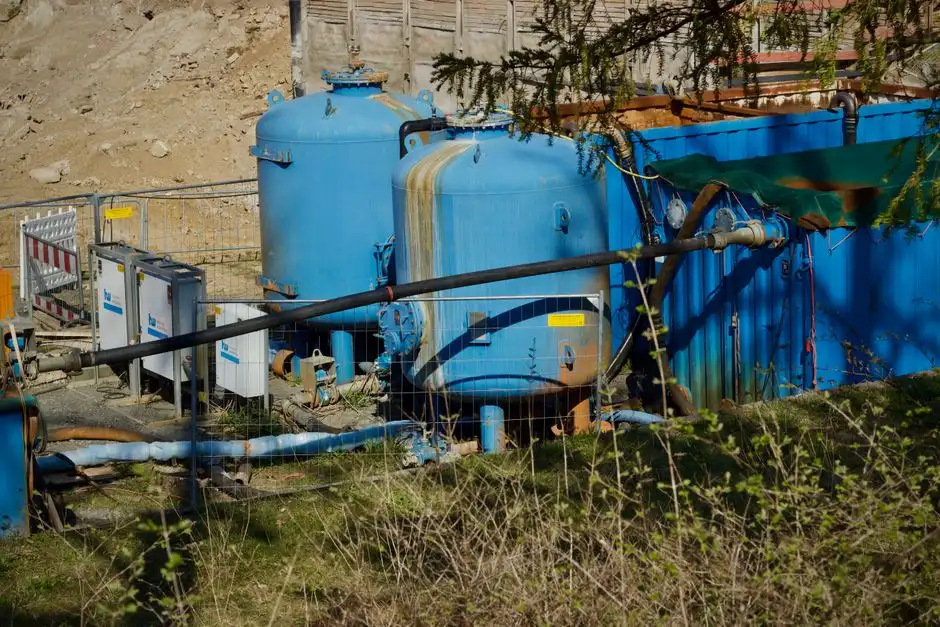
Use the following scorecard during a 2026 vendor call or factory audit. Seven red flags disqualify a supplier immediately; five green lights confirm shortlist status.
Red flags (disqualify on sight): (1) No EAC certificate or refusal to share the certificate number for verification; (2) No FAT video recorded on the actual production line; (3) Zero reference projects in Kazakhstan, Uzbekistan, or Russia; (4) Refusal to name membrane, blower, or pump OEM brands; (5) Vague "10-year lifespan" claim with no warranty document and no named exclusions; (6) Quotation sent only by email with no engineering drawing, P&ID, or hydraulic profile; (7) No after-sales spare-parts list with part numbers and unit prices.
Green lights (confirm shortlist): (1) ISO 9001:2015 audited factory, third-party certificate attached; (2) At least three reference projects in Kazakhstan, Uzbekistan, or Russia with named end users; (3) 24-month mechanical warranty plus 12-month membrane warranty in writing; (4) Hot-dip galvanized or SS304 tank with documented -30 °C cold-rating and insulated blower room option; (5) SCADA included with English/Russian interface, and engineering drawing stamped by a licensed P.E. A 2026-ready supplier like HydropureWater satisfies all five: EAC documentation support, FAT video per PO, WSZ and MBR skids rated to -30 °C with insulated blower rooms, and a 24-month mechanical warranty aligned with 2026 buyer expectations, plus a complementary JY water purification skid for potable polishing downstream. For a parallel procurement lens, see the Sewage Treatment Plant Supplier in Dhaka: 2026 Buyer's Guide and the Sewage Treatment Plant Supplier in Santiago: 2026 Buyer's Guide, and cross-check life-cycle math against the Total Cost of Ownership Wastewater Plant: 2026 TCO Breakdown.
Frequently Asked Questions
What effluent standard does a package STP in Kazakhstan need to meet in 2026? SanPiN 2.1.5.980-00 requires BOD₅ ≤ 10 mg/L for discharge to water bodies and ≤ 3 mg/L for irrigation reuse under SanPiN 2.1.7.573-96; EAC certification is mandatory.
How long does delivery from Qingdao to Almaty take in 2026? A 40HQ FCL with an MBR or WSZ skid takes 25-35 days door-to-door via Lianyungang rail and the Khorgos or Altynkol border crossing, with 7-10 days for EAEU customs clearance.
What is the typical landed cost of a 50 m³/day MBR package plant in Almaty? Roughly US$63,400-72,000 in 2026, including FOB US$45,000, freight US$4,500, VAT 12%, inland trucking, and 15% installation.
Which technology is best for a -30 °C Kazakhstan winter? Buried MBBR or buried WSZ with insulated blower room performs best in -25 to -30 °C operation; MBR needs a heated or insulated membrane hall to avoid sub-zero flux loss.
Do I need an EAC certificate to import a package STP into Kazakhstan? Yes — TR TS 010/2011 and TR TS 004/2011 EAC certification is required for customs clearance at Khorgos and for legal operation; non-EAC goods face 5% duty plus 12% VAT.