What Defines a Sewage Treatment Plant Supplier in Santiago in 2026
A sewage treatment plant supplier in Santiago in 2026 typically delivers containerized or skid-mounted systems rated 10–2,000 m³/day, with MBR units from Chinese manufacturers like HydropureWater offering <1 μm PVDF membrane filtration at CAPEX of roughly USD 180–450 per m³/day. Chilean projects must meet DS 90/2000 effluent limits — typically BOD5 ≤35 mg/L and TSS ≤80 mg/L for inland discharges — so supplier evaluation should prioritize documented compliance, local commissioning support, and FOB/CIF logistics via San Antonio or Valparaíso.
Three supplier tiers compete for Santiago-based projects. Local integrators typically act as EPC resellers, sourcing Chinese or Indian skids and adding structural, electrical, and PLC integration in-house; this route lowers unit cost but extends lead time by 30–60 days for local assembly. European OEMs — Suez and Keppel Seghers — sell pre-assembled, skid-mounted, factory-tested packaged systems with continuous-influent UNITANK cyclical activated-sludge technology optimized for municipal flows above 500 m³/day. Asian manufacturers, including HydropureWater in Hangzhou, Yash Enviro in Pune, and Nicoles in Delhi, supply direct from the factory floor, with the Mfrbee/Nicoles listing quoting a 15-day ex-works delivery baseline as the speed-to-site benchmark (source: Mfrbee, 2025-08).
Santiago is the procurement and engineering hub for most Chilean mining, food, dairy, and municipal projects even when the plant ships to Antofagasta, Rancagua, or the Bío-Bío region. The capital concentrates the civil contractors, the SEC-certified electrical integrators, and the freight forwarders who handle San Antonio and Valparaíso customs — meaning a Santiago-registered supplier can legally dispatch a commissioning engineer to a copper-mining camp 1,500 km to the north within 48 hours, while a non-Chilean vendor typically cannot.
Chilean Effluent Compliance: DS 90/2000 and What It Means for Your Supplier
DS 90/2000 — the Ministerio del Medio Ambiente (MMA) Norma de Emisión regulating contaminants in liquid discharges to marine and continental surface waters — is the binding regulation for any sewage treatment plant supplier in Santiago selling into industrial or municipal projects. The typical inland surface-water limits are BOD5 ≤35 mg/L, TSS ≤80 mg/L, oil and grease ≤20 mg/L, pH 6.0–8.5, with total nitrogen and total phosphorus caps tightened for sensitive basins (per DS 90/2000, MMA Chile).
The 2024 MMA updates tightened discharge monitoring for the Bío-Bío and Aconcagua basins, and the practical effect is that a 2026 supplier must now provide online effluent telemetry — pH, conductivity, turbidity, and flow on a 15-minute data-logged cycle — not just monthly batch sampling (per MMA 2024 update). Any vendor whose PLC cannot push Modbus TCP or Ethernet/IP to a customer SCADA is effectively disqualified for these basins. For coastal discharges, the limits tighten further: BOD5 ≤30 mg/L applies to marine outfalls under DS 90/2000 Table 4.
Translate compliance into four supplier filters before issuing an RFQ. First, demand pilot or reference-plant data within the last 24 months for a comparable influent — food, dairy, and mining-camp wastewaters behave very differently from municipal sewage. Second, require at least one operating reference in Chile, Peru, or another LATAM jurisdiction with documented BOD5 and TSS compliance certificates. Third, verify ISO 9001:2015 and ISO 14001:2015 certifications, both of which Chilean auditors routinely request during the RCA (Resolución de Calificación Ambiental) review. Fourth, confirm the supplier carries a SEC-compliant electrical panel with proper grounding and RCD protection; a Chinese skid shipped without SEC certification typically fails customs inspection on first arrival.
| Parameter | Inland Surface Water Limit (DS 90/2000) | Marine Discharge Limit (DS 90/2000) | Typical MBR Performance |
|---|---|---|---|
| BOD5 | ≤35 mg/L | ≤30 mg/L | ≤5 mg/L |
| TSS | ≤80 mg/L | ≤50 mg/L | ≤5 mg/L |
| COD | ≤120 mg/L (typical) | ≤100 mg/L | ≤30 mg/L |
| Oil & Grease | ≤20 mg/L | ≤15 mg/L | ≤5 mg/L |
| pH | 6.0–8.5 | 6.0–8.5 | 6.5–7.5 (controlled) |
| Total Nitrogen | ≤40 mg/L (sensitive basins ≤20) | ≤30 mg/L | ≤15 mg/L (with MLE) |
MBR vs SBR vs Packaged WSZ: Which Process Fits a Santiago Project
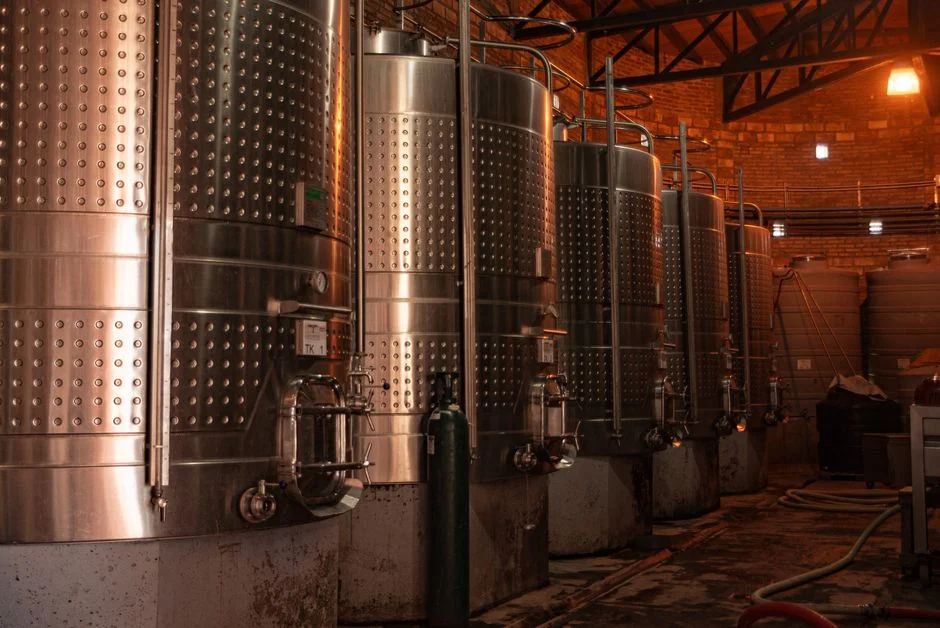
Process selection is the highest-leverage decision a Santiago buyer makes, because it locks in CAPEX, footprint, and operator skill for the next 15–20 years. The three options that dominate 2026 RFQs in central and northern Chile are submerged MBR with PVDF flat-sheet membranes, SBR/UNITANK cyclical activated sludge, and packaged WSZ underground biological contact-oxidation units.
MBR systems using a DF series PVDF flat sheet membrane module deliver the cleanest effluent — typically COD ≤30 mg/L and TSS ≤5 mg/L — at roughly 60% of the footprint of a conventional activated-sludge plant running at the same loading. The submerged hollow-fiber or flat-sheet configuration tolerates the high-FOG influent typical of Chilean dairy plants in the Bío-Bío region, and the permeate is reuse-ready for boiler feed or cooling-tower make-up, which matters in mining-camp projects where raw water costs USD 3–6 per m³. A complete MBR membrane bioreactor system sized 10–2,000 m³/day ships containerized, factory-tested, and ready to lift onto a concrete pad.
SBR and UNITANK systems combine conventional activated sludge with SBR cyclical operation, allowing continuous influent feed and continuous effluent discharge from the same tank — a real engineering advantage over true batch SBR. Keppel Seghers' UNITANK is the reference European design, typically selected for municipal and 500–5,000 m³/day flows where footprint is not critical and the influent is close to domestic strength. For flows under 100 m³/day, a packaged WSZ underground sewage treatment plant rated 1–80 m³/h running A/O biological contact oxidation is the lowest-CAPEX option, fully buried or trailer-mounted, and operates without a dedicated operator.
| Process Type | Capacity Range | Effluent BOD5 / COD / TSS | Footprint | Operator Skill | Best-Fit Application |
|---|---|---|---|---|---|
| MBR (submerged PVDF, <1 μm) | 10–2,000 m³/day | ≤5 / ≤30 / ≤5 mg/L | ~60% of CAS at same load | Mid (PLC + membrane cleaning) | Food, dairy, mining camps, water reuse |
| SBR / UNITANK (cyclical CAS) | 500–5,000 m³/day | ≤20 / ≤80 / ≤20 mg/L | ~80% of CAS | Mid-High | Municipal, large residential, mixed industrial |
| Packaged WSZ (A/O contact oxidation) | 1–80 m³/h (~25–1,900 m³/day) | ≤20 / ≤60 / ≤20 mg/L | Buried or above-ground skid | None (automated) | Rural communities, hotels, hospitals, small sites |
2026 CAPEX, OPEX, and Lead Time: What to Budget for a Santiago STP
Anchor your budget on a per-m³/day metric, not on the lump-sum quote, because containerized systems scale linearly while engineering, FAT, and commissioning are lumpy. The 2026 CAPEX envelope for a packaged sewage treatment plant sized for a Santiago industrial or municipal buyer runs USD 180–450 per m³/day for the 50–500 m³/day band and tightens to USD 250–500 per m³/day in the 500–2,000 m³/day band where civil works and MBR cassette counts dominate (HydropureWater field data, 2026). The packaged sub-50 m³/day tier drops to a USD 25K–80K lump sum; plants above 2,000 m³/day trend back upward to USD 300–600 per m³/day because they require on-site assembly rather than containerization.
OPEX sits in a predictable band. MBR plants run USD 0.12–0.35 per m³ treated, driven by aeration energy at 0.3–0.6 kWh/m³ and PVDF membrane replacement on a 7–10 year cycle. Packaged WSZ plants run USD 0.08–0.20 per m³ because the diffused-aeration A/O process has no membrane cost and the blower duty is lower; chemical dosing — typically chlorine dioxide or sodium hypochlorite for effluent polishing — adds USD 0.02–0.05 per m³ depending on residual target.
Lead time has three serial stages that buyers consistently underestimate. Ex-works production is 15–45 days per the Mfrbee/Nicoles benchmark. Sea transit from Ningbo or Qingdao to San Antonio or Valparaíso is 30–40 days on the Pacific route. Chilean customs and inland trucking to the project site add another 14–30 days, which puts realistic door-to-site delivery at 60–115 days. On Incoterms, FOB Ningbo or Qingdao lets a Santiago freight forwarder control customs clearance and typically saves 8–12% versus CIF San Antonio, but transfers customs risk to the buyer; CIF San Antonio is the right choice for a first-time foreign buyer who does not yet have a trusted Chilean agente de aduanas.
| Plant Size | Process Fit | CAPEX Range (USD) | OPEX (USD/m³) | Door-to-Site (days) |
|---|---|---|---|---|
| <50 m³/day | Packaged WSZ | 25,000–80,000 (lump) | 0.08–0.20 | 60–80 |
| 50–500 m³/day | MBR or SBR | 180–450 per m³/day | 0.12–0.30 | 75–100 |
| 500–2,000 m³/day | MBR or SBR | 250–500 per m³/day | 0.15–0.35 | 90–115 |
| >2,000 m³/day | SBR / UNITANK, civil build | 300–600 per m³/day | 0.10–0.25 | 120–180 |
Seven-Point Checklist for Selecting a Sewage Treatment Plant Supplier in Santiago
Paste this list into your RFQ template and disqualify any supplier who cannot answer "yes" to all seven items before you spend an hour on a video call. Each item targets a specific failure mode — compliance rejection, customs delay, performance shortfall — that has cost Chilean buyers real money in the last 24 months.
- Documented DS 90/2000 compliance with pilot or reference-plant data within 24 months. Ask for a third-party effluent certificate and a 30-day pilot report, not a glossy brochure.
- Local commissioning engineer or LATAM-based service partner. A remote video call does not count; ask for the CV of the engineer who will be on-site and proof of Chilean or Peruvian work history.
- Factory acceptance test (FAT) video, weld inspection records, and material certificates shipped with the skid. Insist on hydrostatic test footage of every membrane cassette and a mill certificate for the SS304 or SS316 contact parts.
- Spanish-language O&M manual and electrical drawings compliant with Chilean SEC standards. NCh 4/2003 for electrical panels and SEC RCD protection are non-negotiable; English-only documentation will be rejected at commissioning.
- Spare-parts kit included with a 48-hour dispatch commitment. Membrane modules, EPDM diffusers, dosing pumps, DO and pH sensors, and a PLC-controlled automatic chemical dosing system spare head should ship in the same container. A GX series rotary mechanical bar screen upstream protects the entire train.
- PLC with Ethernet/IP or Modbus TCP and remote-monitoring option. This is now mandatory for the 2024 MMA telemetry requirements in the Bío-Bío and Aconcagua basins.
- Warranty of at least 24 months on membranes and 12 months on instrumentation, with a defined liquidated-damages clause for missed performance guarantees. Performance guarantees should reference specific BOD5, COD, and TSS numbers under defined influent conditions, with a clear remedy if the plant fails to meet them during the 90-day reliability run.
For a fuller packaged-versus-conventional cost comparison, the Package vs Conventional Wastewater Treatment Plants: 2026 Cost Breakdown and the MBR vs MBBR: 2026 Engineering Comparison for Industrial Plants articles go deeper on the engineering tradeoffs. Buyers evaluating a Manama-region supplier for a parallel Middle East project can cross-reference the Sewage Treatment Plant Supplier in Manama: 2026 Buyer's Guide.
Frequently Asked Questions
What is the average CAPEX for a packaged STP in Santiago in 2026? USD 180–450 per m³/day for a 50–500 m³/day packaged MBR or SBR plant FOB Ningbo or Qingdao, or USD 25,000–80,000 for sub-50 m³/day packaged WSZ units delivered CIF San Antonio (HydropureWater field data, 2026).
Which Chilean regulation governs sewage discharge? DS 90/2000 (MMA), with typical inland surface-water limits of BOD5 ≤35 mg/L, TSS ≤80 mg/L, and pH 6.0–8.5; marine discharges tighten to BOD5 ≤30 mg/L and TSS ≤50 mg/L.
MBR or SBR for a 500 m³/day food plant? Choose MBR for water reuse, tight footprint, and FOG tolerance; the MBR membrane bioreactor system typically delivers COD ≤30 mg/L versus ≤80 mg/L for an equivalent SBR at higher footprint.
How long does shipping from China to Santiago take? 30–40 days sea transit from Ningbo or Qingdao to San Antonio or Valparaíso, plus 14–30 days for customs and inland trucking — total 60–115 days door-to-site.
Can a packaged STP operate fully unattended? Yes — a packaged WSZ underground sewage treatment plant runs automated with no dedicated operator, though a plate-frame filter press for sludge handling and a chlorine dioxide generator for effluent polishing are typically added to the scope.