Why Cairo's 2026 STP Procurement Market Is Different From Generic Exports
A sewage treatment plant supplier in Cairo in 2026 must deliver systems compliant with Egypt's EEAA Law 4/1994 and Decree 44/2000, which set industrial discharge limits of COD ≤ 1,100 mg/L and TSS ≤ 800 mg/L to municipal sewer. The four technology families Cairo buyers typically evaluate are containerized MBR (10–2,000 m³/day), buried WSZ packaged plants (1–80 m³/h), MBBR, and DAF pre-treatment — with CAPEX for 100 m³/day units landing between $45,000 and $180,000 USD FOB plus 12–18% for Alexandria or Damietta port clearance and inland transport.
A global "we ship to 80 countries" supplier list is not a Cairo shortlist. Egypt operates under three interlocking compliance pillars: EEAA Law 4/1994 (environmental protection framework), Decree 44/2000 (executive regulation with numerical discharge limits), and Law 202/2020 (the 2020 waste-management law whose 2026 enforcement updates now require producer registration and quarterly self-monitoring uploads to the national environmental monitoring system). Suppliers quoting only "WHO standards" or "EU Directive 91/271" are not aligned with Egyptian enforcement, and that misalignment surfaces at customs, not at commissioning.
2026 has also seen tightened EEAA spot inspections on industrial clusters in 10th of Ramadan and 6th of October, where textile, food, and petrochemical facilities have historically discharged above sewer limits. A vendor that cannot show Arabic-language O&M manuals, EEAA-recognized influent/effluent lab partners, and a local service presence within 200 km of Cairo will fail the documentation gate before the unit is even unboxed. Add the 12–18% landed cost premium over FOB for Alexandria or Damietta routing, plus HS 8421 customs duty at 5%, and the budget envelope shifts materially. For context on the metal-specific limits now being enforced, see the Egypt EEAA copper discharge compliance guide.
EEAA Discharge Limits Every Cairo STP Supplier Must Engineer To
Decree 44/2000 sets the numerical ceiling for industrial wastewater discharge; the 2026 EEAA enforcement layer adds monitoring frequency and reporting format on top. Any supplier shortlist should be screened against the table below before commercial terms are discussed.
| Parameter | Discharge to municipal sewer (10th of Ramadan, 6th of October industrial zones) | Direct discharge to surface water (Nile delta, canals) | Typical Cairo industrial influent (food/textile/petrochemical) |
|---|---|---|---|
| COD | ≤ 1,100 mg/L | ≤ 500 mg/L | 1,500–6,000 mg/L |
| BOD₅ | ≤ 600 mg/L | ≤ 250 mg/L | 800–3,000 mg/L |
| TSS | ≤ 800 mg/L | ≤ 200 mg/L | 400–2,500 mg/L |
| Oil & grease | ≤ 100 mg/L | ≤ 50 mg/L | 150–1,200 mg/L (food, petrochem) |
| pH | 6–9 | 6–9 | 5.5–10.5 |
| Total nitrogen | ≤ 100 mg/L | ≤ 30 mg/L | 40–200 mg/L |
| Total phosphorus | ≤ 15 mg/L | ≤ 5 mg/L | 10–60 mg/L |
Surface water discharge in the Nile delta carries roughly half the permissible COD and TSS of sewer discharge, which is why textile and food plants in Delta governorates are typically steered toward reuse-grade treatment rather than direct discharge. Suppliers quoting equipment that "meets Egyptian standards" without naming the parameter and the limit should be treated as non-compliant until proven otherwise. The 2026 update also requires quarterly self-monitoring reports uploaded to the national environmental monitoring system in a defined XML schema — a vendor with no EEAA-recognized lab partner cannot deliver that documentation.
Effluent reuse targets fall under Egypt's Land Reuse Code, which differs from Gulf or EU reuse practice: typical reuse spec is BOD₅ ≤ 60 mg/L, TSS ≤ 60 mg/L, fecal coliform ≤ 200 CFU/100 mL for landscape irrigation, and ≤ 1,000 CFU/100 mL for restricted agricultural use. The copper and heavy-metal sub-limits that often drive the polishing stage are detailed in the Egypt EEAA copper discharge compliance guide.
Four Technology Families Cairo Suppliers Typically Offer
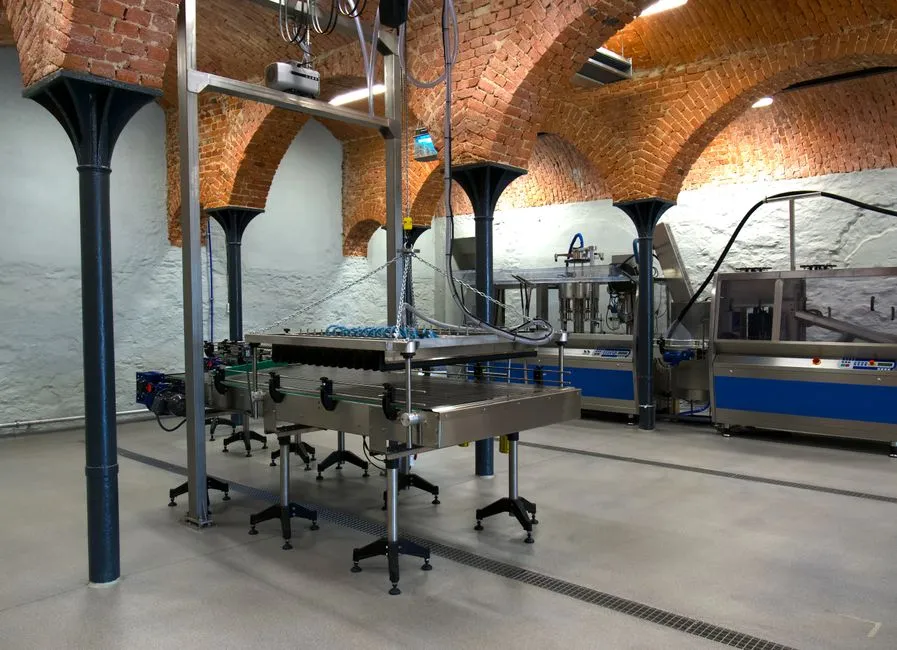
Most Cairo-tier suppliers will offer variants of four process families. Matching the influent profile and site constraints to the right family before approaching vendors prevents costly over- or under-engineering.
| Technology | Capacity range | Footprint | Energy (kWh/m³) | Typical CAPEX FOB (100 m³/day) | Effluent target |
|---|---|---|---|---|---|
| Containerized MBR | 10–2,000 m³/day | 60% smaller than CAS | 0.4–0.7 | $120,000–$180,000 | BOD₅ ≤ 10 mg/L, TSS ≤ 5 mg/L |
| Buried WSZ (A/O contact oxidation) | 1–80 m³/h | Buried, zero surface footprint | 0.3–0.5 | $25,000–$60,000 | BOD₅ ≤ 30 mg/L, TSS ≤ 30 mg/L |
| MBBR (moving PE carriers) | 50–5,000 m³/day | Modular, skid-mounted | 0.25–0.45 | $45,000–$90,000 | BOD₅ ≤ 30 mg/L, TSS ≤ 30 mg/L |
| DAF pre-treatment | 5–500 m³/h | Compact steel tank | 0.05–0.1 | $15,000–$40,000 | FOG ≤ 30 mg/L, TSS ≤ 60 mg/L (pre-biological) |
Containerized MBR (submerged PVDF, <1 μm filtration) is the right answer for sites with tight footprints, mixed municipal/industrial sewage, and a need for reuse-grade effluent in a single packaged unit. Buried WSZ packaged plants run unattended and suit hotels, hospitals, and residential compounds where above-grade equipment is unacceptable. MBBR systems with moving PE carriers handle the load surges typical of Egyptian textile and food operations, with COD removal of 85–95% at 500–3,000 mg/L influent. DAF pre-treatment is rarely standalone — a DAF pre-treatment system in front of an MBBR or MBR stage is what most Cairo food and petrochemical sites actually need to hit Decree 44/2000 oil and grease limits.
For a buried footprint with no surface visibility, a buried packaged sewage treatment plant is the typical low-CAPEX option; for high-effluent-quality requirements on a constrained site, a containerized MBR system is the standard answer.
How to Read a Cairo Supplier's Technical Proposal
Most proposal failures in Egypt are not commercial — they are technical-spec failures hidden behind a quoted capacity. Four filters separate an engineered proposal from a catalog cut-and-paste.
First, demand the hydraulic and organic loading rates stated explicitly. "Capacity 100 m³/day" with no kg BOD/m³·day figure attached means the vendor has not engineered the biological stage — they have picked a tank. A correctly engineered MBBR at 100 m³/day should state an OLR of 0.6–1.2 kg BOD/m³·day; a correctly engineered MBR should state MLSS of 8,000–12,000 mg/L and a stated flux of 10–15 L/m²·h. Second, require the influent design basis and effluent guarantees with measurement methods named: BOD₅ (5-day) not BOD₇, and a stated BOD:COD ratio, because Decree 44/2000 is enforced on BOD₅ and COD separately.
Third, ask for the PLC brand and model (Siemens S7-1200, Allen-Bradley CompactLogix, Schneider M221 are common in 2026 Egyptian projects), the HMI screen size (≥ 7"), and remote monitoring protocol. 2026 Cairo buyers increasingly require Modbus/TCP or MQTT export to a local SCADA or cloud dashboard — the PLC engineering is covered in the PLC control engineering guide for food-plant wastewater and the DCS engineering buyer guide. Fourth, confirm disinfection is included: Cairo's ambient temperatures above 35 °C for 5–6 months of the year elevate pathogen regrowth risk in holding tanks, and chlorination or UV contact stages are non-negotiable on any system that discharges or reuses.
2026 CAPEX and OPEX Benchmarks for Cairo STP Projects
Budgets for Cairo STP projects should be built around an FOB unit price plus a 17–31% landed cost stack, not the FOB figure alone. The ranges below are drawn from typical 2026 supplier quotes and HydropureWater field data for projects between 50 and 500 m³/day.
| Cost line | MBBR (100 m³/day) | Containerized MBR (100 m³/day) | Buried WSZ (100 m³/day) |
|---|---|---|---|
| Equipment FOB | $45,000–$90,000 | $120,000–$180,000 | $25,000–$60,000 |
| Sea freight to Alexandria/Damietta | +12–18% | +12–18% | +12–18% |
| Customs duty (HS 8421) | 5% | 5% | 5% |
| Inland trucking to Cairo | $3,000–$6,000 | $5,000–$8,000 | $4,000–$7,000 |
| Installation & commissioning (typical) | 10–15% of FOB | 10–15% of FOB | 15–20% of FOB (buried civil works) |
| OPEX ($/m³ treated) | $0.18–$0.40 | $0.45–$0.92 | $0.20–$0.45 |
OPEX is dominated by energy at Egypt's 2026 industrial tariff tiers. MBR at 0.4–0.7 kWh/m³ versus MBBR at 0.25–0.45 kWh/m³ is a 30–60% energy delta — material on a 100 m³/day unit running 24/7, which works out to roughly $1,500–$4,200/year in additional electricity at industrial rates. Sludge handling and chemical dosing (for phosphorus removal to ≤ 5 mg/L on surface-water-discharge projects) add another 20–35% to OPEX above the energy baseline. If the project terminates in a reuse spec, the RO polishing stage is the largest single add-on and is sized in the RO reuse stage design guide.
7-Point Vendor Scorecard for Shortlisting Cairo STP Suppliers
The seven filters below are what separate an Egyptian project-experienced manufacturer from a trading house that re-labels Chinese, Indian, or Turkish OEM equipment. Apply them in order; a "no" on any one item is grounds to drop the vendor from the shortlist.
- ISO 9001:2015 certification plus a documented EEAA or Ministry of Environment reference project in Egypt, with the end-user contact verifiable.
- In-house fabrication — verifiable workshop photos, welding procedure specifications (WPS) per ASME IX or equivalent, and a Factory Acceptance Test (FAT) video for the specific unit on order. Trading companies cannot provide FAT videos of their own shop floor.
- Arabic-language documentation (O&M manuals, electrical drawings, safety data sheets) and CE or equivalent electrical certification on the control panel. EEAA-recognized influent/effluent lab partner named in the proposal.
- Local service partner or distributor within 200 km of the project site, with a contractual response-time SLA (typically 24–48 hours) and a named service engineer.
- Spare parts kit included in the supply scope, with part numbers cross-referenced to the BOM and a 24-month availability guarantee in writing.
- Performance warranty backed by liquidated damages — a bond per mg/L of COD or BOD₅ above the guaranteed value, not a generic "12 months warranty" clause. Expect 1–3% of contract value as the LD envelope.
- Reference visit or live video call with at least one Egyptian end-user operating the same model for 12 months or more, including effluent test data from the operating site.
The scorecard above is the same structural filter used in the Bandung STP supplier comparison, adjusted for EEAA documentation and HS 8421 customs treatment.
Frequently Asked Questions
What CAPEX should a Cairo buyer budget for a 100 m³/day STP in 2026?
Equipment FOB ranges from $45,000–$90,000 for MBBR, $120,000–$180,000 for containerized MBR, and $25,000–$60,000 for buried WSZ. Add 12–18% sea freight to Alexandria or Damietta, 5% customs duty under HS 8421, $3,000–$8,000 inland trucking, and 10–20% for installation. The landed range typically lands between $65,000 and $240,000 depending on technology.
What are the EEAA discharge limits a Cairo STP must meet?
Decree 44/2000 sets COD ≤ 1,100 mg/L and TSS ≤ 800 mg/L for discharge to municipal sewer in industrial zones; direct surface water discharge to the Nile delta tightens to COD ≤ 500 mg/L and TSS ≤ 200 mg/L. Oil & grease ≤ 100 mg/L, pH 6–9, total nitrogen ≤ 100 mg/L.
When should a Cairo buyer choose MBR over MBBR?
Choose MBR when reuse-grade effluent is required (BOD₅ ≤ 10 mg/L, TSS ≤ 5 mg/L), the site footprint is constrained, or the influent is mixed municipal/industrial with high variability. Choose MBBR when the discharge target is BOD₅ ≤ 30 mg/L to sewer, the influent is industrial and load is steady, and OPEX sensitivity is high.
How long does shipping from a Chinese manufacturer to Cairo take in 2026?
Sea freight to Alexandria or Damietta runs 22–32 days from Shanghai or Ningpo, plus 7–14 days for customs clearance under HS 8421 and 2–4 days for inland trucking to Cairo. Total door-to-site is typically 35–55 days from PO, assuming complete documentation on first submission.
What warranty terms should a Cairo buyer insist on?
A 12-month performance warranty backed by liquidated damages (1–3% of contract value), a 24-month spare-parts availability guarantee, and an explicit clause that membrane or biological media replacement within the first 12 months is at vendor cost. Vague "12 months warranty" wording without an LD mechanism should be rejected.