South Africa's Nickel Discharge Limit: The Headline Number and the Statute Behind It
South Africa's controlling nickel discharge limit is set by the National Environmental Management: Waste Act (NEM:WA) Government Notice R.665, published in the Government Gazette No. 36760 on 6 September 2013. For effluents discharged into a catchment with downstream water use, the Special Limit is 0.07 mg/L total nickel; for disposal via irrigation or to a site that will not reach a watercourse within 100 m, the General Limit is 0.5 mg/L total nickel. Compliance is enforced by the Department of Water and Sanitation (DWS) under National Water Act Section 21, and the limit is non-negotiable once the Integrated Water Use Licence (IWUL) is issued.
For a compliance memo, the four citations you need on a single line are: NEM:WA GN R.665 (Gazette 36760, 6 Sept 2013) → 0.07 mg/L Special / 0.5 mg/L General total Ni → NWA Act 36 of 1998, Section 21 → DWS IWUL (form DW760/DW763). Any older reference to a "1.0 mg/L DWAF mining limit" is a historical artefact from the 2002 Department of Water Affairs and Forestry mining effluent guideline; that value still appears in some legacy IWULs, but the NEM:WA Waste Limits supersede it for industrial wastewater discharged under the Waste Act.
| Parameter | Special Limit (mg/L) | General Limit (mg/L) | Source |
|---|---|---|---|
| Total Nickel (Ni) | 0.07 | 0.5 | NEM:WA GN R.665, Gazette 36760, 6 Sept 2013 |
| pH range | 5.5–9.5 | 5.5–9.5 | NEM:WA GN R.665 |
| Total Suspended Solids | 10 | 50 | NEM:WA GN R.665 |
| Electrical Conductivity (mS/m) | 70 | 150 | NEM:WA GN R.665 |
| Historical "DWAF mining" Ni (superseded) | — | 1.0 | DWAF 2002 mining effluent guideline |
The Statutory Stack: NWA, NEM:WA, SANS 241 and How They Interact
Three documents govern one discharge, and they are not interchangeable. The National Water Act 36 of 1998 is the umbrella statute; Section 21 lists 11 water uses, of which (e) "discharging waste or water containing waste into a water resource" and (f) "discharging waste or water containing waste into a sewer" are the two that bite on every South African nickel discharger. You cannot legally discharge without an IWUL issued under Section 21, and a Section 21(e) or (f) water use without a licence is a criminal offence under Section 151.
NEM:WA Government Notice R.665 sits one layer down and sets the numerical thresholds — it is the document the inspector carries. SANS 241-1:2015 and SANS 241-2:2015 only apply when the treated water is destined for human consumption, including potable reuse schemes; SANS 241 uses 0.07 mg/L Ni as its operational limit, which is why the NEM:WA Special Limit is also the de facto potable-reuse target. The DFFE administers NEM:WA; the DWS administers the IWUL — different application forms, different regional offices, different inspectors. When you discharge to a municipal sewer, the local bylaw adds a third layer, typically 1.0–2.0 mg/L Ni in the City of Johannesburg, City of Cape Town, and eThekwini bylaws, even though NEM:WA is stricter. The bylaw number is what the municipal wastewater treatment works actually monitors on its inlet.
Where the Nickel Comes From: Typical South African Influent Loads
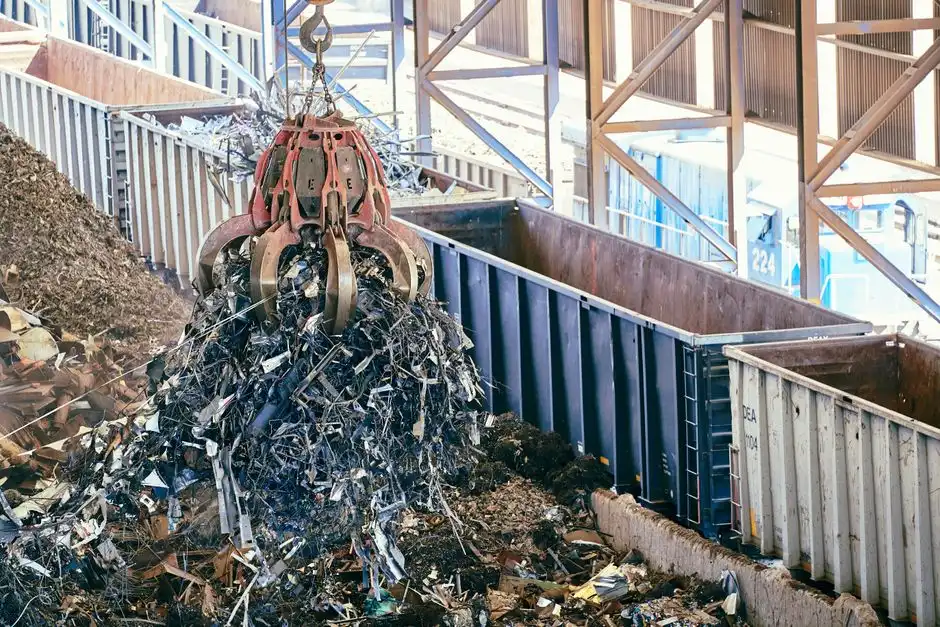
You cannot design a treatment train that hits 0.07 mg/L Special Limit without knowing the feed. South African source categories break into four feed envelopes, and each one drives a different technology choice downstream.
Electroplating rinse water from decorative and functional lines (e.g. the automotive fastener plating shops in Durban, the electronics finishing sector in Cape Town) typically carries 50–500 mg/L Ni at pH 2–5, with high sulfate (1,000–5,000 mg/L SO₄²⁻) and trace cyanide in older decorative lines. Mining and ore processing effluent from the PGM belt (Bushveld Complex), gold (Witwatersrand tailings), and base-metal operations in the Northern Cape runs 5–100 mg/L Ni depending on the ore body, at neutral to alkaline pH, almost always with co-dissolved Cu, Zn, Fe, and Co that compete for precipitant. Stainless steel and alloy pickling carries 10–200 mg/L Ni at pH 1–3, with Cr(VI) and Fe as the harder targets — chromium usually defines the unit operation, not nickel. Spent catalyst and battery recycling feeds (e.g. from the Crescent battery recyclers and the Fuel Cell catalyst sector in the Western Cape) are the strongest at 500–5,000 mg/L Ni and need upstream concentration control before they hit the main treatment train.
Across all four categories, South Africa's load-shedding reality (Eskom rotational outages of 4–12 hours per day in 2026, per the System Operator's quarterly status reports) drives operators to specify equalization tanks sized for 8–24 hours of hold to buffer batch peaks, protect downstream biology, and let the PLC-controlled chemical dosing system track a smoothed influent rather than chasing spikes.
| Source category | Typical Ni (mg/L) | pH | Key co-contaminants | Design implication |
|---|---|---|---|---|
| Electroplating rinse water | 50–500 | 2–5 | SO₄²⁻ 1,000–5,000; trace CN⁻ | pH correction + sulfide primary |
| Mining / PGM / base metal | 5–100 | 6–9 | Cu, Zn, Fe, Co | Selective sulfide or IX |
| Stainless steel pickling | 10–200 | 1–3 | Cr(VI), Fe, F⁻ | Cr(VI) reduction first, then Ni |
| Catalyst / battery recycling | 500–5,000 | 1–4 | Co, Li, organics | Electrowinning candidate |
Treatment Technologies That Hit 0.07 mg/L: A Process Selection Matrix
Five technologies are commercially deployed against nickel in South Africa. None of them is a universal answer; the choice is set by feed concentration, target residual, reuse intent, and whether nickel recovery is economically interesting.
Hydroxide precipitation with NaOH or lime at pH 9.5–10.5 leaves 0.5–2 mg/L residual Ni — it passes the NEM:WA General Limit (0.5 mg/L) under ideal conditions but does not reliably hit the 0.07 mg/L Special Limit. It is the workhorse primary stage because the sludge is stable, the chemistry is forgiving, and NaOH dosing is straightforward. Sulfide precipitation with NaHS or FeS at pH 9.0–10.0 drops residual Ni to 0.05–0.1 mg/L and meets the Special Limit directly; the engineering risk is H₂S release at low pH, so sealed reactors with NaOH dosing on the vent scrubber are mandatory. Ion exchange with aminomethylphosphonic acid (chelating) resin achieves <0.05 mg/L residual and is the right answer for dilute streams (10–100 mg/L) and for polishing after hydroxide; resin fouling by Fe³⁺ and Ca²⁺ defines the cycle length. Reverse osmosis achieves <0.01 mg/L and is the right answer when the discharge is also the product (e.g. rinse-water reuse to the plating bath) — typical flux on a brackish South African feed is 15 LMH at 10 bar with 1.5–2.5 m³ permeate recovered per 3 m³ feed. Electrowinning is a recovery play, not just a treatment: it pulls saleable nickel cathode at current densities of 200–400 A/m² and is only economic above 2,000 mg/L feed with high enough volumes; Q4 2025 LME-adjacent pricing put Ni cathode at roughly R350–R420/kg.
The decision rule most South African process engineers default to: if feed is >200 mg/L, run sulfide precipitation plus filtration, then ion exchange as a polisher; if feed is <200 mg/L, run hydroxide plus filtration, then RO if reuse is needed. For the separation stage after primary precipitation, a dissolved air flotation system handles the fine Ni(OH)₂ flocs better than a conventional clarifier, and a high-efficiency lamella clarifier is the right answer where footprint is constrained. For reuse applications the polish step is typically an industrial RO system.
| Technology | Achievable residual (mg/L Ni) | Best feed range (mg/L) | Key risk |
|---|---|---|---|
| Hydroxide (NaOH/lime) | 0.5–2.0 | 10–5,000 | Misses 0.07 mg/L without polish |
| Sulfide (NaHS/FeS) | 0.05–0.1 | 50–5,000 | H₂S safety; sealed reactor |
| Ion exchange (chelating resin) | <0.05 | 10–100 | Fe/Ca fouling |
| Reverse osmosis | <0.01 | 0.5–50 | Membrane scaling, energy |
| Electrowinning | <0.5 (plus cathode sale) | >2,000 | Capex, power supply |
Engineering the Treatment Train for a South African Site
A defensible 50 m³/day treatment train for a mixed electroplating shop looks like five unit operations in series, each with a measurable design parameter.
- Equalization (8–24 h hold) with pH correction to ≥7, aeration for Fe²⁺ oxidation if needed. This is mandatory under most IWUL conditions and buffers the downstream train against batch spikes from drag-out tanks.
- Coagulation/flocculation + solid-liquid separation using either a DAF or a lamella clarifier. Design surface overflow rate: 20–40 m/h on a lamella, 4–6 m/h on a DAF for the fine Ni(OH)₂ flocs. A 10–20 mg/L FeCl₃ dose in stoichiometric ratio with the nickel load (Fe:Ni ≈ 1:1 by mass) improves floc settleability and reduces residual colloidal nickel.
- Primary precipitation under PLC-controlled pH. Switch NaOH for NaHS (pH 9.0–9.5) when the target is the Special Limit; stay on hydroxide for the General Limit. pH probes with auto-cleaning and redundant dosing pumps are cheap insurance.
- Filtration through multi-media (sand + anthracite + garnet) brings TSS to <5 mg/L, which is what protects downstream resin or RO from blinding. A multi-media filtration unit sized at 10–15 m/h service flow is the standard specification.
- Polishing via ion exchange (typical service flow 20 BV/h on aminomethylphosphonic acid resin) for the Special Limit, or via RO (typical flux 15 LMH at 10 bar, 65–75% recovery) if the water is destined back to the rinse tanks.
Sludge handling is the line item most engineers under-design. The Ni-bearing hydroxide or sulfide cake classifies as Type 2 hazardous waste under NEM:WA Waste Classification GN R.634 of 2013, and the receiving disposal site will reject anything below 30% dry solids. A plate-and-frame filter press dewatering to ≥35% DS is the standard equipment choice; the cake is then consigned under a section 20 waste manifest to a licensed H:h disposal facility such as Holfontein or Vissershok.
Cost and Compliance in 2026: What a South African Plant Will Actually Pay
For a 50 m³/day electroplating line meeting the 0.07 mg/L NEM:WA Special Limit, the turnkey CAPEX is R6.5M–R11.5M ex VAT in Q1 2026 ZAR, with hydroxide + ion exchange as the baseline technology (sulfide or RO adds 15–30% to that range). The wide range reflects three variables: influent variability, the equalization tank size the IWUL will demand, and whether you include a building enclosure. OPEX runs R90–R150 per cubic metre treated, dominated by NaHS or NaOH dosing (≈40% of OPEX), waste-sludge disposal at a licensed H:h site (≈25%), and electricity (≈20%) — the last figure is high in 2026 because of the diesel generator hours needed to ride out load-shedding. A rotary mechanical bar screen on the inlet side (typically a GX-series rotary bar screen) keeps wipes and metal offcuts out of the equalization tank and is the cheapest insurance on the whole plant.
On the permitting side, a non-mining industrial IWUL takes 60–120 days from submission to issue; a mining IWUL takes 6–12 months and almost always requires a Water Use Licence Application Report signed by a Pr.Sci.Nat. professional. Once the licence is in hand, self-monitoring is a non-trivial line item: monthly SANAS 17025-accredited lab composite sampling for total Ni, plus continuous flow-weighted pH and EC logging, and the compliance test is that 90% of measurements over 12 months must be below the limit. A single excursion triggers a Section 19 incident report under the National Water Act. For adjacent context on global standards, the global fluoride discharge standard guide lays out the same compliance logic, and the online copper monitoring sensor guide is directly relevant if you need online Ni monitoring rather than composite sampling. For a comparable design walk-through on a different metal, the electroplating effluent treatment design guide covers copper-zinc rinse trains in the same ZAR envelope. For a regional comparison, the industrial wastewater treatment in Iran guide is useful when benchmarking permits and tariffs across the region.
| Line item | Q1 2026 ZAR | Share of OPEX |
|---|---|---|
| CAPEX (50 m³/day, hydroxide + IX) | R6.5M–R11.5M | — |
| OPEX total | R90–R150/m³ | 100% |
| NaHS / NaOH | ~R45/m³ | ≈40% |
| Sludge disposal (H:h site) | ~R28/m³ | ≈25% |
| Electricity (incl. load-shedding) | ~R22/m³ | ≈20% |
| Maintenance, resin, lab | ~R15/m³ | ≈15% |
| IWUL application timeline (industrial) | 60–120 days | — |
| IWUL application timeline (mining) | 6–12 months | — |
Frequently Asked Questions
What is the South Africa nickel discharge limit in mg/L? The NEM:WA Special Limit is 0.07 mg/L total nickel and the General Limit is 0.5 mg/L total nickel, set by Government Notice R.665 of 6 September 2013 (Gazette 36760). The Special Limit applies to any discharge into or onto a watercourse or catchment likely to be used downstream; the General Limit applies to irrigation or re-use where the discharge will not reach a watercourse within 100 m.
Does South Africa follow WHO for nickel? The NEM:WA Special Limit of 0.07 mg/L matches the WHO Drinking Water Guideline for nickel, and SANS 241-1:2015 also uses 0.07 mg/L operationally. South Africa is therefore aligned with WHO for the Special Limit but not the WHO Health-based value of 0.02 mg/L — the South African number is a risk-management operational threshold, not a health-based guideline value.
What is the mining effluent nickel limit in South Africa? NEM:WA GN R.665 is the controlling instrument for any industrial or mining effluent, so the 0.07 mg/L Special and 0.5 mg/L General limits apply. The older 1.0 mg/L DWAF 2002 mining guideline value is still quoted in some legacy IWULs but is no longer the controlling number for industrial wastewater regulated under the Waste Act.
How do I get an IWUL for nickel discharge? Apply to your regional DWS office using forms DW760 (application) and DW763 (technical report), supported by a Water Use Licence Application Report signed by a registered Pr.Sci.Nat. professional. Processing time is 60–120 days for a non-mining industrial site and 6–12 months for a mining IWUL — factor the mining timeline into any project schedule before you commit CAPEX.
Can I discharge nickel-treated water to a municipal sewer in South Africa? Yes, but the local bylaw applies alongside NEM:WA. Johannesburg Water, Cape Town, and eThekwini impose bylaw limits of 1.0–2.0 mg/L Ni on sewer discharges to protect the municipal wastewater treatment works, and the municipality may require additional pretreatment (e.g. flow equalization and pH correction) before acceptance.