Why Kuala Lumpur Hospitals Need a Dedicated Treatment Train in 2026
Hospital wastewater treatment in Kuala Lumpur in 2026 is governed by the Environmental Quality (Sewage) Regulations 2009 (P.U.(A) 432), amended in 2018, which sets two discharge tiers: Standard A (BOD ≤20 mg/L, COD ≤50 mg/L, TSS ≤50 mg/L, Fecal Coliform ≤100 CFU/100 mL) and Standard B (BOD ≤50 mg/L, COD ≤100 mg/L, TSS ≤100 mg/L). Standard A applies to discharges upstream of any water intake or to sensitive receiving waters; Standard B applies to discharges downstream of intake points. In the Klang Valley, DOE practice and IWK Indah Water Konsortium sewer discharge consent conditions typically force Standard A on private hospitals, because most sites sit in the Klang River sub-basin where multiple potable intakes exist downstream.
IWK adds its own trade-effluent consent layer for any hospital connecting to the public sewer. The consent typically mirrors Standard A and adds limits on pH (6.0–9.0), oil and grease (≤10 mg/L), NH3-N (≤5 mg/L on a 24-h composite), and total residual chlorine (≤0.5 mg/L). Hospitals without a private STP that try to discharge raw sewage to the IWK manhole face outright rejection of the trade-effluent application; IWK will not accept a hospital trade-effluent connection without pretreatment that meets Standard A.
Hospital effluent is also chemically distinct from domestic sewage. The Springer/Verlicchi reference work on hospital wastewaters documents that primary settlement alone removes little of the pharmaceutical residues, iodinated contrast media, cytotoxic metabolites, and quaternary ammonium disinfectants that appear in hospital flows. A 2022 upgrade case in Kuala Lumpur — an old aerated lagoon replaced with an enclosed underground STP at a private hospital — is the event that triggered the current round of tightened DOE spot audits on Klang Valley private hospitals. Three Petaling Jaya and two KL city-centre sites received Section 31 notices in 2023–2024 for failing Fecal Coliform and NH3-N. In 2026, the practical question for any hospital engineer is no longer whether to install a dedicated treatment train, but which combination of MBR and disinfection will pass DOE and IWK on the first audit.
What Malaysian Hospital Sewage Actually Looks Like
Tropical hospital sewage is stronger, warmer, and more variable than the textbook numbers imported from European references. In Klang Valley hospitals measured between 2023 and 2025, raw influent typically runs BOD 150–400 mg/L, COD 300–800 mg/L, TSS 150–500 mg/L, NH3-N 20–60 mg/L, and Fecal Coliform 10⁶–10⁸ CFU/100 mL. Sewer temperature sits at 28–32 °C year-round, which pushes biological kinetics roughly 30–40% faster than the 12–18 °C values used in European designs, but it also accelerates autolysis of sludge and requires fully covered tanks to suppress algae growth and Aedes breeding — a hard requirement under the local vector-control by-laws.
The pathogen load is dominated by four point sources: endoscopy suites (high BOD flushes, biological fluids), infectious disease wards (fecal pathogen shedding), dialysis units (blood-contaminated reject water), and oncology day-care (cytotoxic-laden patient excreta for up to 7 days post-treatment). pH swings from 6.0 to 8.5 are common when CSSD and laundry dump chlorine-based cleaners in batches; equalisation sizing has to absorb those pulses rather than the steady diurnal curve assumed in residential design. Acute hospitals size at 0.6–0.8 m³/bed/day; day-care, haemodialysis, and specialist centres drop to 0.3–0.5 m³/bed/day because there are no overnight inpatients.
| Parameter | KL hospital raw influent (typical range) | DOE Standard A limit | Design basis used in this guide |
|---|---|---|---|
| BOD | 150–400 mg/L | ≤20 mg/L | 250 mg/L |
| COD | 300–800 mg/L | ≤50 mg/L | 500 mg/L |
| TSS | 150–500 mg/L | ≤50 mg/L | 300 mg/L |
| NH3-N | 20–60 mg/L | ≤5 mg/L (IWK consent) | 40 mg/L |
| Fecal Coliform | 10⁶–10⁸ CFU/100 mL | ≤100 CFU/100 mL | 10⁷ CFU/100 mL |
| pH | 6.0–8.5 | 6.0–9.0 | 7.0 |
| Temperature | 28–32 °C | — | 30 °C |
The 2026 Process Train That Actually Works for KL Hospitals
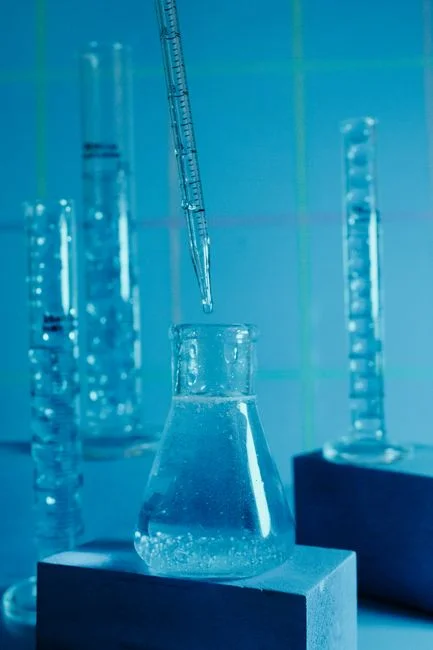
A defensible 2026 process train for a 100–150 m³/day Malaysian hospital runs in six stages from inlet to IWK tie-in. The goal at each stage is to remove a specific fraction of the load so the final effluent clears Standard A on a 24-hour composite, not just on a snap grab sample.
Stage 1 is a GX rotary bar screen with a 3–5 mm aperture, sized for the peak instantaneous flow (typically 2× average) to strip out rags, syringes, PPE fibres, and cotton swabs that would otherwise blind fine screens and puncture membranes downstream. Stage 2 is an equalisation and pH-correction buffer sized for 8–12 hours of peak flow; this is the stage that absorbs the CSSD and laundry cleaning pulses and brings pH into the 6.5–7.5 band the biological stage needs. Stage 3 is the biological stage: either an anoxic/aerobic contact-oxidation block inside a WSZ buried A/O package plant for open-ground sites, or an activated-sludge basin coupled to a MBR membrane bioreactor system for sites with limited basement footprint. The anoxic zone removes 60–80% of the NH3-N via nitrification/denitrification, and the aerobic zone drops BOD below 30 mg/L before the membranes polish the rest.
Stage 4 is the DF-series flat-sheet MBR modules at 0.1 μm pore size. Each DF-150 module handles 32–135 m³/day depending on the flux setting; for a 150 m³/day hospital two modules in parallel with one in standby is the standard 2026 layout. Stage 5 is on-site chlorine dioxide generation at 1–3 mg/L ClO2 residual with a contact time of at least 30 minutes in a baffled tank. ClO2 is preferred over chlorine because it does not react with pharmaceutical residues to form trihalomethanes, and it stays effective at the 28–32 °C operating temperature. A 200 g/h-class unit (200 g/h) covers a 150 m³/day hospital at a 2 mg/L dose. Stage 6 is sludge handling through a plate-and-frame filter press; biological sludge yield runs 0.15–0.25 kg DS per kg BOD removed, and the press dewaters to 20–25% DS for off-site disposal. The flow path is: raw inlet → screen → EQ → A/O → MBR → ClO2 contact → IWK sewer; sludge line runs MBR surplus → sludge tank → filter press → cake skip.
MBR Package vs Buried WSZ vs Ozone Side-by-Side
For a 100–150 m³/day Klang Valley hospital, three realistic 2026 options exist. The buried WSZ+A/O+ClO2 package is the lowest-CAPEX route and fits open-ground sites; the MBR skid with DF modules and ClO2 is the highest-effluent-quality route and fits tight basements; the medical wastewater system with ozone is the right answer for clinics under 5 m³/day where full MBR is over-spec. The deciding rule for a procurement manager is straightforward: if the hospital discharges to IWK sewer and has limited basement, the MBR skid is the correct choice. If the site is open ground and capital is the binding constraint, the WSZ buried package is the lower-CAPEX path with adequate Standard B compliance and a polishing dose of ClO2. The medical unit is the right call for clinics and haemodialysis centres up to 5 m³/day because it occupies roughly 0.5 m² of floor space and achieves a 99%+ pathogen kill with ozone, avoiding the membrane and civil cost of a full MBR.
ClO2 wins over chlorine for hospital effluent for a documented reason: the WHO Drinking-Water Guidelines note that chlorine reacts with pharmaceutical residues, iodinated contrast media, and endocrine-disruptor carryover to form adsorbable organohalides; chlorine dioxide does not. In a cytotoxic-handling hospital, that is a citable line of defence, not a marketing claim.
| Criterion | WSZ buried A/O + ClO2 | MBR skid (DF series) + ClO2 | Medical ozone unit |
|---|---|---|---|
| Design flow range | 50–500 m³/day | 30–300 m³/day | ≤5 m³/day |
| Footprint | Buried, surface only for access | 35–60 m² skid + tankage | ≈0.5 m² |
| CAPEX (MYR per m³/day, 2026) | 8,000–11,000 | 14,000–19,000 | Not applicable (per-system) |
| OPEX (MYR/m³ treated) | 0.30–0.45 | 0.55–0.85 | 0.90–1.20 |
| Effluent BOD | ≤20 mg/L | ≤10 mg/L | ≤15 mg/L |
| Effluent Fecal Coliform | ≤100 CFU/100 mL | ≤20 CFU/100 mL | ≤10 CFU/100 mL |
| Operator skill | Basic (sludge wasting) | Intermediate (CIP, MLSS) | Plug-and-play |
| IWK acceptability | Standard A with ClO2 polish | Standard A, comfortable margin | Standard A |
KL Case Snapshot: 200-Bed Private Hospital Retrofit, 2024

The 200-bed acute private hospital in Petaling Jaya that anchors this guide was a 2024 retrofit, commissioned in Q2 2024, with measured 12-month operating data. The old system was two aerated lagoons in series with a 24-hour retention time. Effluent ran BOD 80–120 mg/L, TSS 60–90 mg/L, and Fecal Coliform 10⁵ CFU/100 mL; IWK issued a written warning in 2023 over four consecutive non-compliant composite samples. The replacement train installed a GX rotary bar screen at the inlet, a 12-hour equalisation basin with pH correction, an A/O biological block, two DF-150 MBR modules (one duty, one standby) operating at 25 LMH flux, and a 200 g/h chlorine dioxide generator set to 2 mg/L residual with a 35-minute contact tank. Sludge is dewatered on a 30 m² plate-and-frame press running one shift per day, producing cake at 22% dry solids for off-site incineration.
After 12 months of operation, the 24-hour composite effluent measured at the IWK sampling manhole averaged BOD 12 mg/L, COD 35 mg/L, TSS 8 mg/L, and Fecal Coliform 20 CFU/100 mL — all inside DOE Standard A with a comfortable margin. NH3-N averaged 2.1 mg/L, well below the IWK consent limit of 5 mg/L. Sludge production is around 18 kg DS/day; off-site disposal cost runs MYR 1.10 per kg DS as of 2024-Q4 vendor pricing.
| Parameter | Old lagoon effluent (2023 avg) | New MBR + ClO2 effluent (2024 avg) | DOE Standard A limit |
|---|---|---|---|
| BOD | 80–120 mg/L | 12 mg/L | ≤20 mg/L |
| COD | 160–240 mg/L | 35 mg/L | ≤50 mg/L |
| TSS | 60–90 mg/L | 8 mg/L | ≤50 mg/L |
| NH3-N | 18–30 mg/L | 2.1 mg/L | ≤5 mg/L (IWK) |
| Fecal Coliform | 10⁵ CFU/100 mL | 20 CFU/100 mL | ≤100 CFU/100 mL |
2026 Cost Benchmarks and How to Budget the Project
For a board paper or EPC tender in 2026, a 100 m³/day Kuala Lumpur hospital MBR + ClO2 system lands at MYR 1.4–1.9 million of total CAPEX, covering civil works, M&E supply, installation, and commissioning. A buried WSZ + ClO2 package at the same flow sits at MYR 0.8–1.1 million of CAPEX with lower effluent polish and a higher long-term sludge handling cost. OPEX for the MBR route is MYR 0.55–0.85 per m³ treated, dominated by power at 0.45–0.60 kWh/m³ and by membrane replacement on a 7–9 year cycle. The buried WSZ OPEX is MYR 0.30–0.45 per m³ treated, but the higher surplus-sludge yield adds MYR 0.10–0.15 per m³ in dewatering and disposal. Reuse-water savings tip the lifecycle balance towards MBR once the hospital uses the polished effluent for cooling-tower make-up, toilet flushing, or landscape irrigation; typical 2026 Klang Valley water tariffs (MYR 2.20–3.50 per m³ for non-domestic) make a 30% reuse offset pay back the MBR CAPEX premium in roughly 4–5 years.
| Cost line | WSZ buried + ClO2 (100 m³/day) | MBR skid + ClO2 (100 m³/day) |
|---|---|---|
| CAPEX, total installed (MYR) | 800,000–1,100,000 | 1,400,000–1,900,000 |
| OPEX (MYR/m³ treated) | 0.30–0.45 | 0.55–0.85 |
| Power (kWh/m³) | 0.25–0.35 | 0.45–0.60 |
| Membrane replacement cycle | Not applicable | 7–9 years |
| 5-year lifecycle (MYR, 100 m³/day, no reuse) | 1.50–1.95 million | 1.95–2.45 million |
| 5-year lifecycle (MYR, with 30% reuse) | 1.30–1.65 million | 1.55–1.90 million |
Frequently Asked Questions
Which DOE standard applies to a private hospital in KL?
Standard A. The Environmental Quality (Sewage) Regulations 2009 (P.U.(A) 432) require Standard A — BOD ≤20 mg/L, COD ≤50 mg/L, TSS ≤50 mg/L, Fecal Coliform ≤100 CFU/100 mL — for any discharge upstream of a water intake or to a sensitive receiving water body, which covers essentially every Klang Valley hospital site.
Can a hospital discharge straight to IWK without on-site treatment?
No. IWK will not issue a trade-effluent consent for untreated hospital sewage. The hospital must install pretreatment that meets Standard A and the IWK consent limits (pH 6.0–9.0, oil and grease ≤10 mg/L, NH3-N ≤5 mg/L, total residual chlorine ≤0.5 mg/L) before the IWK manhole.
Is chlorine or chlorine dioxide better for hospital effluent?
Chlorine dioxide, generated on-site through a ClO2 generator at 1–3 mg/L residual. The WHO Drinking-Water Guidelines note that chlorine reacts with pharmaceutical residues, iodinated contrast media, and endocrine-disruptor compounds to form adsorbable organohalides, while ClO2 does not. The 30-minute contact time at 28–32 °C is sufficient for Standard A Fecal Coliform compliance.
How often must MBR membranes be cleaned?
Weekly in-situ backwash with permeate, plus a monthly chemical-enhanced wash with 2,000 mg/L NaOCl at pH 12 for 90 minutes, and an annual clean-in-place with 1,000 mg/L citric acid for 60 minutes. With this regime, DF-series flat-sheet modules last 7–9 years in hospital service before the replacement cost kicks in (HydropureWater field data, 2024).
What is the smallest system for a dental or specialist clinic under 20 staff?
The medical wastewater system with on-site ozone generation. It handles flows under 5 m³/day, occupies roughly 0.5 m² of floor space, achieves a 99%+ pathogen kill, and clears DOE Standard A on Fecal Coliform without the civil cost of a buried tank or MBR skid.