2026 Wastewater Heat Recovery Market: Global Snapshot and Regional Split
The 2026 wastewater heat recovery market splits sharply by region: North America leads at a 6–9% CAGR through 2035 (per the Northern America Wastewater Heat Recovery System market report, 2026), the European Union is policy-driven under the 2024 EPBD recast and RED III renewable-heat targets, and Asia-Pacific is the fastest-growing industrial adopter, led by China and India. Regional growth is dictated by four axes: sewage temperature profile, decarbonization mandates, electricity-to-gas price spread, and the density of high-temperature industrial effluent in food, paper, chemicals, and textiles.
The Nagpal 2021 review (Nagpal et al., Water, 2021) established the global "available resource" baseline at roughly 357 TWh/yr of recoverable thermal energy from municipal wastewater — a figure calculated before the 2024 EPBD recast reclassified qualifying renewable heat. The 2025 iScience special issue call (Cell Press, 2025-09) on "Wastewater Harvesting & Applications" confirms the topic is now an indexed, peer-reviewed research priority, and the Bologna sewer-temperature study (Cipolla & Maglionico, Energy Procedia 2014) remains the canonical European reference for flow-rate and temperature variability used in project feasibility models.
For this article, "wastewater heat recovery" (WWHRA) covers four technology buckets: municipal sewage heat recovery via sewer heat exchangers, WWTP effluent-to-source heat pumps, industrial effluent heat exchangers (shell-and-tube, plate), and in-pipe thermal energy recovery networks. Each is then compared on the same four axes so the reader can benchmark regions apples-to-apples.
North America: Largest 2026 Market, Policy-Accelerated
North America is the largest 2026 WWHRA market by installed capacity, expanding at 6–9% CAGR through 2035 (Northern America WWHRA market report, 2026). Growth is policy-accelerated, not just economically driven: the Inflation Reduction Act §45X (advanced manufacturing production credit) and §48C (clean energy manufacturing credit) both cover components of wastewater-source heat pumps, while state-level thermal-energy-network incentives in Massachusetts, New York, Minnesota, and Colorado are funding district-scale sewer heat recovery projects. The RSC Environmental Science: Water national analysis (UK effluent temperature dataset, 2021) provides the methodological template US utilities use to characterize discharge temperatures for project bankability.
Dominant industrial adopters in 2026 are food and beverage (dairy processors and craft breweries with 40–70 °C effluent streams), pulp and paper, chemicals on the US Gulf Coast, and an emerging cluster of data-centre cooling loops drawing heat from municipal WWTP-sourced chillers. The cold-climate advantage is real: when ambient winter air drops below 0 °C, the 10–18 °C sewage temperature fed to a heat pump raises the coefficient of performance by 0.8–1.4 versus summer operation, which is why Boston, Toronto, and Minneapolis lead installed-base figures. The 2014 Bologna study (Cipolla & Maglionico) is also cited in North American feasibility models because it quantifies diurnal flow variability that drives heat-exchanger sizing.
| State / Cluster | 2026 Driver | Dominant Technology |
|---|---|---|
| Massachusetts, New York | State thermal-energy-network incentives + utility decarbonization mandates | Sewer heat recovery + effluent-to-source heat pumps |
| Minnesota, Colorado | Cold-climate COP advantage, district heating decarbonization | WWTP effluent-to-source heat pumps feeding district loops |
| California | Title 24 building codes, data-centre cooling demand | In-pipe heat recovery for hyperscale campuses |
| Quebec, Ontario | Provincial carbon pricing, low electricity prices | Large-scale effluent heat pumps for district heating |
Europe: Policy-Led, EPBD-Recast Driven
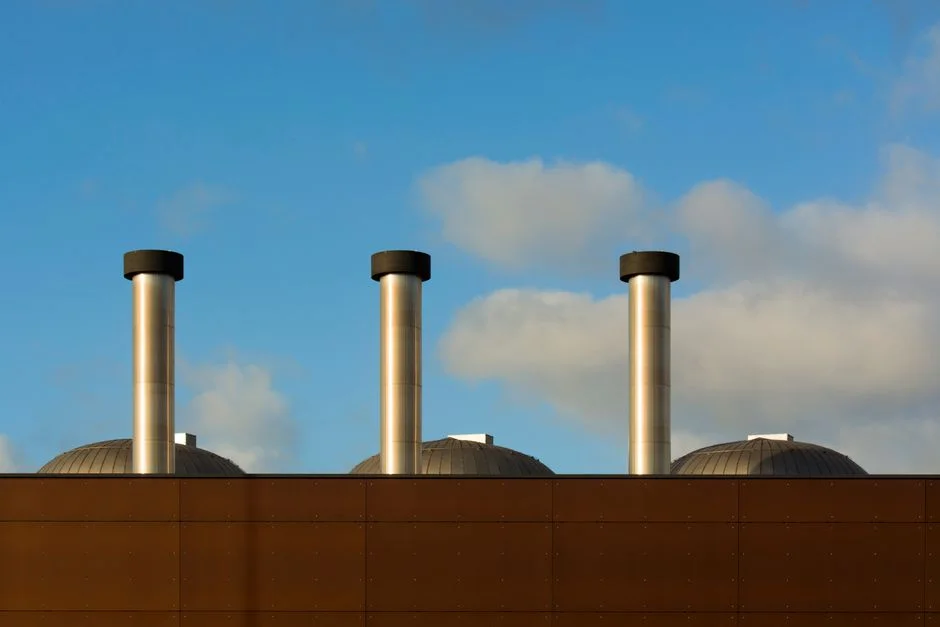
Europe's 2026 WWHRA market is policy-led rather than market-led. The 2024 EPBD recast (Directive 2024/1275) requires every member state to publish a national heat-pump deployment plan by 2027, and wastewater is a qualifying renewable thermal source under Annex IIa of the recast Renewable Energy Directive (RED III, 2023/2413). District-heating decarbonization obligations in Germany, France, the Netherlands, Denmark, Sweden, and Austria are pulling utilities toward WWTP effluent and sewer-network heat as a baseload renewable source.
Leading member-state markets in 2026 are Germany (Hamburg's HWW heat network, Munich's Stadtwerke projects), the Netherlands (Amsterdam and Rotterdam heat networks sourcing from WWTPs), Denmark (Copenhagen's HOFOR utility), Sweden (Stockholm Exergi's sewage-sourced district heat), and France (Paris CPCU network). Industrial adopters in 2026 are breweries, dairies, pulp and paper (Stora Enso and UPM mills in Finland and Sweden), and the Antwerp/Rotterdam chemical-park cluster, which uses wastewater-source heat pumps for low-temperature process heat down to 70 °C. The Bologna urban sewer study (Cipolla & Maglionico, Energy Procedia 2014) remains the reference for European project feasibility models because it quantifies diurnal and seasonal temperature variability in a dense urban catchment.
| Member State | Policy Instrument | 2026 Lead Project Type |
|---|---|---|
| Germany | EPBD recast, Wärmeplanungsgesetz (heat planning law) | Municipal WWTP effluent-to-source heat pumps feeding district networks |
| Netherlands | National heat-pump deployment plan, gas-phase-out | Sewer heat recovery + industrial effluent heat for chemical clusters |
| Denmark, Sweden | District-heating decarbonization mandates | Large-scale effluent heat pumps, sewage-sourced district heating |
| France | RE2020 building code, national heat strategy | Paris CPCU network expansion, brewery and dairy heat recovery |
Asia-Pacific: Fastest-Growing Industrial Region
Asia-Pacific is the fastest-growing WWHRA region in absolute MWh terms, driven by industrial heat demand that exceeds the EU's by a factor of 3–4 in textiles, food processing, and pulp. China is the regional anchor: the dual-carbon "30·60" goals (carbon peak by 2030, neutrality by 2060) and the 14th Five-Year Plan explicitly fund WWTP waste-heat utilization, with Hebei, Jiangsu, Zhejiang, and Guangdong leading installed capacity for both municipal and industrial projects. India is the second-largest growth pocket: the Perform-Achieve-Trade (PAT) scheme imposes Specific Energy Consumption (SEC) reduction targets on designated consumers in chemicals, textiles, paper, and metals, which converts WWHRA CAPEX into a directly recoverable compliance cost — a regulatory mechanic absent from EU and US policy stacks.
Japan and South Korea have long-established sewer heat recovery R&D programs (Tokyo Bay area, Busan), and both are now scaling deployments under 2025–2030 net-zero plans. Southeast Asia — Vietnam, Indonesia, Thailand, Malaysia — is in early adoption, with growth tied to FDI-linked export factories in food processing, textiles, and electronics. The high industrial heat demand in textiles (50–80 °C dye-house effluent), food, and pulp makes APAC the highest-density WWHRA opportunity globally through 2030, and the 2025 iScience special-issue call is explicitly soliciting research from the region to fill the literature gap.
MENA, Latin America, and Africa: Emerging Frontier Regions
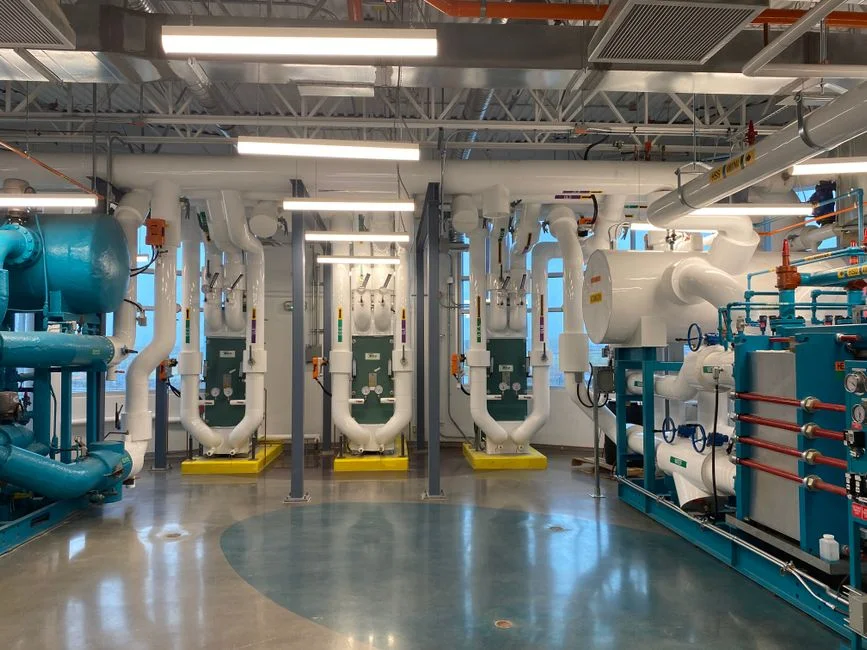
Outside the NA-EU-APAC core, MENA, Latin America, and Africa form the emerging WWHRA frontier. In MENA, Saudi Arabia's Vision 2030 and the UAE Energy Strategy 2050 fund district cooling loops sourced from treated wastewater — a counterintuitive fit because warm sewage still drives absorption chillers effectively in 35–45 °C ambient conditions. Pilot projects in Riyadh (ACWA Power) and Abu Dhabi (Tabreed) are the 2026 reference cases. Latin America is led by Brazil, Mexico, and Chile, with the dominant verticals being pulp and paper (Klabin, Suzano mills recovering 1.5–4 GWh/yr each), food and beverage, and mining process-water heat recovery in Chile's copper belt. Africa is the earliest stage: South Africa and Egypt are pilot-project markets, constrained by capital availability but supported by multilateral green-climate finance through the Green Climate Fund and AfDB. The 2025 iScience call (Cell Press, 2025-09) invites submissions from all regions, signalling the literature is finally moving toward geographic balance.
Industrial Sectors Driving 2026 Regional Demand
Industrial effluent carries the highest recoverable thermal energy density per the Nagpal 2021 review, and sector-level recovery potential varies by an order of magnitude. Food and beverage leads with 40–70 °C effluent streams in dairy, brewing, and meat processing — global adoption, with strongest deployment in the EU and US. Pulp and paper mills generate 1.5–4 GWh/yr of recoverable heat each, dominant in the EU (Stora Enso, UPM) and Latin America (Klabin, Suzano). Chemicals and petrochemicals offer 60–90 °C high-temperature process water recovered via shell-and-tube exchangers; strongest in the EU, US Gulf Coast, and China's chemical parks. Textiles are the APAC story: dye-house wastewater at 50–80 °C is a major WWHRA target in India, Bangladesh, Vietnam, and Turkey. Pharma and semiconductors are emerging 2026 application areas where ultrapure-water reject streams are paired with heat exchangers downstream of MBR pretreatment upstream of a heat exchanger.
| Sector | Effluent Temperature | Recoverable Heat Density | Strongest Region (2026) |
|---|---|---|---|
| Food & beverage (dairy, brewing, meat) | 40–70 °C | High (0.5–2 GWh/yr per site) | EU, North America |
| Pulp & paper | 50–80 °C | Very high (1.5–4 GWh/yr per mill) | EU, Latin America |
| Chemicals & petrochemicals | 60–90 °C | High (process-water grade) | EU, US Gulf, China |
| Textiles (dye-house) | 50–80 °C | Medium-high (batch-process) | India, Bangladesh, Vietnam, Turkey |
| Pharma & semiconductors | 25–40 °C (UPW reject) | Low-medium, high purity | US, Japan, South Korea |
2026–2030 Regional Outlook: Risks, Drivers, and Where to Site
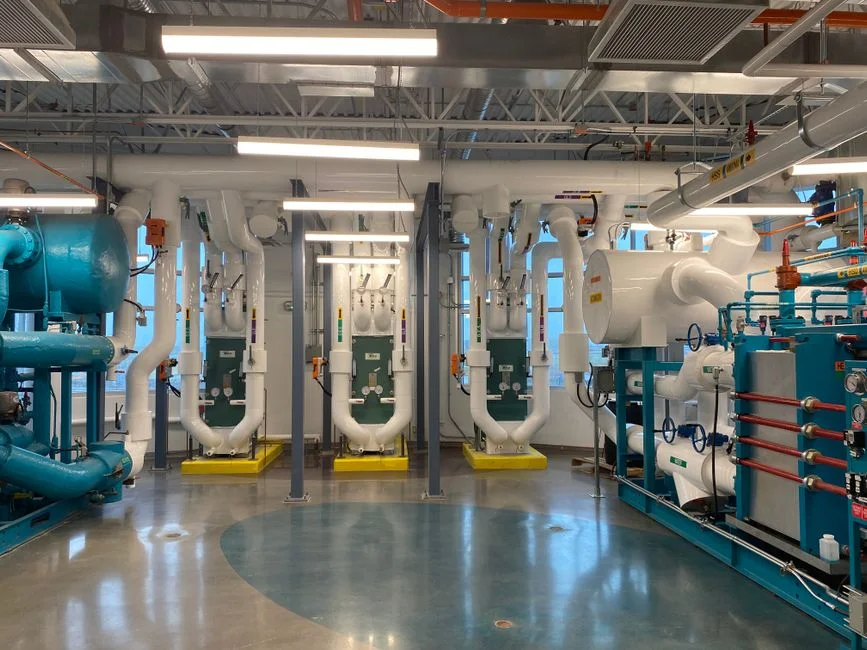
Two axes determine where a 2026 WWHRA project pencils out: the electricity-to-gas price spread (the wider the spread, the faster the heat-pump payback) and policy strength. On price spread, North America and the EU are most favourable in 2026 — US industrial electricity at $0.07–0.10/kWh and EU industrial gas at €35–45/MWh produce 4–7 year paybacks on a 1 MW thermal effluent heat pump. On policy, the order is EU > NA > China > India > RoW; on absolute market size, the order is NA > EU > China > RoW. The decision rule: municipal-scale heat-network projects go to the EU and NA under EPBD-recast and IRA §48C funding; industrial-scale CAPEX projects go to China, India, and Southeast Asia where industrial heat demand and PAT/SEC compliance converge; capital-constrained frontier projects go to the MENA GCC, where sovereign-funded pilots absorb the early-mover risk.
Forward-looking 2030 CAGR ranges (directional, derived from current policy trajectories rather than published forecasts): NA 6–9%, EU 7–10%, China 9–12%, India 10–14%. The practical buying implication: regional CAGR is highest where pretreatment infrastructure already exists, which favours proven packaged treatment systems like DAF pre-treatment for high-FOG industrial streams and MBR units as the upstream step before any heat exchanger. For broader context on the upstream water-reuse and circular-economy drivers behind these regional splits, the circular water economy buyer's guide and the MBR market growth 2026 companion piece cover the equipment-side dynamics; for India specifically, the India industrial wastewater treatment guide walks through the PAT-driven compliance mechanics.
| Region | 2026 Market Size Rank | Policy Strength | Best-Fit Project Type |
|---|---|---|---|
| North America | 1 | High (IRA §45X, §48C, state incentives) | Municipal heat networks, data-centre loops, F&B retrofits |
| Europe | 2 | Very high (EPBD recast, RED III, national heat plans) | District heating, industrial pulp & paper, chemical parks |
| China | 3 | High (dual-carbon, 14th FYP) | WWTP waste-heat, chemical parks, district heating |
| India | 4 (fastest growth) | Medium-high (PAT/SEC mandates) | Textiles, chemicals, pulp & paper |
| MENA / LATAM / Africa | 5–7 (frontier) | Medium (Vision 2030, sovereign pilots) | District cooling, mining, F&B, pulp |
Frequently Asked Questions
Which region has the largest 2026 wastewater heat recovery market?
North America leads by installed capacity in 2026, expanding at 6–9% CAGR through 2035 (Northern America WWHRA market report, 2026), driven by IRA §45X/§48C tax credits and cold-climate heat-pump COP advantages in Boston, Toronto, and Minneapolis.
What is the fastest-growing WWHRA region in 2026?
Asia-Pacific is the fastest-growing region in absolute MWh terms, with China expanding under dual-carbon "30·60" goals and India under PAT/SEC compliance mandates for chemicals, textiles, and pulp and paper.
How does the EU EPBD recast affect wastewater heat recovery?
The 2024 EPBD recast (Directive 2024/1275) requires every member state to publish a national heat-pump deployment plan by 2027, and RED III (2023/2413) classifies wastewater as a qualifying renewable thermal source, directly pulling utility-scale WWTP effluent and sewer heat recovery projects in DE, NL, DK, SE, AT, and FR.
Which industrial sector has the highest recoverable heat from wastewater?
Pulp and paper leads at 1.5–4 GWh/yr of recoverable heat per large mill (Nagpal 2021 review), with strong 2026 deployment at Stora Enso and UPM in the EU and at Klabin and Suzano in Brazil.
Where should a 2026 WWHRA project be sited for fastest payback?
North America and the EU deliver the fastest 2026 paybacks (4–7 years on a 1 MW thermal heat pump) because of favourable electricity-to-gas price spreads, IRA §48C credits, and EPBD-recast-mandated heat-pump deployment plans; industrial-scale projects targeting 9–14% CAGR go to China and India.