Why Meat Processing Permit Requirements Changed in 2025 — and What Still Applies in 2026
On August 28, 2025, EPA announced it would not move forward with revised Clean Water Act Effluent Limitations Guidelines (ELGs) or new pretreatment standards for the Meat and Poultry Products (MPP) sector, leaving the existing 40 CFR Part 432 framework in force through 2026 (Faegre Drinker, 2025-09). Three weeks later, on September 15, 2025, environmental groups filed a Ninth Circuit petition challenging that withdrawal — so the federal rule is stable for now, but not final. Compliance teams should size and operate their treatment trains against the existing limits while holding optionality for a tighter rule in late 2026 or 2027.
40 CFR Part 432 contains four subcategories — Slaughterhouse, Simple Processing, Complex Processing, and Renderer — each with its own BOD, TSS, FOG, and ammonia (as TKN) limits. Subcategory selection drives the applicable number, and the right subcategory depends on whether the facility is killing and dressing animals, cutting and deboning, making further-processed products, or rendering. A plant that has grown from one subcategory into another (a common path for mid-sized processors) may be out of compliance simply because the permit hasn't been re-issued.
Two parallel regimes run on top of the federal ELG. State groundwater or surface water permits (e.g., Michigan MDEGLE's general permit GW1530000) impose their own sampling cadence and limits, and POTW pretreatment programs enforce local sewer-use ordinances. Meeting one tier does not clear the others — the binding limit at any given outfall is the strictest of the three. For a practical cross-jurisdiction benchmark on the FOG number specifically, the oil and grease discharge limit guide for 2026 lays out EPA, EU, and China caps side by side.
The Three Permit Layers a Meat Processor Must Clear
Federal 40 CFR Part 432 sets technology-based effluent limits by subcategory. For the Slaughterhouse subcategory, the typical daily maximum and 30-day average are BOD 270 mg/L / 170 mg/L and FOG 113 mg/L daily max, with subcategory-specific TSS and ammonia limits layered on top. Simple Processing and Complex Processing subcategories carry different — sometimes lower — FOG caps; the Renderer subcategory runs the highest organic and ammonia load. A facility that has not revisited its subcategory determination in five years is the most common compliance gap we see in the field.
State permits add a second layer. Forty-nine of 50 states administer either an NPDES surface water permit or a groundwater discharge permit for land-applied or subsurface discharges. The Michigan MDEGLE general permit GW1530000 is a representative example: it allows co-mingling of sanitary sewage and processing wastewater, requires monthly self-monitoring, and applies to any facility discharging more than 10,000 gallons per day that does not send waste to a POTW (per Michigan Farm Bureau fact sheet, 2022). Other states have their own general permits and individual permits with different trigger flows and limits.
The third layer is the POTW pretreatment program, which applies whenever a plant discharges to a municipal sewer. The local POTW sets limits through its sewer use ordinance — commonly BOD 250–500 mg/L, TSS 250 mg/L, FOG 100 mg/L — and enforces them through surcharges, slug controls, and the threat of permit revocation. POTW limits are often stricter than the federal ELG because the receiving treatment plant is sized for domestic sewage, not red-meat or poultry streams. The practical limit a plant must meet is the minimum of the three tiers at each outfall.
| Permit Layer | Governing Authority | Typical BOD Limit | Typical FOG Limit | Sampling Baseline |
|---|---|---|---|---|
| Federal ELG (40 CFR Part 432) | U.S. EPA | 170–270 mg/L (Slaughterhouse subcat.) | 113 mg/L daily max | Flow-proportional composite |
| State groundwater / surface water | State DEQ (e.g., MDEGLE) | Varies by state; often ≤200 mg/L | 50–100 mg/L | Monthly self-monitoring |
| POTW pretreatment | Local sewer-use ordinance | 250–500 mg/L | 100 mg/L typical cap | Monthly composite + surcharge sampling |
What Comes Out of a Meat Processing Plant — Influent Characteristics Engineers Must Size For
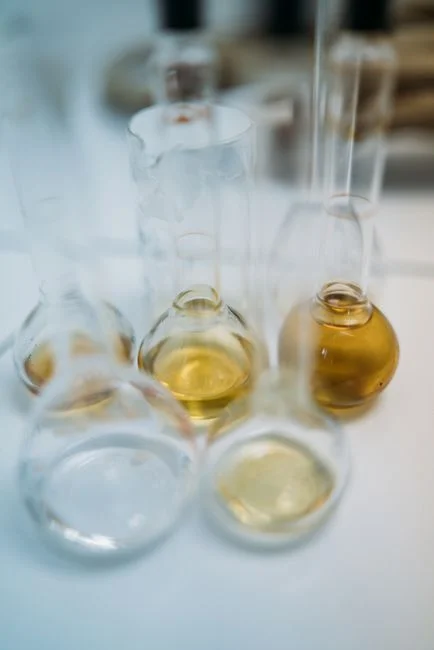
Raw meat processing wastewater runs an order of magnitude stronger than domestic sewage. Industry-typical influent ranges: BOD 800–4,000 mg/L, COD 1,500–6,000 mg/L, TSS 500–3,000 mg/L, FOG 200–1,500 mg/L, TKN 100–500 mg/L, pH 6–9. Slaughterhouse streams (kill floor, paunch handling, blood) sit at the top of these ranges; cutting and deboning operations run 2–3× lower; rendering produces the highest organic and ammonia load of the four subcategories.
Blood alone contributes 50–60% of the total BOD load in a slaughter operation. A facility that segregates blood at the source — separate collection, often going directly to a blood tank or rendering — drops its downstream BOD load by half and shrinks the biological stage accordingly. We see the biggest treatment-cost reductions when this segregation is added to an existing plant rather than retrofitted into the original civil design. The full BOD removal engineering context, including sizing formulas, is in the BOD removal engineering guide.
Flow variability is the second sizing variable. Peak-to-average ratios commonly reach 3:1 in batch-process facilities — clean-down cycles, shift changes, and seasonal throughput swings all concentrate flow into a few hours per day. Equalization for 8–24 hours of retention is not optional; without it, downstream biological treatment sees feast-or-famine loading and either fails on ammonia or wastes energy on aeration during low-load periods. For a 500 m³/day average plant, a 200 m³ equalization basin is the typical reference size.
| Parameter | Slaughterhouse (kill floor) | Simple Processing (cut/debone) | Complex Processing (cooked products) | Renderer |
|---|---|---|---|---|
| BOD (mg/L) | 1,500–4,000 | 800–2,000 | 1,200–3,000 | 2,500–5,000 |
| COD (mg/L) | 2,500–6,000 | 1,500–3,500 | 2,000–5,000 | 4,000–8,000 |
| TSS (mg/L) | 800–3,000 | 500–1,500 | 600–2,000 | 1,000–2,500 |
| FOG (mg/L) | 400–1,500 | 200–800 | 300–1,000 | 500–1,500 |
| TKN (mg/L) | 200–500 | 100–250 | 150–350 | 300–600 |
| pH | 6.5–8.5 | 6.5–8.5 | 6–9 | 6.5–8.5 |
The Standard Treatment Train: From Screening to Permit-Ready Effluent
The treatment train that bridges raw meat processing wastewater to permit-ready effluent has five process steps. Each step is sized against a specific pollutant, and skipping or under-sizing any one of them pushes more load onto the next stage than it can handle.
- Rotary bar screening. A GX series rotary mechanical bar screen with 3–6 mm openings removes paunch manure, bone fragments, feathers, and other coarse solids before they reach pumps and DAF nozzles. Typical capture rate is 40–60% TSS removal at this stage alone (HydropureWater field data, 2026), and screening protects every downstream unit from ragging and clogging.
- Flow equalization and pH adjustment. Sized for 8–24 hours of retention against the 3:1 peak-to-average ratio, this basin feeds a steady stream to the biological stage and lets the operator trim pH to 6.5–8.0 before DAF. An automatic chemical dosing system handles pH correction and coagulant feed for the DAF.
- Dissolved air flotation (DAF). The workhorse for FOG and suspended solids. A well-sized dissolved air flotation system delivers 70–90% FOG removal and 60–80% TSS removal at hydraulic loadings of 4–25 m³/m²·h and an air-to-solid ratio of 0.02–0.05 kg air/kg TSS. DAF effluent typically leaves the plant with FOG under 50 mg/L and TSS under 100 mg/L, which is what makes the downstream biological stage feasible.
- Biological treatment. Either conventional activated sludge or an MBR membrane bioreactor system for BOD and ammonia. Conventional activated sludge achieves BOD <30 mg/L and ammonia <5 mg/L in a larger footprint; an MBR delivers BOD <5 mg/L and ammonia <1 mg/L in roughly 60% of the footprint, at higher capex. MBR is the right call when ammonia is the binding parameter or when space is constrained.
- Polishing and disinfection. A chlorine dioxide generator dosing 1–5 mg/L ClO₂ residual, or a UV bank at 30–40 mJ/cm² dose, hits the fecal coliform limit of 200–400 CFU/100 mL geometric mean that most state permits carry. Chlorine dioxide is preferred over chlorine when ammonia is present, because free chlorine forms chloramines that pass through to the receiving stream.
| Process Unit | Primary Target | Typical Removal | Key Sizing Parameter |
|---|---|---|---|
| Rotary bar screen (3–6 mm) | Coarse solids, rags | 40–60% TSS | Opening size, peak flow |
| Equalization basin | Flow / pH swings | None directly | 8–24 h retention |
| DAF | FOG, suspended solids | 70–90% FOG, 60–80% TSS | 4–25 m³/m²·h, A/S 0.02–0.05 |
| MBR / activated sludge | BOD, ammonia | BOD <5 mg/L (MBR), NH₃ <1 mg/L | F/M ratio, HRT, SRT |
| ClO₂ / UV disinfection | Fecal coliform | To <200 CFU/100 mL | 1–5 mg/L ClO₂ or 30–40 mJ/cm² UV |
Sampling, Monitoring, and Recordkeeping the Permit Will Audit
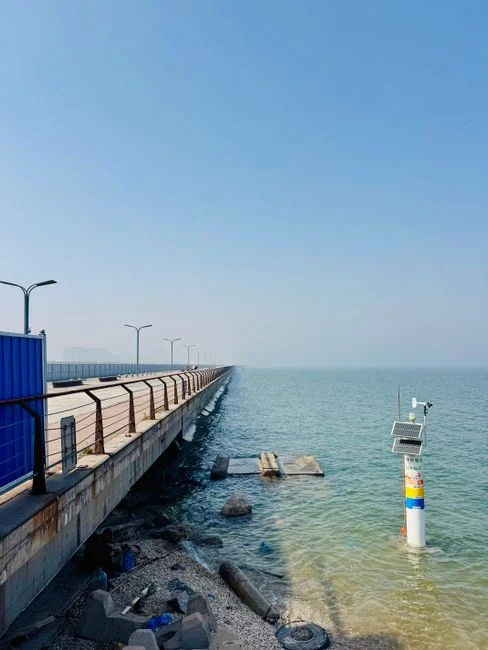
Monthly self-monitoring is the baseline for most state groundwater discharge permits, including MDEGLE's draft general permit GW1530000 (per Michigan Farm Bureau fact sheet, 2022). NPDES surface water permits typically require more: flow-proportional 24-hour composite sampling for BOD, TSS, FOG, and ammonia, with grab samples for pH and temperature. Fecal coliform and chlorine residual are grab-sampled at the outfall, often daily or per discharge event, depending on the permit.
Discharge Monitoring Reports (DMRs) are submitted monthly or quarterly, and EPA's NPDES eReporting rule now requires digital submission for most major permits. Records — including calibration logs, chain-of-custody forms, and lab certificates — must be retained at least 3 years, and 5 years under some state rules. In an inspection, the inspector's first ask is almost always the last 12 months of DMRs and the calibration log for the in-line pH and chlorine probes; missing either is the most common finding we see.
Choosing Treatment Equipment That Holds the Permit in 2026
Equipment selection follows from the binding pollutant at the outfall. If FOG is the limiting parameter, size the DAF for the worst-case influent FOG and the strictest applicable FOG limit across all three permit tiers. If ammonia is the binding parameter, size the biological stage for nitrification — which usually means longer SRT, more aeration, and often an MBR rather than conventional activated sludge. If total nitrogen is limited, plan a separate denitrification stage with methanol or another carbon source.
Footprint and modularity matter for brownfield sites. MBR systems shrink the biological stage footprint by roughly 60% but cost more in capex than conventional activated sludge. Package systems with built-in equalization handle batch-process peak flows better than civil-built concrete tanks without buffer volume. Sludge handling is the line item most plants under-spec: DAF float and biological waste activated sludge both need dewatering, and a plate and frame filter press typically dewaters the combined sludge to 25–35% dry solids for off-site disposal or rendering. The screw press dewatering guide for food industry sludge covers the alternative dewatering option in detail.
A 2026 reference specification for a 500 m³/day meat processing plant: 6 mm rotary bar screen + 200 m³ equalization basin + DAF rated at 20 m³/h + MBR at 500 m³/day design capacity + chlorine dioxide disinfection for a 1–5 mg/L residual + plate and frame filter press for combined sludge. That train, properly sized, will meet federal 40 CFR Part 432 limits, typical state groundwater limits, and typical POTW pretreatment limits at the same outfall.
Frequently Asked Questions
Does EPA still require NPDES permits for meat processors in 2026?
Yes. 40 CFR Part 432 remains the federal ELG framework after the August 28, 2025 EPA decision to withdraw proposed revisions, and individual or general NPDES permits are still required at the state level for any surface water discharge.
What is the typical FOG discharge limit for a meat processor?
Federal 40 CFR Part 432 sets subcategory-specific FOG limits, with 113 mg/L daily max as a common Slaughterhouse subcategory number. State permits and POTW pretreatment programs often impose stricter caps in the 50–100 mg/L range.
Can sanitary sewage and process wastewater be treated in the same system?
Yes. Under most state groundwater discharge general permits, including MDEGLE's draft GW1530000, and most POTW pretreatment programs, co-mingling of sanitary sewage and processing wastewater is allowed for most treatment options.
How often does a meat processor have to sample its discharge?
Monthly self-monitoring sampling is the baseline for most state groundwater discharge permits. NPDES permits typically require flow-proportional 24-hour composite sampling for BOD, TSS, FOG, and ammonia, with grab samples for pH, temperature, fecal coliform, and chlorine residual.
What is the smallest treatment system that can meet a meat processing discharge permit?
For low-flow specialty processors in the 50–100 m³/day range, a packaged screening + DAF + biological + disinfection skid is generally sufficient to meet both federal ELGs and typical state groundwater limits, provided the influent is within the design range for the subcategory.