Why Commercial Laundry Wastewater Needs DAF Pretreatment
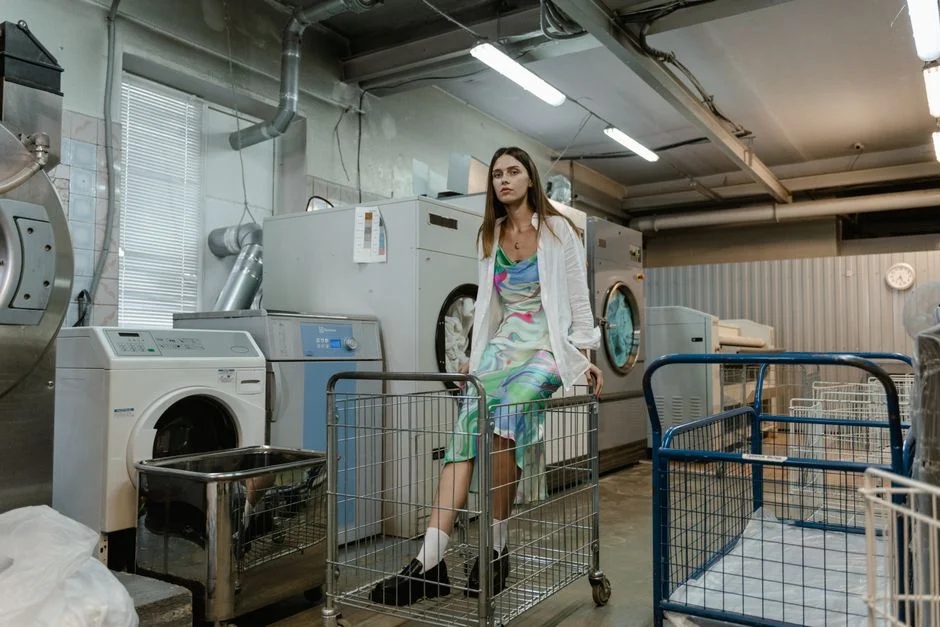
Commercial laundry effluent combines three characteristics that defeat a standard clarifier or oil-water separator: high temperature (30–60°C), high alkalinity (pH 9–12), and surfactant-stabilized emulsions of fats, oils, and grease (FOG) at 200–1,500 mg/L. Add lint and textile fibers at 500–2,500 mg/L TSS, and you get a stream that fouls bar screens within hours, generates stable foaming in aeration basins, and carries 1,500–6,000 mg/L of mostly emulsified COD straight to the biological stage. Direct biological treatment fails in this environment: temperatures above 38°C denature mesophilic biomass, pH excursions above 9.5 suppress nitrifiers, and linear alkylbenzene sulfonate (LAS) at 50–500 mg/L defoams diffused aeration and strips floc from the mixed liquor. DAF pretreatment solves all three problems in a single 15–30 minute contact step, lifting emulsified FOG, colloidal surfactant micelles, and fibers as a float that can be scraped and dewatered separately. The DAF subnatant then carries a 50–70% reduced COD load and a stable pH into the downstream SBR, MBBR, or MBR polishing step, which is the configuration evaluated in the Manjunath et al. slaughterhouse DAF-UASB work and now standard practice for industrial textile and laundry trains.
Influent Characterization: The Numbers Behind DAF Sizing
Every defensible DAF specification starts with a worst-case influent number, not a yearly average. For commercial laundry streams, the design envelope and typical operating range are summarized below.
| Parameter | Typical range | Design (worst-case) value | Notes |
|---|---|---|---|
| COD | 1,500–6,000 mg/L | 6,000 mg/L | Emulsified fraction dominant; correlates with surfactant dose |
| BOD₅ | 600–2,500 mg/L | 2,500 mg/L | BOD/COD ≈ 0.35–0.45 typical |
| TSS | 500–2,500 mg/L | 2,500 mg/L | Lint and fiber dominate; high settleability but slow |
| Oil & grease | 200–1,500 mg/L | 1,500 mg/L | 60–80% emulsified by surfactant |
| LAS (surfactant) | 50–500 mg/L | 500 mg/L | Defoams aeration; drives FOG emulsification |
| pH | 9–12 | 12 | From alkali detergent builders |
| Temperature | 30–60°C | 60°C | Hot rinse water; pre-cool if biology is downstream |
Two sub-segments behave differently. Hotel and healthcare laundry streams run higher pH and higher surfactant load (lower lint, fewer dye chemicals); industrial uniform and rental streams run higher lint, higher FOG, and add dye and RFID-tracker chemicals. Both run batched 8–16 h shifts with a peak-to-average flow ratio of 3–5×, so the DAF must be sized on the peak hourly flow with an upstream equalization tank sized for 4–8 h of average flow to dampen hydraulic and loading swings.
DAF Design Parameters: Hydraulic Loading, Recirculation, and Air-to-Solids
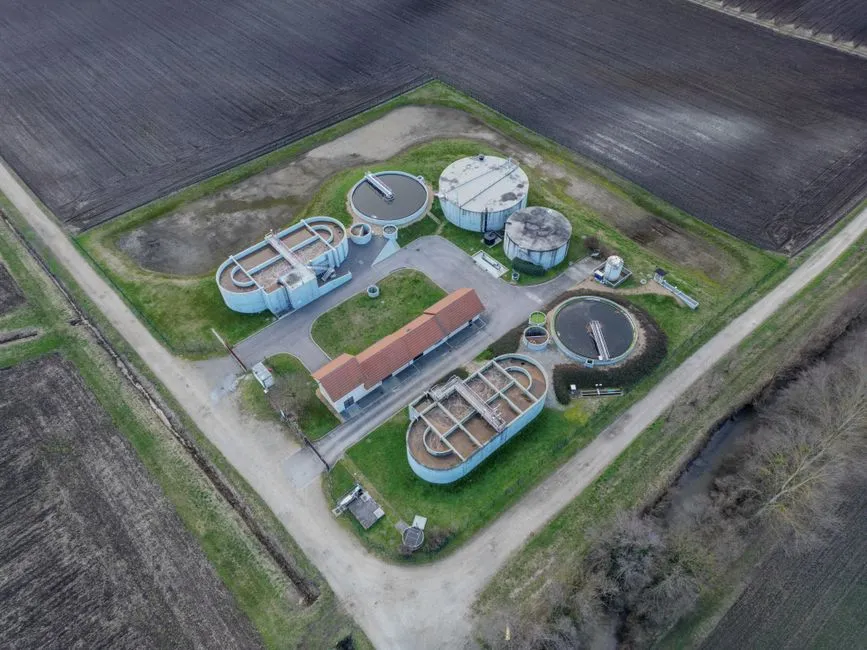
The four operating parameters that govern a DAF design are hydraulic loading rate (HLR), air-to-solids ratio (A/S), saturation pressure, and recirculation ratio. The table below shows the working envelopes a 2026 commercial laundry specification should fall inside.
| Parameter | Industrial DAF range | Laundry design target | Effect on performance |
|---|---|---|---|
| Hydraulic loading rate (HLR) | 5–20 m/h | 10–15 m/h | Drives tank surface area |
| Air-to-solids ratio (A/S) | 0.03–0.10 kg air/kg TSS | 0.04–0.06 | Higher A/S = better TSS capture but smaller bubbles |
| Saturation pressure | 5–7 bar | 6 bar | Higher P dissolves more air per m³ recycle |
| Recirculation ratio (R/Q) | 20–50% | 30–40% | Pressurize recycle, not raw influent |
| Flocculation time | 10–30 min | 15–20 min | Gentle mixing; G = 30–70 s⁻¹ |
| DAF retention time | 15–30 min | 20 min | Float scraping and sludge blanket stability |
The sizing math reduces to four equations. Tank surface area A = Q_peak / HLR. Tank volume V = Q_peak × t_retention (15–30 min). Recycle flow Q_R = R × Q_peak. Saturator contact volume = Q_R / 60 × 2–4 min, which is what sets the recycle pump and saturator vessel size. Worked example for 25 m³/h peak: at 15 m/h HLR, A = 1.67 m²; at 20 min retention, V ≈ 8.3 m³; at 35% recycle, Q_R = 8.75 m³/h through a 6 bar saturator sized for roughly 0.5 m³ contact volume. A packaged dissolved air flotation (DAF) system sized for 5–50 m³/h is typically the cleanest path to that footprint. A useful sanity check on bubble supply is the air-to-solids ratio: at 2,500 mg/L TSS, 0.05 kg air/kg TSS, and 35% recycle, the saturator supplies 0.10 kg air/m³ of raw flow, which is within the range reported in the DAF system troubleshooting guide for stable float formation.
Chemical Conditioning for Laundry Streams: Coagulants, Polymers, and pH Control
Surfactant-laden streams cannot be floated with bubble physics alone. Coagulation destabilizes the emulsified FOG and colloidal COD; flocculation aggregates the destabilized particles into the 100–500 µm flocs that DAF lifts cleanly. The regimen below is the 2026 baseline for laundry influent at the design values listed above.
| Chemical | Function | Dose range | Notes |
|---|---|---|---|
| H₂SO₄ or HCl (30%) | pH adjustment | To pH 6.5–7.5 | From pH 9–12; usually 0.5–1.5 kg/m³ as 100% acid |
| Polyaluminum chloride (PAC) | Coagulant | 50–200 mg/L | Wider working pH than alum; lower sludge volume |
| Ferric chloride (FeCl₃) | Alternative coagulant | 30–120 mg/L | Preferred when FOG >1,000 mg/L |
| Anionic polyacrylamide (PAM) | Flocculant | 1–5 mg/L | Molecular weight 8–18 MDa; charge density 10–30% |
| Silicone or fatty-alcohol antifoam | Foam control | 0.5–2 mg/L | Only if LAS >300 mg/L; dose before flocculation |
The most important single step is pH adjustment. Bringing the stream from pH 9–12 down to 6.5–7.5 multiplies coagulant effectiveness, protects downstream nitrifiers, and prevents carbonate scaling in the saturator. PAC outperforms alum across the wide pH band of laundry streams and produces roughly 30% less chemical sludge at equivalent dose. Avoid cationic PAM when MBR sits downstream; the residual cationic charge binds to membrane surfaces and accelerates fouling. The full regimen should be metered through a PLC-controlled automatic chemical dosing skid with flow-paced control, since influent flow and surfactant load swing by 3–5× over a single shift.
DAF vs. API and CPF: Choosing the Right Primary Separator for Laundry FOG
An API or CPI separator is cheaper to install but it solves the wrong problem for laundry effluent. The table below lays out the engineering trade.
| Separator type | FOG removal | TSS removal | Footprint | CAPEX (relative) | Best fit |
|---|---|---|---|---|---|
| API / CPI gravity separator | 60–80% (free oil only) | 20–40% | Large | 0.5–0.7× | Coarse pre-separation; low-surfactant streams |
| DAF with coagulant | 70–90% (emulsified included) | 80–95% | Compact | 1.0× | Standard for laundry >10 m³/h |
| Centrifugal separator | 50–70% | 40–60% | Small | 1.2–1.5× | High-FOG, low-flow niche |
API and CPI units physically skim free oil; they cannot break the surfactant-stabilized emulsion that dominates laundry FOG, and they leave colloidal COD and lint in the underflow. DAF with proper coagulant chemistry attacks all three fractions in a single 20-minute contact step. For 2026 commercial laundry projects above 10 m³/h, use DAF as the primary separator. Keep an upstream API or grit chamber only when lint and grit loading is extreme (industrial uniform plants with heavy soil) — its job is then to protect the DAF internals, not to do the separation. DAF is also mandatory when MBR or RO follows: any residual emulsified FOG that survives a CPI will foul membranes within days. For current 2026 effluent targets, see the 2026 oil and grease discharge limit standards reference, which sets the discharge envelope the separator must hit.
Integrating DAF With Downstream Treatment and Sludge Handling
The 2026 standard train for a commercial laundry discharge that aims for reuse or surface-water discharge is: equalization tank (4–8 h) → bar screen (1–3 mm) → flash mixer (coagulant + acid) → flocculation tank (15–20 min) → DAF → equalization of subnatant → integrated MBR membrane bioreactor (or SBR for lower CAPEX) → disinfection. The DAF float comes off at 3–6% dry solids and must be dewatered with a plate-and-frame filter press or a screw press to 18–25% DS before off-site disposal. DAF float sludge hauling typically runs $0.06–$0.15 per m³ treated, which is why minimizing float volume through proper A/S control is worth more than the energy it costs. The DAF subnatant should be cooled if it exceeds 38°C before entering the biological stage; an in-line heat exchanger between DAF and the bioreactor is the usual solution when wash water consistently runs above 50°C. For the final disinfection step, a chlorine dioxide generator sized for 2–5 mg/L residual handles any surviving surfactant and biological load without forming trihalomethanes the way chlorine does on high-organic effluent.
2026 Cost Benchmarks and Selection Checklist for Laundry DAF Skids
Turnkey CAPEX for a packaged laundry DAF skid in 2026 falls in the bands below, including tank, saturator, recycle pump, skimmer, and PLC controls but excluding civil works and the downstream biology.
| Peak flow | CAPEX (turnkey, 2026) | Tank volume (20 min) | Recycle pump (35% R) | Saturator |
|---|---|---|---|---|
| 5 m³/h | $35,000–$55,000 | ~1.7 m³ | 1.75 m³/h @ 6 bar | 0.1 m³ |
| 15 m³/h | $80,000–$120,000 | ~5.0 m³ | 5.25 m³/h @ 6 bar | 0.3 m³ |
| 30 m³/h | $140,000–$190,000 | ~10.0 m³ | 10.5 m³/h @ 6 bar | 0.6 m³ |
| 50 m³/h | $190,000–$260,000 | ~16.7 m³ | 17.5 m³/h @ 6 bar | 1.0 m³ |
OPEX adds up to $0.20–$0.45 per m³ treated: polymer $0.04–$0.12, PAC $0.03–$0.08, acid $0.02–$0.05, power $0.02–$0.05, float-sludge hauling $0.06–$0.15. Before issuing an RFQ, the engineer should confirm six things: (1) peak hourly flow and equalization volume, (2) target effluent FOG and TSS to the downstream biology, (3) downstream biology type (MBR versus SBR versus reuse), (4) available footprint and headroom, (5) automation level (flow-paced dosing versus manual), and (6) skimmer and saturator material — 316 SS over 304 SS when bleach or chloride residue is present. A packaged dissolved air flotation (DAF) system typically delivers the fastest installation for the 5–50 m³/h band, and the pressure flotation troubleshooting reference gives operators the data they need once the unit is commissioned.
Frequently Asked Questions
What removal efficiency does a DAF achieve on commercial laundry wastewater? Properly sized DAF with PAC (50–200 mg/L) and anionic polymer (1–5 mg/L) at pH 6.5–7.5 removes 80–95% of TSS, 70–90% of FOG, and 50–70% of COD before biological polishing.
How do I size a DAF for a given laundry flow? Set the tank surface area to Q_peak divided by 10–15 m/h, the tank volume to Q_peak × 20 min, and the recycle flow to 30–40% of Q_peak at 6 bar saturation pressure. For 25 m³/h peak, expect a 1.7 m² surface area, 8.3 m³ tank, and 8.75 m³/h recycle.
Which coagulant works best for laundry effluent? Polyaluminum chloride (PAC) at 50–200 mg/L is the standard; switch to ferric chloride at 30–120 mg/L when FOG exceeds 1,000 mg/L. Avoid cationic PAM when an MBR is downstream to prevent membrane fouling.
Can I use an API separator instead of DAF for laundry wastewater? Only as a coarse pre-separator for sand, grit, and free oil. API units remove just 60–80% of FOG and cannot break the surfactant-stabilized emulsions that dominate laundry effluent, so a DAF is required for any stream above 10 m³/h or any system feeding an MBR or RO.
How is DAF float sludge handled? DAF float from laundry streams is 3–6% dry solids; dewater it with a plate-and-frame filter press or screw press to 18–25% DS before off-site disposal. Expect float hauling to add $0.06–$0.15 per m³ of treated wastewater.