Why Car Wash Wastewater Is Harder Than It Looks
Car wash wastewater is a surfactant-stabilized emulsion, not a simple dirty-water stream, and that distinction drives every equipment decision downstream. Free oil floats and can be skimmed; emulsified oil droplets (typically 1–20 µm) stay suspended indefinitely under normal gravity separation; and the dissolved surfactant fraction — measured as 10–100 mg/L MBAS — keeps the emulsion stable by lowering interfacial tension. A skimmer or grease trap alone removes 60–70% of free oil but leaves the emulsified and dissolved fractions untouched, which is why single-stage designs fail reuse and discharge tests.
Flow variability compounds the chemistry problem. A single tunnel car wash can swing 3–5× in instantaneous flow between weekday mornings and Saturday peaks, and the corresponding COD excursion routinely reaches 800–2,000 mg/L during busy periods against a 200–500 mg/L weekday baseline. The 2021 Bar bench study (Bubalo et al., 2021) confirmed that even a US$900 multi-stage rig — grease trap, coagulation-flocculation, activated carbon, ozonator — only reached reuse targets when each stage was sized for the peak, not the mean. Under-sizing the oil/water separator or DAF for average flow is the single most common reason a compliant Monday becomes a non-compliant Saturday.
Car Wash Wastewater Characteristics: Influent Parameter Table
Design starts with characterization, and characterization starts with USEPA Methods 150.1 (pH) and 300.0 (inorganic analytes), as cited in the 2017 concrete-strength study on car wash effluent. The table below summarizes the parameter ranges an engineer should expect across tunnel, fleet, self-serve, and rollover sites before any vendor proposal is opened.
| Parameter | Unit | Typical range | Test method / source |
|---|---|---|---|
| COD | mg/L | 200–2,000 | USEPA 410.4 / 5220 D |
| BOD₅ | mg/L | 100–600 | USEPA 5210 B |
| TSS | mg/L | 100–1,500 | USEPA 2540 D |
| Oil & grease | mg/L | 50–500 | USEPA 1664 (HEM) |
| MBAS surfactants | mg/L | 10–100 | USEPA 425.1 |
| pH | — | 6–9 | USEPA 150.1 |
| TDS | mg/L | 300–1,500 | USEPA 2540 C |
| Turbidity | NTU | 100–1,000 | USEPA 180.1 |
| Lead, Zn, Cu (trace) | mg/L | 0.1–5 each | USEPA 300.0 / 6010 |
Three parameters control equipment sizing more than any others. Oil & grease at 50–500 mg/L sets the dissolved air flotation (DAF) system hydraulic and air-to-solids ratio. MBAS at 10–100 mg/L drives coagulant and flocculant selection — typically 50–200 mg/L polyaluminum chloride plus 1–5 mg/L anionic polyacrylamide — because anionic surfactants repel conventional coagulants. The BOD/COD ratio (typically 0.25–0.40 for wash effluent) tells the designer whether a biological stage will be kinetically limited; ratios below 0.25 indicate a need for advanced oxidation ahead of biology. Site-specific drivers — engine-degreaser bays, tire-shine and wax applications, winter road-salt rinse cycles, and tunnel vs. self-serve flow profiles — can push every parameter in the table by 2–3×, so composite sampling across at least one full operating week is non-negotiable before final sizing.
Treatment Train Architecture: From Oily Inflow to Reuse-Quality Outflow
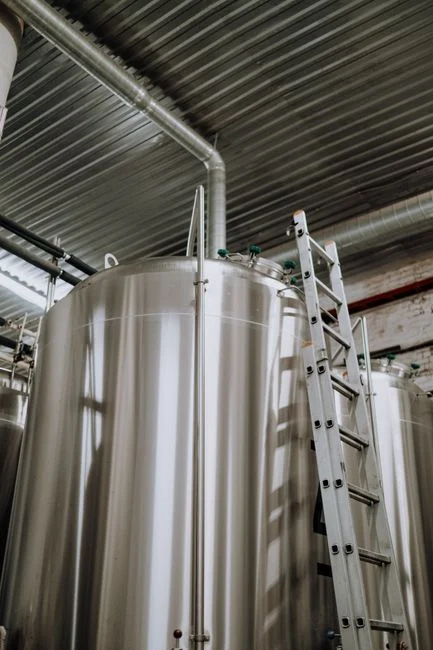
A defensible 2026 treatment train is a four-stage sequence, each stage doing one job and doing it well enough to protect the next.
Stage 1 — Oil/water separation. An API or coalescing-plate separator targets free oil and settleable grit. Design residence time should be ≥30 minutes at peak flow, with a sludge drawoff at the bottom and a scum beach for oil recovery. Coalescing plates at 30–60° from horizontal cut the free-oil removal efficiency to >90% on properly sized units but cannot touch emulsified droplets smaller than ~60 µm.
Stage 2 — Dissolved air flotation for emulsified oil, TSS, and surfactant stripping. A dissolved air flotation (DAF) system operating at hydraulic loading 4–25 m/h and an air-to-solids ratio of 0.02–0.06 (kg air / kg solids) lifts emulsified oil and TSS to the surface as a float layer, while coagulant and flocculant conditioning destabilize the MBAS-stabilized emulsion. DAF typically removes 70–90% of oil & grease and 60–85% of TSS in one pass and produces a 3–6% dry-solids float that is easy to dewater downstream.
Stage 3 — Biological or MBR polishing. Conventional activated sludge (CAS) handles the remaining COD and BOD₅, but a MBR membrane bioreactor delivers TSS <5 mg/L and COD <50 mg/L in roughly 60% of the footprint, with the additional benefit of near-complete solids retention that smooths out hydraulic surges. For a deeper look at biological sizing and loadings, the engineering guide on how to remove BOD from wastewater walks through the kinetics in detail.
Stage 4 — Filtration and disinfection. A multi-media filter or ultrafiltration membrane polishes residual TSS below 5 mg/L, after which a chlorine dioxide generator or UV/UVC system provides disinfection. The 2023 Journal of Photochemistry study (Vol. 27, pp. 2881–2891) demonstrated that UVC combined with active chlorine generates hydroxyl radicals (•OH) that mineralize recalcitrant surfactants in parallel with disinfection — a synergistic effect that a chlorine-only or UV-only system cannot match.
Effluent Targets and 2026 Compliance Benchmarks
Numbers, not adjectives, define compliance. The table below maps reuse-quality targets against the three discharge regimes a vehicle wash site will encounter: U.S. EPA 40 CFR 437, EU UWWTD 91/271/EEC, and China GB 8978-1996 (still the operative first-class standard referenced in 2026 enforcement actions). A more detailed breakdown lives in the article on 2026 oil and grease discharge limits.
| Parameter | Unit | 100% reuse target | EPA 40 CFR 437 (daily max / mo. avg) | EU UWWTD typical | China GB 8978 first-class |
|---|---|---|---|---|---|
| TSS | mg/L | <5 | 30 / 15 | 35 (typical) | 70 |
| COD | mg/L | <50 | — | 125 | 100 |
| BOD₅ | mg/L | <10 | — | 25 | 20 |
| Oil & grease | mg/L | <1 | 15 / 10 | 10 | 10 |
| Turbidity | NTU | <5 | — | — | — |
| Free chlorine residual | mg/L | 0.1–0.5 | — | — | — |
Oil & grease is the binding constraint in every jurisdiction. EPA 40 CFR 437 sets a 15 mg/L daily maximum and 10 mg/L monthly average for the automotive wash subcategory (Subpart C), and that 10 mg/L number is the de facto design floor even in EU and Chinese projects because most wash operators contract to the tightest local limit. An undersized DAF or a coagulant dose that drifts below 50 mg/L PAC is the typical root cause of a violation, not the downstream biological or disinfection stage.
Choosing Unit Operations: DAF vs. Coagulation, MBR vs. CAS, ClO₂ vs. UV
Engineers choose unit operations from influent, not from vendor preference. The matrix below maps the most common decision points to a defensible recommendation.
| Decision | Choose when… | Avoid when… | Engineering rationale |
|---|---|---|---|
| DAF over coagulation-only | Oil & grease >50 mg/L and TSS >500 mg/L | Low-load automatic rollover, <20 cars/day | DAF adds 70–90% oil removal; coagulation alone rarely exceeds 40% on emulsified load |
| MBR over CAS | Footprint <200 m², reuse required, BOD discharge <10 mg/L | Large municipal-scale site with abundant land | MBR delivers TSS <5 mg/L in 60% of the footprint; CAS saves 30–50% CAPEX but needs clarifier and tertiary polish |
| ClO₂ over UV-only | Turbidity spikes >10 NTU, residual disinfection required for reuse loop | Tightest AOP-driven mineralization needed and no residual desired | ClO₂ holds residual 0.1–0.5 mg/L across the loop; UV per the 2023 study enables simultaneous •OH mineralization of MBAS |
| Plate-and-frame over belt press for DAF float | Float volume >2 m³/day, cake target 18–25% DS | Very small sites producing <1 m³ float/day | Plate presses hit 22–25% DS on biological/DAF mixed sludge; belt presses typically cap at 18–20% |
For low-budget or small-operator applications, the 2021 Bar bench sequence (grease trap → coagulation → activated carbon → ozonator) is a documented precedent at roughly US$900 equipment cost, but the reuse-quality effluent that rig produced was tied to a single bench influent — scaling to a 50-car-per-hour tunnel demands the full four-stage train and a properly sized automatic chemical dosing system to hold coagulant dose within ±10% of setpoint during flow swings.
Sludge, Reuse Economics, and Decision Framework
Two outputs come off the back of every car wash treatment train: clarified effluent and a combined sludge stream from the DAF float and the biological stage. A plate-and-frame filter press dewaters this stream to 22–25% dry solids, dropping hauling cost by 60–70% against liquid disposal and producing a cake that passes paint-filter test for landfill acceptance in most jurisdictions.
Reuse economics drive most 2026 retrofit decisions. A 30–80 m³/day tunnel wash reusing at 80%+ recovers water at roughly US$0.30–0.80/m³ against municipal supply at US$2–5/m³, and the avoided water plus sewer charges typically pay back the treatment CAPEX in 2–4 years. Sites targeting zero liquid discharge add a reverse osmosis (RO) polish to the reuse loop and a thermal or mechanical brine concentrator downstream — that configuration only pencils out above ~100 m³/day or where discharge is physically impossible.
The decision logic, in plain text:
- Small site, sewer available: oil/water separator → DAF → chemical dosing → disinfection. Discharge to sewer, no reuse.
- Mid-size site, reuse intent: add MBR after DAF, add multi-media filter and ClO₂ on the reuse line, plate press for sludge.
- Large site, zero-discharge intent or high water cost: full train plus RO, plus sludge dewatering, plus predictive controls.
OPEX control across any of these configurations depends on dosing accuracy and equipment uptime; the 2026 guide to predictive maintenance for wastewater plants and the 2026 MBBR cost reference cover the next layer of detail a process engineer will be asked about once the train is selected.
Frequently Asked Questions
What are the typical COD and BOD₅ values in car wash wastewater? Raw car wash effluent typically runs 200–2,000 mg/L COD and 100–600 mg/L BOD₅, with a BOD/COD ratio of 0.25–0.40 that signals moderate biodegradability (per USEPA 410.4 and 5210 B).
How much oil and grease does a car wash generate per wash? A tunnel wash typically discharges 50–500 mg/L oil & grease; that is well above the EPA 40 CFR 437 limit of 15 mg/L daily maximum, so primary separation plus DAF is non-negotiable for discharge compliance.
Can a car wash recycle 100% of its wastewater? Yes — a four-stage train (oil/water separator → DAF → MBR → filtration/ClO₂) consistently hits TSS <5 mg/L, COD <50 mg/L, and oil & grease <1 mg/L, which meets reuse targets for pre-rinse and undercarriage applications.
Which DAF size handles a 50-car-per-hour tunnel? A 50 cars/hour tunnel producing ~30–50 m³/day needs a DAF rated at 4–10 m³/h hydraulic throughput, with coagulant dose 50–200 mg/L PAC and air-to-solids ratio 0.02–0.06 (kg/kg).