What the Biological Stage Actually Does in a Hospital WWTP
Inside a hospital wastewater train, the biological stage is the workhorse that strips 80–95% of the organic carbon and ammonia load before the effluent ever reaches a disinfectant contact tank. Its three jobs are tightly coupled: oxidize dissolved COD and BOD5 to CO2 and biomass, nitrify NH3-N to nitrate under aerobic conditions, and knock down 1–2 logs of indicator organisms as a side effect of microbial predation. Without that work upstream, no chlorine, ClO2, UV, or ozone dose is economically defensible — the disinfectant would burn through the residual BOD and never reach the fecal coliform target.
The 4-hour HRT threshold is the most-cited design anchor for hospital service. Bo Yu et al. ran a five-HRT contrast test on biological contact oxidation treating hospital wastewater and reported that once HRT exceeded 4 hours, effluent BOD5 and CODCr both met GB 18466-2005 (per the published abstract, Scientific.Net). That number has become a baseline that engineers either meet or beat. The Jun Li Yu et al. 200 m³/d case pushed it further: a combined contact oxidation + MBR + NaClO train delivered effluent COD under 50 mg/L, NH3-N under 10 mg/L, and total coliform not detected — every medical-organism index in the standard.
Hospital wastewater is also far more biodegradable than most industrial streams, which is why biological treatment beats straight chemical oxidation on cost-per-kg-COD. The Chlorella LH2 study reported a BOD5:COD ratio of 0.77 on raw hospital wastewater, well above the 0.3 biodegradability threshold that engineers use to decide whether a stream is treatable by biology alone. For a 50–2,000 m³/d hospital WWTP, a packaged biological stage — such as a compact hospital wastewater treatment system — is the lowest-capex path to compliant effluent in 2026.
Hospital Wastewater Pollutant Profile and Why Generic Municipal Design Fails
Hospital influent is not municipal sewage with a higher pathogen count — it is a different stream chemically. Typical ranges drawn from the Scientific.Net and ScienceDirect literature are: COD 200–600 mg/L, BOD5 100–300 mg/L, NH3-N 20–80 mg/L, SS 100–250 mg/L, and fecal coliform 10⁶–10⁸ MPN/100 mL. Those numbers are not academic — they set aeration tank volume, MLSS targets, and clarifier sizing for the whole train.
Three hospital-specific stressors shift the microbial community enough to break generic municipal design rules. Pharmaceutical residues from wards and oncology day units pass through metabolism and concentrate in the sewer. Iodinated contrast media from radiology suites arrive in slug doses during morning imaging windows. Antibiotic-resistance genes propagate under sub-lethal antibiotic exposure, and the ScienceDirect microbiology review documents that the resistome survives passage through the receiving municipal sewer — meaning the plant must do real work, not just pass the problem downstream.
The discharge bar is also tighter than municipal in most jurisdictions. GB 18466-2005 sets fecal coliform under 100 MPN/L, total coliform under 500 MPN/L, and residual chlorine at or above 3.5 mg/L measured at the contact tank exit. The EPA effluent guidelines and EU UWWTD 91/271/EEC add local overlays, and most health authorities require a logged disinfection finish. Because radiology, laundry, and pathology streams produce slug loads that overwhelm a biological stage in minutes, a rotary mechanical bar screen plus equalization tank is mandatory upstream of any aeration basin — not optional, not nice-to-have.
| Parameter | Typical Hospital Influent | GB 18466-2005 Limit |
|---|---|---|
| COD | 200–600 mg/L | ≤ 250 mg/L (pretreated) / ≤ 50 mg/L (treated) |
| BOD5 | 100–300 mg/L | ≤ 100 mg/L (pretreated) / ≤ 20 mg/L (treated) |
| NH3-N | 20–80 mg/L | ≤ 10 mg/L (treated) |
| SS | 100–250 mg/L | ≤ 20 mg/L (treated) |
| Fecal coliform | 10⁶–10⁸ MPN/100 mL | ≤ 100 MPN/L (treated) |
| Residual chlorine | — | ≥ 3.5 mg/L at contact tank exit |
Five Biological Processes Compared: Activated Sludge, Contact Oxidation, SBR, MBBR, MBR

This is the table the rest of the article expands on. Five process options dominate hospital WWTP scoping in 2026; none is universally best, and the wrong pick costs years of OPEX pain. The comparison below pulls design ranges from the Bo Yu et al. HRT study, the Jun Li Yu 200 m³/d case, and field data on suspended, attached, and hybrid growth systems.
| Process | Growth Type | HRT (h) | SRT (d) | COD Removal | NH3-N Removal | Best-Fit Hospital Flow |
|---|---|---|---|---|---|---|
| Activated sludge | Suspended | 6–10 | 15–25 | 85–92% | 70–85% | ≥ 1,000 m³/d |
| Biological contact oxidation | Attached | 4–8 | 15–30 (attached biomass) | 80–90% | 60–80% | 50–500 m³/d |
| SBR (batch) | Suspended, timed | 12–20 cycle | 20–40 | 90–95% | 85–95% | 100–1,000 m³/d (variable load) |
| MBBR | Hybrid (moving carriers) | 5–8 | 10–20 | 85–93% | 80–90% | 200–1,500 m³/d (retrofit) |
| MBR | Suspended + membrane | 5–7 | 20–40 | 92–97% | 95–99% | 200–2,000 m³/d (footprint-constrained) |
Activated sludge is the workhorse of municipal design and the cheapest $/m³ above ~1,000 m³/d, but its large footprint, high sludge yield, and intolerance to shock loads make it a poor fit for most 200-bed hospitals. Biological contact oxidation is the small-hospital default: no sludge recirculation, the 4 h HRT threshold from Bo Yu et al. is easy to meet, and packaged skids drop into a basement. SBR wins on variable-load tolerance because the timed aerobic/anoxic phases handle peak admissions without operator intervention — a strong fit for teaching hospitals with seasonal surges. MBBR is the retrofit favorite because the moving PE carriers drop into an existing tank without major civil work. MBR is the premium option: the membrane replaces the clarifier, effluent turbidity drops below 1 NTU, and the Jun Li Yu case proves it hits every GB 18466-2005 medical-organism index on a real 200 m³/d plant. A packaged MBR membrane bioreactor system is the standard answer when footprint is the binding constraint.
Process Parameter Deep-Dive: Contact Oxidation and MBR for Hospital Service
Contact oxidation and MBR are the two processes most often specified for hospital service in 2026, so the parameter ranges below are the ones an engineer copies straight into a P&ID.
| Parameter | Biological Contact Oxidation | MBR (Submerged PVDF) |
|---|---|---|
| HRT | 4–8 h (per Bo Yu et al., > 4 h threshold) | 5–7 h |
| Dissolved oxygen | 2.0–3.5 mg/L | 2.0–4.0 mg/L |
| Biomass concentration | MLVSS 3,000–5,000 mg/L attached to PE/PU biofiller | MLSS 8,000–12,000 mg/L |
| Packing ratio | 60–70% | — (membrane module) |
| BOD5 volumetric loading | 0.3–0.5 kg/m³·d | 0.5–1.2 kg/m³·d |
| Membrane spec | — | PVDF, 0.1–0.4 µm pore, flux 15–25 L/m²·h |
| Air-scour rate | — | 0.3–0.6 Nm³/m²·h |
| Effluent turbidity | 5–20 NTU (clarifier-dependent) | < 1 NTU |
| Sludge yield | Moderate (sloughed biofilm) | Low; ~90% less waste activated sludge than conventional |
The Jun Li Yu et al. 200 m³/d hospital case used this exact template: contact oxidation as the carbon-oxidation stage, MBR as the polishing and solids-separation stage, NaClO as the disinfectant. Effluent COD was below 50 mg/L, NH3-N below 10 mg/L, and total coliform not detected — the full GB 18466-2005 medical-organism package met on a working plant, not a bench. For basement installations or containerized hospital plants, the DF series MBR flat sheet membrane module integrates with frame-mounted aeration boxes that fit a 20 ft or 40 ft ISO container envelope, which matters for retrofit projects where civil work is the schedule killer.
Handoff to Disinfection: Why the Biological Effluent Dictates the Finish
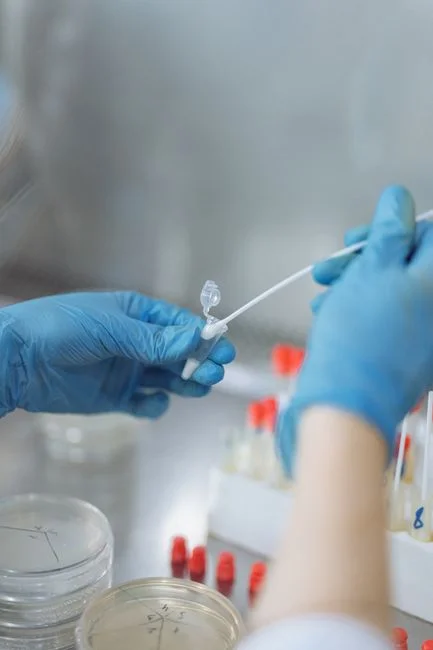
Biological effluent still carries 10³–10⁵ MPN/100 mL fecal coliform — well above the GB 18466-2005 100 MPN/L bar and above EPA and EU UWWTD fecal coliform limits as well. A disinfection stage is non-negotiable, and the choice of finish is constrained by what the biological stage puts downstream.
MBR permeate is the gift to disinfection economics. With turbidity under 1 NTU and near-zero suspended solids, chlorine demand drops 40–60% compared with clarifier effluent — directly shrinking OPEX for any chlorine-based finish (HydropureWater field data, 2026). Among the four mainstream finishes (chlorine, NaClO, ClO2, UV/ozone), ClO2 has become the 2026 hospital default because it kills spores and resistant pathogens that survive NaClO at the same dose. The Lin Chen et al. techno-economic comparison concluded that a compound chlorine dioxide generator is the preferred finish for county and township hospitals specifically on this pathogen-coverage basis.
The compliance number to size against is GB 18466-2005's residual chlorine ≥ 3.5 mg/L at the contact tank exit, with a contact time of at least 30 minutes at peak flow. A packaged chlorine dioxide generator rated 50–20,000 g/h covers everything from a 50-bed clinic to a 2,000-bed regional hospital on a single skid.
2026 CAPEX and OPEX Reality Check by Process Choice
The numbers below are 2026 bands for turnkey packaged or modular installations, including tanks, blowers, pumps, control panels, and the first year of consumables. They exclude building works, civil foundations, and grid power extension. Engineers should treat them as scoping-grade, not tender-grade.
| Process (Hospital Service) | Design Flow | CAPEX (USD) | OPEX (USD/m³) | Footprint | 10-Year TCO Note |
|---|---|---|---|---|---|
| Packaged contact oxidation + ClO2 | 100 m³/d | $80K–$180K | $0.18–$0.30 | ~80–120 m² | Lowest entry cost; OPEX dominated by aeration energy |
| MBR + ClO2 | 100 m³/d | $180K–$350K | $0.22–$0.38 | ~30–50 m² (60% smaller) | Premium CAPEX, ~90% less sludge; net TCO favors MBR above 200 m³/d |
| MBBR + ClO2 (retrofit) | 500 m³/d | $400K–$700K | $0.18–$0.28 | Drops into existing tank | Best CAPEX when an aeration tank already exists |
| SBR + ClO2 | 500 m³/d | $500K–$900K | $0.20–$0.32 | ~150–200 m² (batch tanks) | Strongest shock-load tolerance; needs batch-rated disinfection |
| Activated sludge + ClO2 | 1,000 m³/d | $1.2M–$2.0M | $0.15–$0.25 | ~400–600 m² | Lowest $/m³ once scale crosses ~800 m³/d |
On the disinfection side, NaClO runs roughly 1.5–2× the OPEX of ClO2 on a per-kg-active-chlorine basis at hospital dose ranges, before counting the shorter contact time and broader pathogen coverage that ClO2 delivers. The full SBR plant operating cost breakdown 2026 is worth reading if SBR is on the shortlist, and the best ammonia nitrogen removal technologies for 2026 guide covers the nitrification-finishing step that hospital NH3-N limits drive.
2026 Process Selection Checklist for Hospital Wastewater
Six rules cover ~90% of hospital WWTP scoping decisions in 2026. Apply them in order.
| If… | Then specify… |
|---|---|
| Flow < 200 m³/d, footprint unconstrained, budget-limited | Packaged contact oxidation (HRT > 4 h per Bo Yu et al.) + ClO2 polishing |
| Flow 200–500 m³/d, footprint constrained, basement or container install | MBR + ClO2 generation; premium CAPEX but lowest compliance risk |
| Flow > 800 m³/d, trained operators, civil room available | Conventional activated sludge + ClO2 finishing; lowest $/m³ at scale |
| Variable load (teaching hospital, seasonal admissions) | SBR or MBBR for shock-load tolerance |
| Existing aeration tank, retrofit only | MBBR carriers dropped into the existing volume; ClO2 add-on |
| Always, every site | Mechanical bar screening + equalization upstream; residual-disinfectant contact tank ≥ 30 min at peak flow downstream; packaged underground package sewage treatment plant where site burial is preferred |
Frequently Asked Questions
What hydraulic retention time does hospital wastewater biological treatment need?
At minimum 4 hours for biological contact oxidation, per the Bo Yu et al. HRT study, which is the threshold at which effluent BOD5 and COD meet GB 18466-2005. MBR systems typically operate at 5–7 hours, and SBR cycles run 12–20 hours including anoxic and settle phases.
Which biological process is best for small hospitals under 100 beds?
Packaged biological contact oxidation sized for HRT > 4 hours, paired with a chlorine dioxide generator for the finish. The footprint, CAPEX, and operator skill requirement all line up with what a 50–200 m³/d clinic can support.
Does MBR replace disinfection?
No. MBR removes 90–99% of indicator organisms and produces permeate under 1 NTU, which cuts chlorine demand 40–60%. GB 18466-2005 still mandates a residual-disinfectant contact stage with ≥ 3.5 mg/L at the exit, so MBR is a complement to disinfection, not a replacement.
How is hospital wastewater different from municipal sewage?
Pharmaceutical residues, iodinated contrast media, and antibiotic-resistance genes shift the microbial community. Pathogen loads run 10⁶–10⁸ MPN/100 mL fecal coliform, and discharge limits are tighter — GB 18466-2005 caps fecal coliform at 100 MPN/L versus 1,000 MPN/L for many municipal permits.
What discharge standard applies in 2026?
GB 18466-2005 in China, EPA effluent guidelines in the US, and EU UWWTD 91/271/EEC in Europe, with local health-authority overlays. Most jurisdictions require a logged residual-disinfectant measurement at the contact tank exit on top of the fecal coliform limit. For region-specific scoping, see the hospital wastewater treatment in Rabat 2026 and hospital wastewater treatment in Khobar 2026 guides, or revisit how to treat high nitrate wastewater 2026 if the receiving sewer is already nitrogen-limited.