Why Rabat Hospital Effluent Is a Distinct Treatment Problem
Hospital wastewater in the Rabat-Salé-Kénitra region carries a contaminant mix that domestic-sewage design under-treats by a wide margin: pharmaceutical residues at µg/L levels, iodinated contrast media, cytostatic drugs, aldehyde-based disinfectants, prions, and antibiotic-resistant bacteria with their resistance genes. The only published Rabat-specific characterization remains the 2014 Lamy et al. study of Ibn Sina Hospital effluent, which documented a COD range of 250–600 mg/L, fecal coliforms in the 10⁶–10⁷ CFU/100 mL band, and measurable multi-drug resistance in E. coli and Klebsiella isolates (Lamy, 2014 — Advances in Environmental Biology). That dataset is still the design anchor EPCs cite when sizing CHU-class plants in 2026.
Pathogen loading is the sharper problem. Hospital wastewater typically carries 10–100× higher CFU/100 mL counts than domestic sewage, and oncology wards add a toxicity layer — WHO estimates that 50–70% of cancer patients undergo radiotherapy at some stage of their disease, so effluent from those wards contains active cytotoxics that domestic biology will not degrade. Designing to a domestic standard (COD < 500 mg/L, coliform < 2,000/100 mL) is no longer defensible: under Loi 10-95 on water and Loi 12-06 on waste, non-compliant discharge exposes the operator to enforcement, and ONEE can refuse connection to the municipal interceptor. A HydropureWater MBR membrane bioreactor system sized to ZHSS discharge thresholds is the 2026 baseline for any 200–2,000 m³/d CHU in the region.
Morocco's 2026 Regulatory Baseline for Hospital Discharges
Three instruments govern a Rabat hospital WWTP in 2026: Loi 10-95 on water, its implementing Décret 2-97-787, and Arrêté 2942-2014 (Zones Humides et Sites Spécialement Sensibles / ZHSS), which sets the domestic-equivalent hospital discharge envelope. Plants discharging to a municipal sewer are designed to ZHSS Annex 1 thresholds; plants > 1,200 kg DBO₅/d face the tighter table, while plants < 120 kg DBO₅/d operate against the relaxed small-plant table. Pre-2014 Rabat hospital specs typically assumed COD < 500 mg/L and coliform < 2,000/100 mL — those numbers will fail the current ZHSS test, and a 2026 retrofit or new build has to be re-engineered against the table below.
| Parameter | ZHSS (plant > 1,200 kg DBO₅/d) | ZHSS (plant < 120 kg DBO₅/d) | Legacy 1993 guidance |
|---|---|---|---|
| COD | 120 mg/L | 500 mg/L | 500 mg/L |
| BOD₅ | 35 mg/L | 250 mg/L | 250 mg/L |
| TSS | 35 mg/L | 150 mg/L | 150 mg/L |
| Total nitrogen | 40 mg/L | — | — |
| Total phosphorus | 2 mg/L | — | — |
| Total coliforms | ≤ 2 /100 mL | ≤ 2,000 /100 mL | ≤ 2,000 /100 mL |
| Fecal coliforms | 0 /100 mL | — | — |
Two practical points the engineer should pin to the P&ID: first, ONEE/SIAAP require a pre-connection sampling chamber and a conformity attestation before the discharge line ties into the Salé or Rabat-Tamesna interceptor; second, facilities whose outfall crosses the Bouregreg valley into ORMVA-administered agricultural land also need an ORMVA catchment permit, because that regulator applies the irrigation-reuse criteria on top of the ZHSS envelope.
The 2026 Reference Process Train for a Rabat Hospital WWTP
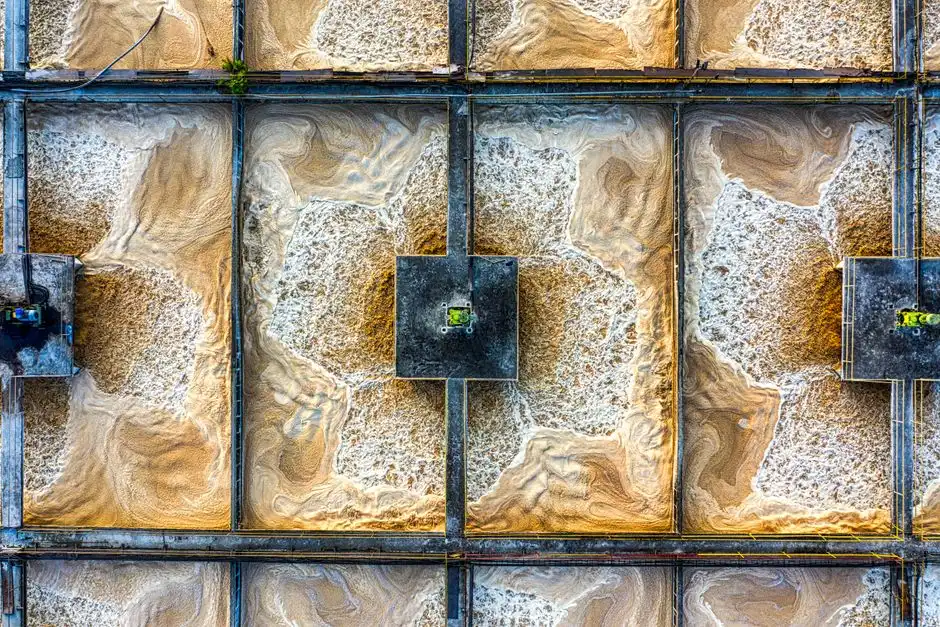
The four-stage train that consistently meets ZHSS at 200–2,000 m³/d is: fine screening → equalization → biological treatment (MBR or contact oxidation) → on-site ClO₂ disinfection. The sizing logic for each block is in the table below; the same sequence is what most Chinese and European EPCs have delivered to Moroccan CHUs between 2022 and 2025.
| Stage | Unit operation | Design parameter | 2026 Rabat value |
|---|---|---|---|
| 1 | Fine screening | Aperture | ≤ 5 mm rotary bar screen (GX-series rotary bar screen) |
| 1 | Flow equalization | HRT | 6–8 h, with 2.0–2.5× peaking factor |
| 2 | MBR (default ≥ 200 m³/d) | Membrane | PVDF, 0.1–0.4 µm, MLSS 8,000–12,000 mg/L, HRT 6–10 h |
| 2 | Biological contact oxidation (< 200 m³/d) | HRT | ≥ 4 h to meet GB18466-2005 COD/BOD targets |
| 3 | Polishing/clarification | TSS ceiling | Lamella or dissolved air flotation unit to push TSS < 35 mg/L |
| 4 | Disinfection | Dose / contact | ClO₂ 0.5–1.0 mg/L residual, ≥ 30 min contact (on-site ClO₂ generator) |
For new 2026 builds the HydropureWater MBR membrane bioreactor system is the default because it holds ZHSS coliforms without a separate clarifier, and the effluent quality is stable enough that downstream ONEE sampling almost never fails. For under-200 m³/d private clinics, the lower-CAPEX route is biological contact oxidation at HRT ≥ 4 h followed by ClO₂ — this is the configuration that has been documented in GB18466-2005 reference plants at 200 m³/d with treated COD < 50 mg/L and NH₃-N < 10 mg/L (Chen et al., Scientific.Net).
Sizing the Plant: Hydraulic and Load Basis for Rabat CHU-Class Hospitals
For a CHU-class hospital, the per-bed design flow sits at 600–1,000 L/bed·day for inpatients, with an additional 30 L/outpatient·visit, and a 2.0–2.5× peaking factor to capture the morning shift surge. A 500-bed CHU therefore runs 300–500 m³/d on average and 700–1,200 m³/d at peak. Loadings are bounded against the Ibn Sina 2014 Rabat field data, not generic textbook values, and the design envelope is summarised below.
| Parameter | Influent (Rabat CHU design) | Source / basis |
|---|---|---|
| COD | 400–800 mg/L | Ibn Sina 2014 upper band + 25% safety |
| BOD₅ | 200–400 mg/L | Ibn Sina 2014 |
| TSS | 200–400 mg/L | Typical CHU, cross-checked vs. Ibn Sina |
| NH₃-N | 25–50 mg/L | Typical CHU |
| Fecal coliforms | 10⁶–10⁷ /100 mL | Lamy 2014, Rabat |
Membrane sizing follows flux: at 12–18 L/m²·h with MLSS at 10,000 mg/L, a 200 m³/d plant needs ~120 m² of DF-series PVDF flat sheet membrane module area and a 1,000 m³/d plant needs ~600 m². Sludge yield is 0.15–0.25 kg DS per kg BOD₅ removed; the sludge line should terminate at a plate-and-frame filter press producing a 70–75% moisture cake that can be hauled to a Class II medical waste route.
Disinfection Technology Trade-Off: Why ClO₂ Wins for Rabat in 2026
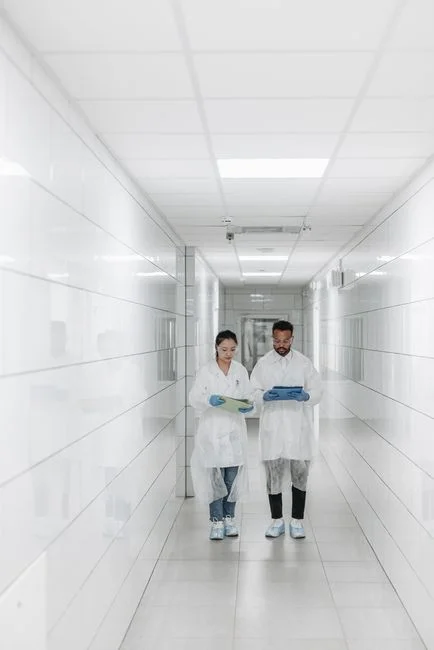
ClO₂ is the 2026 default for Rabat hospitals because it delivers a 99.99% kill of E. coli and coliphage at 0.5 mg/L and 15-min contact, leaves a persistent residual that survives the 1–3 km sewer run to the ONEE interceptor, and — critically — does not form the regulated trihalomethanes (THMs) and haloacetic acids (HAAs) that chlorine produces when it meets pharma-laden effluent. Comparative studies indexed in Springer Environmental Science and Pollution Research (2018–2024) consistently rank ClO₂ above NaClO and UV for hospital effluents containing cytotoxics and contrast media. UV systems lose residual and would require re-dosing at the ONEE connection; chlorine risks THM exceedance against the ZHSS envelope.
| Disinfection option | CAPEX vs. ClO₂ | OPEX (MAD/m³) | Residual in sewer | THM/HAAs |
|---|---|---|---|---|
| ClO₂ (on-site generated) | 1.0× baseline | 12–18 | Yes, persistent | Negligible |
| NaClO (12%) | 0.6× | 9–12 | Yes | Elevated — risk vs. ZHSS |
| UV (medium-pressure) | 1.5× | 6–9 (lamp replacement) | None | None |
| Ozone | 2.0× | 20–30 | Short half-life | By-products regulated |
The on-site ClO₂ generator covers 50 g/h (single clinic) to 20,000 g/h (1,000+ m³/d CHU) and is built to EPA, EU 98/83/EC, and WHO Drinking-water compliance points. The two operational caveats: ClO₂ cannot be transported in bulk, so generation must be on-site, and any enclosed plant room needs a vented ClO₂ scrubber for operator safety. For the clinic-tail variant, the packaged medical wastewater treatment integrates screening, MBR, and ClO₂ into a single skid.
2026 CAPEX and OPEX Benchmarks for a Rabat Hospital WWTP
Turnkey CAPEX for a 200–2,000 m³/d hospital WWTP in the Rabat-Salé-Kénitra region, civil works included, sits in the band below. The figures triangulate against North-African hospital projects delivered by Chinese and European EPCs between 2023 and 2025 and have been re-checked against 2026 logistics and steel indices.
| Design flow | Turnkey CAPEX (USD) | Annual OPEX (USD/m³) | Dominant OPEX line |
|---|---|---|---|
| 200 m³/d | 280,000–380,000 | 0.35–0.55 | MBR aeration electricity ~50% |
| 500 m³/d | 420,000–560,000 | 0.35–0.50 | ClO₂ chemicals ~18% |
| 1,000 m³/d | 580,000–750,000 | 0.35–0.45 | Sludge hauling ~12% |
Annual OPEX sits at USD 0.35–0.55 per m³ treated, dominated by electricity (45–55%, mostly MBR aeration), ClO₂ precursor chemicals (15–20%), sludge hauling (10–15%), and labour (15–20%). The compliance case for the upgrade is direct: ONEE can apply a MAD 5–15/m³ surcharge on non-compliant discharge, and the avoided surcharge plus reduced public-health liability typically pays back an MBR upgrade in 3–5 years for a 500–1,000 m³/d CHU.
Frequently Asked Questions
Which Moroccan standard governs a hospital WWTP discharging to the sewer in Rabat in 2026?
Arrêté 2942-2014 (ZHSS) read with Loi 10-95 and Décret 2-97-787. For a CHU > 1,200 kg DBO₅/d the targets are COD ≤ 120 mg/L, BOD₅ ≤ 35 mg/L, TSS ≤ 35 mg/L, total coliforms ≤ 2 /100 mL, fecal coliforms 0 /100 mL.
Why specify MBR over SBR or conventional activated sludge for a Rabat hospital?
MBR holds ZHSS coliforms and TSS without a separate clarifier, tolerates the variable load from a hospital day cycle, and produces a disinfected-quality effluent that ONEE sampling rarely fails. SBR and ASP work but add tankage and operator attention for the same ZHSS margin.
ClO₂ or NaClO for hospital disinfection in 2026?
ClO₂ at 0.5–1.0 mg/L with ≥ 30 min contact is the safer choice against pharma-rich effluent because NaClO generates THMs/HAAs that risk the ZHSS envelope, while ClO₂ does not. The OPEX premium (MAD 12–18 vs. 9–12 per m³) is offset by avoiding ONEE surcharges.
What CAPEX should a 500-bed CHU plan for in 2026?
USD 420,000–560,000 turnkey for a 500 m³/d plant, civil works included, with annual OPEX of USD 0.35–0.50 per m³. Payback against ONEE non-compliance surcharges and liability exposure typically falls in the 3–5 year band.
How does the 2014 Ibn Sina dataset inform current Rabat design?
The Lamy et al. (2014) characterization of Ibn Sina Hospital wastewater — COD 250–600 mg/L, fecal coliforms 10⁶–10⁷ /100 mL, and documented multi-drug resistance — is the only Rabat-specific anchor. Designers apply a 25% safety margin on top of that envelope for CHU-class flows in 2026.