What Is the COD Discharge Limit in Brazil in 2026?
In Brazil, COD discharge limits for 2026 are governed by CONAMA Resolution 430/2011 (the federal industrial effluent standard) layered with stricter state agency limits — São Paulo CETESB, Minas Gerais COPAM, and Rio de Janeiro INEA. CONAMA 430/2011 caps effluent BOD at 120 mg/L (typically translating to ~330 mg/L COD), but most state agencies enforce COD limits of 75–200 mg/L depending on receiving water body classification. The Licença de Operação (LO) issued to each plant then sets the binding site-specific number after reviewing effluent treatability, dilution capacity, and downstream water uses per ammonia nitrogen limits under CONAMA 430/2011.
The split between BOD and COD matters in practice. CONAMA regulates BOD because it reflects biodegradable load, but engineers design to COD because it is measurable in minutes rather than five days. A typical Brazilian industrial influent shows a BOD:COD ratio of 2.5–2.75, so the federal 120 mg/L BOD ceiling corresponds to roughly 300–330 mg/L COD. Sites discharging into a Class 1 or Class 2 receiving water body — defined under CONAMA 357/2005 — must usually meet the state COD cap directly, not infer it from BOD removal.
CONAMA 430/2011: The Federal Industrial Effluent Standard
CONAMA Resolution 430/2011 is the federal floor for industrial effluent discharge into Brazilian receiving waters. It does not publish a single COD ceiling; instead it sets minimum removal efficiencies and per-parameter caps that, taken together, define what "compliant effluent" means. Engineers who can cite the actual article numbers in their LO renewal package shorten the review cycle at the state environmental agency.
Article 16 sets conventional pollutant caps: oils and greases ≤20 mg/L, phenols ≤0.5 mg/L, and total cyanide ≤0.2 mg/L for discharges into fresh waters. Article 18 imposes total nitrogen ≤20 mg/L when the receiving body is classified as sensitive (e.g., reservoirs with documented eutrophication). Article 21 limits effluent temperature to <40°C at the discharge point to prevent thermal shock. Article 34 specifies minimum removal efficiencies: 60% BOD removal and 75% COD removal for installations with design flow greater than 10 m³/day. Article 34 also caps effluent BOD at 120 mg/L regardless of removal percentage. Article 35 prohibits acute toxicity — the Daphnia similis EC50 or Vibrio fischeri LC50 must exceed 100% v/v effluent concentration, meaning the test organism survives in undiluted effluent.
CONAMA 397/2008 layers sector-specific conditions on top of 430/2011, most notably for pulp & paper (AOX limits, color) and food processing. Receiving water body classification under CONAMA 357/2005 — Classes 1 (special), 2 (drinking water after conventional treatment), 3 (irrigation, recreation), and 4 (navigation, landscape) — drives the LO conditions an engineer will negotiate.
| CONAMA 430/2011 Article | Parameter | Limit | Notes |
|---|---|---|---|
| Art. 16 | Oils & greases | ≤20 mg/L | Mineral and vegetable, measured as total |
| Art. 16 | Phenols | ≤0.5 mg/L | Total phenols, not individual congeners |
| Art. 16 | Total cyanide | ≤0.2 mg/L | Free + complexed |
| Art. 18 | Total nitrogen (sensitive waters) | ≤20 mg/L | Applies where receiving body is listed sensitive |
| Art. 21 | Temperature | <40°C | At the discharge point, not in the tank |
| Art. 34 | BOD removal | ≥60% | Design flow >10 m³/day |
| Art. 34 | COD removal | ≥75% | Design flow >10 m³/day |
| Art. 34 | Effluent BOD ceiling | ≤120 mg/L | Absolute cap, not just removal % |
| Art. 35 | Acute toxicity | EC50 >100% v/v | Daphnia similis 48h or Vibrio fischeri 30 min |
State-Level COD Limits: CETESB, COPAM, INEA Compared

Federal compliance is the starting line, not the finish. São Paulo, Minas Gerais, and Rio de Janeiro each enforce stricter numerical caps that an LO will adopt verbatim, and a plant discharging into a Class 1 or Class 2 receiving water body in any of these three states must design to the state number, not the inferred 330 mg/L from the federal BOD cap.
São Paulo operates under CETESB Decree 8468/1976 with subsequent Norma Técnica amendments (NT 392/2017 for industrial effluents). CETESB typically writes 75–200 mg/L COD into the LO depending on receiving water class — Class 2 waters (most of the Tietê and Pinheiros basins) require <100 mg/L COD at the discharge point. Minas Gerais COPAM Deliberação Normativa Conjunta 01/2008 sets a 150 mg/L COD cap for most industrial discharges into inland waters, with lower values for discharges into Class 1 (special) reaches. Rio de Janeiro INEA enforces a 200 mg/L COD cap for most industrial sectors, dropping to 100 mg/L for discharges into Class 1 waters in the Serra do Mar reserve system. Ceará, Paraná, and Santa Catarina each publish their own CONAMA-aligned tables that are typically 10–30% stricter than the federal floor — never rely on the federal number alone when sizing equipment.
| Jurisdiction | Instrument | Typical COD limit (mg/L) | BOD limit (mg/L) | Receiving-water trigger |
|---|---|---|---|---|
| Federal (CONAMA) | Res. 430/2011 Art. 34 | ~330 (derived from 120 BOD × 2.75) | ≤120 | All waters |
| São Paulo (CETESB) | Decree 8468/1976 + NT 392/2017 | 75–200 (Class 2: <100) | ≤60 typical | Class 1–4 per CONAMA 357 |
| Minas Gerais (COPAM) | DN Conjunta 01/2008 | ≤150 inland waters | ≤60 typical | Class 1 stricter |
| Rio de Janeiro (INEA) | State technical standards | ≤200 (Class 1: ≤100) | ≤60 typical | Class 1–4 per CONAMA 357 |
| Ceará / Paraná / Santa Catarina | State CONAMA-aligned | 10–30% stricter than federal | Varies | Check local LO |
Industry-Specific COD Discharge Limits in Brazil
State agencies publish default COD caps but routinely write tighter numbers into the LO for sectors with high treatability risk or persistent pollutants. Knowing the sector-specific number before the LO negotiation prevents a costly redesign after the agency issues the conditions document.
Food and beverage (dairy, meat, beverage processing) — CETESB target typically 75–150 mg/L COD; the limiting factor is rarely the COD cap itself but BOD variability (raw dairy wastewater runs 800–2,500 mg/L BOD) and ammonia spikes from CIP chemicals. Equalization plus biological treatment is standard. Pulp and paper — CONAMA 397/2008 plus state add-ons; the binding constraint is usually AOX (adsorbable organohalogens) at 0.5 kg/ADt (air-dried ton) rather than COD alone, though CETESB will also impose a 150–200 mg/L COD cap. Textile dyeing — state limits typically 150–250 mg/L COD plus color and sulfide constraints; reactive dye baths push influent COD into the 1,500–5,000 mg/L range, so decolorization is the design driver. Metalworking and surface treatment — COD cap ~150 mg/L but metals (Cr, Ni, Zn, Cd) and cyanide almost always drive the design; DAF pre-treatment is the norm. Pharmaceutical and chemical — case-by-case LO, often <100 mg/L COD plus specific substance bans (AOX, specific solvents).
| Sector | Typical LO COD target (mg/L) | Binding constraint | Design driver |
|---|---|---|---|
| Food & beverage | 75–150 | BOD variability, NH₃ | Equalization + AS / SBR |
| Pulp & paper | 150–200 | AOX 0.5 kg/ADt, color | Primary clarification + biological + tertiary |
| Textile | 150–250 | Color, sulfide, COD | Coagulation + biological + decolorization |
| Metalworking | ~150 | Heavy metals, CN⁻ | DAF + precipitation + polishing |
| Pharma / chemical | <100 (case-by-case) | Specific substance bans | Source separation + advanced treatment |
How to Meet Brazilian COD Discharge Limits: Treatment Train Selection
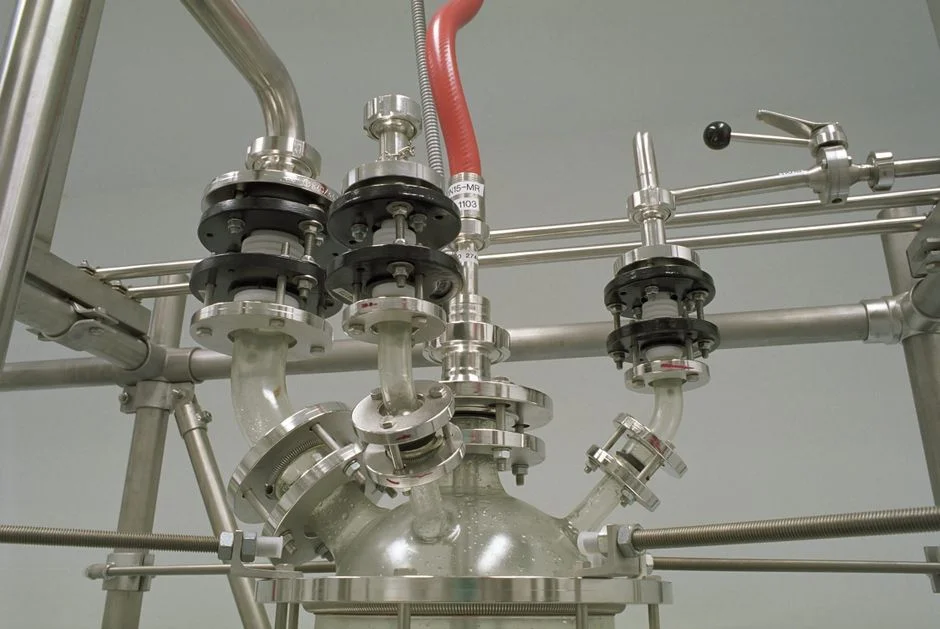
The COD cap in the LO dictates the treatment train, and the train dictates the equipment footprint and operating cost. The mapping below covers the four influent ranges a Brazilian site typically faces; selecting outside these ranges is an invitation to write off the next CAPEX cycle.
Influent COD >5,000 mg/L — start with an anaerobic reactor (UASB or EGSB); the anaerobic stage alone delivers 70–85% COD removal at 0.3–0.6 kg COD/m³·d volumetric loading, then polish aerobically. Influent COD 500–5,000 mg/L — conventional activated sludge or sequencing batch reactor (SBR); target effluent COD 80–150 mg/L with a food-to-microorganism ratio of 0.05–0.15 kg BOD/kg MLSS·d. For final effluent COD <50 mg/L (the typical CETESB Class 1/Class 2 demand) — an MBR with PVDF 0.1–0.4 µm membrane produces reliable 5–20 mg/L TSS effluent and a 60% smaller footprint than conventional activated sludge plus secondary clarification. For COD <30 mg/L or water reuse — add RO polishing; modern brackish-water RO delivers 95–99% rejection at 70–80% recovery. Whenever influent oil and grease exceeds 50 mg/L, install a DAF pre-treatment for oil and grease removal upstream of the biological stage to prevent biomass washout and floating-scum excursions that trigger non-compliance. For sites that need a single packaged biological polishing step, MBR systems for COD polishing below 50 mg/L have become the default in 2024–2026 plant retrofits in São Paulo and Rio.
| Influent COD (mg/L) | Recommended train | Expected effluent COD (mg/L) | Key design parameter |
|---|---|---|---|
| >5,000 | UASB/EGSB + aerobic polishing | 100–200 | OLR 0.3–0.6 kg COD/m³·d (anaerobic) |
| 500–5,000 | Conventional AS or SBR | 80–150 | F/M 0.05–0.15 kg BOD/kg MLSS·d |
| 200–500 | AS + DAF or MBR | 50–100 | MBR flux 10–25 LMH |
| <200 (polish) | MBR alone | 20–50 | PVDF 0.1–0.4 µm, MLSS 8–12 g/L |
| Reuse / near-zero | MBR + RO | <30 | RO rejection 95–99%, recovery 70–80% |
2026 Compliance Checklist for Industrial COD Discharge in Brazil
- Identify the applicable CONAMA resolution (430/2011 baseline; 397/2008 for pulp & paper) and the state environmental agency with jurisdiction (CETESB, COPAM, INEA, or another state agency).
- Calculate the target effluent COD from the receiving water body class under CONAMA 357/2005 and the conditions in the existing LO — never assume the federal 330 mg/L applies.
- Map influent COD variability from at least 12 months of composite sampling; food/beverage plants typically see 2–4× variation across a single shift, and equalization volume must be sized to that peak-to-trough ratio.
- Specify a treatment train that delivers at least 75% COD removal (Art. 34) and passes the Daphnia similis acute toxicity test (Art. 35) — both are non-negotiable federal requirements, even where the state COD cap is stricter.
- Install an online COD/TOC analyzer at the final effluent for continuous monitoring. CETESB typically requires real-time data transmission for plants exceeding 500 m³/day; an overview of online COD analyzer cost and specifications helps justify the line item at budget review.
For greenfield sites or relocations, reviewing certified package sewage treatment plant suppliers in Brazil before the LO application prevents a retrofit penalty if the state agency rejects an undersized biological stage during technical review.
Frequently Asked Questions
What is the federal COD limit in Brazil under CONAMA 430/2011?
CONAMA 430/2011 does not publish a single numeric COD ceiling; Article 34 sets a 75% minimum COD removal efficiency and a 120 mg/L BOD ceiling, which translates to roughly 300–330 mg/L COD for typical Brazilian industrial effluent with a BOD:COD ratio of 2.5–2.75. State agencies write the binding COD cap into the LO.
What COD limit does CETESB enforce in São Paulo?
CETESB typically enforces 75–200 mg/L COD depending on the receiving water body classification, with Class 2 waters (most of the Tietê basin) requiring <100 mg/L at the discharge point under Decree 8468/1976 and NT 392/2017.
Does CONAMA 430/2011 require acute toxicity testing?
Yes. Article 35 prohibits acute toxicity and requires the Daphnia similis 48-hour EC50 or Vibrio fischeri 30-minute LC50 to exceed 100% v/v effluent concentration, meaning the test organism must survive in undiluted effluent.
What is the COD limit for textile effluent in Brazil?
State agencies typically write 150–250 mg/L COD for textile dyeing effluents, with additional constraints on color (mg Pt-Co/L) and sulfide. Reactive dye baths generate 1,500–5,000 mg/L influent COD, so decolorization and sulfide stripping drive the treatment train rather than the COD cap itself.
Which CONAMA resolution applies to pulp and paper mills in Brazil?
CONAMA 397/2008 layers sector-specific conditions on top of CONAMA 430/2011 for pulp and paper, including an AOX cap of 0.5 kg per air-dried ton. State agencies then impose a COD cap of 150–200 mg/L plus color limits in the LO.