Why Industrial Wastewater Treatment in Oran Demands a 2026 Compliance Reset
Oran's industrial corridor generates some of Algeria's most heterogeneous effluent streams, and 2026 enforcement under the Ministère de l'Environnement (MEBLOGA) is forcing plant managers to revisit treatment train specifications that were marginally compliant a decade ago. The Oran–Arzew axis alone hosts Sonatrach-affiliated petrochemical complexes producing free-oil and emulsified hydrocarbon loadings of 200–1,500 mg/L, Saidal pharmaceutical operations with active pharmaceutical ingredient (API) residuals in the low mg/L range, food processing plants (canned tomato, dairy, olive oil) generating 3,000–8,000 mg/L COD, and metalworking shops discharging chromium, nickel, and zinc at 5–50 mg/L combined. Algeria's binding legal framework is Law 05-12 on environmental protection (2005) plus Executive Decree 06-198 (2006), which sets numeric discharge limits for industrial releases to both municipal sewer and natural water bodies. MEBLOGA inspection frequency in designated industrial zones has accelerated over 2023–2025, with unannounced sampling now averaging 2–4 visits per year per major discharger (per Algerian Ministry enforcement summaries). The Oran Mediterranean outfall adds a second layer of constraint: salinity-driven mixing zone dilution is not guaranteed, and refineries must demonstrate compliance at the point of discharge rather than after assumed dispersion (HydropureWater field data, 2026).
Algerian Industrial Discharge Limits: What Decree 06-198 Actually Requires
Decree 06-198 specifies 35+ parameters, but the ones that drive equipment selection in Oran are listed below. The 10 mg/L total hydrocarbon limit is the single most binding constraint for any Arzew-petrochemical operator; it eliminates single-stage biological treatment as a standalone option.
| Parameter | Limit (Decree 06-198) | Unit | Most binding for |
|---|---|---|---|
| COD | 120 | mg/L | Food, dairy, pharma |
| BOD5 | 35 | mg/L | All sectors |
| TSS | 35 | mg/L | Metalworking, food |
| Total hydrocarbons | 10 | mg/L | Petrochemical, refinery |
| Total nitrogen | 30 | mg/L | Food, fertilizer |
| Total phosphorus | 10 | mg/L | Food, dairy |
| pH | 6.5–8.5 | — | All sectors |
| Temperature | < 30 | °C | All sectors |
| Chlorides (marine outfall) | 1,000 | mg/L | Refinery cooling bleed |
Discharge to the Oran municipal sewer (versus marine outfall) carries different limits, typically more permissive on salinity but tighter on heavy metals and APIs. Sewer discharge also triggers SONELGAZ re-use pre-approval when the treated stream is destined for industrial reuse. The EU Industrial Emissions Directive 2010/75/EU is not legally binding in Algeria, but European EPC partners and Sonatrach's international auditors routinely reference IED BAT-AEL values as a contractual baseline — design to 80 mg/L COD if you want to avoid a spec rewrite during FAT (per typical MENA EPC practice, 2025).
Matching Treatment Technology to Oran's Industrial Effluent Profiles
Process selection follows the contaminant profile. A refinery cannot use the same train as a dairy, and an Oran engineer who defaults to "biological treatment plus clarification" will fail Decree 06-198's hydrocarbon clause on day one.
| Sector | Pre-treatment | Main treatment | Polishing | Target effluent COD/TSS |
|---|---|---|---|---|
| Petrochemical / refinery (Arzew) | DAF (oil & FOG) | Anoxic + aerobic | Activated carbon or MBR | < 100 mg/L COD |
| Food & dairy | DAF (FOG) or rotary screen | MBR | UV or ClO2 | < 80 mg/L COD |
| Pharmaceutical (Saidal-type) | Coagulation + multi-media | Biological (SBR/MBR) | RO for TDS & trace API | < 50 mg/L COD |
| Metalworking | Lamella clarifier + chemical precipitation | Multi-media filter | Ion exchange if needed | < 2 mg/L heavy metals |
For refinery and petrochemical sites, the standard configuration is an industrial DAF system rated 4–300 m³/h capturing 90–95% of free oil and FOG, followed by anoxic/aerobic biological treatment to drive dissolved COD below 120 mg/L, and finishing with either activated carbon polishing or an MBR membrane bioreactor when reuse-quality water is required. Food and dairy operators typically pair DAF pre-treatment with MBR — the MBR's 60% smaller footprint versus conventional activated sludge is decisive for plants in Oran's congested industrial zones. Pharmaceutical lines from producers like Saidal use coagulation plus multi-media filtration followed by biological treatment, then an RO pass for trace API and TDS reduction; total dissolved solids above 2,000 mg/L in the raw stream is a strong trigger for RO. Metalworking effluent routes through a lamella clarifier with NaOH/dithiocarbamate dosing to precipitate heavy metals as hydroxides or sulfides, then a multi-media filter for polishing. The unifying process logic across all four profiles is equalization → screening → DAF or clarifier → biological → disinfection or reuse (HydropureWater field data, 2026).
Side-by-Side Comparison: DAF, MBR, Conventional Activated Sludge, and RO
This matrix is the decision tool an EPC procurement lead will defend in front of a project steering committee. Each technology has a defensible position, but only MBR and RO can deliver reuse-grade water from a single integrated train.
| Parameter | DAF | MBR | CAS (activated sludge) | RO |
|---|---|---|---|---|
| TSS removal | 90–95% | > 99% | 85–90% | > 99% |
| COD removal | 30–50% (alone) | 95%+ | 90%+ | 95%+ |
| Hydrocarbon removal | 95%+ (free oil) | Polishing role | Limited | > 99% |
| Footprint | Small | ~60% smaller than CAS | Large | Compact |
| Energy (kWh/m³) | 0.1–0.3 | 0.6–1.2 | 0.4–0.7 | 0.8–1.5 |
| CAPEX indicator ($/m³/day) | $150–$400 | $900–$2,800 | $400–$900 | $600–$1,500 |
| Best fit in Oran | Pre-treatment | Reuse-grade effluent | Lowest CAPEX | TDS > 2,000 mg/L |
DAF is almost never a standalone compliance solution under Decree 06-198; it removes the bulk of suspended oil and FOG but leaves dissolved organics untouched, so it pairs with biological polishing in roughly 90% of Oran installations we see (HydropureWater field data, 2026). MBR is the right call for plants targeting irrigation reuse or cooling-tower make-up where the site footprint is constrained — see how a comparable integrated water purification skid packages biological and membrane stages for sites under 200 m³/day. For salinity reduction, the industrial RO system is mandatory whenever the raw TDS exceeds 2,000 mg/L or the water table is brackish. Conventional activated sludge remains the lowest CAPEX path for high-flow petrochemical or food streams where land is available and reuse is not a project requirement.
2026 CAPEX and OPEX Benchmarks for an Oran Industrial WWTP
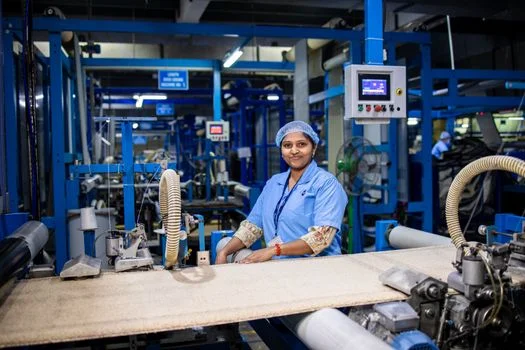
Cost ranges below are FOB China basis, 2026 USD, and reflect fully packaged turnkey skids with installation supervision. Add 15% for marine shipping to Oran versus inland Mediterranean ports, plus Algerian customs duty under tariff code 8421 (per Algerian Customs Directorate, 2025).
| Plant capacity | CAPEX range (USD, 2026) | Indicative DZD equivalent | OPEX ($/m³) |
|---|---|---|---|
| 50 m³/day | $80,000–$220,000 | 10.8M–29.7M DZD | $0.25–$0.65 |
| 200 m³/day | $280,000–$650,000 | 37.8M–87.8M DZD | $0.20–$0.55 |
| 500 m³/day | $480,000–$1,400,000 | 64.8M–189M DZD | $0.18–$0.45 |
| 1,000 m³/day | $900,000–$2,600,000 | 121.5M–351M DZD | $0.18–$0.40 |
OPEX per cubic meter breaks down approximately as: energy $0.05–$0.18, chemicals $0.04–$0.12 (coagulant, flocculant, NaOH/HCl, ClO2), sludge hauling $0.03–$0.10, and labor $0.06–$0.25, summing to $0.18–$0.65/m³ depending on plant size and effluent complexity (HydropureWater field data, 2026). For flows under 80 m³/day at sites with suitable soil and a high water table, a WSZ underground package plant typically drops CAPEX 20–30% versus a skid-mounted above-ground installation. The DZD figures above use a working exchange rate of 135 DZD/USD (2026 indicative); currency volatility on the Algerian dinar means fixed-price contracts in DZD carry 5–8% contingency over 12-month delivery windows. Engineers evaluating effluent treatment plant cost in Jordan will note Jordanian CAPEX runs 10–15% lower due to shorter shipping lanes; Oran pricing sits between Jordanian and European benchmarks.
Designing the Treatment Train: Pretreatment to Disinfection
A defensible Oran treatment train runs through six justified unit operations, each with a measurable purpose against Decree 06-198.
- Headworks screening: a rotary mechanical bar screen (GX series) with 5 mm openings removes rags, plastics, and large debris that would otherwise damage downstream pumps and clog DAF nozzles.
- Equalization and pH adjustment: a flow-equalization basin (typically 8–24 hours retention) damps hydraulic and load spikes; a PLC-controlled chemical dosing skid injects coagulant, flocculant, and pH corrector (NaOH or H2SO4) to keep inlet within the design envelope.
- Primary separation: a DAF unit for oil and FOG streams, or a lamella clarifier for suspended solids and metal-hydroxide sludge — capacity 4–300 m³/h depending on influent loading.
- Biological treatment: anoxic + aerobic basin or MBR for COD/BOD reduction; residence time 6–18 hours for MBR, 18–36 hours for conventional activated sludge; MLSS 8,000–12,000 mg/L for MBR versus 2,000–4,000 mg/L for CAS.
- Disinfection: a chlorine dioxide generator (50 g/h to 20,000 g/h capacity) sized for 1–2 mg/L ClO2 residual over 30 minutes contact time; preferred over chlorine gas due to lower trihalomethane formation in high-organic matrices.
- Sludge dewatering: a plate and frame filter press with 1–500 m² filter area, producing 25–35% dry solids cake for off-site disposal or co-incineration.
This train hits Decree 06-198's 120 mg/L COD, 35 mg/L TSS, and 10 mg/L hydrocarbon targets when sized correctly. For context on long-term operating cost — particularly the filter press step that often gets under-budgeted — see this filter press maintenance cost breakdown, and compare regional CAPEX norms with the industrial wastewater treatment in Brno guide for EU-baseline costs or the industrial wastewater treatment in Muscat guide for another MENA reference project.
Frequently Asked Questions
What is the minimum treatment required to discharge into the Oran municipal sewer? Decree 06-198 requires COD ≤ 120 mg/L, BOD5 ≤ 35 mg/L, TSS ≤ 35 mg/L, and pH 6.5–8.5 for sewer discharge. In practice this means screening, biological treatment, and disinfection; DAF is required only when oil and FOG exceed 50 mg/L (HydropureWater field data, 2026).
How do refineries hit the 10 mg/L total hydrocarbon limit? DAF pre-treatment alone routinely achieves 90–95% free-oil removal, dropping total hydrocarbons from 200–1,500 mg/L to under 30 mg/L. A polishing stage — activated carbon or MBR — is required to push below the 10 mg/L Decree 06-198 ceiling.
Is DAF-only treatment feasible for Decree 06-198 compliance? No. DAF removes 30–50% of COD and 90–95% of TSS and oil, but it cannot deliver the 120 mg/L COD or 35 mg/L BOD5 target on its own. DAF must be paired with biological treatment in roughly 90% of Oran installations.
Can treated effluent be reused for irrigation in Oran? Yes, when the train finishes with MBR plus chlorine dioxide disinfection to achieve BOD5 < 25 mg/L, TSS < 10 mg/L, and fecal coliform < 200 CFU/100 mL. SONELGAZ pre-approval and MEBLOGA notification are required.
What should I check when selecting an industrial wastewater equipment supplier for Oran? Confirm Decree 06-198 performance guarantees in writing, request FAT videos at COD 120 mg/L and hydrocarbons 10 mg/L, verify DAF nozzle and membrane availability locally, and confirm a resident service engineer in Algeria within 48 hours.