What Does an Effluent Treatment Plant Cost in Jordan in 2026?
Effluent treatment plant cost in Jordan for 2026 typically runs USD 80,000–4,000,000 in CAPEX depending on capacity and process complexity, which translates to roughly USD 150–400 per m³/day for a packaged MBR skid, USD 350–900 per m³/day for a full concrete civil build with tertiary disinfection, and USD 1,200–1,800 per m³/day for a zero liquid discharge (ZLD) configuration. A 500 m³/day textile or food-grade ETP in Jordan generally lands between USD 350,000 and USD 900,000 installed, with OPEX of USD 0.18–0.55 per m³ treated across a 5-year horizon. The full cost of ownership includes equipment, civil works, installation, instrumentation, commissioning, and ongoing OPEX lines for energy, chemicals, membrane replacement, labor, and sludge disposal — not just the equipment line on a vendor's quote.
Four Jordan-specific multipliers move a vendor's number up or down: imported equipment carries a 25–35% landed-cost premium over Chinese FOB pricing once freight, customs (5% + 15% sales tax on CIF), and CE/IEC certification are loaded; civil concrete runs 15–25% above GCC averages because cement and rebar are largely imported; electrical energy at JOD ~0.117/kWh (NEPCO industrial tariff, 2026) punishes aeration-heavy processes; and skilled O&M labor scarcity pushes designs toward PLC/SCADA automation, which adds 8–15% to CAPEX but reduces 5-year OPEX 12–20%. A useful biological benchmark is the Trans Bio-Filter pilot data: on a 1,800–2,300 ppm COD nitro-toluene stream at 60–300 KLD, the system achieved 87% COD removal and dropped turbidity from >1,000 NTU to 25–40 NTU after biological treatment — the kind of step-change your Jordan ETP biological stage should be specified to match. The CNKI CETP literature also flags that individual ETPs "face problems from lack of space, resources, capital cost, and specialized manpower for O&M," which directly motivates the packaged, automated MBR preference across Jordanian industrial estates. For a comparable North African benchmark, see this industrial WWTP cost breakdown for 2026 buyers.
Key Cost Drivers for an ETP in Jordan
Quotes from different vendors for the same nominal flow rate can vary by 5x because vendors price on different design assumptions; understanding these four drivers lets a Jordanian procurement manager normalize bids before comparison. First, influent characteristics: textile dyeing influent at COD 1,500–4,000 ppm and TDS 2,000–8,000 mg/L costs 1.5–2x a food-processing stream at COD 800–1,500 ppm to treat, because the biological step must work harder, color removal demands oxidation or carbon, and salt load forces higher reject volumes on any downstream RO. Second, capacity scaling: sub-100 m³/day packaged units carry a 30–50% per-m³ cost penalty; the 200–1,000 m³/day band hits the lowest unit cost because skids can be factory-built; above 2,000 m³/day, civil work (equalization basins, aerobic tanks, clarifiers) re-dominates the bill and unit cost climbs again. Third, effluent target: discharge to the As-Samra municipal sewer under Jordan MoE Standard JS 202/2006 is the cheapest endpoint; reuse for drip irrigation or boiler feed adds MBR + RO polish at USD 200–450 per m³/day incremental CAPEX; full ZLD with brine evaporation or crystallization adds 1.5–3x the base CAPEX and is justifiable only where water costs exceed USD 1.50/m³. Fourth, site conditions: brownfield retrofits inside an active Zarqa or Amman textile plant cost 20–40% more than greenfield for piping tie-ins, confined-space welding, and night-shift work; coastal Aqaba sites inside ASEZA jurisdiction need FRP or SS316 upgrades to resist chloride-induced pitting, which adds 10–18% to the equipment line. Automation trade-off math: PLC + SCADA + remote telemetry adds 8–15% to CAPEX but reduces 5-year OPEX 12–20% through lower labor headcount and faster fault response — a meaningful trade-off given the O&M labor gap documented in the CETP literature.
Technology Comparison: MBR vs SBR vs DAF + Conventional ASP
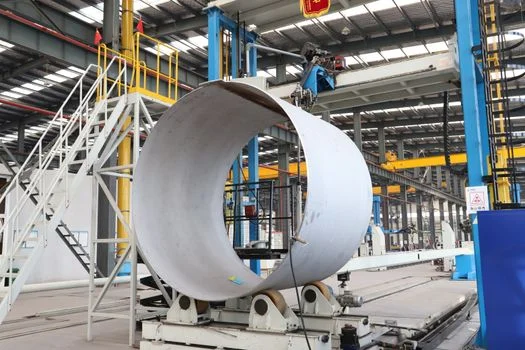
Three process trains cover 90% of Jordanian industrial ETP bids: submerged MBR, sequencing batch reactor (SBR), and DAF pre-treatment followed by conventional activated sludge. The right pick depends on flow rate, reuse intent, and land availability — and the wrong pick is the single most expensive mistake in this article. MBR with PVDF hollow-fiber membranes (nominal pore <1 μm) delivers COD <50 mg/L, BOD <5 mg/L, turbidity <2 NTU, and TSS near zero in a single step, meeting Jordan MoE JS 202/2006 sewer limits and JSP 1/2008 irrigation reuse simultaneously; the trade-off is energy at 0.4–0.7 kWh/m³ from permeate suction and cross-flow aeration. SBR (batch-fill, aerate, settle, decant activated sludge) hits COD 80–120 mg/L and BOD 20–30 mg/L — adequate for MoE sewer discharge but requiring a tertiary sand filter or activated carbon stage before any reuse application; CAPEX runs 20–35% below MBR but OPEX is 15–25% higher per m³ because of longer hydraulic cycle times and more frequent sludge wasting. DAF (dissolved air flotation) is not a stand-alone biological process but an essential pre-treatment: a well-designed DAF pre-treatment unit removes 70–90% of TSS and 60–80% of fats, oils, and grease upstream of the biological step, and is non-negotiable for Jordanian olive mills, tanneries, and food processors where FOG shock would otherwise wipe out biomass. The Trans Bio-Filter pilot data is the useful anchor here: it took influent turbidity >1,000 NTU down to 25–40 NTU after biological treatment alone, and your DAF should be specified to deliver inlet turbidity to the bioreactor below 150 NTU to protect membranes or biomass. Energy penalty math for MBR: at JOD 0.117/kWh, the 0.4–0.7 kWh/m³ demand adds JOD 0.047–0.082 per m³, but for water-scarce Jordanian sites this is recoverable through reuse revenue at USD 1.00–1.50/m³ water cost avoidance. Pick MBR for flows >200 m³/day, any reuse requirement, or constrained footprint; pick SBR for flows <200 m³/day, sewer discharge, and tight CAPEX; always include DAF when influent oil & grease exceeds 200 mg/L.
| Parameter | Submerged MBR (PVDF) | SBR (Batch Activated Sludge) | DAF + Conventional ASP |
|---|---|---|---|
| Effluent COD (mg/L) | <50 | 80–120 | 60–100 |
| Effluent BOD (mg/L) | <5 | 20–30 | 15–25 |
| Effluent TSS (mg/L) | <2 | 20–40 | 20–30 |
| Footprint vs SBR | 40–60% smaller | Baseline | ~110% of SBR |
| CAPEX (USD per m³/day, 500 m³/d) | 1,400–1,800 | 1,000–1,300 | 1,100–1,400 |
| OPEX (USD per m³) | 0.30–0.50 | 0.35–0.55 | 0.32–0.52 |
| Energy (kWh/m³) | 0.4–0.7 | 0.25–0.45 | 0.30–0.50 |
| Operator skill | Moderate (membrane care) | Moderate | Low–Moderate |
| Reuse-ready (JSP 1/2008) | Yes, with ClO2 | Needs tertiary filtration | Needs tertiary filtration |
Jordan Discharge Standards and Compliance Checkpoints
Every ETP design in Jordan must be sized to one of three regulatory endpoints, and the choice drives 30–60% of the equipment line — get the endpoint wrong and the plant either gets rejected at commissioning or carries a retrofit cost within 18 months. The baseline is Jordan Ministry of Environment (MoE) Standard JS 202/2006 for industrial discharge to municipal sewer feeding As-Samra WWTP: BOD 60 mg/L, COD 150 mg/L, TSS 60 mg/L, oil & grease 10 mg/L, pH 6–9, total nitrogen 50 mg/L, and total phosphorus 10 mg/L. The Aqaba Special Economic Zone Authority (ASEZA) applies a tighter, reuse-oriented envelope: BOD 20 mg/L, TSS 30 mg/L, and fecal coliform <200 CFU/100 mL for landscape irrigation reuse — any facility inside ASEZA must meet this from day one and cannot rely on a phased upgrade. The As-Samra trade-effluent agreement, enforced by the SAMS concessionaire, caps heavy metals at Zn 0.5 mg/L, Cr 1.0 mg/L, and Ni 0.5 mg/L — relevant for tanneries and metal-finishing lines discharging to the Amman or Zarqa sewer network. For reuse-bound designs, the Jordanian Standard JSP 1/2008 sets the floor: fecal coliform <1,000 CFU/100 mL and BOD <30 mg/L for restricted agricultural reuse, which is what drives the MBR + ClO2 default. Permit timing is the hidden schedule risk: a typical industrial EIA + discharge permit runs 4–9 months through MoE or ASEZA, so design the ETP to spec on day one — do not buy a "Phase 1" biological skid and assume Phase 2 will close the gap, because the permit will not.
| Parameter | MoE JS 202/2006 (sewer) | ASEZA (irrigation reuse) | JSP 1/2008 (agricultural reuse) |
|---|---|---|---|
| BOD (mg/L) | 60 | 20 | <30 |
| COD (mg/L) | 150 | — | — |
| TSS (mg/L) | 60 | 30 | — |
| Oil & grease (mg/L) | 10 | — | — |
| pH | 6–9 | 6.5–8.5 | 6.5–8.5 |
| Fecal coliform (CFU/100 mL) | — | <200 | <1,000 |
| Total nitrogen (mg/L) | 50 | — | — |
| Total phosphorus (mg/L) | 10 | — | — |
For regional context on metal and fluoride limits that often cross-cut Jordanian discharge negotiations, the Egypt EEAA zinc compliance guide and the Saudi RCJ fluoride limit guide show how neighboring regulators set their own floors.
500 m³/day ETP Worked Example: Textile Dyeing in Jordan
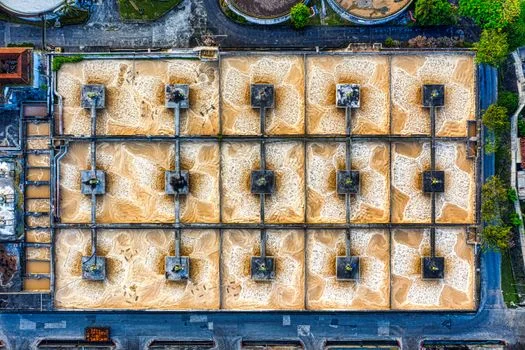
A 500 m³/day textile dyeing ETP in Zarqa or Irbid is a representative 2026 worked example, and the line-item pricing below is defensible against Jordanian and Chinese OEM quotes received in Q1 2026. Influent profile: COD 2,200 mg/L, BOD 700 mg/L, TSS 600 mg/L, pH 9–11, color 1,500 Pt-Co, TDS 4,500 mg/L, temperature 30–40°C — typical of a reactive-dye cotton finishing line. Process train: equalization + pH adjustment → DAF pre-treatment → anoxic/aerobic MBR membrane bioreactor system with PVDF membrane modules → activated carbon polishing → chlorine dioxide disinfection system → sludge dewatering via plate and frame filter press. Chemical dosing handled by a PLC-controlled chemical dosing system. CAPEX line items (USD, FOB + landed Jordan):
| Line Item | CAPEX (USD) | Notes |
|---|---|---|
| DAF unit (30 m³/h) | 45,000 | Removes 70–80% TSS, 60% FOG |
| Equalization + pH adjust tanks (civil) | 55,000 | RC concrete, 8 hr HRT |
| MBR skid (PVDF, 500 m³/d) | 220,000 | Includes cassettes, blower, permeate pump |
| Aeration blowers + fine-bubble diffusers | 35,000 | 2 duty + 1 standby |
| Chemical dosing systems (pH, coag, ClO2) | 25,000 | Three skid packages |
| ClO2 generator | 18,000 | 5 kg/h capacity |
| Plate & frame filter press (10 m³/d) | 38,000 | Manual cake discharge |
| PLC + SCADA + remote telemetry | 32,000 | Siemens S7-1500, 4G modem |
| Installation, piping, cabling | 90,000 | ~12% of equipment |
| Civil concrete works (tanks, building, drains) | 110,000 | Reinforced, lined |
| Engineering, commissioning, contingency | 80,000 | ~12% of supply + civil |
| Total CAPEX | 748,000 | ~USD 1,496 per m³/day |
OPEX (USD per m³ treated, at 90% uptime = 164,250 m³/yr): energy 0.18, chemicals (pH adjust, coagulant, ClO2, CIP) 0.09, membrane replacement reserve 0.07, sludge disposal to licensed landfill 0.05, labor and maintenance 0.08 — total USD 0.47/m³, equating to USD 77,200/year. Sensitivity: dropping the activated carbon polishing and accepting MoE sewer discharge lowers CAPEX to ~USD 540,000 (USD 1,080 per m³/day); adding RO for >95% reuse lifts CAPEX to ~USD 1.05M but unlocks ~USD 1.20/m³ water cost avoidance. Commissioning acceptance criteria should be tied to the Trans Bio-Filter benchmark: MBR should achieve COD reduction 95–98% (vs the 87% in the TF pilot, with the gain coming from membrane solids retention), NH4 removal >95%, and TSS to <5 mg/L — document these in the performance guarantee. For a packaged comparison point, the WSZ underground integrated sewage treatment unit is the right reference only for sub-100 m³/day sewer-discharge flows; a 500 m³/d textile site should not be downsized to packaged.
Procurement Checklist: How to Budget a Jordan ETP Without Surprises
Pre-RFQ: complete 2 weeks of composite influent sampling (24-hour composite, 7 days continuous) so the vendor is sizing to real numbers, not your marketing estimate; build a shortlist of 3 vendors — one local EPC with a Jordan reference list, one regional (Egyptian or Saudi), and one Chinese OEM with documented Jordan commissioning experience; freeze the process train in your RFQ to prevent redesign creep. The RFQ must explicitly include: influent characterization with full parameter list, target effluent (specify MoE sewer or JSP 1/2008 reuse), site survey including soil and electrical availability, scope of supply with model numbers, scope of civil (what is vendor vs your contractor), exclusions list, and a 5-year membrane and spare-parts schedule with firm pricing. Watch-outs: confirm CE or IEC electrical certification for any Chinese skid (Jordan customs will reject unmarked panels), confirm membrane model and lead time (typically 8–14 weeks ex-China), confirm Arabic and English documentation, and verify the vendor will provide an in-region commissioning engineer (not a fly-in from Shanghai). Payment and warranty: use a standard 30/30/30/10 TT schedule linked to milestones (deposit, ex-factory, on-site delivery, performance test), insist on a 24-month mechanical warranty and 12-month membrane performance warranty, and lock a 5-year spare-parts price commitment to protect the OPEX assumptions in your budget. For a regional cross-check before signing, the Morocco WWTP supplier 2026 guide and the Rabat WWTP cost 2026 guide are useful MENA cost benchmarks, and the decentralized wastewater treatment market forecast to 2030 shows where unit costs are heading.
Frequently Asked Questions
What is the typical CAPEX for a small (50–100 m³/day) industrial ETP in Jordan?
USD 80,000–180,000 for a packaged MBR or SBR skid including installation and civil works, or roughly USD 1,100–1,800 per m³/day — the per-unit cost is 30–50% higher than mid-scale plants because fixed engineering and shipping costs are amortized over a smaller flow base (HydropureWater field data, 2026).
Should I choose MBR or SBR for a 500 m³/day textile ETP in Jordan?
Choose MBR if you need reuse-grade effluent under JSP 1/2008 or have a tight footprint; choose SBR if you are discharging to the As-Samra sewer and want 20–35% lower CAPEX. MBR typically adds USD 100–200 per m³/day in CAPEX but cuts OPEX 10–15% on sludge handling (HydropureWater field data, 2026).
What is the realistic OPEX per cubic meter for an industrial ETP in Jordan?
USD 0.18–0.55 per m³ for biological treatment only, dominated by energy at JOD 0.117/kWh (NEPCO industrial tariff, 2026) and membrane replacement at 5–7 year intervals for MBR systems.
How long does the Jordan MoE or ASEZA permit process take for an industrial ETP?
4–9 months for the combined EIA, discharge permit, and ASEZA environmental review; build this into your project schedule before placing the equipment order to avoid idle capital and storage costs (per Jordan MoE practice, 2025-2026).
Is zero liquid discharge (ZLD) economic for a Jordanian industrial site?
ZLD becomes economic only when fresh-water cost exceeds USD 1.50/m³ and the site has a high salt or heavy-metal load that blocks reuse; for a 500 m³/day textile plant the ZLD CAPEX premium is USD 600,000–1,000,000 above a sewer-discharge design, recoverable in 4–7 years only under current Jordanian water tariffs. For a similar South-East Asian benchmark, the Taguig WWTP cost 2026 guide shows comparable ZLD economics under a different tariff regime.