Rotary Drum Screen Cost for Wastewater Treatment
Rotary drum screen cost for wastewater treatment typically runs from $1,600 for a basic 600 mm SS304 unit to over $6,500 for SS316 machines with VFD controls. Price moves with drum diameter, 1–6 mm mesh, 0.55–1.5 kW motors, and feed design. Internally fed packages with automatic cleaning usually add 20–30% above a comparable externally fed base.
Ex-works ranges above reflect common 2025–2026 industrial quotations for compact pretreatment drums, not full civil packages. Drum diameter, mesh type, motor control, and stainless grade still drive most of the delta. Plant engineers and procurement teams use these bands to shortlist vendors before asking for site-specific bids. Most plants we price for food laterals land in the lower half of that band.
Quoted bands are Ex-Works equipment figures for skid-style process drums. Civil works, upstream pumping, screenings wash-presses, and disposal contracts sit outside these numbers and should be line-itemed in the project estimate.
Which Specs Move Unit Price the Most?
Drum diameter remains the first cost lever because steel mass and drive torque rise together. Each 300 mm step (for example 600 mm to 900 mm) typically adds about $400–$600 to the unit price under the same mesh and motor class. Most plants we size for food or light industrial drains run toward the lower end of that diameter ladder unless peak flow already exceeds about 30 m³/h.
Mesh aperture from 1 mm to 6 mm changes both capture and fabrication cost. Finer 1 mm wedge wire versus 2 mm perforated plate usually raises price 15–25% because of tighter tolerances and higher-grade wire. Motor packages from 0.55 kW to 1.5 kW, especially with a VFD, add roughly $800–$1,200 yet let operators match drum speed to variable influent.
Coarse screens start at 6 mm (0.25 in) or larger. The same fact sheet does not define drum diameter or internal versus external feed. Commercial quotes here still use drums of about 0.5–2 m, which lines up with the 600–2000 mm range in the tables below.
If you need the operating mechanics before locking a budget, review how a rotary drum screen moves solids across the media. For a flow-specific budget check, compare the published price for 250 gpm rotary drum screen for wastewater treatment against your peak hydraulic load.
What Is the SS304 vs SS316 Rotary Drum Screen Price?
SS316 rotary drum screen price sits 18–22% above a comparable SS304 drum for the same diameter, mesh, and drive. Material grade is the corrosion decision. SS304 covers most municipal and mild industrial streams, while SS316 is the upgrade for saline, acidic, or chemically aggressive wastewater.
According to worldstainless waste-water installation guidance, Type 304 is satisfactory below about 200 mg/l chloride and only marginally satisfactory from 200 to 1000 mg/l. The same guidance prefers 1.4404 (316L) over 1.4307 (304L) above that 200 mg/l line, and recommends 316L for underwater parts.
Stress corrosion cracking of these austenitic grades is generally a concern only above about 50–60 °C in chloride water. Most plants we size with chloride under 200 mg/l stay on SS304 and put the 18–22% into brushes or a VFD instead. Worldstainless, citing EN 12502-4, treats crevice gaps of more than 0.5 mm as uncritical.
What Is the Internally Fed Rotary Drum Screen Cost?
Internally fed rotary drum screen cost commonly runs 20–30% above a simpler externally fed frame with the same diameter and mesh (HydropureWater engineering analysis, 2025). Internally fed designs need tighter seals and denser cleaning hardware. That premium is a hardware difference, not a mesh difference.
According to WEF operations training on preliminary treatment, the two basic rotary drum fine screens are internally fed and externally fed. An internally fed unit sends influent into the center and spreads it along the drum. Curved stainless steel screen sections hold the solids, and an external spray near the top washes debris into a trough.
An externally fed unit spreads influent along the outside of the rotating screen. Water passes inward and is collected in the center. A doctor blade and a spray wash take screenings off the outer face.
WEF also notes wedge-wire fine screens with openings of about 0.2 to 6 mm (0.01 to 0.25 in). Fine screens should sit downstream of a bar rack so large debris does not damage the drum. Most food plants we size still choose external feed when a side box fits the channel. Internal feed earns the 20–30% when the layout is tight or the solids need center distribution.
Entry-Level vs Premium Units: Cost Breakdown
Entry-level drums around 600 mm with SS304 and a fixed-speed motor usually list at $1,600–$2,500. They fit low-flow duties below 20 m³/h where intermittent operation and simple spray cleaning are acceptable, such as pilot lines or small industrial laterals.
Mid-tier packages commonly land at $3,800–$5,200. A typical build uses a 1200 mm drum, SS304, a VFD-controlled 0.75 kW motor, and 1 mm wedge wire with self-cleaning brushes. Food-processing wastewater and municipal headworks with swinging loads are the usual fit because VFD speed control improves capture during diurnal peaks.
Premium continuous-duty trains often quote $5,800–$7,500. Expect an 1800 mm drum, full SS316, internal feed, a 1.5 kW VFD motor, and brush-plus-spray cleaning. Pulp and paper, chemical plants, and large municipal headworks buy this tier when unplanned downtime costs more than the stainless premium.
Custom flanges, PLC handshakes, or IoT sensors usually add $500–$1,500. Sea freight from China typically adds $600–$1,200 per unit, while on-site commissioning and operator training often run $1,000–$2,000. Most change orders we see are flange height, not a new drum diameter.
| Feature/Model Tier | Entry-Level | Mid-Tier | Premium |
|---|---|---|---|
| Price Range (Ex-Works) | $1,600 – $2,500 | $3,800 – $5,200 | $5,800 – $7,500 |
| Drum Diameter | 600mm | 1200mm | 1800mm |
| Material Grade | SS304 | SS304 | SS316 |
| Motor Power/Control | 0.55kW, Fixed Speed | 0.75kW, VFD Control | 1.5kW, VFD Control |
| Mesh Aperture/Type | 2-3mm Perforated | 1mm Wedge Wire | 1mm Wedge Wire |
| Feed Design | Externally Fed | Externally Fed | Internally Fed |
| Cleaning Mechanism | Basic Spray/Manual | Automated Brushes | Automated Brushes + Spray |
| Typical Flow Rate | <20 m³/h | 40-80 m³/h | >100 m³/h |
| Common Applications | Small industrial, pilot | Food processing, municipal headworks | Pulp & paper, chemical, large municipal |
Which Rotary Drum Suits Wastewater Flows?
Flow capacity maps closely to diameter: 600 mm drums typically handle 10–30 m³/h, while 1800 mm models process about 80–150 m³/h under clean-mesh conditions. As a sizing rule of thumb, each extra 50 m³/h of design flow often needs roughly 200 mm more diameter and about 0.3 kW more motor power. That step-up is why larger hydraulic duties climb the price tiers above.
Peak flow, not the daily average, is the number we size. A duty that averages well under 30 m³/h and peaks near 50 m³/h should not stay on a 600 mm drum.
The US EPA Wastewater Technology Fact Sheet: Screening and Grit Removal (832-F-99-040, September 1999) places common fine-screen openings in the 1.5–6 mm band for preliminary treatment. Finer media is used when plants chase primary-like solids removal. That aperture window is why 1–6 mm meshes dominate the industrial quotes in this guide.
For the hydraulic path and solids transport pattern inside the cylinder, see How Does a Rotary Drum Screen Work? Engineering Mechanics, Efficiency before you freeze flange elevations.
What Capture Ratio Should Buyers Expect?
Rotary drum screen capture ratio for general pretreatment with 2 mm perforated media typically lands at 85–92% solids capture under design hydraulic loading. Applications that need clearer filtrate often move to 1 mm wedge wire and can reach about 95% capture when flow stays inside the rated band and cleaning stays online. When spray water is off, the 95% capture on 1 mm wedge wire is the first number we stop trusting.
Do not read that 85–92% as plant TSS removal. US EPA fact sheet 832-F-99-040 (September 1999) states that fine screens can remove 20 to 35 percent of suspended solids and BOD5, which is closer to a primary-like cut. Screenings capture and percent TSS removed are different tests, so both numbers belong in the bid comparison.
Drive choice affects uptime more than peak capture. Gear motors usually run 10+ years in continuous service and cost about 12% more than chain drives that need tighter lubrication discipline. Self-cleaning brushes are standard on mid-tier and premium builds; optional spray nozzles add about $300 when sticky fats or fibrous solids blind the media faster than brushes alone can clear.
Frame metallurgy still matters on corrosive sites. Coated carbon steel frames are common on budget builds, while full stainless frames (SS304 or SS316) add $700–$1,100 and cut coating touch-up work in aggressive rooms.
| Technical Specification | Typical Range/Option | Performance Impact | Price Impact (Approx.) |
|---|---|---|---|
| Drum Diameter | 600mm – 2000mm | Flow capacity (10–150 m³/h) | +$400–$600 per 300mm increment |
| Mesh Aperture | 1mm – 6mm (perforated/wedge wire) | Solids capture (85–95%), filtrate quality | +15–25% for finer wedge wire |
| Motor Power | 0.55kW – 1.5kW | Torque, handling higher solids/flow | +$800–$1,200 with VFD |
| Material Grade | SS304 vs SS316 | Corrosion resistance, lifespan | +18–22% for SS316 |
| Feed Design | Internal vs External | Solids handling, space efficiency | +20–30% for internal feed |
| Drive System | Gear Motor vs Chain Drive | Longevity, maintenance needs | +12% for gear motor |
| Cleaning Mechanism | Brushes, Spray Nozzles | Reduced manual cleaning, uptime | +$300 for spray nozzles |
| Frame Material | Coated Carbon Steel vs Full SS | Corrosion resistance, durability | +$700–$1,100 for full SS |
How to Select a Rotary Screen Microfilter
Rotary drum microfilter selection starts with peak flow, screen opening, and solids character—not catalog horsepower. Confirm the design m³/h (and US gpm equivalent), required aperture, fat or fiber load, and whether the channel needs internal or external feed. Then price only the metallurgy and cleaning package that matches the chemistry. A chloride result above 200 mg/l is the usual trigger to price SS316 before arguing about motor kilowatts.
Use this short checklist before releasing an RFQ. If the lab sheet has no chloride number, do not guess the grade.
- Target aperture (1–6 mm) tied to downstream process limits.
- Influent chloride, pH, and temperature band for SS304 vs SS316.
- Duty cycle: intermittent pilot service versus 24/7 headworks.
- Cleaning method: manual spray, brushes, or brushes plus spray.
- Integration needs: VFD, PLC I/O, flange standard, discharge height.
- OPEX owners: labor hours, power tariff, and planned screenings handling.
What Is the Rotary Drum Screen Total Cost of Ownership?
Rotary drum screen total cost of ownership often dwarfs the Ex-Works delta between tiers, and budget drums without automated cleaning commonly need manual cleaning every 3–5 days. Brush-equipped units cut that cadence to about weekly and can save roughly 16 labor hours per year on a single duty point (HydropureWater field data, 2025).
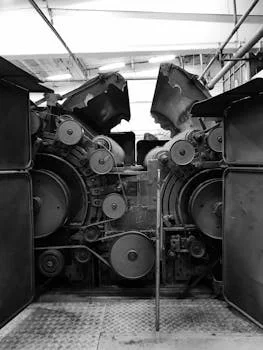
Energy is the next lever. VFD-controlled drums typically use 25–35% less power than fixed-speed motors when influent swings through the day, because operators can drop rpm during low-load hours instead of running full torque continuously. That saving is largest on mid and premium packages already carrying VFD hardware.
SS304 drums commonly last 8–10 years; SS316 stretches service to about 12–15 years in aggressive wastewater, roughly 25% longer before a capital replacement.
Unplanned clogging still hurts: pulp and paper benchmarks near $1,200 per hour of lost production make continuous-duty cleaning worth the premium when solids spikes are frequent. For heavier bar-screen duty in the same headworks train, evaluate a Rotary Mechanical Bar Screen (GX Series) alongside the drum option.
On flows above 50 m³/h with high solids, a premium drum often recovers its upcharge in about 2.1 years through lower labor, lower kWh, longer metallurgy life, and fewer production stops.
Pair that math with a written maintenance plan. Operators who still ask how do i inspect a rotary screen daily? usually under-budget the labor line on cheap, manually cleaned units.
A 1999 EPA bid example, in fact sheet 832-F-99-040, shows contractor bids from $150,000 to $400,000 for rotary drum screenings removal, and those figures included construction. Treat that band as an installed-project example from 1999, not as a current Ex-Works drum price. The $1,600–$7,500 equipment tiers in the table above are a different scope.
Who This Is For / Next Step
Plant engineers, EPC designers, and procurement leads use this cost guide to compare Ex-Works tiers before formal bids. Look elsewhere if you need only a static sieve for very low solids, or if your project is a multi-million-dollar CSO tunnel screen package rather than a skid-mounted process drum.
When the flow, aperture, and metallurgy shortlist is ready, request a rotary drum quotation with design m³/h, mesh, and chemistry attached. That file keeps the proposal on the duty point instead of a catalog mid-point.
Frequently Asked Questions
What is the average cost of a stainless steel rotary drum screen?
The average cost for a new stainless steel rotary drum screen with VFD control and 1–3 mm openings typically falls between $3,800 and $6,500 Ex-Works. Final price still moves with drum diameter, SS304 versus SS316, and whether brushes or spray bars ship as standard. Treat published bands as planning figures until a vendor sizes the unit to your peak flow. Most bids we compare still move once diameter and alloy are fixed.
How much does shipping from China add to rotary drum screen cost?
Sea freight from China typically adds $600–$1,200 per unit for these compact industrial drums, which remains the usual cost-effective path for non-urgent projects. Air freight can roughly double shipping cost while cutting transit to about 7–10 days when a shutdown window is fixed. Always confirm whether the quote is Ex-Works, FOB, or CIF before comparing vendors.
Are there cheaper alternatives to rotary drum screens?
Static wedge wire screens are cheaper alternatives at about $900–$1,800, but they lack powered self-cleaning and usually need more manual labor. Over a multi-year horizon, labor and blinding risk can erase the capital gap on greasy or fibrous wastewater. Choose static media only when solids load is low and operators can clean on a short interval.
Can I customize the inlet size and discharge height?
Custom inlet flanges and discharge chutes are routine and typically add $300–$800 depending on geometry and stainless grade. Those changes matter when tying into existing channels, pumps, or conveyor elevations without civil rework. Provide as-built drawings early so the vendor quotes the modification once instead of issuing a change order later.
What is included in the base price?
Base price usually covers the drum assembly, drive motor, support frame, and a basic IP55 control panel. VFDs, PLC integration, specialty sprays, and freight sit outside that core unless the quotation says otherwise. For parallel capital-planning patterns on other packaged equipment, compare structures in our pulse jet dust collector cost prices guide and the sludge dewatering machine costs article.