The Real Question Isn't DAF vs Clarifier — It's What Comes First
For mining and metals plants in Titus, Alabama in 2026, the choice is not "DAF or clarifier" but "which one comes first." The EPA 1978 state-of-the-art matrix rates both API gravity separators and dissolved air flotation as "excellent" for free oil and oil-coated settleable solids, but only DAF as "excellent" for chemically stabilized primary dispersions and oil-coated neutrally buoyant solids (EPA, Oil/Water Separation: State of the Art, EPA-600/2-78-069, 1978-04).
The EPA report concluded that "no single technique can separate all oil/water system states efficiently" and that a "combination of devices in a process chain is therefore necessary for production of effluents with desired discharge quality (<10 ppm of oil)" (EPA, 1978-04). Mining streams with heavy TSS, residual reagents, and floatable fines typically benefit from a DAF primary stage, with a lamella or plate clarifier protecting downstream filters. Most Titus plants require both units in a process train; the engineering question is sequence, not selection.
Titus, Alabama Mining & Metals Discharges: What the Permit Writer Expects in 2026
The federal framework governing mining and primary metals discharges in the United States is 40 CFR Part 440 — Ore Mining and Dressing — which is divided into subparts tied to specific metal categories. The supplied research does not list numeric effluent limits for any Titus subcategory, so the buyer must verify exact thresholds directly with the NPDES permit writer or the local pretreatment program. Discharges to a publicly owned treatment works (POTW) follow 40 CFR Part 403 in addition to the Part 440 category limits; the source research references these pretreatment categories but does not supply site-specific numeric values for Titus operations. Qualitatively, the EPA 1978 separation matrix (EPA, 1978-04) describes the kinds of states a mining or metals wastewater can present — free oil, oil-coated settleable solids, neutrally buoyant oil-coated solids, primary and secondary chemical dispersions, and molecularly dissolved or solubilized oil — and those states map directly onto what a Titus coal-, iron-, or by-product-metal plant is likely to see in stormwater-adjacent flows, thickener overflow, and reagent-laden recycle streams. The article's recommendations below are anchored in those EPA 1978 ratings, and any numeric limit the buyer needs to clear should be confirmed with the permit writer before equipment is specified. For an adjacent example of how Alabama-region metal operations are framing 2026 pretreatment compliance, the Frisco City mining/metals 2026 pretreatment compliance guide walks through the same Part 403 / Part 440 logic.
How a DAF Actually Removes Solids, Fines and Oil
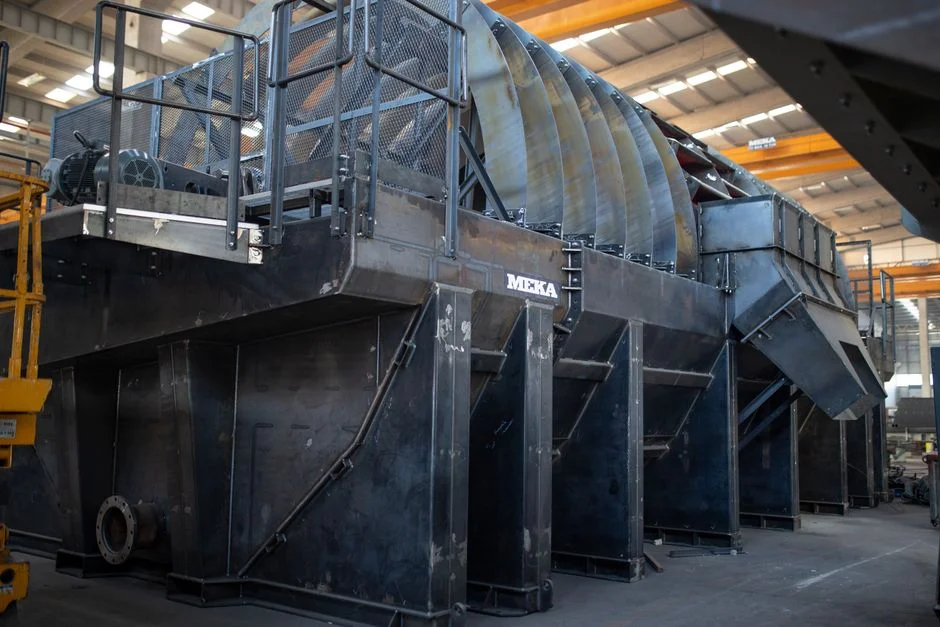
A dissolved air flotation system saturates a recycle sidestream with pressurized air, then releases the pressure inside the clarification tank; the released air forms micro-bubbles in the 30-50 micron range that attach to flocculated particles and lift them to the surface (Clearwater Industries / SigmaDAF USA, 2026-04-27; Clearwater Industries, DAF for Industrial Wastewater Treatment). A paddle skimmer then scrapes the floated sludge off the top into a collection trough, and clarified effluent is withdrawn from below the float blanket. Chemical conditioning is required: coagulant, pH adjustment, and polymer flocculant are added upstream so the micro-bubbles have an attachable particle to lift, with mixing done in serpentine flocculation tubes (15-45 second flash mix) or in impeller mix tanks where longer contact time is required (Clearwater Industries). Heavier solids that do not float settle into a bottom collection zone and are removed with an auger. Standard DAF tanks are built in 304 stainless, with 316 stainless and polypropylene available for corrosive mining waters (Clearwater Industries / SigmaDAF USA, 2026-04-27). The DAF FPAC model handles small-to-medium flow at very high solids, the FPBC pairs with lamella plate technology for low/medium solids including low-buoyancy particles, and the FPHF combines cross-flow and countercurrent flow for high flows (Clearwater Industries). A compact DAF system for mining wastewater is also available in a pre-assembled, PLC-controlled single skid for flows of 66 GPM or less.
How a Lamella or Plate Clarifier Actually Removes Solids
A lamella or plate clarifier is a gravity settler enhanced by a stack of inclined plates or tubes. The plates shorten the effective settling distance each particle has to travel before it lands on a surface and slides down into a hopper, which raises the effective surface loading rate well above what a conventional basin can handle. The chemical conditioning logic is the same as for DAF — coagulant plus flocculant to grow the particles large enough to settle — but the separation force is gravity rather than buoyancy. The result is a compact unit that is well suited to high-density mining slurries where the solids are already settleable and the buyer does not need the floatation step. A lamella clarifier for high-density mining slurries combines sludge recirculation, flocculation, and inclined-plate separation in a single compact structure, which reduces chemical consumption relative to plain settling and shrinks the basin footprint relative to a conventional clarifier. Upstream chemistry is required: if the particles will not settle on their own, coagulation and flocculation must come first.
DAF vs Clarifier: Side-by-Side Selection Matrix
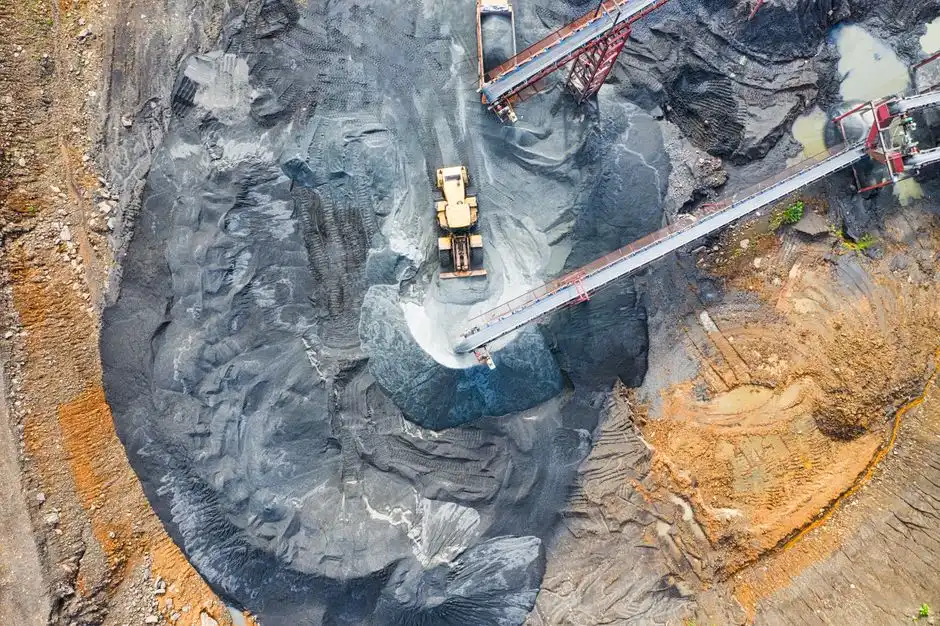
The matrix below pairs each technology with the EPA 1978 separation-technique ratings (EPA-600/2-78-069, Table 1) for the oil/water system states most relevant to a Titus mining or metals stream, and adds the qualitative engineering context a buyer needs to apply those ratings.
| Oil/Water System State | API Gravity Separator (EPA 1978 rating) | Dissolved Air Flotation (EPA 1978 rating) | Lamella / Plate Clarifier (qualitative) |
|---|---|---|---|
| Free oil | Excellent (XXX) | Excellent (XXX) | Poor — not designed for floatables |
| Oil-coated settleable solids | Excellent (XXX) | Excellent (XXX) | Excellent when chemically conditioned |
| Neutrally buoyant oil-coated solids | Not rated (gap) | Excellent (XXX) | Poor — particles do not settle or float reliably |
| Primary dispersion (chemically stabilized) | Not rated (gap) | Excellent (XXX) | Poor |
| Secondary dispersion | Not rated (gap) | Average (XX) | Poor |
| Unstabilized dispersion (mechanical) | Not rated (gap) | Excellent (XXX) | Poor |
| Surface charge oil (chemically stabilized) | Not rated (gap) | Excellent (XXX) | Poor |
| Footprint (qualitative) | Large — large basin volume required | Compact, but needs chemical conditioning equipment alongside | Compact by design — inclined plates shorten settling distance |
| Chemical demand (qualitative) | Low for free oil; none typically added | High — coagulant, pH adjustment, polymer flocculant required | Moderate — same chemistry as DAF, typically lower polymer dose |
| Typical process-train placement | First — bulk free-oil removal | After API or lamella, or as primary for fines/oily water | Primary for high-density settleable slurries, or polishing ahead of filters |
The differentiator is the rows where DAF is the only rated technology: neutrally buoyant oil-coated solids, primary chemical dispersions, secondary dispersions, and surface-charge oils. Any Titus stream that contains residual flotation reagents, fuel or lubricant oils from haul-truck wash, or comminution fines that carry hydrocarbons will land in those rows, which is why the matrix points toward DAF as the primary stage for most mining/metals discharges and toward a lamella clarifier as a polishing or slurry-handling step. For an Esco-area parallel reading on the same matrix logic, see the companion Esco mining/metals DAF vs clarifier guide.
Sizing, Footprint and Process Train Reality in 2026
The DAF model architecture maps cleanly onto the kind of flow a Titus mine or primary-metals site is likely to run. The FPAC handles small-to-medium flow at very high solids — the right answer for thickener overflow or filter-press filtrate spikes. The FPBC pairs DAF with lamella plate technology to handle low/medium solids including low-buoyancy particles, which is the configuration that blurs the line between DAF and clarifier. The FPHF is the high-flow option, combining cross-flow and countercurrent flow for optimized separation on medium-to-large contaminant loads (Clearwater Industries). For a smaller Titus site, the COMPACT DAF ships as a pre-assembled turnkey single skid with chemical conditioning, sensors, instruments, and a PLC control panel; flows of 66 GPM or less fit a single skid, flows above 66 GPM use a modular two-skid design (Clearwater Industries / SigmaDAF USA, 2026-04-27). A skid-mounted DAF system for mining wastewater or a compact lamella clarifier for high-density mining slurries both cut install time and civil work relative to a poured concrete basin. The EPA 1978 report (EPA-600/2-78-069) recommends API + DAF + polishing as the standard train for sub-10 ppm oil effluent, with reverse osmosis, ultrafiltration, and carbon adsorption held back as higher-CAPEX polishing steps. The buyer must request a site-specific sizing and CAPEX package from the vendor — feed flow, influent TSS and oil, target effluent oil and TSS, and the relevant 40 CFR Part 440 subcategory limits are the four inputs a vendor needs to size the unit.
Decision Framework: How to Choose for Your Titus Site in 2026
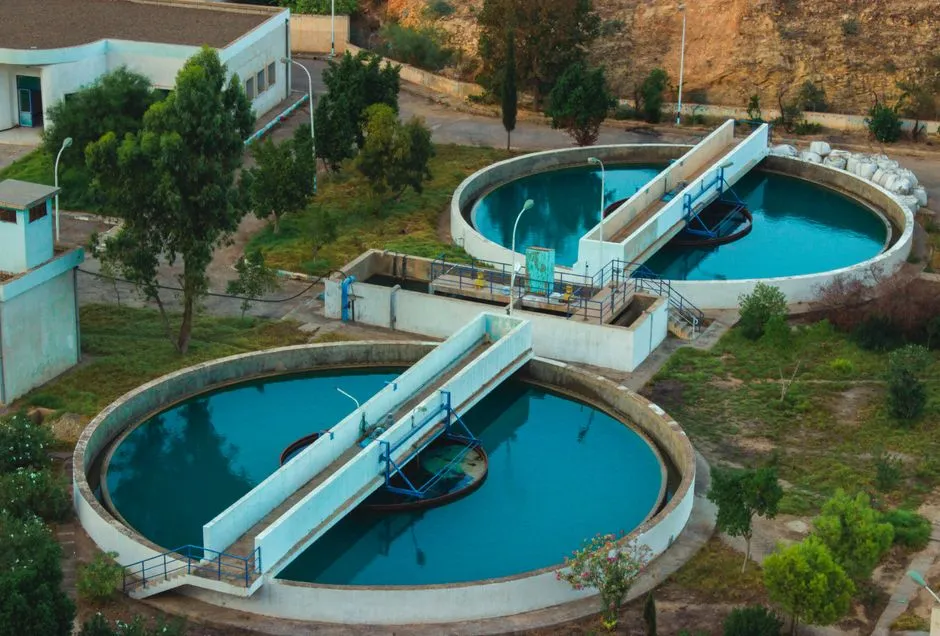
Use the branches below to apply the matrix to your plant.
- High-density settleable slurry, low oil: lead with a lamella clarifier for high-density mining slurries as the primary TSS step. Add oil-tolerant polishing only if a permit limit is at risk.
- Fines-laden runoff, residual reagents, floatable oils: lead with a DAF system for mining wastewater as the primary stage. The EPA 1978 matrix rates DAF as excellent for chemically stabilized dispersions and oil-coated neutrally buoyant solids where a clarifier cannot score (EPA, 1978-04).
- Both streams present, or a permit-driven sub-10 ppm oil target: run the train the EPA 1978 report recommends — API gravity or lamella first for bulk solids and free oil, DAF second for dispersions and neutrally buoyant material, with RO, UF, or carbon adsorption held in reserve for the toughest polishing (EPA, 1978-04). Operational issues that show up once a DAF is installed are covered in the DAF common problems and solutions 2026 guide.
- Always: confirm the applicable 40 CFR Part 440 subcategory limits and any local 40 CFR Part 403 pretreatment program requirements with the permit writer before the unit is specified.
Frequently Asked Questions
What should a Titus mining or metals plant budget for a DAF system versus a lamella clarifier in 2026?
The buyer must request a site-specific quote based on local conditions. The research supports the input set a vendor needs to size and price:
Frequently Asked Questions
Is a DAF or a clarifier the better primary treatment for a Titus, Alabama mining plant in 2026?
The selection depends primarily on the density and settling velocity of your specific mineral tailings. Clarifiers (specifically lamella models) are superior for high-density, fast-settling solids common in heavy metals processing, typically handling solids concentrations exceeding 5,000 mg/L. Dissolved Air Flotation (DAF) is the preferred technology for Titus-area facilities processing lighter minerals, oily emulsions, or fine particulate matter with specific gravities near 1.0, as it uses micro-bubbles to float particles that would otherwise resist gravity sedimentation.
In the Titus climate, thermal stratification within open-top clarifiers can hinder settling efficiency; therefore, DAF units are often favored if the wastewater contains significant organic surfactants or low-density metal precipitates. A bench-scale jar test measuring the Stokes' Law settling velocity vs. the flotation rate is required to finalize the process selection for 2026 site-specific influent profiles.
What 40 CFR Part 440 subcategory limits apply to a Titus-area metals facility, and where do I confirm the current numbers?
Mining and metals facilities in Alabama must adhere to 40 CFR Part 440, which categorizes effluent limitations based on the type of ore processed, such as Subpart J (Copper, Lead, Zinc, Gold, Silver, and Molybdenum Ores) or Subpart L (Base and Precious Metals). These subcategories define strict mass-based or concentration-based limits for pollutants like Total Suspended Solids (TSS), pH (6.0–9.0 range), and heavy metals including Cadmium, Lead, and Mercury.
You must confirm current site-specific effluent limitations by reviewing your facility’s active National Pollutant Discharge Elimination System (NPDES) permit issued by the Alabama Department of Environmental Management (ADEM). The official, real-time regulatory values and any recent amendments to 40 CFR Part 440 are accessible via the U.S. EPA’s Effluent Guidelines Program website or the eCFR database.
What flow rate and footprint should I size a DAF or lamella clarifier for, and which supplier specs actually matter?
Sizing is determined by the Surface Overflow Rate (SOR). For lamella clarifiers, target an SOR of 0.25 to 0.50 gpm/ft² of projected settling area. For DAF units, size based on the hydraulic loading rate, typically ranging from 1.5 to 3.0 gpm/ft². Footprint requirements for lamella clarifiers are generally 70-80% smaller than conventional circular clarifiers, making them ideal for space-constrained Titus factory expansions.
When reviewing supplier specifications, ignore "peak flow" marketing numbers and focus on the "rise rate" and "solids loading rate" (lbs/ft²/hr) at the 95th percentile of your historical influent variability. Ensure the supplier provides a material compatibility report for the specific chemical coagulants and flocculants utilized in your process, as well as the specific plate spacing (for lamella) or bubble density (for DAF) required to meet your target TSS removal efficiency.
How much does a DAF or lamella clarifier cost in 2026 for a mid-sized Titus mining operation, and what hidden OPEX items should I budget for?
In 2026, a mid-sized, industrial-grade lamella clarifier system typically ranges from $120,000 to $280,000, while a DAF unit with integrated chemical skids and air dissolution systems ranges from $180,000 to $350,000, depending on metallurgy and automation levels. These figures reflect equipment costs for mid-sized operations processing 200–500 GPM.
Budgeting for OPEX must include high-frequency items often overlooked: polymer and coagulant consumption, which accounts for 30-40% of operational costs; energy for DAF air-saturation pumps; and labor for lamella plate descaling or DAF skimmer maintenance. Additionally, account for the cost of sludge dewatering and disposal (typically 15-25% of total annual wastewater budget) and the biennial replacement of wear-parts such as scraper blades, seals, and saturator nozzles.