The WHO reuse guidelines set a health-based framework for safe wastewater reuse. The core texts are the 2006 third edition of the Guidelines for the Safe Use of Wastewater, Excreta and Greywater and the 2017 Potable Reuse guidance. They call for a multiple-barrier approach. Potable trains typically need about 6-log virus reduction and 4-log bacteria reduction. Effluent quality tracks intended use, from irrigation (about 1–2 log) to indirect potable supply.
What the WHO Wastewater Reuse Guidelines Cover
The 2006 third edition of the WHO Guidelines for the Safe Use of Wastewater, Excreta and Greywater is the foundation for global reuse practice and spans four volumes. Volume 1 covers policy and regulatory aspects. Volume 2 addresses wastewater use in agriculture. Volume 3 covers wastewater and excreta use in aquaculture. Volume 4 covers excreta and greywater use in agriculture. In 2017, WHO issued Potable Reuse: Guidance for Producing Safe Drinking-Water for schemes that produce drinking-water from treated municipal wastewater. Earlier summaries often cite a 10⁻⁴ annual infection risk; the 2006 Volume 2 health-based target is ≤10⁻⁶ DALY loss per person per year, with a design tolerable rotavirus infection risk of about 10⁻³ per person per year. A core principle is the multiple-barrier approach: source control, treatment trains, continuous monitoring, and end-use management working together.
Health-Based Targets and Pathogen Reduction Requirements
WHO guidance points to about 6-log (99.9999%) enteric virus reduction for potable reuse pathways and about 4-log (99.99%) reduction of pathogenic bacteria such as E. coli in potable applications. For non-potable agricultural reuse, 1–2 log virus reduction is often enough, depending on crop type and human exposure. Unrestricted irrigation of edible crops needs tighter control than orchards. Helminth ova must stay ≤1 per litre for unrestricted irrigation. Most plants we size for indirect potable projects target the 6-log virus benchmark with a multi-stage train: primary treatment, secondary biological treatment, membrane filtration, and UV or chlorine dioxide disinfection, plus advanced oxidation when needed. For non-potable cases, secondary treatment plus chlorination typically delivers the 1–2 log reduction. For non-potable greywater detail, see our global greywater reuse regulations guide.
Wastewater Reuse Categories and Treatment Standards
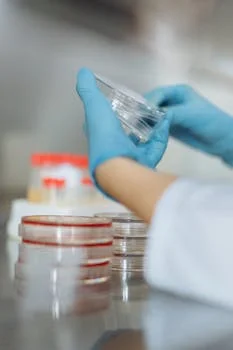
WHO ties reuse categories to intended application and treated-water quality. For non-potable agricultural reuse (fodder, industrial crops, restricted food crops), plants typically apply secondary treatment with disinfection, TSS below 100 mg/L, fecal coliform below 1,000 MPN/100mL, and helminth ova below 1 per liter. Urban non-potable reuse (landscape irrigation, toilet flushing, cooling towers) needs advanced secondary treatment, filtration, and UV or chlorination, with turbidity below 5 NTU and fecal coliform below 200 MPN/100mL. Indirect potable reuse (IPR), which feeds an aquifer or reservoir before drinking-water withdrawal, uses membrane filtration (MF/UF), reverse osmosis, and UV/AOP to hit the 6-log virus target. Direct potable reuse (DPR) adds redundant systems and real-time monitoring on top of the IPR train. Industrial reuse for boiler feed or process water often needs an industrial RO system for potable reuse with conductivity below 50 μS/cm and silt density index below 3 to protect downstream equipment.
| Reuse Category | Primary Application | Minimum Treatment Level | Key Effluent Parameters | Pathogen Log Reduction (Viruses/Bacteria) |
|---|---|---|---|---|
| Non-Potable Agricultural | Restricted irrigation (fodder, industrial crops) | Secondary + Disinfection | TSS < 100 mg/L, Fecal Coliform < 1,000 MPN/100mL, Helminth Ova < 1/L | 1-2 log / 2-3 log |
| Non-Potable Urban | Landscape irrigation, toilet flushing, cooling towers | Advanced Secondary + Filtration + UV/Chlorination | Turbidity < 5 NTU, Fecal Coliform < 200 MPN/100mL | 2-4 log / 3-5 log |
| Indirect Potable Reuse (IPR) | Groundwater recharge, reservoir augmentation | Advanced Treatment (MF/UF, RO, UV/AOP) | Turbidity < 0.1 NTU, TOC < 0.5 mg/L, NDMA < 10 ng/L | >6 log / >4 log |
| Direct Potable Reuse (DPR) | Direct to drinking water distribution | Advanced Treatment (MF/UF, RO, UV/AOP) + Redundant Systems | Meets Drinking Water Standards (e.g., EPA MCLs) | >6 log / >4 log (with high reliability) |
| Industrial Process Water | Boiler feed, ultra-pure process water | RO + Polishing (EDI, Ion Exchange) | Conductivity < 50 μS/cm, SDI < 3, TOC < 0.1 mg/L | >5 log / >4 log (incidental removal) |
Technology Mapping to WHO Reuse Requirements
Treatment trains are sized to the pathogen log-reduction and effluent quality benchmarks in the WHO reuse guidelines. MBR Membrane Bioreactor Wastewater Treatment System units combine biological treatment with membrane filtration, delivering 4–6 log bacteria reduction and turbidity below 1 NTU. That fit supports non-potable reuse and acts as strong pre-treatment before potable trains. Dissolved Air Flotation (DAF) systems are widely used for primary or pre-treatment in food processing and manufacturing, removing 92–97% of total suspended solids (TSS) and fats, oils, and grease (FOG). That pre-treatment protects downstream membranes. For disinfection, chlorine dioxide generators for effective disinfection deliver a 4-log virus inactivation when dosed at 1–2 mg/L with a 30-minute contact time, and form fewer disinfection byproducts than chlorination. Reverse osmosis removes over 99% of dissolved salts, viruses, bacteria, and many pharmaceutical residues. For direct potable reuse, UV with advanced oxidation processes (AOP) supplies the final ~2-log virus reduction, while hydroxyl radicals attack trace organics and resistant pathogens.
Who This Guidance Is For and Next Step
This page is for plant engineers, EPC contractors, and procurement managers sizing reuse trains against WHO targets. It is less useful for operators chasing discharge permits alone, where local effluent limits govern rather than reuse categories. If you are scoping a reuse project and need equipment sizing or train configuration, send your influent data and target reuse category via the project inquiry form. We will return a sized train sketch within one working day.
Frequently Asked Questions
What are the WHO guidelines for wastewater reuse in agriculture?
WHO agricultural reuse guidance calls for at least secondary treatment and about 1–2 log pathogen reduction, with crop and irrigation limits that cut human exposure. Spray irrigation of raw-eaten edible crops is generally barred unless treatment goes beyond the agricultural baseline. Helminth ova should stay ≤1 per litre for unrestricted irrigation.
Is WHO guidance legally binding?
No. WHO documents are advisory and supply a scientific framework and best practices. National and regional rules such as the U.S. EPA framework and the EU UWWTD turn those recommendations into enforceable standards. For U.S. detail, see our guide on U.S. EPA compliance for water reuse, and for Europe see EU UWWTD regulations for wastewater.
What is the difference between potable and non-potable reuse?
Potable reuse treats wastewater to drinking quality and returns it to a drinking-water supply, needing about 6-log virus reduction and 4-log bacteria reduction. Non-potable reuse covers irrigation, industrial cooling, or toilet flushing, where the water is not for drinking and treatment demands are lower.
How does WHO define safe wastewater reuse?
WHO defines safe reuse through a multiple-barrier approach that combines source control, effective treatment, continuous monitoring, and end-use management. The 2006 Volume 2 health-based target is ≤10⁻⁶ DALY loss per person per year, with a design tolerable rotavirus infection risk near 10⁻³ per person per year.
Where can I download the WHO wastewater reuse guidelines PDF?
The full Guidelines for the Safe Use of Wastewater, Excreta and Greywater (2006, third edition) and Potable Reuse: Guidance for Producing Safe Drinking-Water (2017) are available on the World Health Organization website under its publications section.