What Are Greywater Reuse Standards?
Greywater reuse standards in 2025 require treated effluent to meet strict criteria: fecal coliform <2.2 MPN/100mL, TSS <10 mg/L, and BOD <10 mg/L for unrestricted irrigation. Systems must be NSF/ANSI 350-certified for residential use and use purple piping to prevent cross-connection, per EPA and state-level regulations.
Greywater is technically defined as wastewater sourced from bathtubs, showers, bathroom washbasins, clothes washing machines, and laundry tubs. It explicitly excludes "blackwater"—wastewater from toilets, urinals, or any water that has come into contact with human waste or kitchen sink discharge containing high organic loads and grease. In the context of industrial and large-scale commercial deployment, these standards serve as the technical boundary between safe resource recovery and public health risks. Unlike stormwater, which is intermittent and variable in quality, greywater provides a consistent, high-volume source of non-potable water that can significantly reduce municipal water demand when managed through rigorous global industrial water reuse compliance strategies.
The primary objective of these standards is to mitigate three specific risks: pathogen exposure to humans, soil salinization in irrigation applications, and the accidental cross-contamination of potable water supplies. For engineers, compliance is not merely about meeting a single number but navigating a hierarchy of standards that scale with the volume of water and the intended end-use. While residential standards focus on simple filtration and immediate use, industrial and commercial standards mandate advanced biological treatment, continuous monitoring, and fail-safe disinfection protocols to ensure that high-volume reuse does not degrade local groundwater or violate environmental discharge permits.
U.S. Federal and State Greywater Regulations
The EPA’s 2012 Guidelines for Water Reuse (EPA 600-R-12-618) serve as the foundational framework for greywater reuse in the United States, recommending specific limits for unrestricted urban reuse, such as TSS <10 mg/L, BOD <10 mg/L, and fecal coliform <2.2 MPN/100mL. However, because the EPA does not federally mandate these standards, enforcement falls to state and local jurisdictions, creating a fragmented regulatory landscape that engineers must navigate based on project location. California, Texas, and Arizona represent the three dominant regulatory models currently in use.
California Title 22 is widely considered the "gold standard" for reclaimed water. It requires a combination of oxidation, filtration, and disinfection for any greywater reuse exceeding 250 gallons per day. In contrast, states like Arizona and New Mexico utilize a "tiered" approach where systems under 400 gallons per day are often exempt from formal permitting, provided they utilize subsurface irrigation and prevent any surface pooling. Texas mandates that any system exceeding 1,000 gallons per day must be designed by a licensed professional engineer and strictly prohibits the storage of untreated greywater beyond a 72-hour window to prevent the onset of anaerobic conditions and odor issues.
| Jurisdiction/Standard | BOD Limit (mg/L) | TSS Limit (mg/L) | Pathogen Limit | Primary Use Case |
|---|---|---|---|---|
| EPA Guidelines (Unrestricted) | <10 | <10 | <2.2 MPN/100mL (Fecal Coliform) | Urban Irrigation, Toilet Flushing |
| CA Title 22 (Disinfected Tertiary) | <10 | <2 (Turbidity) | <2.2 MPN/100mL (Total Coliform) | Commercial Landscaping, Cooling Towers |
| Texas (Chapter 210) | <5 (30-day avg) | <5 (30-day avg) | <20 CFU/100mL (E. coli) | Industrial Reuse, Dust Control |
| NSF/ANSI 350 (Class R/C) | <10 | <10 | <14 MPN/100mL (Total Coliform) | Packaged Systems (Residential/Comm) |
For packaged systems deployed in multi-family residential or small commercial builds, NSF/ANSI 350 certification is increasingly mandatory. This standard evaluates the system's ability to maintain water quality over a 26-week testing period, including stress tests for varying organic loads. It ensures that the treatment technology—often a membrane bioreactor or advanced oxidation process—can autonomously handle the fluctuations inherent in greywater production without manual intervention.
International Greywater Reuse Standards

ISO/WD 25446 provides the primary international benchmark for the design and management of greywater systems in new buildings, focusing on the integration of filtration, disinfection, and long-term maintenance protocols. This standard is particularly relevant for global firms standardizing facility designs across multiple continents. In Australia, the AS/NZS 1547:2012 standard is the most rigorous, setting strict parameters for pH (between 6 and 9), turbidity (<5 NTU), and E. coli (<10 CFU/100mL) for subsurface irrigation. Australia’s standards are highly sensitive to soil chemistry, reflecting a national priority on preventing soil salinization and protecting fragile ecosystems.
The World Health Organization (WHO) Guidelines for Recreational Water Quality are often used as the baseline in emerging markets where specific greywater codes have not yet been codified. These guidelines recommend a limit of <1,000 CFU E. coli/100mL for restricted irrigation, which allows for safe use in areas with limited human contact. In Europe, the EU Water Framework Directive and the Urban Wastewater Treatment Directive (91/271/EEC) provide the overarching legal structure, though individual member states often apply more stringent rules for centralized reuse systems. For large-scale projects, studying a real-world MBR implementation for water reuse projects can provide critical insights into how international standards are adapted to local environmental and economic constraints.
The trend in 2025 is toward global alignment, with many jurisdictions adopting a "fit-for-purpose" approach. This means that instead of one universal standard, the required treatment depth is dictated by the level of human contact. For example, toilet flushing and laundry reuse require significantly higher disinfection and filtration standards than subsurface irrigation of non-food crops. This risk-based approach allows facility managers to optimize capital expenditure while maintaining 100% regulatory compliance.
Treatment Requirements for Compliance
To meet the 2025 compliance benchmarks, greywater systems must move beyond simple sand filtration. Primary treatment begins with high-efficiency mechanical screening, such as rotary bar screens or fine mesh filters, to remove hair, lint, and physical debris. This stage is critical for protecting downstream components; if hair and lint are not removed, they can lead to membrane fouling or pump cavitation, causing system failure within months of installation.
Secondary treatment is the core of any compliant greywater system. An integrated MBR system for high-efficiency greywater treatment is the industry standard for achieving 95–99% BOD and TSS removal. Membrane Bioreactors (MBR) combine biological degradation with membrane filtration (typically 0.03 to 0.4 microns), effectively "sieving" out bacteria and suspended solids. This produces an effluent that is physically clear and biologically stable, making it suitable for long-term storage or reuse in sensitive applications like cooling towers or toilet flushing.
Tertiary treatment focuses on disinfection to meet pathogen limits like the <2.2 MPN/100mL threshold. Utilizing an on-site ClO2 generator for reliable greywater disinfection offers several advantages over traditional bleach dosing. Chlorine dioxide (ClO2) is a more potent oxidant that remains effective across a wider pH range and does not produce harmful trihalomethanes (THMs) when it reacts with residual organics in the greywater. For systems requiring NSF/ANSI 350 certification, the disinfection process must be fully automated, with real-time monitoring of residual disinfectant levels to ensure the water remains safe even after it has entered the distribution piping.
Finally, continuous monitoring of turbidity and oxidation-reduction potential (ORP) is essential for compliance reporting. Modern industrial greywater systems utilize PLC-based control systems that automatically divert effluent to the sewer if it fails to meet pre-set quality parameters. This "fail-to-sewer" logic is a mandatory safety feature in most commercial and municipal codes to prevent the distribution of sub-standard water during a treatment upset.
Greywater System Design and Safety Standards
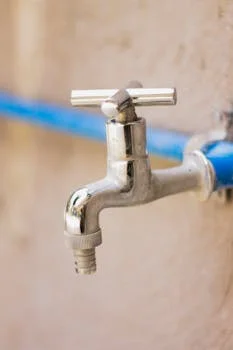
Safe greywater system design is predicated on the physical separation of potable and reclaimed water lines. All reclaimed water piping must be purple (Pantone 512 or 522) and clearly labeled with "CAUTION: RECLAIMED WATER – DO NOT DRINK" at regular intervals. This requirement, found in both the International Plumbing Code (IPC) and Uniform Plumbing Code (UPC), is designed to prevent cross-connections during future renovations or maintenance work. Backflow prevention devices are mandatory on the potable water supply line to any facility using a greywater system to ensure that no reclaimed water can ever siphon back into the city main.
Storage tank design is another critical safety component. Greywater is biologically active; even after primary treatment, it can rapidly become anaerobic and odorous if stored for too long. Standard codes in Texas and California restrict untreated greywater storage to a maximum of 24 to 72 hours. Tanks must be sealed, vented to the atmosphere, and equipped with overflow protection that directs excess water to the sanitary sewer. For treated effluent, tanks should be opaque to prevent algae growth and should include a recirculation loop to maintain disinfectant residuals throughout the volume.
Irrigation design must also adhere to safety standards to prevent aerosolization. Most state codes require greywater to be distributed via subsurface drip irrigation or through emitters located under a minimum of 2 inches of mulch or soil. This prevents the formation of mist that could be inhaled by residents or employees. In commercial settings where surface spray is used, the water must meet the highest "unrestricted" treatment standards (tertiary filtration + high-level disinfection) to eliminate the risk of respiratory infection from pathogens like Legionella.
Frequently Asked Questions
Can we reuse grey water?
Yes, provided it is treated to meet the effluent standards of your local jurisdiction. In 2025, most industrial and commercial facilities can reuse greywater for irrigation, toilet flushing, cooling tower make-up, and dust suppression. Compliance typically requires filtration, biological treatment (MBR), and disinfection.
Can greywater be reused for laundry?
Yes, but only after advanced treatment. Laundry reuse requires greywater to meet high clarity and pathogen standards (TSS <5 mg/L, Turbidity <2 NTU) to prevent bacterial growth in the machines and potential staining or odor on clothing. NSF/ANSI 350 Class C systems are specifically designed for this application.
What are the rules for greywater?
The fundamental rules include: no potable use, no contact with food crops (unless subsurface), mandatory purple piping, no storage of untreated water beyond 72 hours, and strict adherence to BOD, TSS, and fecal coliform limits. Systems must also include backflow prevention and automatic shutoff valves.
Is greywater dangerous?
Untreated greywater can contain pathogens (bacteria, viruses, and parasites) and chemical contaminants from soaps and detergents. However, when treated through a certified system and handled according to code-compliant design (like subsurface irrigation), the risk to human health is negligible.
What is the NSF/ANSI 35