What an MBR Wastewater Treatment System Delivers in Ethiopia
MBR Ethiopia deployments cover municipal districts and hospitals at capacities from 75 m³/day package plants to the 3,600 m³/day Arabsa WWTP. Typical effluent uses sub-micron membrane filtration near 0.1 μm pore size, with footprint cuts up to 60% versus conventional activated sludge. Reuse-ready water supports irrigation and non-potable uses in water-scarce Addis Ababa.
Why Ethiopia Is Adopting MBR Wastewater Treatment
Addis Ababa’s population exceeds 5 million, and sewer coverage remains limited. Earlier guidance often cited less than 30% wastewater collection; Haileselassie et al. (2025) report sewerage serving about 23% of residential houses, while AAWSA supplied about 515,000 m³/day of drinking water in 2023. That gap between water supplied and wastewater collected keeps untreated sewage flowing into the Akaki catchment.
AAWSA operates 36 wastewater plants with a combined design capacity of 163,080 m³/day, of which MBR capacity totals 26,760 m³/day. Actual citywide discharge was about 112,039 m³/day in the study period, so many plants still run below design load. Compact membrane plants fit condominium compounds and constrained urban plots where waste stabilization ponds cannot.
According to Haileselassie et al. (2025) in the Journal of Water, Sanitation and Hygiene for Development, season significantly shapes raw and treated wastewater quality in Addis Ababa (ANOSIM R=0.3126, p=0.001). The same study found treatment plant type did not significantly change measured effluent characteristics overall (ANOSIM R=0.1235, p=0.2000). Buyers should therefore size for seasonal peaks and underloading, not assume automatic effluent superiority at every site.
MBR Ethiopia Projects: Capacity and Clients
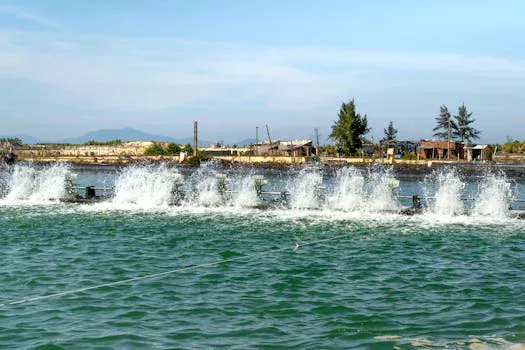
Operational membrane bioreactor plants already span municipal, healthcare, and commercial clients. The Arabsa WWTP in central Addis Ababa was commissioned in 2018 at 3,600 m³/day on MBR technology and remains the clearest municipal-scale reference. Haileselassie et al. (2025) note Arabsa was running near one-fifth of design capacity during their sampling window, which raised unit costs per cubic metre treated.
In healthcare, the Ethiopian Military Hospital in Bishoftu uses a 150 m³/d Newterra MBR for medical wastewater. Treated water is reused for irrigation, laundry, and other non-potable duties, with excess routed toward Cheleklelea Lake. Private adoption includes an IDRO GROUP Green MBR at Myseru General Trading in Addis Ababa (capacity not published) and a MENA Water 75 m³/d municipal package plant with screens and lifting pumps.
| Project Name | Location/Client | Capacity (m³/day) | Commissioning/Status | Application |
|---|---|---|---|---|
| Arabsa WWTP | Central Addis Ababa | 3,600 | 2018 | Municipal Wastewater Treatment |
| Ethiopian Military Hospital | Bishoftu | 150 | Operational | Medical Wastewater Treatment & Reuse |
| Myseru General Trading | Addis Ababa | Unspecified | Operational | General Trading/Commercial |
| MENA Water Project | Municipal | 75 | Operational | Municipal Package Plant |
MBR Technology Specifications for Ethiopian Conditions
Submerged PVDF flat-sheet membranes suit the high solids and variable organic loads common in Ethiopian municipal and industrial wastewater. Larger flow channels reduce clogging risk versus tighter hollow-fiber packs. A typical 0.1 μm pore size removes suspended solids, bacteria, and many viruses before discharge or reuse.
Integrated MBR trains commonly exceed 95% COD removal, 98% BOD removal, and 99% TSS removal under design loading. Flat-sheet energy use typically sits at 1.2–1.8 kWh/m³, below many hollow-fiber trains at 2.0–2.5 kWh/m³ because scour air demand is lower.
Most plants we size for highland Ethiopian sites keep flux conservative in warm months and rely on automated scour cycles to limit irreversible fouling. HydropureWater supplies the MBR Membrane Bioreactor Wastewater Treatment System for packaged duty, with PVDF flat sheet MBR membrane modules for basin retrofits.
| Parameter | Specification for Ethiopian Conditions | Benefit |
|---|---|---|
| Membrane Type | Submerged PVDF Flat Sheet | High resistance to fouling, robust for high-solids wastewater |
| Pore Size | 0.1 μm | Excellent effluent quality, pathogen removal |
| COD Removal | >95% | Meets stringent discharge and reuse standards |
| BOD Removal | >98% | Ensures high organic pollutant reduction |
| TSS Removal | >99% | Produces crystal-clear, reuse-ready water |
| Energy Consumption (Flat Sheet) | 1.2–1.8 kWh/m³ | Lower operational costs compared to hollow fiber (2.0–2.5 kWh/m³) |
| Footprint Reduction | Up to 60% vs. Conventional | Saves valuable land in urban areas |
| Effluent Quality | Reuse-ready (e.g., irrigation, industrial) | Critical for water-scarce regions |
MBR vs Conventional Plants: Footprint, Cost, and Efficiency
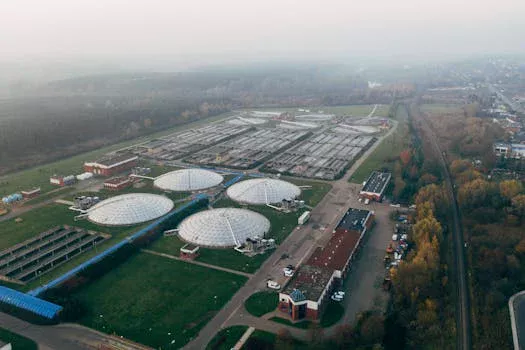
Membrane bioreactor trains cut land need by up to 60% versus conventional activated sludge, which matters on scarce Addis Ababa plots. Indicative CAPEX still runs about $1,200–$1,800 per m³/day of capacity, against roughly $800–$1,100 per m³/day for waste stabilization ponds or UASB-TF schemes. Budget OPEX for energy and membrane replacement is about $0.35–$0.50 per m³.
According to Haileselassie et al. (2025), total treatment cost in 2022 across four AAWSA plants ranged from $0.045 to $0.546 per m³. Earlier vendor guidance used $0.35–$0.50/m³ OPEX for MBR; the 2022 Arabsa MBR total cost reached $0.546/m³ when amortized construction was included, about 6–12 times the other technologies studied. Underloading at Arabsa amplified that unit cost.
Reuse credits change the ledger. Irrigation, cooling, or laundry reuse offsets purchased freshwater, which is the usual payback path on constrained urban sites that cannot justify land for ponds. For process selection context, see aerobic vs. anaerobic wastewater treatment options and a data-driven comparison of package plants and conventional treatment plants.
| Feature | MBR Systems | Conventional Systems (e.g., WSP, UASB-TF) | Notes/Implications for Ethiopia |
|---|---|---|---|
| Land Footprint | 60% less land required | High land requirement | Critical for urban Addis Ababa; reduces land acquisition costs. |
| CAPEX ($/m³/day) | $1,200–$1,800 | $800–$1,100 | Higher initial investment, but offset by long-term benefits. |
| OPEX ($/m³) | $0.35–$0.50 (energy, membrane replacement) | $0.15–$0.25 (stabilization ponds) | Higher operational costs, but for superior effluent. |
| Effluent Quality | Reuse-ready (<1 μm filtration, high BOD/COD removal) | Secondary treatment (variable, often not reuse-ready) | Enables water reuse, reducing freshwater demand. |
| Operational Complexity | Higher (membrane cleaning, process control) | Lower (e.g., stabilization ponds) | Requires skilled operators and maintenance. |
| Maintenance Frequency | Regular membrane cleaning, periodic replacement (5-7 years) | Sludge removal, general upkeep | Membrane care is key to longevity and performance. |
What Do MBR and RO Units Cost?
MBR and RO unit costs stack when a project needs reuse beyond secondary-quality irrigation water. Standalone MBR CAPEX in Ethiopia typically falls in the $1,200–$1,800 per m³/day band cited above, with OPEX near $0.35–$0.50 per m³ for energy and membranes. Published AAWSA plant data price full MBR works, not a separate RO skid line item.
RO is usually added after MBR when the duty needs dissolved-salt reduction for boilers, process make-up, or high-purity rinse water. Most plants we review for Ethiopian hospitals and condominiums stop at MBR plus UV or chlorination unless a process engineer specifies conductivity or TDS limits that membranes alone cannot meet. Budget RO only after effluent TDS, silica, and recovery targets are written into the basis of design.
How to Choose the Right MBR System for Your Project
Flow, effluent targets, and site utilities drive the configuration more than brand labels. Flows below 200 m³/day usually favor prefabricated or containerized MBR systems that ship with screens and aeration already skidded. Hospitals and pharma sites should plan UV or ozone after the membrane when microbial limits are tighter than secondary discharge rules.
Selection checklist for Ethiopian membrane projects:
- Confirm average and peak flow in m³/day, including seasonal occupancy swings.
- Set effluent COD, BOD, TSS, and pathogen limits against EEPA discharge or reuse rules.
- Measure available plot area; if land is scarce, MBR beats ponds on footprint.
- Verify stable power and spare-parts logistics before choosing hollow fiber versus flat sheet.
- Decide whether irrigation reuse is enough, or whether RO polishing is truly required.
- Staff for membrane cleaning, MLSS control, and weekly integrity checks.
- Model CAPEX at $1,200–$1,800 per m³/day and OPEX at $0.35–$0.50 per m³ under expected utilization.
Who This Is For / Next Step
This page is for plant engineers, EPC contractors, and procurement teams sizing compact reuse plants for Ethiopian municipalities, hospitals, and commercial sites. Look elsewhere if you have abundant land, very low energy budgets, and only basic secondary discharge targets—ponds or UASB-TF may cost less per cubic metre. To match capacity, membrane type, and reuse goals for your site, request an MBR system quotation with flow and effluent data.
Frequently Asked Questions
What is the cost of an MBR wastewater treatment system in Ethiopia?
Typical CAPEX ranges from $1,200–$1,800 per m³/day of capacity, depending on automation, pretreatment, and membrane type. Budget OPEX near $0.35–$0.50 per m³ for energy and membrane replacement. Haileselassie et al. (2025) measured 2022 total cost at Arabsa MBR of $0.546 per m³ when amortized construction was included, higher than WSP, ABR, and UASB-TF plants in the same study.
Which hospitals in Ethiopia use MBR systems?
The Ethiopian Military Hospital in Bishoftu operates a 150 m³/d Newterra MBR for medical wastewater. The plant supports on-site reuse for irrigation, clothes washing, and other non-potable uses. Excess treated water can discharge toward Cheleklelea Lake when reuse demand is low.
How much space does an MBR plant need?
MBR plants typically need about 60% less land than conventional activated-sludge or pond systems. A 1,000 m³/day MBR plant can fit in approximately 500 m² when tanks are arranged tightly. That footprint advantage is why condominium and hospital sites in Addis Ababa favor packaged MBR over WSP.
What is the lifespan of MBR membranes in Ethiopia?
With proper maintenance and regular cleaning, PVDF flat-sheet membranes commonly last 5–7 years before replacement. Lifespan shortens if grit pretreatment is weak, MLSS runs too high, or scour air fails during warm high-flux periods. Plan chemical clean-in-place intervals and keep spare modules in country to limit downtime.
Do MBR plants always outperform ponds on effluent quality in Addis Ababa?
Not automatically. Haileselassie et al. (2025) found season affected water quality more than plant technology type across four AAWSA works. MBR still wins on footprint, pathogen barriers, and reuse polishing, but underloaded plants can post very high unit costs without better measured effluent in every parameter.