Flat Sheet MBR Membrane for Industrial Wastewater: Why Plants Are Switching in 2026
A flat sheet MBR membrane for industrial wastewater delivers 92–97% TSS removal and COD to ≤50 mg/L; PVDF sheets hold 0.1 μm pores, 5,000 ppm chlorine resistance and MLSS above 15,000 mg/L, at $80–$150 per m² and OPEX of $0.15–$0.30 per m³.
Compliance is the first driver. Flat sheet trains meet EPA and EU discharge limits for industrial wastewater, benchmarks set by the EU Industrial Emissions Directive 2010/75/EU and EPA 40 CFR Part 403, which now frequently require industrial discharge to maintain ≤50 mg/L COD and ≤30 mg/L TSS. Flat sheet MBRs reach those numbers without tertiary clarifiers or sand filtration. A food processing plant in Shandong that battled chronic effluent violations reduced TSS from 300 mg/L to 12 mg/L after upgrading, avoiding $250,000 per year in regulatory fines (HydropureWater case study, 2024).
Operational economics is the second. Industrial wastewater from dairy and pharmaceutical sectors carries high Mixed Liquor Suspended Solids (MLSS) and high viscosity, loads under which conventional activated sludge (CAS) and hollow fiber MBRs struggle with "sludging" or fiber breakage. Flat sheet MBRs deliver 30% lower OPEX in high-MLSS environments (per Imemflo 2024 data). The rigid panel tolerates aggressive air scouring, so the "cake layer" never hardens and chemical cleaning cycles stretch out. Hollow fiber and flat sheet formats are the two configurations used in membrane bioreactor applications (Wikipedia, Membrane Bioreactor), and the panel format is the one that survives high-viscosity duty.
Reliability closes the case. Conventional clarifiers bulk and carry solids over whenever influent quality swings; the flat sheet is a physical barrier that does not. That lets EHS managers spend their attention on production instead of treatment upsets, turning the plant from a liability into a stable utility.
Flat Sheet MBR Membrane Specs: PVDF vs. PES vs. Hollow Fiber
PVDF Flat Sheet MBR Membrane Specifications: Strength, Chlorine, Pore Size
PVDF flat sheet MBR membrane specifications start with material: Polyvinylidene Fluoride (PVDF) is the industry standard for high-strength industrial loads, with a tensile strength of 200 N/mm² and chlorine resistance of 5,000 ppm. That chlorine tolerance supports intensive Clean-In-Place (CIP) protocols using Sodium Hypochlorite (NaOCl) without degrading the polymer — PVDF exhibits increased chemical resistance and compatibility among thermoplastic materials (Wikipedia, Polyvinylidene Fluoride). Polyethersulfone (PES) is the lower-cost alternative, with a tensile strength of approximately 150 N/mm² and pH tolerance of 2–12, but it lacks PVDF's oxidative resistance and suits municipal-strength streams where aggressive bleaching is not required.
Pore size is the second spec. A 0.1 μm pore sits at the fine end of the microfiltration band — the typical particle size used for microfiltration ranges from about 0.1 to 10 μm (Wikipedia, Microfiltration) — blocking sediment, algae, protozoa and large bacteria while dissolved salts pass. Designs marketed as a backwashable flat sheet mbr membrane trade panel rigidity for reverse-flow cleaning, so check the supplier's MLSS ceiling before switching formats.
Configuration is the third. Flat sheets operate efficiently at 15,000–20,000 mg/L MLSS, whereas hollow fibers "clog" or "mat" once concentrations exceed 12,000 mg/L. Industrial flat sheet MBRs run at 15–30 LMH (liters per square meter per hour); hollow fibers can match that in clean water, but sustainable flux in high-viscosity industrial wastewater drops to 8–15 LMH because the inside of fiber bundles is hard to clean. The flat sheet's open channel lets aeration reach every part of the surface, maximizing scouring efficiency.
| Parameter | PVDF Flat Sheet (DF Series) | PES Flat Sheet | Hollow Fiber (PVDF) |
|---|---|---|---|
| Standard Pore Size | 0.1 μm | 0.04 – 0.1 μm | 0.03 – 0.1 μm |
| Chlorine Tolerance | 5,000 ppm | 1,000 ppm | 2,000 ppm |
| Max MLSS | 20,000 mg/L | 15,000 mg/L | 12,000 mg/L |
| Design Flux (Industrial) | 15–30 LMH | 12–25 LMH | 8–15 LMH |
| Cleaning Method | Backwash + Air Scour | Relaxation + Air Scour | Backwash + Air Scour |
| Fiber Breakage Risk | Zero | Zero | High |
Cleaning protocols for HydropureWater’s DF Series PVDF flat sheet MBR modules are streamlined to minimize downtime: a maintenance wash every 1–2 weeks using 500–1,000 ppm NaOCl, and a recovery wash every 3–6 months with 2–5% citric acid to strip inorganic scaling. Reference practice aligns with that cadence, scheduling intensive chemical cleaning once or twice a year (Wikipedia, Membrane Bioreactor). Because the sheets are rigid, there is none of the "shredding" seen in aged hollow fiber systems, and service life typically reaches 5–8 years in industrial settings.
Industry-Specific Performance: COD/TSS Removal for Food, Pharma and Electronics
Flat Sheet MBR Membrane MLSS Tolerance 20000 mg/L: Why It Matters
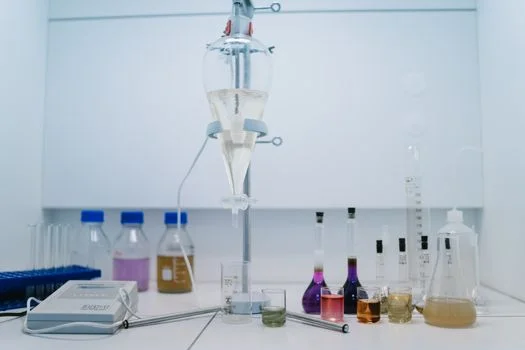
Flat sheet MBR membrane MLSS tolerance of 20,000 mg/L is what lets one tank do the work of two. Reference data note that submerged MBRs typically operate with mixed liquor suspended solids concentrations between 12000 mg/L and 20000 mg/L (Wikipedia, Membrane Bioreactor), with hydraulic retention times that range between 3 and 10 hours. Running high MLSS shrinks bioreactor volume and digests high-strength loads in the same footprint. The penalty is oxygen-transfer efficiency, so blower sizing decides whether the tolerance is usable on your site.
Performance benchmarks still vary by sector. In food processing wastewater treatment, the challenge is high organic loading plus fats, oils and grease (FOG); flat sheet MBR plants achieve COD reduction from 10,000 mg/L to ≤50 mg/L, but only when food processing wastewater treatment with MBR systems includes robust pre-treatment such as fine screening (≤1mm) and DAF.
In the pharmaceutical industry, the focus shifts to Active Pharmaceutical Ingredients (APIs) and high-strength solvents, and a 0.04 μm pore size is often recommended to maximize retention of complex organic molecules. HydropureWater's pilot data (2024) shows pharma plants reducing influent COD of 30,000 mg/L to <100 mg/L with TSS consistently non-detectable or ≤5 mg/L; that effluent is frequently reused for cooling towers or boiler feed after RO polishing.
For electronics wastewater treatment, the concerns are heavy metals and fluoride. The MBR handles the organics and delivers an excellent silt density index (SDI) for downstream membranes, while specialized precipitation steps do the metals work. In electronics wastewater treatment with MBR systems, fluoride can be reduced from 200 mg/L to ≤5 mg/L by integrating the MBR with RO polishing for ultra-strict local standards.
| Industry | Influent COD (mg/L) | Effluent COD (mg/L) | Influent TSS (mg/L) | Effluent TSS (mg/L) | Key Pre-treatment |
|---|---|---|---|---|---|
| Food Processing | 5,000–10,000 | ≤50 | 300–500 | ≤10 | DAF + 1mm Screen |
| Pharmaceuticals | 10,000–30,000 | ≤100 | 200–400 | ≤5 | pH Adj + Equalization |
| Electronics | 500–1,500 | ≤30 | 100–300 | ≤2 | Coagulation/Flocculation |
| Petrochemical | 2,000–5,000 | ≤60 | 150–400 | ≤10 | DAF (Oil Removal) |
| Nickel Plating | 800–2,000 | ≤40 | 200–500 | ≤5 | Chemical Precipitation |
Pre-treatment is non-negotiable for industrial MBR success. In nickel wastewater treatment with MBR membranes, metals must be precipitated before the MBR to prevent membrane scaling and biological toxicity. Petrochemical applications likewise require pre-treatment with HydropureWater’s DAF system to cut oil and grease below 50 mg/L, protecting the panel from irreversible "blinding" by hydrocarbons.
CapEx and OPEX Breakdown: Flat Sheet MBR vs. Conventional Systems
Flat Sheet MBR Membrane CAPEX OPEX Industrial Benchmarks
Flat sheet MBR membrane CAPEX for industrial duty runs $80–$150 per m² of membrane area, against $30–$70 per m³ of tankage for a CAS system with secondary clarifiers. The sticker comparison misleads, because an MBR needs 50–70% less land area — worth millions in urban or space-constrained zones — and eliminates clarifier chemical dosing entirely. For whole-plant budgeting rather than module pricing, our mbr wastewater treatment plant cost guide breaks down tankage, blowers and controls line by line.
OPEX is where flat sheets win. Lower MLSS operation in CAS trains means higher sludge volumes and dewatering bills, plus coagulant and flocculant dosing that an MBR eliminates. Scouring energy for flat sheets runs 0.3–0.6 kWh/m³, whereas hollow fiber systems spike to 0.8–1.2 kWh/m³ as fiber bundles foul (HydropureWater 2024 cost models).
| Cost Category | Flat Sheet MBR | Hollow Fiber MBR | Conventional (CAS) |
|---|---|---|---|
| CapEx (Equipment) | $80–$150/m² | $50–$100/m² | $30–$70/m² (total sys) |
| OPEX (per m³ treated) | $0.15–$0.30 | $0.25–$0.40 | $0.40–$0.60 |
| Energy Use (kWh/m³) | 0.3–0.6 | 0.8–1.2 | 0.4–0.7 |
| Maintenance (Annual) | $0.02–$0.05/m³ | $0.05–$0.10/m³ | $0.08–$0.15/m³ |
| Typical ROI | 2–4 Years | 3–5 Years | Baseline |
Maintenance costs for flat sheets stay predictable. Hollow fiber modules cost less to buy but break individual fibers, degrading effluent immediately and demanding labor-intensive "pinning" or full module replacement. Flat sheets are effectively break-proof in normal operation; the $0.02–$0.05/m³ annual maintenance line mainly buys cleaning chemicals and sensor calibration. With avoided regulatory fines and reuse value included, ROI for a flat sheet MBR typically lands at 2–4 years for high-load industrial applications.
How to Select the Right Flat Sheet MBR Membrane for Your Plant
A flat sheet MBR membrane for industrial wastewater duty is chosen on five inputs, not on catalog peak flux. Engineers who follow the sequence below land on a compliance-ready installation instead of a retrofit fund.
Step 1: Characterize wastewater. Run a 24-hour composite sampling for peak COD, TSS, FOG and MLSS. For food processing (high TSS, moderate COD), prioritize membranes with high scouring efficiency; for pharmaceuticals (high COD, API presence), prioritize pore size and chemical resistance.
Step 2: Match membrane material. Specify PVDF if the process needs high-strength chlorine cleaning or handles abrasive wastewater. Use PES only for low-fouling, "cleaner" industrial streams where upfront cost drives the decision. For most turnkey MBR systems for industrial wastewater, PVDF is the safer long-term investment.
Step 3: Select pore size. A 0.1 μm pore is the workhorse for 90% of industrial applications, balancing flux against solids rejection. Move to 0.04 μm only when targeting specific pathogen removal or preparing high-pressure RO feed where SDI < 3 is mandatory.
Step 4: Calculate module capacity. Size on peak hourly flow, never average flow. MBR Flat Sheet Membrane Module (DF Series) units come in 80–225 m² configurations; a 100 m³/day system at 20 LMH design flux requires 208 m² of membrane area. Include a 10–15% safety margin for future production growth, and size blowers for both biological oxygen demand and the scouring air-to-water ratio — undersized aeration is the most common design pitfall.
Step 5: Evaluate pre-treatment needs. This is where most MBR systems fail. With FOG above 50 mg/L, include a pre-treatment with HydropureWater’s DAF system; with sharp debris or hair, a 1mm automatic fine screen is mandatory. Skipping pre-treatment cuts membrane life from 7 years to under 2.
For protocol depth beyond this page, the companion Flat Sheet MBR Membrane Maintenance Guide: Protocols for Peak Performance and Longevity covers CIP chemistry and interval tuning. A wider supplier scan is possible through the mbr network - network for membrane bioreactor listing. To size modules against your own composite data, send flow and influent numbers through our DF Series quotation request for a budget-grade model.
Frequently Asked Questions
What is the lifespan of a flat sheet MBR membrane in industrial applications?
In most industrial settings, a high-quality PVDF flat sheet membrane like the DF Series lasts 5 to 8 years. Lifespan depends heavily on pre-treatment quality and the consistency of the Clean-In-Place (CIP) schedule. Improper screening of sharp debris is the leading cause of premature failure, followed by skipped maintenance washes that let the cake layer harden into permanent resistance.
How does flat sheet MBR compare to hollow fiber for high-viscosity wastewater?
Flat sheet MBR performs significantly better for high-viscosity wastewater such as dairy or starch processing. The wide, flat channels let air bubbles scour the entire surface effectively. Hollow fiber bundles trap thick sludge at the bundle center — the classic "sludging" failure — which leads to irreversible fouling and fiber breakage. If your MLSS runs above 12,000 mg/L, the panel format is the defensible choice.
What are the cleaning protocols for PVDF vs. PES flat sheet membranes?
PVDF membranes are cleaned using 500–1,000 ppm NaOCl for organic fouling and 2% citric acid for inorganic scaling. Because PVDF is highly chlorine-resistant, it tolerates more frequent and aggressive bleaching. PES membranes require closer pH monitoring and lower oxidant concentrations to avoid weakening the polymer structure. Log every wash interval; drift in cleaning frequency is the earliest fouling alarm you will get.
Can flat sheet MBR membranes handle heavy metals like nickel or copper?
The membrane itself does not remove dissolved metals by filtration. The MBR process instead supports high MLSS, providing large surface area for metal biosorption. For high concentrations, metals must be chemically precipitated into solids upstream; the MBR then acts as an absolute barrier so metal-laden solids cannot escape in the effluent. Pair precipitation with the membrane barrier and effluent metals stay inside permit limits.
What is the typical CapEx for a 100 m³/day flat sheet MBR system?
For a complete 100 m³/day industrial system — including pre-treatment screening, the MBR tank, PVDF membrane modules, blowers and PLC controls — CapEx typically ranges from $45,000 to $75,000. The final number moves with influent complexity and the required degree of automation. Plants with high FOG or metals loads should budget the DAF or precipitation stage on top of that band.