Food Processing Wastewater Treatment in Oman: 2025 Engineering Specs, Zero-Risk Compliance & Cost-Optimized Equipment Guide
Food processing wastewater in Oman requires systems that meet MD 145/93 effluent standards (COD ≤ 250 mg/L, TSS ≤ 50 mg/L) while addressing high organic loads (COD 3,000–10,000 mg/L) and fats/oils/grease (FOG up to 1,500 mg/L). For water reuse, MBR systems achieve 92–97% COD removal and TSS ≤ 1 mg/L, critical for Oman’s arid climate where treated wastewater accounts for 12% of industrial supply. CAPEX for a 100 m³/h DAF system starts at OMR 80,000, while MBR systems range from OMR 150,000 to 500,000 depending on pretreatment needs. This guide outlines the specific engineering and operational considerations for Omani food processors aiming for compliance and sustainable water reuse.Why Food Processing Wastewater in Oman Is a Unique Challenge
Food sub-sectors in Oman generate distinct wastewater profiles, with dairy, meat, seafood, and beverage processing each presenting unique challenges for treatment systems. Dairy operations, for instance, produce wastewater characterized by high biochemical oxygen demand (BOD) due to lactose and milk proteins, often ranging from 2,000–6,000 mg/L. Meat processing effluent is typically high in fats, oils, and grease (FOG), blood, and suspended solids, with FOG concentrations frequently between 500–1,500 mg/L and COD reaching 5,000–10,000 mg/L. Seafood processing wastewater often contains high salinity (up to 5,000 mg/L TDS), elevated total suspended solids (TSS), and significant organic loads, requiring specialized corrosion-resistant equipment and biological treatment tolerant to salt. Beverage production, meanwhile, can lead to substantial pH swings and high sugar content (BOD 1,000–4,000 mg/L), demanding robust equalization and pH neutralization. These influent parameter ranges, benchmarked against EPA 2023 food industry data, demonstrate why generic industrial treatment systems often fail to adequately address the specific characteristics of food processing wastewater. Seasonal variability in Oman’s food industry, such as increased production during Ramadan or peak fishing seasons for seafood processors, necessitates wastewater treatment systems with a minimum of 20–30% surge capacity. Fixed-capacity systems are highly susceptible to hydraulic and organic overloading during these peak periods, leading directly to effluent quality excursions and compliance violations. For example, a dairy plant in Sohar was recently fined OMR 8,500 for exceeding COD limits (1,200 mg/L vs. the 250 mg/L standard) primarily due to inadequate FOG removal in its pretreatment stage, causing downstream biological units to fail under high organic and fat loads. This incident highlights the critical need for a robust pretreatment stage capable of handling fluctuating FOG and organic concentrations. Oman’s arid climate, characterized by a per capita water availability of approximately 430 m³/year (significantly below the global average of 1,000 m³/year), makes water reuse a strategic imperative rather than an option. Treated wastewater currently accounts for 12% of industrial water supply, a figure projected for significant growth by 2024, according to Oman Water Society data. Investing in advanced wastewater treatment systems that enable water reuse not only ensures compliance but also provides a sustainable and cost-effective alternative to increasingly scarce and expensive potable water resources.| Parameter | Dairy Processing | Meat Processing | Seafood Processing | Beverage Production |
|---|---|---|---|---|
| COD (mg/L) | 3,000 – 7,000 | 5,000 – 10,000 | 4,000 – 8,000 | 2,000 – 6,000 |
| BOD (mg/L) | 2,000 – 6,000 | 3,000 – 7,000 | 2,500 – 5,000 | 1,000 – 4,000 |
| TSS (mg/L) | 500 – 1,500 | 800 – 2,000 | 1,000 – 3,000 | 200 – 800 |
| FOG (mg/L) | 300 – 800 | 500 – 1,500 | 200 – 700 | 50 – 200 |
| pH | 4.0 – 8.0 | 6.0 – 8.5 | 6.5 – 8.0 | 3.0 – 9.0 |
| Salinity (TDS mg/L) | 500 – 1,000 | 1,000 – 2,000 | 2,000 – 5,000 | 300 – 800 |
Oman’s Regulatory Landscape: MD 145/93 Compliance and Water Reuse Standards
| Parameter | Oman (MD 145/93) | EU (91/271/EEC) | US (EPA 40 CFR Part 403) |
|---|---|---|---|
| COD (mg/L) | ≤ 250 | ≤ 125 | N/A (BOD primary) |
| BOD (mg/L) | ≤ 50 | ≤ 25 | ≤ 30 |
| TSS (mg/L) | ≤ 50 | ≤ 35 | ≤ 30 |
| FOG (mg/L) | ≤ 10 | N/A (covered by TSS) | ≤ 100 |
| pH | 6 – 9 | 6 – 9 | 6 – 9 |
Treatment Train Design: DAF + MBR vs. DAF + RO for Food Processing Wastewater
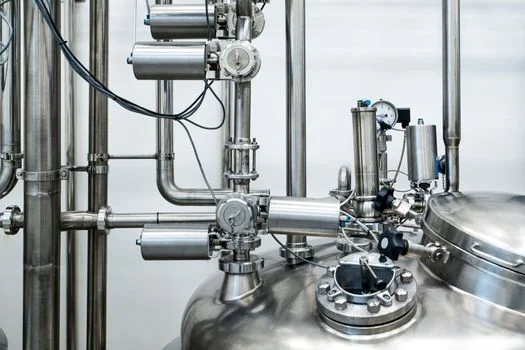
Effective pretreatment is paramount for food processing wastewater, with Dissolved Air Flotation (DAF) systems being critical for removing high concentrations of FOG and TSS. High-efficiency DAF systems for FOG and TSS removal in food processing wastewater can remove 85–95% of FOG and 60–80% of TSS, significantly reducing the organic load on downstream biological and membrane filtration units. Key design parameters for DAF include an air-to-solids ratio of 0.02–0.04 and a hydraulic loading rate of 5–10 m/h, ensuring efficient separation of fats and solids. This robust pretreatment is essential for protecting sensitive MBR and RO membranes from fouling and premature wear. Following DAF, an equalization tank is typically employed to buffer flow and load variations, ensuring a consistent feed to subsequent treatment stages. For achieving MD 145/93 compliance or high-quality reuse, Membrane Bioreactor (MBR) systems are highly effective. MBR systems delivering reuse-quality effluent (TSS ≤ 1 mg/L) for food processors in Oman achieve exceptional COD removal rates of 92–97% and produce effluent with TSS typically below 1 mg/L. However, MBR systems in food processing applications require proactive membrane fouling prevention strategies, including regular chemical cleaning (e.g., sodium hypochlorite for organic fouling, citric acid for scaling) typically every 3–6 months. Membrane lifespan generally ranges from 5–8 years, and energy consumption for aeration and permeate pumping is between 0.5–1.0 kWh/m³. When ultra-high purity water is required for specific industrial processes or potable reuse, Reverse Osmosis (RO) systems are employed. Advanced reverse osmosis (RO) systems for high-purity water reuse in Omani food processing plants can remove over 99% of dissolved solids, pathogens, and micropollutants. RO systems demand extensive pretreatment, often including ultrafiltration (UF), to prevent membrane scaling and fouling from residual suspended solids or organic matter. Typical RO recovery rates range from 75–85%, with operating pressures between 15–30 bar. The concentrate stream (brine) requires careful management, often through evaporation or specialized brine treatment. For food processors aiming for zero-liquid discharge (ZLD) or maximum water recovery, hybrid systems combining DAF + MBR + RO offer the most comprehensive solution. In such a configuration, the process flow typically involves DAF for primary solids and FOG removal, followed by equalization, then MBR for advanced biological treatment and filtration, and finally RO for polishing to achieve ultra-pure water. These ZLD-capable systems for 100 m³/h capacity can have a CAPEX starting at OMR 700,000.| Parameter | DAF + MBR System | DAF + RO System |
|---|---|---|
| CAPEX (OMR) | 150,000 – 500,000 | 300,000 – 600,000 |
| OPEX (OMR/year) | 30,000 – 60,000 | 50,000 – 90,000 |
| Effluent Quality | COD ≤ 30 mg/L, TSS ≤ 1 mg/L, Turbidity < 1 NTU | TDS < 100 mg/L, Pathogen Free |
| Footprint (m²) | Compact (e.g., 100–150) | Larger (e.g., 150–250) |
| Energy Use (kWh/m³) | 0.5 – 1.0 | 1.0 – 2.5 |
| Chemical Use | Coagulants, flocculants, membrane cleaning chemicals | Antiscalants, membrane cleaning chemicals, pH adjusters |
| Maintenance Complexity | Moderate (membrane cleaning) | High (membrane cleaning, scaling prevention) |
| Reuse Potential | Irrigation, cooling towers, general industrial use | Boiler feed, process water, potentially potable reuse |
CAPEX and OPEX Breakdown: Budgeting for Food Processing Wastewater Systems in Oman
| Cost Category | DAF + MBR System (OMR) | DAF + RO System (OMR) |
|---|---|---|
| CAPEX (Initial) | 350,000 | 500,000 |
| OPEX (10 years) | 330,000 | 500,000 |
| Membrane Replacement (10 years, 2 cycles) | 40,000 | 60,000 |
| Total Cost of Ownership (10 years) | 720,000 | 1,060,000 |
Case Study: 200 m³/h DAF + MBR System for a Seafood Processor in Salalah
A prominent seafood processing plant in Salalah faced significant challenges in managing its wastewater, which averaged 200 m³/h with extremely high organic loads (COD 8,000 mg/L), substantial FOG (1,200 mg/L), and elevated salinity (3,500 mg/L). The plant urgently needed to achieve compliance with MD 145/93 effluent standards and sought to reduce its reliance on costly freshwater resources. HydropureWater designed and implemented a robust treatment system tailored to these specific conditions. The system commenced with a high-efficiency DAF-150 system for FOG removal in seafood processing wastewater, followed by an equalization tank to buffer flow and load fluctuations. The core biological treatment and filtration stage comprised a 200 m³/day MBR system utilizing durable PVDF membranes. Final effluent polishing was achieved through a chlorine dioxide generator for disinfection in seafood processing wastewater reuse, ensuring the treated water met stringent reuse guidelines. The process flow was DAF → equalization → MBR → disinfection → reuse. The system demonstrated exceptional performance, transforming influent COD of 8,000 mg/L to an effluent COD of 180 mg/L, achieving a remarkable 98% removal rate and comfortably meeting MD 145/93 standards. TSS was consistently maintained below 5 mg/L, and FOG levels were reduced to less than 5 mg/L. Automated backwashing protocols for the MBR membranes led to a 40% reduction in membrane fouling rates compared to manual cleaning schedules, optimizing operational efficiency. The total CAPEX for this 200 m³/h system was OMR 650,000, with an estimated OPEX of OMR 75,000 per year. The plant successfully reused 60,000 m³/year of treated water, resulting in annual freshwater savings of OMR 120,000 (calculated at OMR 2/m³). This yielded a compelling payback period of 4.2 years, underscoring the strong financial viability of water reuse. A key lesson learned was the need for additional pretreatment, specifically sand filtration, to manage seasonal salinity spikes that occasionally impacted membrane performance. membrane cleaning frequency had to be increased during peak production periods, such as Ramadan, to maintain optimal flux and prevent irreversible fouling.Selecting the Right Equipment: A Decision Framework for Food Processors in Oman
- Step 1: Characterize Wastewater Thoroughly. The foundational step involves comprehensive wastewater characterization, including 24-hour composite samples taken during peak production to capture maximum variability. Key parameters to test are COD, BOD, TSS, FOG, pH, and salinity. Accurate data here prevents undersizing or mis-specifying equipment, which can lead to compliance failures and costly retrofits.
- Step 2: Define Clear Goals (Discharge vs. Water Reuse). The choice between merely meeting discharge limits and achieving water reuse significantly impacts system design and cost. If the primary goal is strict compliance with MD 145/93 for discharge, a DAF followed by conventional biological treatment may suffice. However, if water reuse is the objective, prioritizing advanced systems like MBR or RO becomes essential for meeting higher quality standards required for irrigation or process water.
- Step 3: Evaluate System Flexibility and Scalability. Food processing operations in Oman often experience seasonal or production-driven spikes in wastewater volume and strength. Systems must be designed with sufficient surge capacity (e.g., 20-30% above average flow) and modular expansion capabilities to prevent compliance violations during peak loads. A beverage plant in Muscat, for example, faced fines due to its fixed-capacity system failing to cope with increased production during Ramadan.
- Step 4: Compare Vendors on Comprehensive Criteria. When evaluating potential suppliers for wastewater treatment equipment in Oman, look beyond the initial CAPEX. Critical criteria include OPEX, the vendor's local support and service network in Oman, their compliance track record with MD 145/93, and proven case studies specifically within the food processing sector. A vendor comparison template helps standardize the evaluation.
- Step 5: Consider Pilot Testing. For complex or large-scale projects, running a 3–6 month pilot test with a 1–5 m³/h system is a prudent investment. This allows for validation of performance under actual site conditions, fine-tuning of operational parameters, and accurate projection of full-scale energy and chemical consumption. Pilot tests, typically costing OMR 20,000–50,000, provide invaluable data on COD removal efficiency, membrane fouling rates, and overall system stability before committing to a full-scale investment.
| Evaluation Criteria | Vendor A | Vendor B | Vendor C |
|---|---|---|---|
| CAPEX (OMR) | |||
| OPEX (OMR/year) | |||
| Local Support & Service Network | |||
| MD 145/93 Compliance Track Record | |||
| Relevant Food Processing Case Studies | |||
| System Flexibility & Scalability | |||
| Pilot Testing Availability |
Frequently Asked Questions
What are the primary challenges in treating dairy wastewater in Oman?
Dairy wastewater in Oman is primarily challenging due to its high BOD (lactose), high FOG, and fluctuating pH levels. These characteristics require robust pretreatment, often involving DAF and pH neutralization, followed by biological treatment systems capable of handling significant organic loads and preventing FOG accumulation.
How often should MBR membranes be cleaned in a food processing application?
MBR membranes in food processing applications typically require chemical cleaning every 3–6 months, depending on influent quality, operational flux, and the specific food product being processed. Regular maintenance cleans are also recommended weekly or bi-weekly using permeate flushing or relaxation cycles to prolong membrane life and maintain performance.
What is the typical ROI for water reuse systems in Omani food plants?
The typical Return on Investment (ROI) for water reuse systems in Omani food plants ranges from 3–5 years for MBR-based systems and 5–7 years for more advanced RO systems. This is driven by significant savings on freshwater tariffs (OMR 1.2–1.8/m³ compared to potable water costs) and potential eligibility for Ministry of Environment grants.
What local support services should Omani food processors look for in a wastewater treatment vendor?
Omani food processors should seek vendors offering comprehensive local support, including readily available spare parts, trained technicians for emergency repairs, scheduled maintenance programs, and process optimization support. Local presence ensures rapid response times and minimizes downtime, which is crucial for continuous operations.
What is the impact of seasonal production on wastewater treatment system design?
Seasonal production spikes, such as during Ramadan or specific harvesting seasons, significantly increase both hydraulic flow and organic load on wastewater treatment systems. Designs must incorporate at least 20–30% surge capacity in equalization tanks and biological reactors, along with flexible chemical dosing and aeration controls to prevent non-compliance during peak periods.
Related Equipment
- PLC-controlled chemical dosing for pH adjustment and coagulant addition in food wastewater — view specifications, capacity range, and technical data
Need a customized solution? Request a free quote with your specific flow rate and pollutant parameters.