Why Sarawak’s Sewage Treatment Equipment Market Demands Local Expertise
Sarawak's industrial landscape is characterized by high-density palm oil cultivation in Bintulu, timber processing in Sibu, and oil and gas operations in Miri, presenting unique wastewater challenges that standard off-the-shelf solutions often fail to address. Industrial facilities in these regions generate effluent with high organic loading, often exceeding Chemical Oxygen Demand (COD) concentrations of 1,000 mg/L. According to DOE Malaysia 2024 guidelines, treating such high-strength wastewater requires advanced biological or physical-chemical processes that go beyond basic chemical dosing. For engineers and project leads, the geographic isolation of many Sarawak sites necessitates equipment that is both robust and low-maintenance.
Remote project sites in Sarawak’s interior demand modular underground sewage treatment plants for remote sites. These systems, such as the WSZ Series, are designed for ease of transport and minimal surface footprint, making them ideal for logging camps or rural industrial outposts where land clearing is restricted. The Sarawak Water Board enforces local discharge limits that are occasionally more stringent than national standards in Peninsular Malaysia. For instance, ammonia-nitrogen limits in certain Sarawak catchment areas are capped at 10 mg/L, compared to the national baseline of 20 mg/L, requiring higher precision in the nitrification-denitrification stages of treatment.
A 2023 case study of a palm oil mill in Sibu illustrates the impact of site-specific engineering. The mill previously relied on a traditional chemical precipitation system but faced consistent compliance violations due to fluctuating influent quality. After transitioning to an integrated Membrane Bioreactor (MBR) system, the facility achieved an 80% reduction in compliance violations and maintained a consistent Biological Oxygen Demand (BOD) of < 20 mg/L (HydropureWater field data, 2023). This shift underscores the necessity of choosing a sewage treatment equipment supplier in Sarawak Malaysia capable of providing tailored technical specifications rather than generic equipment.
Sarawak’s Wastewater Treatment Compliance Standards: What Your Equipment Must Achieve
The Environmental Quality (Sewage) Regulations 2009 under the Department of Environment (DOE) Malaysia guide procurement for Sarawak projects. These regulations establish the baseline for discharge, but local oversight by the Sarawak Water Board and the Natural Resources and Environment Board (NREB) adds layers of regional requirements. Equipment that fails to meet these numeric limits puts the facility at risk of severe legal repercussions under the Environmental Quality Act 1974, which includes fines up to RM 500,000 and potential imprisonment.
Industrial sectors like palm oil and timber face even more rigorous sector-specific guidelines. For example, palm oil mill effluent (POME) must adhere to the 2020 POME Guidelines, targeting BOD levels below 100 mg/L before discharge into watercourses. In Sarawak, where water scarcity can affect operations during dry seasons, chlorine dioxide disinfection for wastewater reuse is becoming a requirement for facilities looking to recycle process water and reduce raw water intake costs.
| Parameter | DOE Malaysia Standard B (National) | Sarawak Local Catchment Targets | Industrial POME Guidelines (2025) |
|---|---|---|---|
| BOD (mg/L) | 50 | < 20 | < 100 |
| COD (mg/L) | 200 | < 150 | < 400 |
| TSS (mg/L) | 100 | < 50 | < 100 |
| Ammonia-N (mg/L) | 20 | < 10 | N/A |
| Oil & Grease (mg/L) | 10 | < 5 | < 25 |
| pH | 5.5 – 9.0 | 6.0 – 9.0 | 5.0 – 9.0 |
To ensure long-term compliance, equipment must be sized for peak flow conditions and potential shock loads. Suppliers should provide automated monitoring systems that track parameters in real-time, allowing for immediate process adjustments if discharge limits are approached.
Key Sewage Treatment Equipment for Sarawak Projects: Technical Specifications and Use Cases
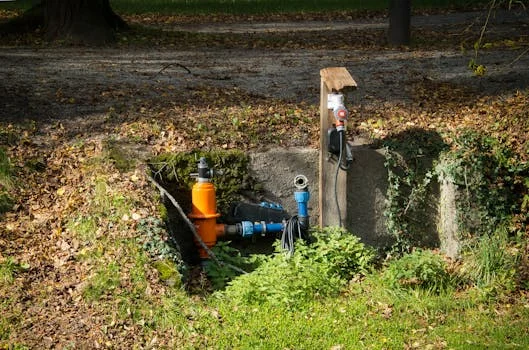
Selecting the correct technology involves a trade-off between footprint, energy consumption, and removal efficiency. For Sarawak’s industrial and municipal projects, four primary technologies dominate the market, each serving specific influent profiles and site constraints. The choice of technology depends on the project's specific needs.
MBR Membrane Bioreactor Systems: These systems utilize PVDF membranes with a 0.1 μm pore size, operating at flux rates of 15–25 LMH and a Trans-Membrane Pressure (TMP) of less than 30 kPa. MBR membrane bioreactor systems for high-strength wastewater achieve up to 99% pathogen removal and are effective in urban Sarawak hospitals or high-load industrial sites where space is limited.
Dissolved Air Flotation (DAF) Systems: For facilities dealing with high concentrations of oils, fats, and suspended solids, DAF systems for FOG and TSS removal in industrial wastewater are essential. These systems generate micro-bubbles (30–50 μm) that attach to particles, achieving TSS removal rates of 92–97% and Fat, Oil, and Grease (FOG) removal of over 95% (HydropureWater DAF benchmarks, 2024).
Underground Package Plants (WSZ Series): Utilizing the A/O (Anaerobic/Oxic) biological contact oxidation process, these plants support capacities from 1 to 80 m³/h and are fully automated, requiring no dedicated full-time operator. This makes them suitable for decentralized housing projects or remote industrial camps in the Sarawak interior.
Sludge Dewatering Equipment: Effective sludge management is vital for reducing disposal costs. Plate and frame filter presses with filtration areas ranging from 1 to 500 m² can produce filter cakes with 25–35% dryness. This sludge dewatering equipment for municipal and industrial projects is more energy-efficient than traditional belt presses, especially for stabilized industrial sludge.
| Equipment Type | Key Technical Spec | Removal Efficiency (COD/TSS) | Best Use Case |
|---|---|---|---|
| MBR System | 0.1 μm PVDF Membrane | 95% / 99% | Water reuse, space-limited sites |
| DAF System | 30-50 μm Micro-bubbles | 70% / 97% | POME, Food processing, FOG removal |
| WSZ Package Plant | A/O Biological Process | 85% / 90% | Remote camps, residential areas |
| Filter Press | 1-500 m² Area | N/A (Sludge focus) | Industrial sludge volume reduction |
How to Evaluate Sewage Treatment Equipment Suppliers in Sarawak: A 5-Step Decision Framework
Evaluating a sewage treatment equipment supplier in Sarawak Malaysia requires a rigorous technical audit. To ensure compliance and efficiency, follow these steps:
- Verify Sarawak Compliance Expertise: The supplier must demonstrate a deep understanding of both DOE and Sarawak Water Board regulations. Request project completion certificates or DOE approval letters for past projects in Sarawak.
- Assess Equipment Customization: Sarawak’s wastewater is rarely "standard." Suppliers should be able to adjust equipment for high organic loads. Ask: "How do you adjust the flux rate and aeration intensity of your MBR system for palm oil mill effluent with COD exceeding 1,500 mg/L?"
- Evaluate Local Support Infrastructure: For remote sites, a supplier should offer a service response time of less than 24 hours. Inquire about the availability of critical spare parts in regional hubs like Kuching or Bintulu.
- Compare Total Cost of Ownership (TCO): Request a 5-year TCO calculation that includes energy consumption, chemical dosing costs, and membrane replacement intervals.
- Request Sarawak-Specific Case Studies: Look for data that matches your influent characteristics. A supplier with experience in treating high-BOD wastewater in a Sarawak timber mill is more reliable than one with only urban municipal experience.
Sarawak Sewage Treatment Equipment Costs: 2025 Benchmarks and ROI Calculator
Capital costs for MBR systems in Sarawak typically range from RM 1.2M to RM 5M for capacities of 10–200 m³/day. DAF systems for industrial flows (4–300 m³/h) range from RM 300K to RM 1.5M. The WSZ Series underground plants are the most cost-effective for small-to-medium municipal needs, starting at RM 200K.
Operating costs (OPEX) are driven by energy and chemicals. MBR systems consume between 0.3 and 0.8 kWh/m³, while DAF systems are more energy-efficient at 0.1 to 0.4 kWh/m³. Chemical costs can be 10–15% higher in rural areas due to transport surcharges. The Green Technology Financing Scheme (GTFS) provides government-backed incentives for equipment that facilitates water reuse or reduces environmental impact.
The Return on Investment (ROI) is driven by the avoidance of compliance fines and savings from industrial water reuse. In Sarawak, a facility recycling 50% of its effluent can achieve payback on an MBR system within 3 to 5 years.
| Cost Component | MBR System (50 m³/day) | DAF + Biological (50 m³/h) |
|---|---|---|
| Estimated CAPEX (RM) | 1,500,000 - 2,200,000 | 800,000 - 1,300,000 |
| Energy Cost (per m³) | RM 0.40 - RM 0.65 | RM 0.15 - RM 0.30 |
| Chemical Cost (per m³) | RM 0.20 - RM 0.40 | RM 0.80 - RM 1.80 |
| Maintenance (Annual) | 2% of CAPEX | 4% of CAPEX |
| 5-Year TCO (Est. RM) | ~2.1M | ~1.9M |
Frequently Asked Questions
What is the largest STP in Malaysia?
The Pantai 2 Sewage Treatment Plant in Kuala Lumpur is the largest, with a capacity of 2.4 million population equivalent (PE). The Pending STP in Kuching handles approximately 150,000 PE.
What are the four types of wastewater treatment?
Wastewater treatment is categorized into Primary,