Define the treatment outcome before selecting equipment
Selecting an industrial effluent treatment and reverse osmosis plant in Mauritius starts with the required outcome: permitted discharge, process-water reuse, boiler or cooling feed, or potable-grade polishing. Oil, suspended solids, colloids and salinity determine whether biological treatment, flotation, ultrafiltration and reverse osmosis are needed. The review by Applied Water Science reports optimized oily-wastewater removal of 84.5% for COD, 94% for oil and 83.4% for suspended solids. The final equipment selection still depends on site-specific flow, wastewater analysis, permit conditions and reuse targets.
Water scarcity can justify investigating reuse, but it does not determine the required process. Pure Aqua reports Mauritius renewable resources of 2.751 km³/year, exploitable resources of 1.083 km³/year and total dam capacity of 93 million m³. These figures establish the planning context; they do not prove that a particular industrial discharge is suitable for reuse or that any proposed recovery rate is achievable.
Before comparing quotations, request the current wastewater permit and discharge limits, the client’s reuse specification, operating hours, future expansion allowance and intended recovery rate. For reuse, identify the receiving process and required final-water quality rather than describing the project simply as “water reuse.”
| Outcome | Question to resolve | Information required before selecting equipment |
|---|---|---|
| Permitted discharge | Which discharge limits apply to each regulated parameter? | Current permit, receiving environment, sampling method, operating envelope and compliance monitoring requirements |
| Process-water reuse | Which equipment or process will receive the treated water? | Client reuse specification, process-water quality limits, variability profile and operating hours |
| Boiler or cooling feed | What additional conditioning and polishing are required? | Feedwater limits for the relevant equipment, scaling parameters and expected cycles of concentration |
| Potable-grade polishing | Is RO the final treatment stage or part of a broader compliance scheme? | Required quality specification, applicable regulatory basis, validation requirements and monitoring plan |
Once the outcome is defined, compare the industrial reverse osmosis plant against the whole treatment train. RO functions as a polishing step in many industrial reuse schemes, rather than a substitute for the removal of oil, suspended material or biologically demanding pollutants.
Classify the wastewater and build the right treatment train
Wastewater classification determines which unit operations are credible and which create downstream fouling or scaling problems. Apply the following sequence: identify oil, grease and free solids; determine biodegradability and suspended-solids separation needs; identify dissolved salts and fouling constituents; then select the membranes required to meet the specified outcome.
For oily wastewater, the review in Applied Water Science reports an optimized case with 84.5% COD removal, 94% oil removal and 83.4% suspended-solids removal under a hydraulic retention time of 1.0 hour, an air-to-water volume flow ratio of 5:1 and backwashing every 4–7 days. These are review-specific operating conditions, not universal design values. They provide a benchmark against which a supplier must explain feed assumptions and performance evidence.
Use dissolved air flotation where suspended solids, oil and grease or colloidal material must be removed before membrane treatment. The supplied DAF catalogue identifies applications in food processing, pulp and paper, textiles, metalworking, petrochemicals and municipal pretreatment. The supplier should demonstrate that the proposed DAF pretreatment system matches the actual oil and solids characteristics rather than relying only on an application label.
Do not route high-solids or oily feeds directly to RO. The Applied Water Science review reports a membrane-treatment case with 75% COD, 55% BOD, 92% total-solids, 96% TDS and 30% TSS reduction, but those results are feed- and configuration-dependent. Biological streams should instead be evaluated against the required solids separation and reuse target. HydropureWater describes its MBR system as combining activated sludge with submerged PVDF filtration and producing effluent below 1 μm; that catalogue statement must be translated into a project-specific solids-removal and permeate-quality guarantee.
| Wastewater characteristic or target | Primary screening decision | Required evidence from the supplier |
|---|---|---|
| Free oil, grease or high COD | Source control and separation before fine membrane treatment | Oil-water separator or DAF duty, emulsion characteristics, removal basis and produced-waste volume |
| High suspended solids or colloids | Clarification, DAF or biological solids separation before RO | Design solids loading, expected solids capture, equalisation assumptions and downstream carryover |
| Biodegradable organic discharge | Biological treatment with membrane separation only if its effluent quality is required | Organic loading, sludge production, membrane configuration and solids-removal guarantee |
| Dissolved salts and low-permeate target | RO after validated pretreatment | Feed salinity range, membrane selection, recovery basis, scaling assessment and concentrate route |
Protect the RO membranes with verified pretreatment
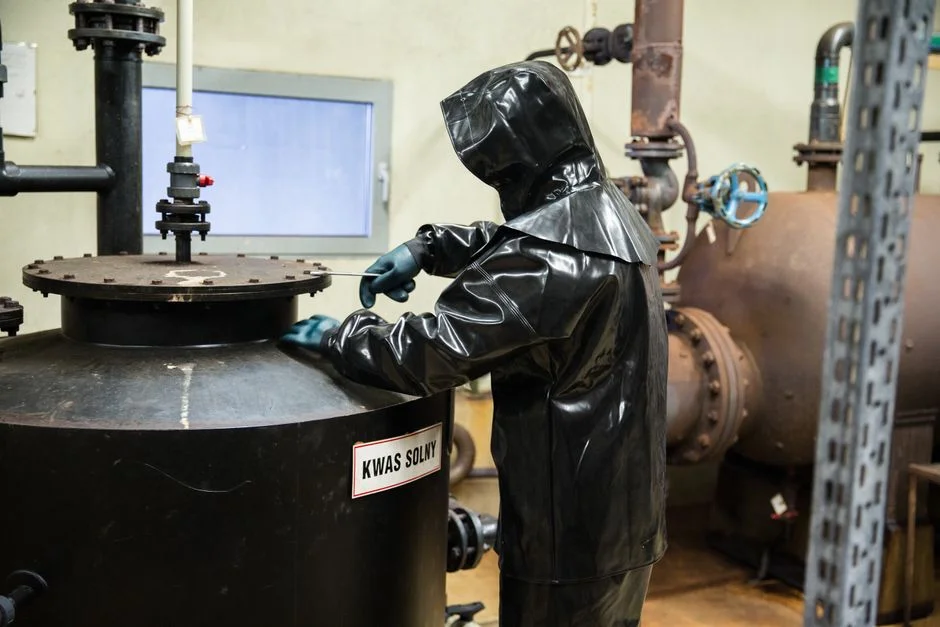
RO pretreatment should be selected from identified contaminants and their expected membrane impact, not from a generic claim that the feed is “pretreated.” Suspended solids and colloids require removal, while dissolved constituents require a scaling and precipitation assessment.
Multi-media filtration can remove suspended solids, turbidity and colloids before RO. Require the supplier to state the calculated silt density index, or SDI, for the filtered feed and identify the test method and sample point. “Multi-media filter installed” is not an acceptance criterion because filtration performance depends on the upstream treatment and operating condition.
HydropureWater states that its hollow-fiber UF systems remove bacteria, colloids and suspended solids without chemicals, accept turbidity up to 300 ppm, and provide automatic backwash and air scour. These are catalogue capabilities. The project bid must specify the actual feed condition, required turbidity, allowable backwash contribution, membrane flux basis and effect of interruptions on downstream RO operation.
For anaerobic wastewater, high recovery requires a separate precipitation-risk review. The supplied SSRN paper is titled Vivianite Precipitation in High Recovery Reverse Osmosis Desalination of Anaerobic Wastewater Effluent. Its scope identifies vivianite precipitation as a specific risk to investigate; it does not establish a safe recovery rate for every plant.
| Pretreatment issue | Equipment or control response | Supplier information to request |
|---|---|---|
| Suspended solids, turbidity and colloids | Multi-media filtration and, where justified, UF | Calculated SDI, turbidity basis, flux, backwash sequence and post-filter sample point |
| Oil carryover or emulsions | Oil-water separator, DAF and equalisation | Design flow, influent oil range, carryover limit and separation-performance basis |
| pH or chemical demand | pH control and automatic chemical dosing | Chemical type, dose range, control response, residual target and dosing sequence |
| Iron, phosphate or other precipitation risk | Conditioning, anti-scaling programme or feed-specific treatment | Water-chemistry assessment, precipitant identification and defined mitigation strategy |
Equalisation, pH control and chemical dosing should be reviewed wherever the analysis indicates variable pH, fluctuating loading or scaling constituents. Request the chemical type, dose range and PLC-controlled operating sequence rather than accepting an unqualified “conditioned feed” statement.
Compare recovery, reuse value and operating risk
High recovery can increase available reuse water, but it also narrows the operating margin against membrane scaling, fouling and concentrate management. Evaluate recovery against feed salinity, pretreatment performance, membrane condition and the consequences of a recovery-rate change.
HydropureWater states that its industrial RO systems deliver ultra-pure permeate at recovery rates up to 95%, with PLC-controlled operation, continuous output and minimal chemical consumption. Treat 95% as a maximum catalogue capability, not a guaranteed project recovery. A compliant quotation should state the recovery range applicable to the supplied wastewater analysis, including the operating and scaling assumptions behind it.
The economic comparison must include more than recovered-water volume. It should account for additional pretreatment, concentrate disposal or treatment, membrane replacement and energy use. The supplied research contains no Mauritius-specific tariffs or project prices, so a defensible cost comparison requires current local utility tariffs, concentrate-disposal arrangements, equipment quotations and a site-specific mass balance.
Where high recovery is proposed for anaerobic effluent, require a precipitation assessment and a defined anti-scaling or conditioning strategy. Include membrane scaling, precipitate formation, permeate quality and recovery as separate acceptance obligations, each with a test method and remedy if the agreed envelope is exceeded.
| Bid item | Minimum statement required | Reason for the check |
|---|---|---|
| System recovery | Recovery range tied to feed salinity, temperature and pretreatment conditions | Separates a catalogue maximum from guaranteed project performance |
| Permeate quality | Named parameters, acceptance limits, sampling points and test methods | Prevents an undefined “ultra-pure” claim |
| Concentrate | Flow, composition basis and proposed management route | Exposes recovery costs and discharge constraints |
| Operating risk | Scaling, fouling and precipitate response obligations | Connects plant performance to corrective action and warranty terms |
The commercial value of industrial effluent reuse should be calculated only after these operating risks are priced. For a comparable method, see the guide to industrial wastewater reuse and cooling-blowdown treatment and the analysis of UF/RO versus zero-liquid-discharge decision.
Issue a supplier-ready sizing and acceptance checklist
A comparable quotation requires one common design basis, an explicit process flow diagram and measurable acceptance criteria. Provide average and peak flow, the complete wastewater analysis, oil and grease, COD, BOD, TSS, TDS, salinity, pH, temperature, fouling indicators, and the required recovery or reuse quality.
- State the project purpose: permitted discharge or a named reuse application. Attach the current permit and the client’s final-water specification.
- Provide the design basis: operating hours, average and peak flow, analysis methods, sampling points and the variability of each critical parameter.
- Describe site constraints: available footprint, equipment elevations, utilities, drainage, access, installation window and noise or environmental restrictions.
- Define future requirements: expansion provision, operating schedule and locally available or international service arrangements.
- Require bidders to return the design flow, process flow diagram, duty and standby assumptions, membrane make and quantity, recovery range, permeate quality, chemical consumption, control philosophy and performance-test method.
- Write acceptance and remedy terms into the procurement documents for membrane scaling, fouling, precipitate formation and permeate-quality failures.
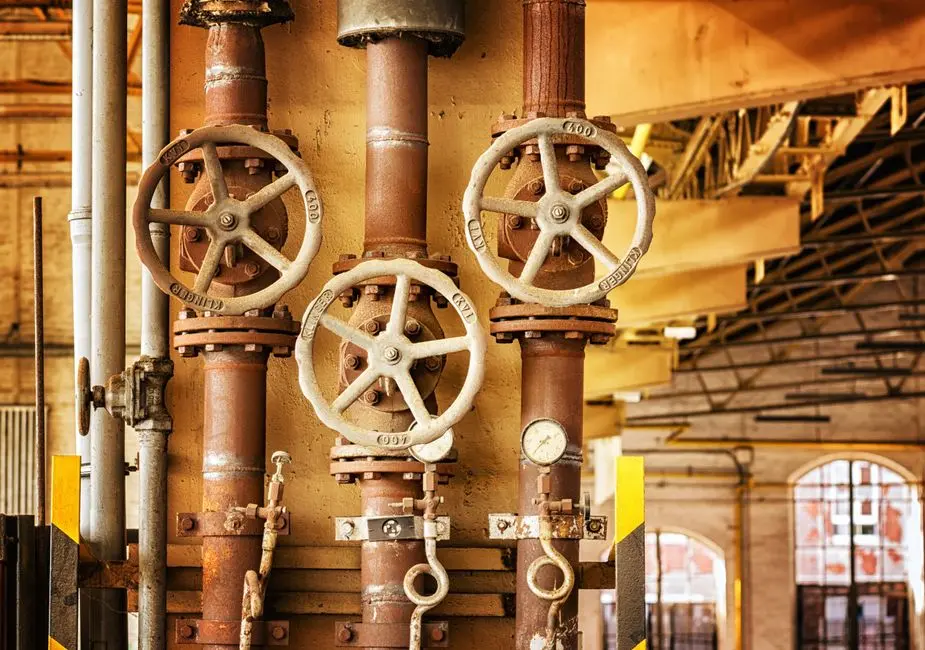
Do not accept an equipment list without the process basis behind it. Each major unit should have a stated duty, feed envelope and downstream interface. If the bid includes vessels, valves or media, require compatible materials, quantities and replacement assumptions so that the treatment equipment parts, valves and media can be compared without ambiguity.
For oily streams, also request the separator or DAF performance basis and produced-waste handling. The selection reference for API/CPI and DAF pretreatment selection illustrates why upstream separation criteria should be settled before downstream membranes are fixed.
Frequently Asked Questions
How should an industrial effluent treatment and reverse osmosis plant in Mauritius be selected?
Start with the required outcome and wastewater hazards. Use biological treatment for biodegradable organic loads, DAF for separated oil, suspended solids and colloids, MBR where fine solids separation is required, UF where membrane protection is needed, and RO for the specified dissolved-solids reduction. Each route requires a different final-water and acceptance specification.
What data is needed to size the equipment?
Request average and peak flow, operating hours, oil and grease, COD, BOD, TSS, TDS, salinity, pH, temperature and fouling indicators, together with the permit or reuse specification and site constraints. Catalogue maxima such as 95% recovery or turbidity up to 300 ppm cannot determine project size without a feed-specific wastewater analysis.
How should suppliers be compared on cost and supplier capability?
Compare each bid using the same design flow, process flow diagram, recovery range, permeate guarantees, chemical consumption, utility demand, test method, warranty and remedial obligations. Ask for the chemical type, dose range and PLC-controlled operating sequence where dosing is proposed. Since no project price is supported by the supplied research, request a priced bill of quantities rather