
Confirm the project basis before selecting equipment
For a hospital in Timor-Leste, select the treatment route after confirming average and peak flow, wastewater characteristics, the discharge point, land availability and the applicable authority’s requirements. Compact multi-stage filtration with ozone disinfection suits small medical facilities and is specified in a footprint as small as 0.5 m². Larger hospitals may need an integrated biological package plant or membrane bioreactor. Local compliance remains an open verification item: HydropureWater’s East Timor country page, dated 2026, states that discharge standards, plant costs and equipment guides are still being prepared.
No supplied source establishes hospital wastewater flow data for Timor-Leste. The tender design basis should request metered flow data, operating hours, seasonal variation, planned bed expansion and any storm, overflow or emergency-storage requirement. Where metered data are unavailable, require the hospital to state the method used to estimate flows and identify where assumptions remain.
Wastewater sampling should characterize suspended solids, organics, nutrients, oil and grease, disinfectants, pharmaceuticals, pathogens and antimicrobial-resistance considerations. A sampling plan must specify sampling points, sampling periods, laboratory methods and parameter units. These data determine pretreatment requirements, biological loading, disinfection performance and sludge production.
Define the discharge route before selecting equipment: a sewer connection, surface-water discharge, reuse point or controlled tanker removal each imposes different hydraulic, solids and disinfection requirements. Record available land, access for maintenance, power supply and backup arrangements, sludge-disposal route, flood exposure and the authority that will review the installation. Use the hospital wastewater treatment engineering and compliance guide as a method for structuring those questions, not as evidence of Timor-Leste requirements.
| Design-basis field | Information the buyer must obtain | Procurement consequence if missing |
|---|---|---|
| Flow and service conditions | Average and peak flow, operating hours, future expansion, storm ingress and emergency storage | Equipment hydraulic capacity and equalization requirements remain unverified |
| Wastewater characteristics | Sampling plan and results for solids, organics, nutrients, oil and grease, pharmaceuticals, disinfectants and pathogens | Treatment train and sludge route cannot be fixed reliably |
| Discharge and reuse | Receiving sewer or watercourse, discharge point, intended reuse and applicable authority | No defensible treatment or disinfection performance specification can be issued |
| Site and utilities | Land boundary, flood level, access, power reliability, backup power and drainage | Installation may not fit or remain operable |
| Local compliance | Current discharge limits, licensing conditions and required commissioning evidence | Compliance claims cannot be accepted or priced |
Match treatment capacity and footprint to the hospital
Treatment equipment size should align with the confirmed peak hydraulic and organic load, followed by testing whether the selected route fits the available site and operating resources. Published product capacities establish the envelope available for comparison; they do not establish the required capacity for a Timor-Leste hospital.
For a clinic or small medical facility, the compact hospital wastewater treatment system combines multi-stage filtration with ozone disinfection. The verified HydropureWater product catalog states a 99%+ kill rate and a footprint as small as 0.5 m². These are published product claims; the buyer still needs project-specific influent data, a confirmed discharge basis and verification that the stated performance applies to the proposed installation.
For hospitals requiring integrated biological treatment, the WSZ integrated package treatment plant combines anoxic and aerobic biological contact oxidation, sedimentation and disinfection in one buried unit. The product catalog gives a capacity range of 1–80 m³/h. Selection requires confirmation of process suitability, hydraulic loading, excavation and groundwater conditions, access to buried components and arrangements for sludge and odour management.
For larger facilities or water-reuse applications, the product catalog describes an MBR route combining activated sludge with submerged PVDF membrane filtration, covering 10–2,000 m³/day. MBR procurement should address membrane cleaning, fouling control, energy demand, replacement strategy, standby provision and the consequences of interrupted power. A reuse claim also requires the intended reuse quality, treatment objectives and receiving party to be defined.
| Route | Published basis | Use when | Acceptance evidence to request |
|---|---|---|---|
| Compact filtration and ozone | Multi-stage filtration with ozone disinfection; 99%+ kill rate stated by the verified product catalog; footprint as small as 0.5 m² | Small medical facilities can document that the hydraulic and contaminant load falls within the verified performance envelope | Project-specific performance guarantee, disinfection validation method, controls, maintenance plan and delivery drawings |
| Integrated WSZ package | Anoxic and aerobic contact oxidation, sedimentation and disinfection in one buried unit; 1–80 m³/h stated in the product catalog | An integrated biological route suits the confirmed load and the site can accommodate buried equipment | Hydraulic and process calculations, installation requirements, sludge route, odour controls and commissioning protocol |
| MBR | Activated sludge with submerged PVDF membrane filtration; 10–2,000 m³/day stated in the product catalog | Confirmed flows, treatment objectives or reuse requirements justify the added membrane and operating burden | Membrane design basis, cleaning and replacement plan, energy consumption, redundancy and guaranteed treated-water performance |
Include equalization, sludge handling, access, power, maintainability and redundancy in the comparison rather than ranking equipment on footprint or rated capacity alone. Because no Timor-Leste hospital flow data are supplied, none of these routes can be declared suitable until the design basis is completed.
Build a treatment train that protects the discharge route
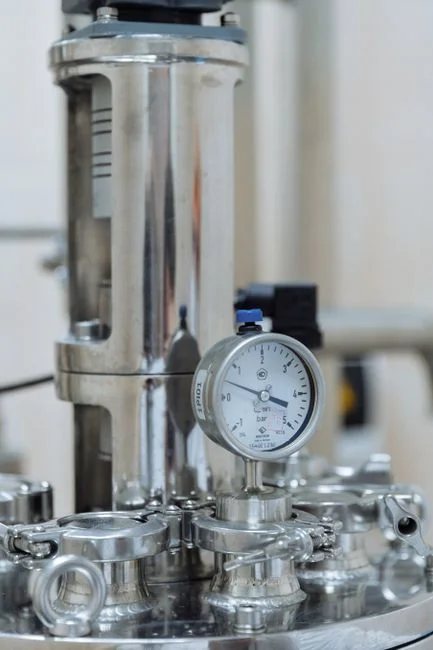
Pretreatment, biological treatment and disinfection should be selected as one process train. Product selection should follow the wastewater characteristics and receiving route, not begin with an equipment catalogue.
Use screening where rags, plastics, fibrous debris or other suspended material could damage pumps and valves or interfere with downstream biological treatment. The GX mechanical bar screen is described in the product catalog as municipal and industrial wastewater headworks equipment. Its suitability depends on the observed debris, channel geometry, required removal duty and a disposal route for screenings.
Assess dissolved air flotation when oil, grease, floatables or settleable suspended solids need removal before biological treatment. The DAF equipment range covers 4–300 m³/h across 13 models, according to the product catalog. That published range does not replace project selection: the buyer must confirm the constituent stream, hydraulic flow, required separation performance, recovered-solids handling and chemical or saturation requirements.
Define sludge treatment only after the biological and solids-handling route is settled. The plate-and-frame filter-press range has filtration areas from 1 m² to 500 m² and manual, hydraulic or automatic PLC operation, as stated in the product catalog. Require the bidder to state expected sludge volume, moisture target, operating mode, cake-disposal route, wash-water demand and operator competency needs.
Antimicrobial resistance is a risk-design input, not a quantified claim about Timor-Leste. A FEMS Microbiology Ecology study titled Limited influence of hospital wastewater on the microbiome and resistome of wastewater in a community sewerage system explains that hospital sewage may contain antibiotic-resistant bacteria and antimicrobial-resistance genes and may contribute to their spread. It does not establish their prevalence in Timor-Leste. The tender should require a defensible sampling and risk-assessment method rather than imply a local contamination level.
Design for local operations and verification
A hospital treatment plant is a service asset, not an appliance. The bid should demonstrate that the hospital can operate and maintain the proposed system under its actual staffing, power and access constraints.
Require documented operating procedures, operator training, commissioning records, critical spares, local spare-parts availability, fault indication, power-failure response and a defined sludge-handling plan. Identify who responds to alarms, who performs preventive maintenance, what response time is available and how consumables reach site. These are contractual deliverables and should be scored.
The official presentation Waste Management in Timor-Leste, published on 2010-10-05, describes limited financial support, limited human resources and a lack of facilities for waste management. It also identifies the Directorate of Water Supply and Sanitation and the Directorate of Environment as the executing ministries associated with the Tasitolu wastewater ponds. Because that source is more than a decade old, use it as institutional context, not as current evidence of authority, policy or operating capability. Confirm the current responsible authority for wastewater discharge, environmental approval and health-facility requirements.
Tie final acceptance to the confirmed design basis, applicable discharge requirements, guaranteed process performance, documentation, training and commissioning tests. Require the supplier to identify which guarantees are project-specific and which are only general catalog claims. Quarantine every unresolved local requirement in a compliance register with an owner, evidence source, deadline and approval status.
| Tender package | Required deliverable | Acceptance test |
|---|---|---|
| Design basis | Signed flow, wastewater, discharge, site and utilities schedule | Engineer confirms that the selected train is sized against the stated peak load and site constraints |
| Process guarantee | Equipment list, process schematic, hydraulic calculations, controls narrative and performance guarantees | Commissioning demonstrates the agreed duty and compliance parameters under representative operations |
| Operations | O&M manual, routine schedule, fault-response procedure, training plan and spares list | Operators complete training and demonstrate routine checks and fault response |
| Residuals | Sludge and screenings quantity, handling method, transport route and disposal documentation | Residual-handling route is accepted by the relevant authority |
| Compliance record | Permit conditions, discharge criteria, sampling method and unresolved-item register | All compliance-critical items are closed or formally conditioned before acceptance |
Frequently Asked Questions
What should a buyer request before comparing hospital wastewater treatment prices in Timor-Leste?
Request the confirmed average and peak flows, wastewater characterization, discharge route, site constraints, power arrangement, applicable permit requirements and residual-disposal route before requesting comparable prices. No supplied source gives Timor-Leste hospital treatment costs, so any quotation should separate equipment, freight, installation, civil works, commissioning, training, consumables and O&M support. Require the bidder to state exclusions and the commercial basis for each item. The regional hospital wastewater compliance and equipment guide can help structure that request, but it does not establish Timor-Leste prices.
Which route should be selected for a small hospital or clinic?
Use the compact filtration and ozone route only if project sampling and flow data place the installation within the supplier’s verified performance envelope. The catalog states multi-stage filtration, ozone disinfection, a 99%+ kill rate and a footprint as small as 0.5 m², but those claims do not replace project-specific validation. Confirm the discharge point and current authority requirements first. If the confirmed duty exceeds the verified envelope, compare the WSZ package route instead of forcing a unit beyond its stated limits.
When is an MBR justified, and what should the supplier prove?
Consider MBR when confirmed flows, treatment objectives or reuse requirements justify the additional membrane and operating burden. The catalog states a capacity range of 10–2,000 m³/day for an activated-sludge system with submerged PVDF membrane filtration; it does not establish suitability for a particular hospital. Ask the supplier to demonstrate the hydraulic basis, fouling and cleaning strategy, energy demand, replacement provisions, redundancy and project-specific performance guarantees.
How should a buyer select a supplier and manage compliance risk?
Select on evidence rather than catalog capacity alone. Require verifiable project references or equivalent commissioning evidence, confirmed performance guarantees, O&M documentation, operator training, spares availability, a named local-support arrangement and a clear warranty. Also require the supplier to submit a compliance register separating confirmed local requirements from unresolved items. Any cited standard or discharge claim must apply to the specified project and be accepted by the relevant authority; published product claims cannot substitute for that review.
