Establish the discharge route and applicable limits
Mining and metals plants near Blue Moon meet pretreatment limits by treating wastewater to the applicable permit or sewer authority’s written conditions before discharge. On August 20, 2026, Nevada’s Division of Environmental Protection transferred the Springer tungsten project’s Water Pollution Control Permit and Reclamation Permit into Blue Moon’s name, authorizing construction activities under those permits. These mine authorizations do not establish generic sewer pretreatment limits. Equipment selection must begin with the receiving authority, written contaminant limits, and site-specific wastewater data.
First determine whether the proposed route is a publicly owned treatment works sewer, an industrial sewer, a permitted outfall, or a no-discharge arrangement. “Near Blue Moon” does not identify the discharge authority, and the supplied research does not establish a sewer destination for Springer. A plant may require both mine-specific authorizations and a separate industrial-user pretreatment permit or discharge authorization.
Issue one written request to each relevant authority for the current industrial-user permit, sewer-use ordinance, discharge limits, monitoring requirements, surcharge provisions, reporting forms, and local amendments. Blue Moon Metals’ August 20, 2026 announcement identifies Nevada’s WPCP and Reclamation Permit as principal state authorizations governing construction, operation, and closure of Springer, but it does not state POTW local limits, equipment capacities, or treatment-performance requirements.
| Document or decision | What it establishes | Required procurement action |
|---|---|---|
| Mine WPCP and Reclamation Permit | State authorizations governing Springer construction, operation, and closure | Obtain the complete permits and identify all wastewater, monitoring, reporting, and residual-management conditions |
| Industrial-user permit or sewer authorization | The receiving sewer’s written authority to accept the proposed discharge | Confirm the discharge point, applicable limits, sampling method, monitoring frequency, and surcharge exposure |
| Written authority clarification | How mine-permit and sewer conditions interact | Require the receiving authority and mining regulator to resolve material conflicts in writing |
For every numerical limit, ask the authority to state its legal basis, averaging period, daily or instantaneous maximum, applicable sampling location, monitoring frequency, and required analytical methods. This prevents a supplier from treating a permit condition, sewer surcharge threshold, or vendor case study as the design basis.
Build the wastewater characterization before sizing equipment
Final equipment sizing requires a representative mining wastewater characterization that captures flow, composition, variability, and cold-weather conditions. Blue Moon’s August 20, 2026 announcement identifies construction authorization at Springer but provides no influent flow records, contaminant concentrations, or operating envelope.
Request a sampling program covering flow, pH, suspended solids, settleable solids, oil and grease, metals, ammonia, nitrate, and any site-specific contaminants. Sample mill, tailings, wash-down, and stormwater contributions separately before combining them into a design basis. Nexom’s mining wastewater page identifies high-strength, highly variable flows and cold conditions as mining design challenges; those conditions must be demonstrated at the proposed facility rather than assumed.
For each stream, document operating shifts, batch discharges, storm events, production changes, chemical use, and seasonal water temperatures. Request historical laboratory results, flow totals, production records, reagent inventories, and sampling methods. If those records do not exist, establish a representative monitoring period before issuing a final equipment schedule.
- Separate each wastewater source and identify its normal, peak, and episodic discharge pattern.
- Record flow and contaminant results together so mass loading can be evaluated rather than concentration alone.
- Identify whether batch dumps can be equalized or must be treated immediately.
- Define the coldest operating condition and the biological loading expected during that period.
- Use the written sewer or permit limits to define treatment objectives before selecting equipment.
The operating envelope should state average and peak flow, duration of peaks, contaminant ranges, pH range, temperature range, flow seasonality, and future-production assumptions. Missing historical data should block final sizing, not be replaced by generic industry ranges. A broader treatment comparison can be found in MBR versus activated sludge for mining wastewater, but that comparison does not establish the correct train for Blue Moon.
Match contaminants to treatment unit operations
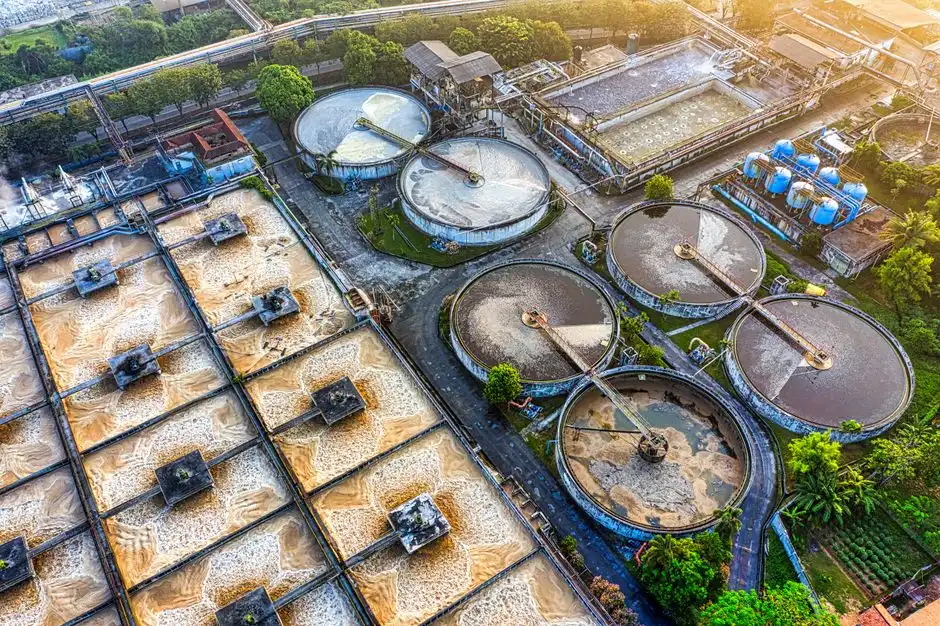
The treatment train should follow the controlling contaminant and hydraulic condition, as supplier examples establish screening options rather than Blue Moon discharge limits or guaranteed project performance.
| Site condition to verify | Unit operation to evaluate | Design and verification focus |
|---|---|---|
| Ammonia or nitrate control is required under variable loads | MBBR or another biological process | Evaluate hydraulic retention, media area, aeration, biomass behavior, bypass conditions, and performance across the measured load range |
| Year-round nitrification is required under cold conditions | SAGR post-lagoon beds | Nexom states that SAGR beds can support winter discharge below 1°C, or 34°F; require site-temperature performance evidence |
| The written limit requires stringent dissolved-metals removal | Reactive filtration | Define the target metal and limit, then validate media chemistry, contact time, backwash and residual handling |
For solids control, a MBR integrated wastewater treatment system may be relevant where membrane separation is justified by the written discharge requirement, but it should be compared with the less process-intensive alternatives required by the site data.
For ammonia and nitrate, Nexom describes BioPorts MBBR systems for treating ammonia or nitrates without relying on a recycle-based recovery process. For cold northern sites, the same supplier states that SAGR post-lagoon beds can maintain nitrification and discharge through winter below 1°C, or 34°F. These are technology claims, not evidence that Springer has the same loading, temperature, or permit conditions.
For metals removal filtration, Nexom reports that its Blue PRO reactive filtration process achieved copper removal to 8 µg/L, or 0.008 mg/L, in Burrillville, Rhode Island. Use that result to identify the technology worth investigating, not as a discharge limit. A site-specific pilot or performance test must establish effluent quality under the actual metal mix, pH, solids load, flow variability, and written sewer limit. The mining pretreatment comparison of DAF and lamella clarification can support the clarification-screening step.
Integrate solids, sludge and controls into the selected train
A treatment train that meets an effluent limit can still fail procurement or compliance if residual handling, peak loading, controls, and monitoring are left outside the scope. Define where solids are captured, how they are thickened, where dewatering occurs, and whether the receiving authority permits sewer discharge of the resulting sludge or requires hauling.
Use the plate-and-frame filter press for sludge dewatering as a candidate where solids handling requires it. HydropureWater lists filtration areas from 1 m² to 500 m² and manual, hydraulic, or fully automatic PLC-controlled operation. These are supplier screening inputs; final sizing requires the expected solids mass, sludge volume, moisture target, operating schedule, and chemical-conditioning demand.
Price equalization, diversion, standby power, chemical storage, level alarms, flow instrumentation, automatic sampling, and utility connections as design requirements rather than optional extras. A diversion system should identify how an upset stream is contained without creating an uncontrolled discharge route.
For pH adjustment, coagulation, or another required chemical control, evaluate a PLC-controlled automatic chemical dosing system. HydropureWater describes its dosing systems as skid-mounted, pre-wired, factory-tested, and PLC controlled. The final specification should define chemical concentration, storage capacity, duty range, alarms, calibration verification, containment, and response to power failure.
Set acceptance criteria around sustained flow, peak influent challenge, effluent compliance, recovery rate, sludge moisture or dryness, control response, and operator workload. A single clean-water sample is insufficient. Define the acceptance protocol, sampling points, operating duration, analytical methods, correction rights, and conditions under which the test must be repeated. The performance plan should state how residuals will be managed if the test fails.
Prepare the information request and performance test
Comparable bids require every supplier to work from the same regulatory and wastewater basis. Issue one information request containing the complete characterization, flow records, mine permits, receiving-authority limits, utilities, site constraints, future-production plans, and required sampling and reporting conditions.
Ask each bidder to state:
- The design flow, contaminant envelope, temperature range, operating hours, redundancy, and anticipated production changes used for sizing.
- Every unit’s duty points, chemical consumption, energy demand, controls, residual stream, installation requirements, and maintenance assumptions.
- The proposed pilot basis, relevant reference installations, available performance data, and limitations of those references.
- The startup sequence, operator training, calibration, automatic sampling, contingency operation, and corrective-action thresholds.
- The proposed acceptance test, including sustained-flow operation, peak influent challenge, effluent sampling, sludge characterization, recovery rate, and operator-workload checks.
Before purchase order issue, ask the relevant authorities to resolve conflicts between mine-permit conditions and sewer requirements in writing. Include the US industrial pretreatment limits and compliance process as a general process reference, not as evidence of the limits that apply near Blue Moon.
Maintain a compliance matrix linking each written requirement to its equipment or operating control, monitoring method, responsible party, reporting frequency, and acceptance test. Equipment selection can support a discharge proposal, but it does not replace permit approval, site-specific validation, operator training, maintenance, or the receiving authority’s continuing compliance requirements.
Frequently Asked Questions
Can DAF, MBR, or reactive filtration be selected from a regional reference alone?
No. The written sewer limit and site wastewater data control the decision. Use DAF when solids or oily material could impair downstream treatment; evaluate biological processes for demonstrated ammonia or nitrate duties; and evaluate reactive filtration when the permit requires the corresponding dissolved-metals performance. Confirm each choice through pilot or site-specific performance testing.
What does the August 20, 2026 Blue Moon announcement establish for equipment selection?
It establishes that Nevada’s Division of Environmental Protection transferred the Springer project’s WPCP and Reclamation Permit into Blue Moon’s name and authorized construction activities under those permits. It provides no sewer-limit values, equipment sizing, wastewater flow, contaminant concentrations, or treatment-cost figures. Those items require separate written evidence.
How should a buyer use supplier capacity ranges when comparing bids?
Treat them as screening inputs only. Final sizing requires the measured site flow, contaminant and temperature envelopes, peak-duration data, operating schedule, residual requirements, and redundancy assumptions. Ask each bidder to show how its selected duty point covers that documented envelope and how performance is tested under sustained and peak conditions.
What should be obtained before purchasing a pretreatment train?
Obtain the current industrial-user permit or sewer authorization, sewer-use ordinance, numerical limits, monitoring requirements, surcharge provisions, and sampling instructions from the POTW or industrial sewer operator. Obtain the applicable mine permits from the mining regulator. Before purchase, have both authorities confirm in writing which conditions govern the proposed discharge and how any conflict must be resolved.
Related Equipment
- DAF system for mine-water solids and oil removal — specifications, capacity range, and technical data