Choose the treatment route from verified site inputs
The most practical domestic sewage treatment in Multan route starts with six site inputs: average flow, peak flow, sewer availability and acceptance, installation area, effluent destination, and responsibility for permits, commissioning and operations. WASA Multan reports 2,055 KM of sewer lines and more than 50 automated pumping stations, but these citywide figures do not confirm that a specific property can connect. If the public network cannot accept the project flow or foul sewer is impractical to reach, onsite domestic wastewater treatment in Multan becomes the relevant route.
Do not select equipment until the designer establishes a defensible wastewater flow basis. The supplied Multan research characterizes wastewater and evaluates agricultural reuse, but it does not provide a project flow range or a per-capita demand factor for this comparison. A hotel, hospital, residential development or industrial facility therefore needs its own flow calculation, supported by occupancy or production information and wastewater sampling.
The comparison should also separate treatment from infrastructure. Public sewer feasibility depends on connection location, hydraulic acceptance and the responsible authority’s conditions. Onsite feasibility depends on installation depth, access, utilities, sludge removal, reuse or discharge arrangements, and who will maintain the system. The public sewer versus package plant decision framework provides a useful structure for applying the same route test at each site.
| Screening input | Public sewer remains viable when | Onsite treatment remains viable when | Evidence required |
|---|---|---|---|
| Average and peak flow | WASA Multan confirms that the proposed connection can accept the project’s hydraulic load. | The verified design flow can be treated within the selected package system’s stated capacity. | Design-flow calculation and written network acceptance. |
| Connection access | A foul-sewer connection point is accessible, constructible and compatible with the project drainage layout. | The connection is unavailable, technically impractical or unacceptable to the relevant authority. | Survey, utility drawing and connection-location confirmation. |
| Installation area | Available space is sufficient for the required connection works and any utility contribution. | The site can accommodate a buried or other package arrangement, maintenance access and sludge handling. | Site plan, construction envelope and access routes. |
| Effluent destination | The receiving arrangement is accepted by WASA Multan and project pretreatment obligations are defined. | The receiving authority and applicable effluent, reuse or disposal requirements are identified before process selection. | Discharge or reuse route, applicable requirements and written acceptance. |
| Operations and commissioning | WASA Multan and the developer have defined handover, testing and operating responsibilities. | The project has assigned maintenance, sludge withdrawal, monitoring and compliance ownership. | Responsibility matrix and commissioning plan. |
Local effluent conditions also require project-specific assessment. The Polish Journal of Environmental Studies study titled Wastewater Evaluation for Multan, Pakistan: Characterization and Agricultural Reuse supports examining local wastewater characteristics and reuse conditions; it does not establish a universal reuse standard for this project. Route selection and equipment procurement should follow the receiving environment and required effluent quality, rather than an assumed citywide condition.
Confirm what the public sewer can accept
A public sewer becomes a technically available option only when the relevant authority confirms the connection in writing. WASA Multan’s sewerage-system page describes sewer-network collection, removal of large solids and debris, biological and chemical treatment, automated pumping stations and safe discharge of treated water. These are system-level statements, not confirmation that every segment of the network has capacity or that a proposed discharge will be accepted.
Request a connection response that identifies the connection location, discharge point, available capacity, required pretreatment, connection charges, testing and commissioning responsibilities, and the conditions for handing over the works. The project should also establish whether domestic sewage will be mixed with commercial or process wastewater. If it will, WASA Multan needs to define the applicable industrial or commercial influent requirements; those requirements must be incorporated into the treatment design rather than treated as a minor connection detail.
Confirm which network and treatment functions will actually serve the proposed connection. Collection, pumping, solids removal, biological treatment, chemical treatment and final discharge are separate elements of the published service description. The project should not assume that every treatment step occurs at the site or that a nearby pumping station resolves downstream capacity constraints.
For sites near wastewater-irrigated land, the 2026 Eurasian Journal of Soil Science study on cadmium and heavy metals in wastewater-irrigated areas of Multan is a screening consideration. It does not establish a discharge limit or demonstrate contamination at a particular property. If reuse or land application is proposed, the buyer still needs project wastewater testing and the applicable Multan and Punjab requirements.
This verification stage should result in one of three documented outcomes: connection accepted, connection accepted subject to defined works, or connection unavailable. Only the first two support a public-sewer route. An informal statement that a sewer “passes nearby” is not enough to order a package plant, nor is it a reason to assume the connection is feasible.
Match onsite treatment to flow and operating conditions
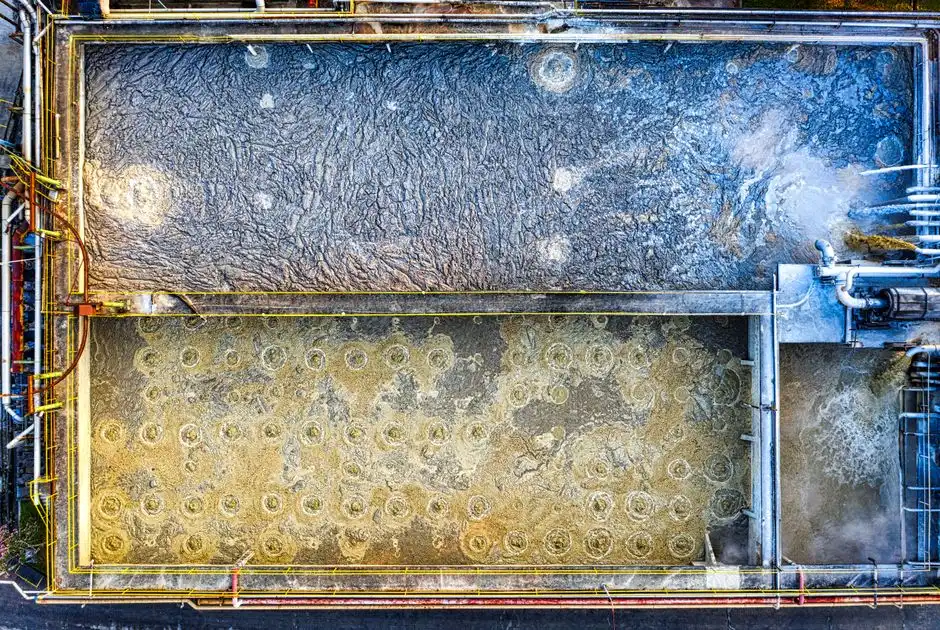
The WSZ is an underground A/O biological contact oxidation plant with a stated treatment range of 1–80 m³/h. Its verified product scope combines anoxic/aerobic contact oxidation, sedimentation and disinfection in a single buried package unit. That specification makes it relevant when the verified design flow fits the range, a public-sewer connection is unavailable or impractical, and below-grade installation is compatible with the site.
Capacity is only one selection criterion. The duty basis must connect flow to wastewater characteristics, required effluent quality, peak loading, installation depth, access, utilities and disposal routes. The project should also identify who will inspect the unit, withdraw sludge, maintain the system and respond to alarms after handover. Although the underground A/O package sewage treatment plant is fully automated, automation does not remove the need for maintenance and compliance ownership.
An MBR alternative becomes relevant when the project requires stronger solids separation, a smaller treatment footprint, or a reuse outcome that cannot be met by the A/O package route. The A/O package plant versus MBR comparison provides a process framework, but the final choice must be tied to the Multan project’s effluent destination and verified requirements. Process complexity, membrane maintenance, operator competence and sludge handling should be compared as part of the procurement scope.
| Selection issue | WSZ A/O package route | MBR route | Buyer’s decision evidence |
|---|---|---|---|
| Flow basis | Verified design flow must fall within the specified 1–80 m³/h range. | Hydraulic and biological duty must be established against verified flow and wastewater characteristics. | Average flow, peak flow and loading calculation. |
| Treatment scope | Anoxic/aerobic contact oxidation, sedimentation and disinfection in one buried package. | Solid-liquid separation requirements must justify the added process complexity. | Required effluent quality and receiving-route acceptance. |
| Installation | Below-grade installation may leave the area above the package available for normal site use. | Plant area, access, utilities and maintenance arrangements must be defined. | Site drawing, construction method and access plan. |
| Operations | Automated package operation still requires defined maintenance, sludge withdrawal and compliance ownership. | Specify membrane-related maintenance, replacement planning and specialist support. | O&M responsibility matrix and service scope. |
| Waste products | Define sludge withdrawal, storage, handling and disposal. | Define residual sludge quantity and handling route. | Approved handling and disposal route. |
For a hospital, hotel or mixed-use development, the supplier should receive the same design basis and site information as every other bidder. Any assumption about wastewater strength, peak flow, utilities or disposal must be listed as a commercial exclusion or design allowance until confirmed.
Build the procurement and compliance request
Comparable bids require the same project inputs, process basis and acceptance conditions. Give each bidder the verified flow calculation, wastewater characterization, site drawing, required effluent specification, intended reuse or discharge route, installation constraints and acceptance-test requirement. State explicitly that no equipment should be selected from a nominal flow or unit price alone.
Require each response to identify pretreatment needs, process scope, package or tank dimensions, installation method, utilities, automation, sludge withdrawal, spare parts, commissioning tasks and O&M responsibilities. Where the proposed route includes reuse or land application, request supporting wastewater testing and an assessment against the applicable Multan and Punjab requirements. The receiving authority and applicable route-specific criteria must be identified before bids are evaluated.
Special pretreatment should follow the wastewater character assessment. Use a mechanical bar screen for wastewater pretreatment only if testing or process review identifies rags, plastics or fibrous debris that could overload downstream equipment. It should not be included as an unexamined precaution that adds cost and an ownership obligation without a defined design duty.
| Information or deliverable | Minimum project information | Required supplier response | Evaluation check |
|---|---|---|---|
| Design basis | Average flow, peak flow and wastewater characterization. | Stated hydraulic and process duty, including assumptions. | Capacity is tied to verified inputs. |
| Effluent route | Reuse, discharge or sewer destination and applicable requirements. | Proposed treatment scope and compliance evidence. | Receiving authority is identified. |
| Site and installation | Drawing, installation depth, access, utilities and construction constraints. | Dimensions, installation method, utilities and required civil works. | No unresolved site assumption. |
| Residuals | Sludge and grit destination. | Withdrawal, storage, handling and disposal method. | Residual route is operational, not theoretical. |
| Commissioning | Handover boundary and acceptance-test requirement. | Testing scope, training, documentation and handover deliverables. | Responsibilities are assigned contractually. |
| Operations | Maintenance access, monitoring and compliance ownership. | O&M tasks, response time, spare parts and support. | Long-term owner is named. |
The final commercial comparison should separate equipment price from site-specific obligations. Civil works, installation depth, power and other utilities, pretreatment, sludge handling, commissioning, testing, training, monitoring and maintenance are part of the purchase decision. Without these items, bids are not comparable, even if their headline package prices appear similar.
Frequently Asked Questions
What flow information is needed to size a sewage treatment package for a project in Multan?
Provide the verified average flow, peak flow, wastewater characteristics and required effluent quality. The WSZ product range is 1–80 m³/h, but that range is a product specification, not a substitute for a project flow calculation. The buyer should obtain occupancy, production or customer-use inputs and have the designer establish the duty basis.
How should a buyer select a supplier for an onsite sewage treatment system?
Require a site-specific process basis, installation method, O&M scope and acceptance criteria rather than selecting on unit price alone. Ask bidders to identify package dimensions, utilities, sludge withdrawal, commissioning tasks, spare parts and unresolved assumptions. Then compare the complete site obligation, including civil works and compliance responsibilities.
What evidence is needed before treated sewage can be reused or discharged in Multan?
Identify the receiving authority, destination and applicable requirements first. Request project wastewater testing and an assessment against the applicable Multan and Punjab conditions. The Multan agricultural-reuse study supports local characterization and reuse screening, but it does not establish a universal effluent limit or prove conditions at a particular site.
Should onsite equipment be ordered before confirming a WASA Multan sewer connection?
No. Obtain written confirmation of connection availability, location, capacity, pretreatment, charges and commissioning responsibilities from WASA Multan before ordering onsite equipment. If a project wishes to preserve an onsite option, the equipment request should remain conditional until that confirmation is complete.
What installation and operating items belong in the procurement scope?
Include below-grade construction, access, utilities, sludge removal, commissioning, testing, maintenance and compliance ownership. The WSZ underground package sewage treatment plant is fully automated, but the project still needs a named owner for maintenance, residual handling and regulatory evidence.