
What 'Digital Water Optimization' Actually Means for a Utility in 2026
Digital water optimization solutions for utilities are integrated offerings — sensors, smart metering, SCADA, digital twins, advanced analytics, and OT cybersecurity — that replace analog water and wastewater operations with data-driven control. A 2023 npj Clean Water survey of 64 utilities found all respondents had begun digitalizing the urban water cycle, grouped into five subdivisions (water source, water distribution, wastewater, customer/distribution, and IT), with economic factors cited in 66% of stated drivers. Providers such as Tetra Tech now bundle project-lifecycle delivery with dedicated OT cybersecurity and digital-twin services. For 2026 procurement, the practical question is not whether to digitalize, but which provider covers the right subdivision mix, secures OT, and closes the data-skills gap that the same survey flags as a binding constraint.
The reason that definition matters in a procurement document is that "digital water" gets thrown around as a single product category when it is actually a stack of technologies bound to specific utility processes. A buyer who writes an RFP for "a digital water platform" will receive proposals that have nothing in common — one vendor's platform is an AMI/headend combination, another's is a hydraulic digital twin, a third is an OT/IT integration practice. Reframing the scope around the five subdivisions published in the npj Clean Water survey — water source (WS), water distribution (WD), wastewater (WW), customer/distribution (CD), and IT — turns the conversation from a software debate into an operations debate, which is the conversation a board understands.
Adjacent labels compound the confusion. "Smart water" usually emphasizes metering and customer-side telemetry. "Industry 4.0" or "Water 4.0" come from manufacturing and over-promise autonomous operations before a utility's data layer is mature. The npj Clean Water 2023 survey explicitly states that analog and stand-alone devices need replacement with digital and ICT-enabled equipment for digital transformation to work, which is a slower, more deliberate journey than the marketing language implies. For 2026 procurement, write the scope as "digitalization across WS/WD/WW/CD/IT subdivisions, with named OT cybersecurity and data-management deliverables," and reject any vendor response that cannot be mapped back to those five buckets.
The 2023 Smart Water Survey Baseline: 64 Utilities, 5 Subdivisions, One Score
The Smart Water Survey published in npj Clean Water in 2023 (DOI 10.1038/s41545-023-00265-7) gives utilities a defensible baseline to anchor an internal business case. The survey covers 64 water utilities that provided complete responses after data cleaning, and it reports maturity as a per-subdivision Utility Digitalization Score (UDS) rather than a single composite number. A separate Technology Availability Score (TAS) measures the penetration of individual enabling technologies across the same respondents. The driver picture is captured in three groups — hydroclimatic (HCL), economic (ECO), and government regulation (GOV) — with economic factors accounting for 66% of driver occurrences across all subdivisions. Crucially, the survey's ANOVA at 95% confidence found that no single driver class significantly dominated a utility's UDS, which means a vendor pitch built on a single driver (compliance-only, or cost-only) is statistically thin.
For a procurement officer, the value of this baseline is that it converts a vague "we should digitalize" argument into a measured "we are at UDS X in WD and UDS Y in WW, and the gap to the median is Z" argument. The UDS is reported separately for each of the five subdivisions, which lets a board see the variance inside a single utility — almost no water or wastewater system will score evenly across WS, WD, WW, CD, and IT, and that variance is itself the pilot-selection criterion. The 66% economic-driver signal is also useful as a counterweight: if a vendor's pitch leans entirely on compliance or sustainability without naming an economic case, ask why their framing differs from what 64 surveyed utilities actually reported.
| Term | Definition (npj Clean Water, 2023) | Procurement use |
|---|---|---|
| Utility Digitalization Score (UDS) | Per-subdivision digitalization maturity, reported for WS, WD, WW, CD, IT | Anchor the internal baseline and subdivide the RFP scope |
| Technology Availability Score (TAS) | Penetration of each enabling technology across surveyed utilities | Compare vendor offerings to market penetration reality |
| Driver class ECO | Economic factors driving digitalization | 66% of occurrences across all subdivisions (S2, 2023) |
| Driver class HCL | Hydroclimatic factors (source variability, climate) | Not dominant at 95% confidence (S2, 2023) |
| Driver class GOV | Government regulation drivers | Not dominant at 95% confidence (S2, 2023) |
Mapping Enabling Technologies to the Five Utility Subdivisions
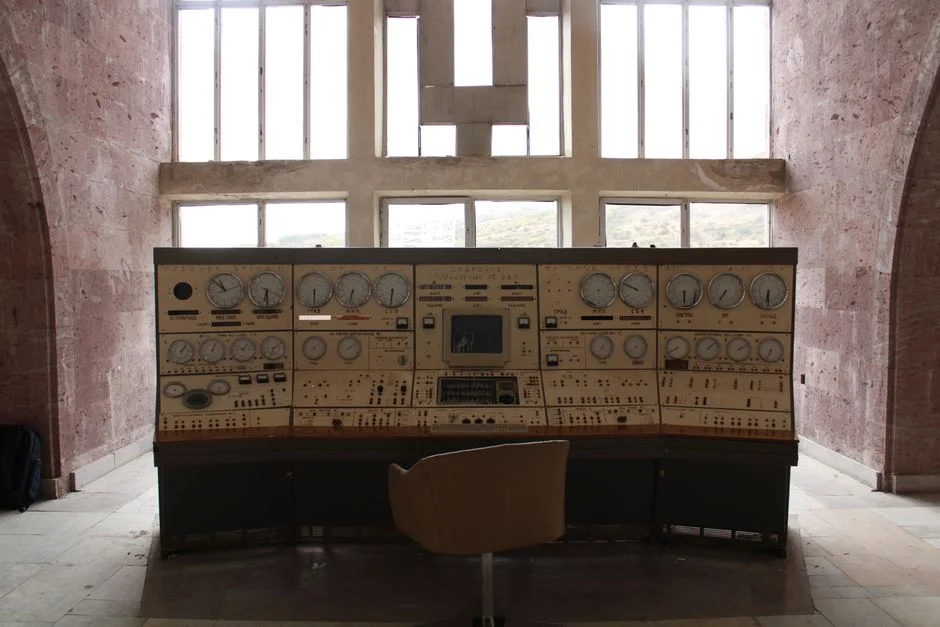
The UDS framework only becomes useful to a buyer when it is paired with a technology-to-subdivision map. The npj Clean Water 2023 paper lists the digital technologies that anchor each subdivision, and the Tetra Tech 2026 digital-water service page demonstrates how an integrated provider now packages them. The map below is the lens a procurement team should use when reading vendor proposals: if a vendor's reference list only covers one subdivision, that vendor cannot credibly claim enterprise utility digitalization, and that limitation needs to be priced into the contract.
For Water Source (WS), the practical stack is SCADA, level and flow telemetry, source-quality sensors (pH, turbidity, conductivity), and rainfall/runoff analytics — these map to raw-water security and intake optimization, and physical screening at the headworks (such as a rotary mechanical bar screen for headworks screening) is the upstream equipment whose performance data the digital layer will monitor. For Water Distribution (WD), the stack is smart metering, pressure/flow sensors, district metered area (DMA) analytics, and digital-twin hydraulic models, all of which map to non-revenue-water reduction and pressure management. For Wastewater (WW), the stack is online BOD/COD/turbidity probes, aeration control loops, and performance dashboards for MBR or UV trains — a packaged MBR membrane bioreactor for wastewater subdivision optimization is a concrete example of the kind of unit process the digital layer has to wrap around. For Customer/Distribution (CD), the stack is AMI, customer portals, and digital engagement platforms, which the S2 paper specifically credits with fostering long-term water conservation through smart-meter-based feedback. For IT/OT, the cross-cutting layer is data historians, unified analytics platforms, and OT cybersecurity controls — and the S2 paper explicitly flags that replacing analog with digital/ICT-enabled equipment introduces new cyber-security risk that the utility must own. Disinfection-side compliance, meanwhile, is typically closed with packaged skids such as a chlorine dioxide generator for water treatment compliance, whose telemetry feeds the same historian as the rest of the plant.
| Subdivision (S2, 2023) | Core enabling technologies | Operational outcome | Evidence anchor |
|---|---|---|---|
| Water Source (WS) | SCADA, level/flow telemetry, source-quality sensors, rainfall analytics | Raw-water security, intake optimization | S2, npj Clean Water 2023 |
| Water Distribution (WD) | Smart metering, pressure/flow sensors, DMA analytics, hydraulic digital twins | NRW reduction, pressure management | S2, npj Clean Water 2023 |
| Wastewater (WW) | Online BOD/COD probes, aeration control loops, MBR/UV dashboards | Energy and compliance optimization | S2, npj Clean Water 2023 |
| Customer/Distribution (CD) | AMI, customer portals, digital engagement platforms | Long-term water conservation | S2, npj Clean Water 2023 — "smart meter-based feedback and digital user engagement" |
| IT / OT backbone | Data historians, unified analytics, OT cybersecurity controls | Cross-cutting data layer; new cyber risk | S2, npj Clean Water 2023 — cyber security "new risk" |
What a Credible Digital Water Provider Looks Like in 2026
The 2026 market for digital water optimization providers is dominated by firms that have moved from software-only sales to full lifecycle delivery — assess, design, integrate, operate. The Tetra Tech digital-water service page (tetratech.com/solutions/one-water/digital-water) describes that integrated model explicitly, with named practices in advanced analytics, digital twins, instrumentation and controls (I&C), and a dedicated OT cybersecurity practice. A utility that buys software only, without integration and OT-security depth, tends to end up with a stranded dashboard: data flowing in, but no one on staff to action it and no one accountable for the cyber exposure. A shortlist should therefore be filtered on three hard gates before feature comparison starts.
The first gate is lifecycle coverage. A credible 2026 provider offers assess-to-operate delivery, not just software licensing, and can show case studies across more than one of the S2 subdivisions. The second gate is OT cybersecurity. The S2 paper names cyber security as a new risk introduced by replacing analog devices with digital/ICT-enabled equipment, and the Tetra Tech page treats OT cybersecurity as a dedicated practice with "secure by design" philosophy and named staff. A vendor without named OT-security personnel should be rejected — this is a binding constraint, not a checkbox. The third gate is data-management enablement. S2 explicitly states that utilities need data management tools and skills to fully embrace digital technologies, so the contract should require training, governance, and historian ownership, not just software installation. A vendor with only WW or only WD case studies cannot credibly claim enterprise utility digitalization across the S2 five-subdivision model — that limitation needs to be visible on the shortlist, not hidden in a marketing deck.
A Vendor Selection Scorecard for Utility Buyers

Translating the S2 evidence into a procurement tool, the scorecard below is a starting point for a 2026 RFP evaluation. Each criterion is tied back to a specific S2 finding so the scoring is defensible in a board memo, and so the weights are not arbitrary. The five weighted criteria are subdivision coverage breadth, OT cybersecurity depth, data-management enablement, referenceability in your utility type, and total cost of ownership over a 5-year horizon. S2 reports variance in UDS across subdivisions, so the scorecard includes a mandatory pilot-first clause — a phased pilot in one subdivision (e.g., WD) is the defensible first step before utility-wide roll-out, because it lets the utility prove the UDS gain before committing the rest of the capex. The scorecard also requires the provider to disclose their own cybersecurity certifications and incident-response SLAs, since S2 frames cyber risk as inherent to the digitalization journey.
| Criterion | Weight (suggested) | What to score | Evidence anchor |
|---|---|---|---|
| Subdivision coverage breadth (WS/WD/WW/CD/IT) | 25% | Number of S2 subdivisions with delivered references | S2 UDS framework, 2023 |
| OT cybersecurity depth | 25% | Named OT staff, secure-by-design process, incident-response SLA | S2 cyber-risk finding, 2023; Tetra Tech OT practice, 2026 |
| Data-management enablement | 20% | Historian ownership, governance, training plan, skills-transfer milestones | S2 skills-gap finding, 2023 |
| Referenceability in your utility type | 15% | Case studies of comparable size, climate, and subdivision mix | S2 sample of 64 utilities, 2023 |
| 5-year total cost of ownership | 15% | Hardware, software, integration, OT-security, training, and exit costs | S2 ECO 66% driver signal, 2023 |
| Pilot-first clause (mandatory) | Pass/Fail | One subdivision pilot with measurable UDS gain before roll-out | S2 per-subdivision UDS variance, 2023 |
| Cyber disclosure clause (mandatory) | Pass/Fail | Vendor cybersecurity certifications + incident-response SLAs disclosed | S2 cyber-risk finding, 2023 |
Risks, Constraints, and the Compliance Reality for 2026
The S2 paper names three risks that any 2026 business case must acknowledge rather than hide. First, replacing analog devices with digital/ICT-enabled equipment introduces new cyber-security exposure that the utility owns. Second, full digitalization depends on data-management tools and skills that many utilities do not yet have in-house, which is an organizational risk as much as a technical one. Third, water utilities function as multi-stakeholder cooperations, and the governance overhead of running a digital utility is real. The S2 66% economic-driver finding is a warning here: if the business case is framed as cost-out only, the cyber and skills line items will be under-funded and will surface later as incidents or stalled projects.
Compliance does not go away during digitalization. Discharge permits and drinking-water obligations still apply, and a programme that does not map digital controls to those obligations creates audit exposure. The advanced nutrient removal construction guide for 2026 and the data hall wastewater compliance guide are useful references because both treat digital monitoring as a means to an existing compliance end, not as a replacement for the compliance case. That framing — digital as the control layer over existing obligations — is the one a board will sign.
Frequently Asked Questions
How should a utility budget for a digital water optimization programme in 2026?
The npj Clean Water 2023 survey reports that economic factors accounted for 66% of driver occurrences across all subdivisions, which is the strongest signal that the business case must lead with cost and efficiency, not with technology for its own sake. The actionable check for a buyer is to require a five-year total cost of ownership line in every vendor proposal, broken into hardware, software, integration, OT security, training, and exit costs, and to score it against a like-for-like baseline of current analog operating cost. Because the research does not publish a unit price, the buyer must request vendor quotations against their own subdivision mix and pilot scope rather than rely on a benchmark.
What should a utility look for when shortlisting digital water optimization providers?
The S2 2023 paper names cyber-security risk and data-management skill gaps as binding constraints, and the Tetra Tech 2026 digital-water page treats OT cybersecurity as a dedicated practice with named staff. The actionable check is to reject any shortlist candidate that cannot produce evidence of a named OT cybersecurity practice, a data-management enablement plan with skills transfer, and case studies in at least three of the five S2 subdivisions (WS, WD, WW, CD, IT). A vendor with single-subdivision references cannot credibly claim enterprise utility digitalization.
How does a utility decide which subdivision to pilot first?
The S2 2023 paper reports the Utility Digitalization Score per subdivision, which means digital maturity is uneven inside a single utility and that variance is itself the pilot-selection criterion. The actionable check is to score the five subdivisions on current UDS, operational pain, and measurability, and to pick the one with the lowest UDS and the cleanest data baseline — typically WD (smart metering, DMA analytics) or WW (online probes, aeration control). A pilot in one subdivision is a defensible first step before utility-wide roll-out, because it lets the utility prove a measurable UDS gain before committing further capex.
What compliance and cybersecurity evidence should a utility demand from a digital water provider in 2026?
The S2 2023 paper explicitly states that the replacement of analog with digital technologies introduces new cyber-security risks to water-utility operations, and the Tetra Tech 2026 page treats OT cybersecurity as integral to design, planning, implementation, and operations. The actionable check is to require named OT cybersecurity certifications (for example, IEC 62443 alignment), an incident-response SLA with named response times, and a documented secure-by-design process that the utility can audit. The research does not enumerate a specific certification list, so the buyer must request the vendor's own certifications and SLAs in writing rather than assume a market standard.