Screen the Wastewater Before Choosing EGSB
An EGSB reactor can be considered for sugar mill wastewater only after checking wastewater character, especially soluble COD, suspended solids, sulfate, temperature and seasonal variation. EGSB uses a high upflow velocity to expand granular anaerobic sludge and improve mixing; academic literature reports 4–10 m/h, while one commercial design operates near 6 m/h. Its high velocities favor mainly soluble wastewater, so suspended solids may need removal before the reactor. Loading must not be transferred directly from generic literature to a project: supplied academic sources report up to 35 kg COD/m³/day, while a commercial EGSB states up to 25 kg COD/m³/day. The practical next step is a wastewater characterization and pilot test.
The expanded granular sludge bed reactor is a UASB variant that depends on stable granular sludge, slight bed expansion, and high hydraulic mixing. The academic overview by ScienceDirect reports application from low-strength soluble and complex wastewater to high-strength wastewater, but also identifies a decisive limitation: coarse suspended particles and colloids are not entrapped and hydrolyzed efficiently at the higher EGSB velocity. That limitation applies directly to the screening question for sugar industry effluent.
Do not treat a generic EGSB loading range as proof of sugar-mill applicability. Request total COD, soluble COD, TSS, particle-size distribution, sulfate, pH, temperature, flow, and seasonal profiles. The supplied research does not establish universal acceptance limits for sugar mill streams, so these inputs must be measured or obtained from mill operating records.
Sulfate requires specialist review. The academic table identifies high-rate treatment of sulfate-containing wastewater as an EGSB feature, but it provides no sugar-mill sulfate design rule. Assess sulfate together with COD, pH, temperature, and expected organic composition rather than treating it as a standalone pass-or-fail criterion.
| Screening input | Why it matters to EGSB | Decision consequence |
|---|---|---|
| COD and soluble COD | Separates soluble organic load from particulate material | Proceed to anaerobic feasibility testing if the soluble fraction is suitable |
| TSS and particle-size distribution | Coarse solids and colloids are not efficiently entrapped and hydrolyzed at high EGSB velocity | Define solids removal before the reactor if suspended material is significant |
| Sulfate, pH, and temperature | Can affect anaerobic process behavior and requires integrated review | Obtain specialist review and supporting test data |
| Hourly, daily, and seasonal profiles | Reactor hydraulics and organic loading must accommodate normal variation and upsets | Do not size from an annual average alone |
Match the EGSB Hydrodynamic Design to the Treatment Objective
EGSB is distinguished from UASB by higher upflow velocity, which improves mixing and substrate-to-granule contact; the commercial comparison gives about 6 m/h for EGSB and about 1 m/h for UASB (Nijhuis Saur Industries, commercial Econvert-EGSB product information, accessed 2026). The academic overview gives a 4–10 m/h EGSB superficial-velocity range (ScienceDirect, academic overview of granular sludge blanket reactors, accessed 2026). Those figures are design-context values, not a sugar-mill selection criterion by themselves.
Use the velocity range to check available reactor height and recirculation duty. A tall reactor, effluent recirculation, or both can establish the expanded granular sludge blanket. The commercial system mixes incoming wastewater with recirculated effluent before distribution and describes operation at about 6 m/h (Nijhuis Saur Industries, accessed 2026). The supplier should therefore demonstrate how the proposed reactor geometry and recirculation arrangement maintain the intended upflow condition at the selected flow.
| Basis | EGSB | UASB | Interpretation for the mill |
|---|---|---|---|
| Academic hydrodynamic context | 4–10 m/h superficial velocity | Low upflow velocity | EGSB requires more hydraulic height, recirculation, or both |
| Commercial Econvert comparison | About 6 m/h; up to 25 kg COD/m³/day | About 1 m/h; up to 15 kg COD/m³/day | Vendor-reported capabilities, not guaranteed project performance |
| Broader academic loading context | Up to 35 kg COD/m³/day | Can fail above 5 kg COD/m³/day according to the cited overview | General literature values; not sugar-mill guarantees |
The broader academic source reports EGSB organic loadings up to 35 kg COD/m³/day, while the commercial Econvert information states up to 25 kg COD/m³/day (ScienceDirect, accessed 2026; Nijhuis Saur Industries, accessed 2026). Keep those categories separate. General academic performance supports feasibility screening; a commercial claim can support preliminary supplier comparison; neither replaces site-specific testing.
Compared with UASB, EGSB is attractive where space or available reactor height supports high-rate operation. Aerobic treatment remains an alternative when the effluent characteristics, discharge constraints, or process-control objectives make anaerobic treatment unsuitable; the supplied research does not establish a sugar-mill-specific route-selection matrix.
Protect the Granules with the Right Pretreatment Train
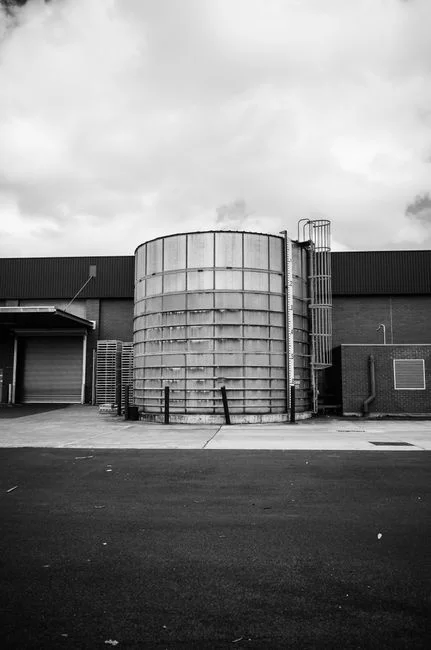
Characterize suspended material before final reactor sizing because high EGSB velocities do not efficiently trap and hydrolyze coarse solids and colloids (ScienceDirect, academic overview, accessed 2026). The result is a clear pretreatment question: will the mill effluent presented to the reactor be predominantly soluble, or will suspended solids and associated particulate COD be removed upstream?
Use dissolved air flotation only where the wastewater characterization supports its role. An industrial DAF pretreatment system is described in the HydropureWater catalog as being intended to remove suspended solids, fats, oils and grease, oil, and colloidal matter before biological treatment. That catalog description does not establish EGSB suitability by itself; it identifies a possible function that must be confirmed with the wastewater data.
Ask the treatment supplier to define pretreatment responsibility explicitly. The scope should identify the required solids-removal performance, equalization provisions, bypass conditions, and the effect of seasonal washouts or process upsets. Upstream equipment should not be credited with removing contaminants that the wastewater sampling shows are primarily soluble or dissolved.
The DAF system’s stated capacity range is 4–300 m³/h (HydropureWater catalog, accessed 2026). Use this only for preliminary comparison with the mill flow. It is not an EGSB sizing calculation and does not establish hydraulic, COD-removal, or seasonal-capacity suitability.
Pretreatment decision: if field characterization shows substantial suspended solids or particulate COD, define solids removal before the EGSB. If the stream is predominantly soluble and stable, document that basis and still verify it through pilot testing.
Build the Engineering Basis for Reactor Sizing
Size the EGSB from mill-specific design data, not from a published loading rate alone. The supplier should receive design flow, hourly and daily peak flow, total and soluble COD, TSS, sulfate, pH, temperature, and seasonal ranges. Each should be tied to a stated design basis and operating envelope. A proposal that omits the distinction between total and soluble COD leaves the most important EGSB screening issue unresolved.
Require the supplier to state the applied volumetric loading rate, reactor volume, hydraulic retention time, upflow velocity, effluent recirculation ratio, and sludge-retention method. The academic table lists a 5 h EGSB hydraulic retention time and 85% treatment efficiency as general values (ScienceDirect, academic overview, accessed 2026). They are context, not a sugar-mill guarantee. The commercial source describes flexible height-to-diameter configuration and retrofitting of some existing anaerobic reactors (Nijhuis Saur Industries, accessed 2026). Ask the supplier to confirm whether the mill’s existing geometry and internals qualify; “retrofit-compatible” should not be accepted without an inspection.
| Required design item | Minimum supporting input | Supplier deliverable |
|---|---|---|
| Organic loading | Total and soluble COD with flow profiles | Applied volumetric loading rate and operating range |
| Reactor hydraulics | Design, peak, and seasonal flow; available height | Reactor volume, upflow velocity, hydraulic retention time, and recirculation ratio |
| Solids control | TSS and particle-size distribution | Solids-removal specification and pretreatment responsibility |
| Biomass retention | Upstream condition and pilot evidence | Granule-separation and sludge-retention method |
| Gas handling | Expected gas quality and site routing | Gas-tight containment, methane-rich biogas collection, and downstream utilization or treatment scope |
Include biogas recovery in the process scope rather than treating it as an optional accessory. The commercial source describes methane-rich biogas, gas-tight EGSB construction, and potential use for heat, electricity, or fuel (Nijhuis Saur Industries, accessed 2026). Require the supplier to define gas collection, containment, safety provisions, and the downstream handling basis. Also request a total-budget breakdown covering pretreatment, reactor, recirculation, equalization, gas handling, installation, commissioning, and performance risk. No supported quotation is available, so a buyer must request these inputs before comparing capital cost.
Confirm Performance With a Site-Specific Pilot

Test the actual sugar mill wastewater rather than relying on soluble-sugar or distillery test data. The pilot should represent relevant seasonal conditions and include the proposed pretreatment train, because upstream solids removal can materially change both reactor feed and hydraulic loading. The supplied distillery study reported about 9 days for anaerobic culture acclimatization (OpenAlex, “Treatment of Distillery Wastewater by Innovative Biomod EGSB Process,” academic record, accessed 2026). That result illustrates the need for a deliberate startup period; it is not a universal startup time for sugar mill wastewater.
Track COD removal, soluble COD, TSS, methane production, granule condition, upflow velocity, recirculation, and stability while loading increases. Define acceptance limits for removal, granule retention, odor control, and biogas performance in the purchase contract. Use pilot results and site data to set guarantees, not generic literature values or a supplier’s catalog loading claim.
Frequently Asked Questions
What inputs are needed before sizing an EGSB reactor for sugar mill wastewater?
Request total and soluble COD, TSS, particle-size distribution, sulfate, pH, temperature, design flow, peak flows, and seasonal profiles. The supplier must then state volumetric loading, reactor volume, hydraulic retention time, upflow velocity, recirculation ratio, and sludge-retention method.
How should a buyer compare EGSB and UASB for this stream?
Compare feasible upflow velocity, available reactor height, recirculation requirements, and site-specific treatment performance. Treat 4–10 m/h for academic EGSB and the commercial figures of about 6 m/h for EGSB and about 1 m/h for UASB as context, not guaranteed project performance.
What should be included in the total-budget request?
Ask for a complete installed-cost breakdown covering pretreatment, reactor, recirculation, equalization, gas handling, commissioning, and performance risk. The supplied research contains no comparable quotation, so price comparison should begin only after the same scope and wastewater basis are defined.
What supplier commitments reduce performance and compliance risk?
Require pilot evidence for the actual mill wastewater, defined treatment and granule-retention criteria, gas-tight containment, and contractual acceptance limits tied to site data. Verify pretreatment responsibility and bypass provisions rather than relying on a general EGSB loading claim.