Separate the wastewater streams before selecting equipment
A data center in Victoria de Durango requires separate treatment routes for cooling tower blowdown and sanitary sewage, plus contingency planning for glycol leaks, treatment-system backwash, cleaning waste, and condensate. Blowdown contains concentrated minerals, treatment chemicals, biocides, and corrosion-inhibitor residues, so the selected train must address pH, temperature, suspended solids, chlorine or other biocides, metals, and dissolved solids. The practical first decision is whether to seek industrial-user discharge to the sanitary sewer, treat and reuse blowdown, or install an on-site treatment system. Because no Victoria de Durango permit limits or sewer criteria were supplied, those requirements must be verified with the competent local water and sewer authorities before equipment is selected.
Cooling tower blowdown is the primary industrial process stream because evaporation leaves dissolved minerals and treatment chemicals behind while a controlled fraction of the circulating water is purged. Domestic sanitary sewage has a different composition and should remain on its own collection and treatment route. RSP Engineers notes that sanitary waste is normally minor relative to potential blowdown flow, while glycol releases, water-treatment backwash, equipment-cleaning waste, and air-handling condensate require separate screening.
Before freezing the design, request the cooling-system configuration, source-water analysis, seasonal makeup and blowdown estimates, tower chemistry program, operating schedule, and intended discharge or reuse point. The data center wastewater route and sizing method provides a useful framework for linking these inputs to equipment selection.
| Stream | Principal design basis | Required information before route selection |
|---|---|---|
| Cooling tower blowdown | Concentrated minerals, treatment chemicals, temperature, suspended solids, biocides, corrosion products, and metals | Source-water analysis; tower and control-system configuration; seasonal flow; chemical inventory; concentration cycles; proposed discharge or reuse point |
| Sanitary sewage | Domestic flow and wastewater characteristics | Peak and average sanitary flow; kitchen and restroom loadings; sewer connection requirements |
| Glycol-bearing closed-loop drainage | Contamination risk from accidental release or maintenance drainage | Glycol type and concentration; inventory; containment layout; isolation and disposal procedure |
| Treatment backwash, cleaning waste, and condensate | Variable chemistry and generation frequency | Source unit; backwash or cleaning frequency; chemical content; disposal or reuse destination |
Choose the discharge or reuse route
Sewer discharge, on-site reuse, and package treatment depend on different combinations of authority acceptance, blowdown chemistry, reuse quality, and residual-management requirements. The following sections outline the necessary steps to confirm these requirements in the absence of site-specific data for Victoria de Durango.
For industrial sewer discharge, obtain written sewer acceptance criteria and determine whether an Mexican wastewater permit requirements route, industrial-user permit, or equivalent local authorization applies. HOBI identifies sanitary-sewer discharge under pretreatment review and permitted surface-water discharge as the relevant pathways; it also warns that a new blowdown stream can strain wastewater capacity when salinity or treatment chemicals approach plant limits. The permit route must be confirmed rather than assumed.
For reuse, define the receiving use. Cooling-tower make-up requires water-quality limits set by the tower chemistry and mechanical design; other uses require their own standards. Before accepting a reuse train, test whether higher concentration cycles can reduce the source stream. DOE guidance, as reported by HOBI, indicates that raising cycles from three to six can reduce makeup water by about 20% and blowdown by about 50%. That operating change can reduce treatment flow, but it also concentrates the remaining blowdown and must be evaluated against scaling and corrosion.
A package sewage plant addresses domestic wastewater, not the concentrated industrial chemistry of cooling blowdown. It may form part of the sanitary route but cannot be selected as the blowdown solution without a separate physical-chemical or membrane train. Alternative-source and reclaimed-water supply are also separate source questions requiring confirmation of local water quality, infrastructure availability, and applicable requirements. The comparison of sewer discharge, RO reuse, softening, and ZLD is useful for route comparison, but its examples do not replace local verification.
| Candidate route | Use when | Selection inputs | Principal hold point |
|---|---|---|---|
| Industrial discharge to sanitary sewer | The sewer authority accepts the expected flow and pollutant profile, and pretreatment can meet written criteria | Peak and average flow; temperature; pH; metals; chlorine or other biocides; TDS and sewer acceptance criteria | Written authorization, limits, monitoring, and treatment-plant capacity |
| Treat blowdown for on-site reuse | The reuse target and cooling chemistry can be met at a justified recovery rate | Source chemistry; scaling indices; reuse specification; recovery; pretreatment needs; concentrate destination | Confirm feasible recovery and manage residual brine or salts |
| Dedicated physical-chemical blowdown plant | Discharge or reuse requires control of pH, solids, metals, chlorine, temperature, or dissolved solids | Complete chemical analysis; design flow; target water quality; chemical program | Prove treatment performance against local limits and reuse targets |
| Package sewage treatment | Domestic sanitary waste needs an on-site collection and treatment solution | Sanitary flow and load; site utilities; effluent destination | Keep it segregated from the blowdown design basis |
Match treatment equipment to blowdown chemistry
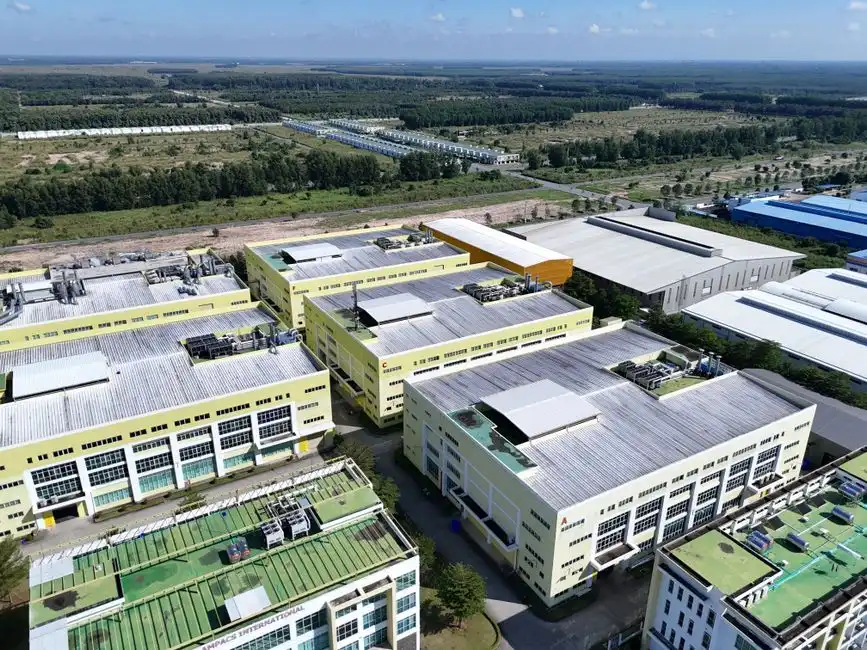
The correct blowdown train is determined by contaminants and the required endpoint: pH control addresses acidity or alkalinity, filtration addresses suspended solids, precipitation or ion exchange addresses selected metals, and dechlorination addresses residual chlorine. RSP Engineers identifies pH neutralization, chemical precipitation, ion exchange, and specialized filtration as candidate pretreatment processes, but the applicable discharge limits must come from the local authorization. Numerical pH and temperature examples in that source are illustrative, not Victoria de Durango criteria.
When dissolved-solids reduction or reuse is required, evaluate reverse osmosis. Its design must account for silica, calcium carbonate, and calcium sulfate scaling rather than treating recovery as an isolated percentage. IDE Tech states that conventional brackish-water RO is typically limited to 75–80% recovery before scaling becomes unmanageable. For an industrial reverse osmosis system, provide the complete source-water analysis and operating basis rather than relying on a generic recovery rating.
High-recovery reuse requires a separate brine-management decision. Controlled salt precipitation can remove sparingly soluble salts instead of allowing them to accumulate in the concentrate. IDE Tech describes one industrial application operating at around 95% recovery, with permeate silica reduced to about 1 mg/L. This is an application-specific result, not a design guarantee for a Victoria de Durango data center. The project team must define the feed, recovery, scaling control, residual handling, and reuse target before selecting a high-recovery configuration.
Use an automatic chemical dosing system where controlled acid or caustic addition and other treatment chemicals are required. Multi-media filtration or ultrafiltration should be considered where solids removal is necessary, particularly where pretreatment must protect downstream membranes. Each chemical must be included in the permit application and operating plan because a change in biocide, corrosion inhibitor, or antiscalant can alter both treatment requirements and discharge quality.
| Condition or target | Candidate process | Design input | Decision caution |
|---|---|---|---|
| Acidic or alkaline blowdown | pH neutralization with controlled chemical dosing | Raw pH range; chemical demand; target pH | Obtain the sewer limit or reuse target before setting the control range |
| Suspended solids or corrosion products | Filtration; multi-media or ultrafiltration where required | TSS profile; particle size; filtration rate; downstream sensitivity | Filtration alone does not remove dissolved salts |
| Selected metals | Chemical precipitation or ion exchange | Metal species and concentrations; residual chemical; solids handling | Confirm limits with the receiving authority |
| Residual chlorine or relevant biocides | Dechlorination or chemistry review | Residual oxidant; dosing; contact time; monitoring | Biocide type and persistence must be identified |
| TDS reduction for reuse | Reverse osmosis with scaling control | Full ionic analysis; silica; hardness; sulfate; temperature; recovery | Conventional brackish-water RO is typically limited to 75–80% recovery before scaling becomes unmanageable |
| High recovery with salt accumulation | Controlled salt precipitation or another brine-management step | Solubility behavior; brine outlet; pellet or sludge handling | An industrial application at around 95% recovery does not transfer automatically to another site |
Build the site, monitoring, and glycol-control requirements
Treatment infrastructure must be included in the initial site plan rather than added after mechanical design is fixed. The scope should allocate space for tanks, pumps, chemical storage, treatment skids, containment, drainage, and maintenance access, with vehicle access for chemical delivery. RSP Engineers reports that a simple pH-neutralization system may occupy a few hundred square feet, while a more complex system with filtration and chemical precipitation may require several thousand square feet.
Provide representative sampling points and establish whether monitoring must cover flow and pH continuously or by sampling, with laboratory analysis and reporting defined by the applicable authorization. The operational plan must identify who collects samples, who performs analyses, what corrective action follows an exceedance, and which records must be retained. For reuse, add monitoring at the point where treated water enters the cooling system so treatment performance is connected to equipment protection.
Glycol requires a separate response plan because it is normally contained but can be released during failure or maintenance. Provide secondary containment, leak detection, isolation valves, and a documented disposal route for drained fluid. HOBI notes that both ethylene and propylene glycol can reduce dissolved oxygen if they reach surface water, while ethylene glycol carries greater toxicity concerns; the selection therefore needs to account for the actual coolant and receiving environment.
Do not route industrial process wastewater to a stormwater system. RSP Engineers identifies sanitary-sewer discharge under industrial authorization and permitted surface-water discharge as the relevant pathways, while HOBI emphasizes the environmental risk of untreated process wastewater reaching surface waters. Because the cited U.S. permitting mechanisms are not evidence of Mexican legal requirements, use them as engineering pathways, not as the governing rule for Victoria de Durango.
Verify the Victoria de Durango design basis

The design cannot be frozen until the competent local authority confirms sewer acceptance criteria, discharge limits, authorization procedures, monitoring requirements, and treatment capacity. No Victoria de Durango limits or capacity data were included in the supplied research, so every local value remains an open verification item. The project team should also identify the applicable federal, state, and local authorities and confirm whether water reuse triggers a separate authorization or water-quality standard.
| Hold point | Information or decision required | Responsible party | Release criterion |
|---|---|---|---|
| Stream segregation | Cooling configuration; sanitary flow; glycol, backwash, cleaning, and condensate sources | Mechanical, civil, and environmental engineers | Approved flow and chemistry basis |
| Source-water characterization | Complete source and blowdown analyses, including pH, temperature, solids, dissolved ions, metals, and treatment chemicals | Water-treatment and process engineers | Chemistry governs unit-process selection |
| Route selection | Written sewer criteria, capacity confirmation, reuse target, and residual-management route | Project engineer and utility liaison | One selected discharge or reuse pathway |
| Regulatory verification | Applicable federal, state, and local requirements; permit procedure; discharge limits; monitoring; reuse authorization | Environmental counsel and local authority | Written requirements incorporated into the design basis |
| Final design package | Seasonal blowdown estimate, chemical inventory, utilities, footprint, electrical power, waste-residue route, operator responsibility | Design team | Equipment sizing and layout approved |
Frequently Asked Questions
Why can’t the treatment system be sized from cooling capacity alone?
Cooling capacity does not establish wastewater flow or quality. Final sizing requires design and peak blowdown flow, source-water chemistry, chemical program, seasonal operating profile, target recovery, and written discharge limits. The requested package should state each design flow, duty condition, chemistry assumption, and performance endpoint rather than provide equipment dimensions alone.
How should a supplier be selected for a blowdown treatment package?
Require a complete process basis: feed-water assumptions, chemical and membrane assumptions, treatment sequence, target recovery, monitoring scope, reject-water or residual route, utility requirements, and local commissioning support. Ask how the supplier will handle changes in biocide or antiscalant chemistry and who remains responsible for performance after startup.
When is blowdown reuse preferable to discharge?
Reuse becomes more attractive when the site has a defined demand for treated water, the cooling system can accept the resulting quality, and the operator can manage the residual stream. The decision inputs are seasonal blowdown flow, source chemistry, required cooling make