Start with the discharge route available at the property
The permitted discharge route determines the equipment decision. Confirm with the relevant municipality or utility whether a public sewer connection exists at the property, where it discharges, whether capacity is available, and what application, connection works and pretreatment requirements apply. The public sewer versus package plant assessment provides a decision sequence, but its conclusions cannot be transferred to Aleppo without local confirmation.
Treat an onsite sewage treatment plant as the contingency route until the authority confirms in writing that the hotel may discharge to sewer. This confirmation should identify the receiving point and applicable requirements, rather than relying on a nearby sewer main, an informal connection or a general statement that sewer service exists in the district. It should also establish whether the hotel must meet pretreatment requirements before discharge.
HydropureWater’s Syria location guide says its regional material combines local discharge standards, engineering specifications and cost benchmarks. That framework is useful for identifying the evidence a quotation must address, including the current receiving route and the applicable approval process. It does not itself establish a current Aleppo sewer connection or numerical effluent limit.
None of the supplied research confirms that a publicly announced wastewater plant serves a particular Aleppo hotel. The TripAdvisor listings for Aleppo and Aleppo Governorate hotels, plus the Dar Halabia guesthouse page, provide property and market context only. Municipal network capacity must therefore remain an open design input rather than an assumption.
Build the hotel wastewater design basis
Room count is only one input to hotel wastewater sizing; the design must also capture peak hydraulics, organic loading and concentrated waste streams. Request occupied rooms, restaurant and pool loads, laundry flows, staff numbers, operating hours, water-pressure data, and any irrigation or toilet-flushing reuse demand. The property listings can help identify the scale and type of hospitality operation being considered, but they cannot substitute for site records or measurements.
Obtain representative flow and wastewater-analysis data before selecting a treatment route. The request should cover peak hourly flow, average daily flow, BOD, COD, TSS, fats and oils, pH and temperature. Identify kitchen and laundry discharges separately because grease, detergents, bleach and cleaning products can affect pretreatment requirements and biological treatment performance.
HydropureWater’s Aleppo data-center sizing guide covers source water, design flows, reuse trains and discharge options. Apply the same planning categories to the hotel, while keeping wastewater duties separate from cooling blowdown and other process streams.
| Site-data item | Evidence needed for the design basis | Decision affected |
|---|---|---|
| Occupancy and operating pattern | Occupied room count, guest turnover, restaurant and pool use, laundry load, staff numbers and operating hours | Average load, peak hydraulic duty and treatment continuity |
| Flow record | Peak hourly flow and average daily flow from metered data or a site-specific campaign | Equipment capacity and equalization |
| Wastewater analysis | BOD, COD, TSS, fats and oils, pH and temperature from representative samples | Biological loading, pretreatment and effluent objectives |
| Concentrated streams | Separate kitchen and laundry discharge descriptions and sampling points | Grease control, screening and chemical or operational constraints |
| Reuse and disposal demand | Irrigation, toilet-flushing and other reuse requirements, including intended reuse quality | Final treatment, disinfection and storage |
| Site and utilities | Available footprint, soil conditions, power, backup-power needs and maintenance access | Process selection, installation method and operating risk |
Compare sewer, A/O package and MBR treatment
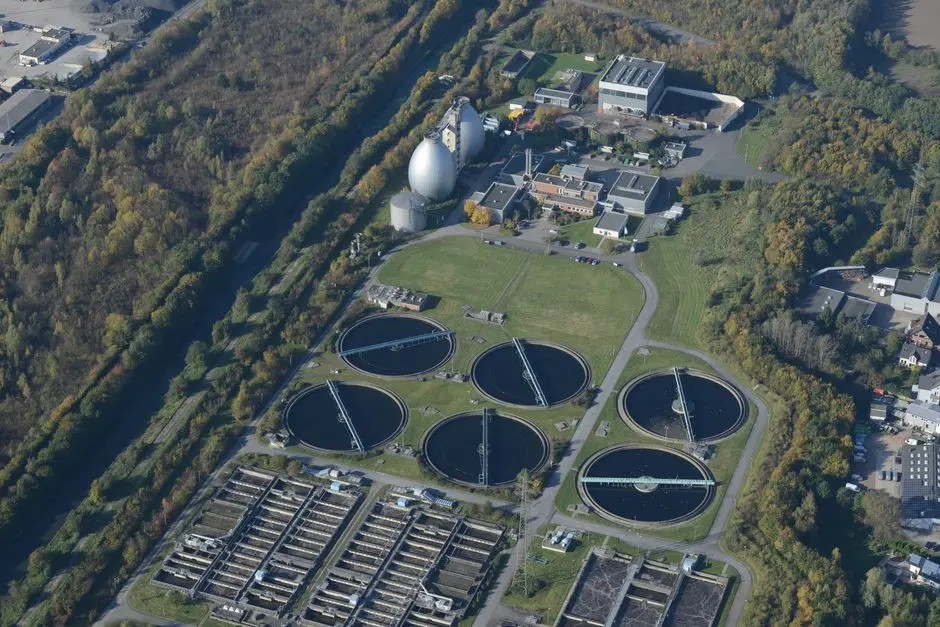
The three routes become comparable only after the discharge route, design duty and reuse objective are verified. Public sewer requires a confirmed lawful connection but avoids the hotel owning the entire biological-treatment and sludge-handling process; its suitability at the Aleppo property remains unverified in the supplied sources. Onsite A/O treatment provides an alternative where sewer discharge cannot be used, while MBR adds membrane solids separation where reuse quality or footprint constraints justify the additional process requirements.
The catalog-listed WSZ A/O package treatment plant handles 1–80 m³/h for hotel applications. It combines anoxic and aerobic biological contact oxidation, sedimentation and disinfection in one buried package. The catalog-listed MBR membrane bioreactor covers 10–2,000 m³/day and combines activated sludge with submerged PVDF membrane filtration. HydropureWater’s product catalog states that the MBR produces effluent below 1 μm filtration and has a 60% smaller footprint than conventional systems.
Do not select either system from nominal capacity alone. Check peak hydraulic loading, biological loading, effluent objectives, sludge removal, power demand, controls and maintenance access. The A/O package plant versus MBR for hotels comparison provides the equipment-selection framework, but the Aleppo site data must govern the final choice.
| Decision condition | Public sewer | WSZ A/O package | MBR |
|---|---|---|---|
| Route status | Proceed only after written connection and discharge confirmation | Use when lawful sewer discharge is unavailable and the package duty matches the site | Use when the verified reuse, effluent or footprint requirement justifies membrane treatment |
| Catalog capacity | Depends on available receiving capacity; no Aleppo capacity is established by the supplied sources | 1–80 m³/h | 10–2,000 m³/day |
| Process configuration | Connection and any authority-required pretreatment; treatment ownership remains with the receiving utility | Anoxic and aerobic contact oxidation, sedimentation and disinfection in one buried package | Activated sludge with submerged PVDF membrane filtration |
| Effluent or reuse feature | Requirements depend on the confirmed receiving route and permit | Requires a site-specific effluent design and confirmed treatment objective | Catalog states filtration below 1 μm, with reuse suitability still requiring a defined application and water-quality plan |
| Land and maintenance | No onsite biological reactor or sludge-dewatering system | Buried package; access for controls, aeration, sludge removal and maintenance must be provided | Catalog states a 60% smaller footprint than conventional systems; membrane maintenance and cleaning access remain critical |
| Principal procurement check | Written authority approval, available capacity, connection conditions and application process | Peak flow and loading, pretreatment, controls, power, installation method and commissioning scope | Peak flow and loading, membrane design, reuse target, pretreatment, controls, power and commissioning scope |
Specify pretreatment, disinfection and sludge handling
A treatment package does not remove the need to protect the biological process. Require a kitchen grease-control strategy and identify whether wastewater contains soaps, bleach, oils or other substances that could inhibit treatment. If these streams are concentrated or variable, define whether they will be segregated, equalized, pretreated or accepted directly by the selected process.
Assess mechanical screening where rags, plastics or fibrous debris could affect pumps, valves and biological treatment. HydropureWater’s catalog lists the GX rotary bar screen as a continuous-duty unit for municipal and industrial headworks. That catalog description does not establish that screening is required at the hotel; the decision should follow the wastewater characterization and selected process train.
Match final disinfection to the confirmed receiving route and reuse application. The product catalog lists UV and chlorine-dioxide options, but the appropriate method must follow the verified permit and water-reuse plan. Include storage, contact requirements, instrumentation and operator controls in the quotation rather than treating disinfection as an accessory line item.
Assign responsibility for sludge stabilization, removal, dewatering, transport and disposal. HydropureWater’s catalog lists a plate-and-frame filter press for sludge dewatering with filtration areas from 1 to 500 m². The filtration area still has to be selected against the actual sludge quantity and properties. The associated filter-press guidance is relevant to equipment reliability and troubleshooting, but it does not replace a site sludge balance.
Keep chemical dosing on the critical path only when the wastewater characterization and treatment train justify it. HydropureWater’s catalog states that its automatic dosing system uses PLC-controlled injection for coagulants, flocculants, pH adjusters and specialty chemicals. Specify reagent type, duty, storage, safety requirements, duty-standby arrangements and operator training only after those needs are established.
Turn the decision into a procurement and acceptance package

Issue one site-specific request for quotation to the public authority and equipment bidders so every party works from the same verified inputs. The request should cover peak flow, average flow, wastewater analysis, available footprint, soil conditions, power, backup-power needs, sludge route, reuse targets and receiving-authority requirements. It should also ask each equipment bidder to state its design basis, duty calculations, pretreatment assumptions, process guarantees, control philosophy, installation method, commissioning tests, training and spare-parts scope.
HydropureWater’s Syria page states that its guides were most recently updated on Nov 21, 2026 and cover regional standards, engineering specifications and cost benchmarks. Require each quotation to identify the current applicable requirement and provide documentary support; do not accept an undated reference to a generic discharge standard. The hotel treatment-route selection method can structure the comparison, but permits and acceptance criteria must reflect the Aleppo receiving route.
Accept the equipment only after factory and site tests demonstrate the contracted hydraulic and effluent duties under representative operating conditions. Define sampling points, test methods, acceptance values, retest provisions and who resolves non-performance before the contract is closed.
| Responsibility | Minimum evidence or deliverable |
|---|---|
| Hotel owner | Occupancy, operating records, flow and wastewater data, reuse objectives, footprint and budget approval |
| Design engineer | Survey, process calculations, utility and installation design, pretreatment and sludge balance, equipment schedule and acceptance criteria |
| Local authority | Written discharge route, current application requirements, connection or discharge conditions and required approvals |
| Supplier | Duty calculations, process guarantees, controls, factory tests, installation method, commissioning, training and spare-parts scope |
| Contractor | Excavation, civil works, power connection, equipment installation, site tests and handover records |
| Operators | Documented operating duties, routine checks, sludge handling, emergency response and long-term training |
Frequently Asked Questions
What will an Aleppo hotel wastewater treatment system cost?
There is no Aleppo-specific price in the supplied research. Request a quotation using verified peak flow, average flow, wastewater quality, treatment route, pretreatment, civil work, controls, sludge handling, power and site constraints. Require the bidder to separate equipment, civil work, installation, commissioning, approvals and operating items so the owner can compare complete scopes rather than headline prices.
How should a hotel or resort in Aleppo be sized for treatment?
Size from peak flow and organic loading, not room count alone. Compare the resulting duty with the catalog ranges of 1–80 m³/h for the WSZ A/O package plant and 10–2,000 m³/day for the MBR, then check whether the selected duty also satisfies pretreatment, effluent and reuse requirements.
Should the supplier be chosen for WSZ A/O treatment or MBR?
Select the supplier on the strength of a transparent design basis, relevant local approval experience, clearly stated process guarantees, installation and commissioning scope, training and after-sales support. Ask each bidder to show how its proposed duty and pretreatment assumptions match the hotel’s verified site data.
What compliance evidence is needed before discharge or reuse begins?
Obtain the current receiving route, discharge conditions and permit in writing from the responsible authority. No supplied source establishes a specific current Aleppo numerical effluent limit, so request the applicable requirement directly and do not infer it from catalog performance or another city’s rules.