Separate the wastewater streams before selecting equipment
An Erode data center needs treatment selected separately for cooling-tower blowdown, sanitary wastewater, maintenance drainage or closed-loop leakage, and RO concentrate. Evaporative or hybrid cooling creates a concentrated blowdown stream requiring solids control and, where reuse requires salt reduction, feed-specific RO; closed-loop liquid cooling does not automatically produce blowdown. Conventional brackish-water RO commonly reaches 75–80% recovery, so higher recovery needs pilot evidence and an approved residue route. Final sizing must use measured Erode peak flows and representative chemistry, while reuse, discharge, concentrate and solids destinations require written acceptance.
Begin with the cooling architecture, not the equipment catalogue. Confirm whether the facility uses evaporative, hybrid or closed-loop liquid cooling. An evaporative or hybrid arrangement can generate a continuous, chemically concentrated blowdown stream. A closed-loop liquid-cooling system does not automatically do so, as HydropureWater’s 2026 guidance states. If the design changes during procurement, update the water balance and treatment scope before comparing bids.
Sample each stream across operating modes and representative IT loads. For cooling blowdown, request flow, cycles of concentration, conductivity or TDS, pH, hardness, silica, TSS, chlorides, sulfate, alkalinity, temperature and residual chemicals. For closed-loop leakage and maintenance drainage, obtain the coolant identity, additives and any refrigerant or PFAS information. Keep recovery or disposal open until compatibility is established. Sanitary wastewater requires an independent biological, solids-treatment and disinfection basis based on COD, BOD, TSS, ammonia, pH and pathogen data.
| Erode wastewater stream | Required site evidence | Preliminary decision |
|---|---|---|
| Evaporative or hybrid cooling blowdown | Measured flow and representative chemistry across operating modes | Solids control followed by RO only where the reuse specification requires dissolved-solts reduction |
| Closed-loop leakage and maintenance drainage | Peak flow, coolant identity, additives and possible refrigerant or PFAS contamination | Keep recovery or controlled disposal open until compatibility is demonstrated |
| Sanitary wastewater | COD, BOD, TSS, ammonia, pH and pathogen data | Separate biological, solids-treatment and disinfection route |
| RO concentrate and treatment residues | Flow, salinity, constituent profile and destination constraints | Obtain written acceptance before finalizing the recovery train |
Build the Erode water balance from measured peaks
A defensible Erode treatment design begins with one reconciled water balance covering makeup, evaporation, blowdown, leakage, maintenance drainage, permeate, concentrate, reclaimed-water demand and final discharge. Meter each boundary and retain the operating condition associated with each reading. Average daily water use cannot represent startup dumps, shutdown discharges, peak cooling demand, maintenance events or emergency routes, so the treatment and storage cases must include those events separately.
HydropureWater’s 2026 guidance gives the theoretical cooling-tower relationship as blowdown = 1 ÷ (CoC − 1). At 4 cycles of concentration, theoretical blowdown is 25% of makeup; at 6 CoC, it is 20%. The same 2026 guidance states that actual blowdown can exceed the theoretical relationship by 15–30% because of unmeasured losses and emergency dumps. These are source relationships, not Erode measurements. Use metered flows and the project’s documented design margin rather than sizing pumps and vessels from the calculation alone.
IDE Tech’s 2026 article illustrates a 100-MW facility using up to 2 million litres per day. That is facility-scale context, not a design input for the Erode project. A useful data center wastewater route and sizing method is the water-balance structure, not the illustrative flow.
- List measured makeup, evaporation and blowdown for normal and peak cooling operation.
- Add leakage, maintenance drainage, startup dumps, shutdown discharges and emergency routes as separate cases.
- Reconcile treated-water production, reuse demand, concentrate generation and final discharge.
- Check future thermal architecture and IT-load assumptions against the same balance.
Match each stream to a preliminary treatment train
The treatment train should follow the required destination and the contaminants that can impair the receiving service. For evaporative or hybrid blowdown, remove suspended solids and colloids before dissolved-solids treatment. Ultrafiltration pretreatment for cooling blowdown may form part of that train, but filtration alone does not establish microbiological suitability for reuse.
HydropureWater’s 2026 UF catalogue lists 0.03-micron PVDF membranes, capacities from 2,000 to 40,000 L/h and feed turbidity up to 300 ppm. These are catalogue limits, not guaranteed Erode performance. The bid must verify peak flow, feed chemistry, recovered-water quality, cleaning method, differential-pressure limits and redundancy against representative site data.
Use RO only when the recovered-water specification requires dissolved-salts reduction. Project recovery from feed TDS, calcium hardness, silica, temperature, antiscalant strategy and Erode scaling limits. IDE Tech reports in 2026 that conventional brackish-water reverse osmosis commonly reaches 75–80% recovery before scaling becomes unmanageable. The industrial RO catalogue’s up-to-95% recovery is a maximum, not an operating guarantee. Any industrial RO water treatment system proposal should therefore include feed-specific calculations and pilot evidence.
For specialist high recovery, IDE Tech’s 2026 MAXH₂O concept combines conservative RO, controlled precipitation of silica and calcium salts, and a brine loop. IDE reports approximately 95% recovery and about 1 mg/L permeate silica for a stated mixed industrial feed; these figures are not Erode performance values. A data center cooling-blowdown treatment comparison is useful for route selection, but Erode chemistry and residue acceptance remain controlling inputs.
| Treatment objective | Indicative train | Evidence required before selection |
|---|---|---|
| Remove particles and colloids | UF RO pretreatment | Measured peak flow, turbidity, suspended solids, recovered-water specification, cleaning method and redundancy |
| Reduce dissolved salts | Feed-specific brackish-water RO | TDS, calcium hardness, silica, temperature, antiscalant strategy, scaling analysis and pilot recovery |
| Reuse as cooling make-up | Permeate conditioning, storage and distribution | Quality specification, microbial control, residual chemistry, scaling controls and materials compatibility |
| Specialist high recovery | Controlled precipitation and brine management | Feed-specific pilot evidence and approved solid-residue route |
| Sanitary wastewater | Biological treatment, solids control and disinfection | COD, BOD, TSS, ammonia, pH, pathogen data and receiving-route acceptance |
Set the reuse, discharge and residue acceptance gates
A treatment proposal is not commercially complete until the destination of every stream is accepted in writing. Obtain discharge acceptance criteria from the relevant Erode authority or receiving sewer operator for pH, TDS, temperature, chemicals, solids and other applicable, stream-specific parameters. The supplied research contains no verified Erode legal limits, so the project team must establish the applicable route rather than transfer limits from another jurisdiction.
To ensure system viability, define recovered-water quality, storage, distribution, microbial limits, scaling controls and cooling-chemistry compatibility before selecting final equipment. A receiving system should confirm the operating envelope it can accept. In parallel, approve RO concentrate, sludge and precipitated solids separately: acceptance of the treated effluent does not automatically approve the rejects.
Saltworks’ 2025 material describes MLD as retaining a high-salinity, low-volume brine and ZLD as zero liquid discharge at the highest cost. Neither route can be selected from the supplied evidence without an Erode destination and cost case. A broader industrial effluent treatment plant selection method helps structure the comparison, but it does not establish Erode acceptance.
- Reuse gate: written recovered-water specification and compatibility confirmation from the receiving cooling service.
- Discharge gate: written acceptance from the relevant authority or receiving sewer operator.
- Residue gate: separate written destination and handling basis for concentrate, sludge and precipitated solids.
- Commercial gate: quantified energy, chemical, labour and residue-handling implications for the accepted route.
Issue one comparable bid and pilot-acceptance package
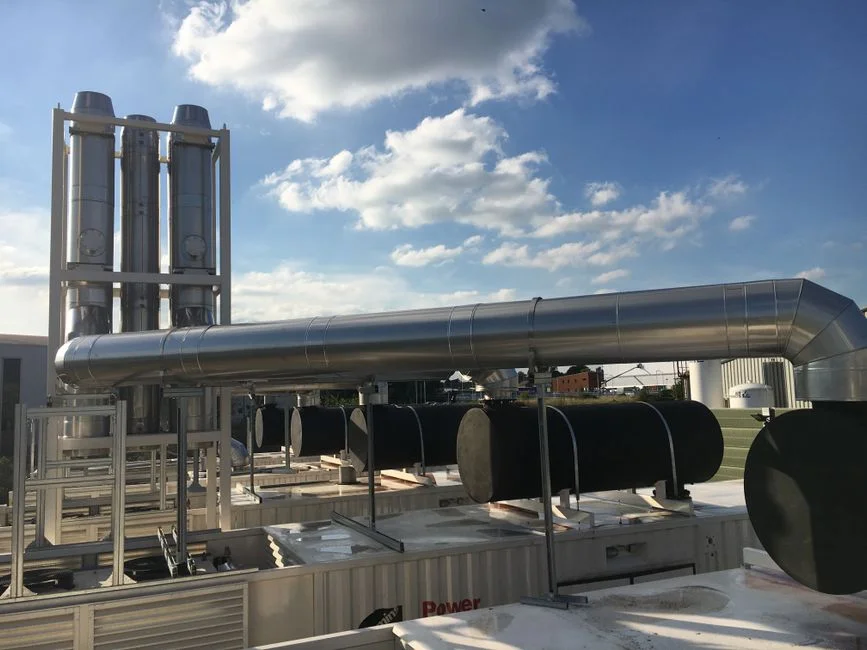
One common bid package will expose differences that a generic equipment subtotal can hide. Require itemized quotations covering equipment, installation, membranes, chemicals, energy, testing, operator time, cleaning, redundancy, replacement parts and residue handling. Each bidder should state its measured peak-flow assumptions, Erode operating cases, feed-specific recovery projection, scaling analysis, control philosophy and every reject destination.
HydropureWater’s 2026 guidance proposes a 3–6-month trial, or the longest practical operating window. Monitor flow, conductivity, pH, hardness, silica, TSS, selected biocide residual and membrane or filter differential pressure. Also trend cycles of concentration, actual recovery, cleaning frequency, chemical consumption and reuse performance under representative demand.
Turn the observations into contractual criteria for recovered-water quality, stable recovery, concentrate handling, cleaning frequency and automatic controls. State every projection assumption and require evidence that the proposed train handles measured Erode peak conditions and chemical residuals. Catalogue recovery maxima, case-study results and theoretical blowdown percentages are screening inputs; none is an Erode guarantee.
Use this fillable basis in the issue document:
- Measured peak flow for every stream, with operating mode and sampling date.
- Representative chemistry and cooling-water residual inventory.
- Confirmed cooling architecture and cycles-of-concentration basis.
- Written reuse specification, discharge criteria and residue destination.
- Feed-specific scaling analysis, projected recovery and pilot protocol.
- Itemized capital, operating, maintenance, energy, chemical and residue costs.
- Contractual recovered-water, recovery, cleaning, controls and reject-handling criteria.
Frequently Asked Questions
How should an Erode data center size cooling-blowdown treatment?
Use measured makeup, blowdown, evaporation and peak-event flows, then reconcile them with reuse demand, treatment output, concentrate and discharge. HydropureWater’s 2026 theoretical values—25% of makeup at 4 CoC and 20% at 6 CoC—are screening relationships, not Erode design loads; its guidance says actual blowdown can exceed theory by 15–30%.
How much will the treatment system cost?
No defensible Erode price can be derived from the supplied research because it contains no local tariff, measured flow data or quotation. Require itemized bids that separately price equipment, installation, membranes, energy, chemicals, operator time, cleaning, redundancy, replacement parts and each residue-handling route.
Which treatment route should the bidder demonstrate?
For evaporative or hybrid blowdown, require solids control and then RO where the reuse specification requires dissolved-salts reduction. For closed-loop leakage, retain recovery or controlled disposal until coolant compatibility is established. Treat the 75–80% conventional BWRO range and 95% catalogue or case-study values as screening evidence, not guaranteed Erode performance.
How should the buyer select the supplier and control compliance risk?
Select a bidder that provides feed-specific recovery calculations, scaling analysis, representative pilot evidence, control philosophy and documented destinations for concentrate, sludge and precipitated solids. Do not release final equipment selection until the relevant Erode authority or receiving operator confirms the selected discharge, reuse and residue routes in writing.