Identify the controlling sewer requirement
Mining and metals plants near Thornton generally meet sewer pretreatment requirements through a staged train: equalization, pH correction, heavy-metals precipitation, solids separation, optional polishing, and controlled discharge. The controlling authority is the receiving POTW under Clean Water Act §307(b) and 40 CFR Part 403, together with its current sewer-use ordinance and industrial discharge permit. Federal categorical standards provide the floor, while the POTW may impose tighter limits, monitoring protocols, and enforcement triggers. The supplied research suggests representative local limits of 0.3–1.0 mg/L zinc and 0.3–0.5 mg/L copper monthly average, but Thornton’s adopted ordinance must be verified before sizing equipment.
Sewer discharge is not governed by an NPDES permit. NPDES requirements apply to direct discharges to surface water; a discharge to a POTW enters the federal pretreatment program, with local enforcement through the sewer-use ordinance (HydropureWater, “How Mining & Metals Plants Meet Pretreatment Limits Before Sewer Discharge,” undated research excerpt). This distinction matters because pretreatment limits protect the POTW’s biological process, sludge handling, and workers, whereas surface-water limits address receiving-stream conditions.
Federal categorical standards establish the minimum applicable framework, but the site-specific industrial discharge permit can be more restrictive. Confirm the following before issuing an equipment specification:
- Identify the actual receiving POTW and the authority responsible for approving the sewer connection.
- Obtain the current industrial sewer-use ordinance, not a summary or comparison article.
- Confirm the applicable categorical subcategory and the current eCFR text. The supplied sources conflict on the ore-mining part citation, so do not repeat either number without verification.
- Determine whether the operation is a categorical industrial user or significant industrial user.
- Obtain the industrial discharge permit, applicable local limits, monitoring protocol, slug-load provisions, sampling requirements, fees, and enforcement provisions.
- Confirm local prohibitions for specific metals, oil and grease, pH, temperature, sulfide, chlorine, or other process chemicals.
Thornton Water’s 2025 Water Quality Report identifies mining and metal refining as potential source-water contributors to copper, lead, and selenium, but it does not establish industrial sewer-discharge limits. It also does not identify the industrial POTW or establish the applicable categorical subcategory. Treat those as unresolved inputs rather than local law.
| Verification item | Evidence required | Decision owner |
|---|---|---|
| Receiving authority | Written confirmation of the POTW and applicable industrial-user program | Site environmental lead |
| Controlling limits | Current sewer-use ordinance and site industrial discharge permit | POTW liaison and regulatory counsel |
| Categorical status | Current eCFR text, applicable subcategory, and SIU determination | Regulatory engineer |
| Compliance protocol | Sampling locations, monitoring frequencies, analytical methods, reporting and enforcement conditions | Operations and laboratory |
| Unresolved local inputs | Thornton-area permit, ordinance, sewer fee schedule, and accepted sludge route | Procurement team |
Characterize the wastewater that drives equipment selection
The design basis must represent the worst-case blend, not average production flow. Mining and metals wastewater is a superposition of pit dewatering, concentrator slurry water, contact stormwater, acid mine drainage, and finishing-shop rinsate; each stream has a different pollutant fingerprint and flow pattern (HydropureWater, “Mining Pretreatment for Sewer Discharge in the US: 2026 Compliance Guide,” undated research excerpt). The supplied research reports pH of 2–4 in raw acid mine drainage and spent process solutions, suspended solids in the hundreds to several thousand mg/L, dissolved Pb, Cu, Zn, Cd, Ni, and As, and elevated sulfate and TDS.
Do not blend all available data into one average composite. Build a stream-by-stream mass and load inventory first. Identify which streams enter continuously, which are generated by dump-leach cycles, mill clean-outs, storm events, or finishing campaigns, and whether those streams can be segregated before treatment. Equalization is the first equipment decision because the train must absorb hourly and batch variability caused by ore grade, mill throughput, and weather.
For a defensible design, HydropureWater’s 2026 mining pretreatment guide identifies online pH and conductivity at the headworks plus a 24-hour composite sampler as the minimum basis. Extend the sampling program to characterize flow, pH, metals, TSS, oil and grease, sulfate, TDS, and batch loads. Operations should supply historical operating data, storm and production scenarios, and any chemical-reuse or segregation practices. The POTW should confirm the analytical suite, sampling frequency, composite protocol, and whether additional constituents must be reported.
| Stream | Characterization needed | Design consequence |
|---|---|---|
| Pit dewatering | Flow, pH, metals, TSS, sulfate, TDS, and discharge timing | Equalization and precipitation load |
| Concentrator slurry water | Solids, metals, flotation reagents, oil and grease, batch profile | DAF versus lamella and sludge-handling design |
| Contact stormwater | Event flow, solids, metals, pH, and diversion potential | Peak capacity and equalization |
| Acid mine drainage | pH, acidity, metals, sulfate, TDS, and flow duration | Reagent demand and solids production |
| Finishing rinsate | Metals, cyanide if applicable, oil and grease, pH, and batch loads | Segregation, precipitation, and polishing |
The Thornton Water report can support regional source-water context, but it cannot be used to infer an industrial discharge limit or to substitute for a site composite. Any assumed local zinc or copper range remains representative context, not a design target.
Build a precipitation and solids-removal train
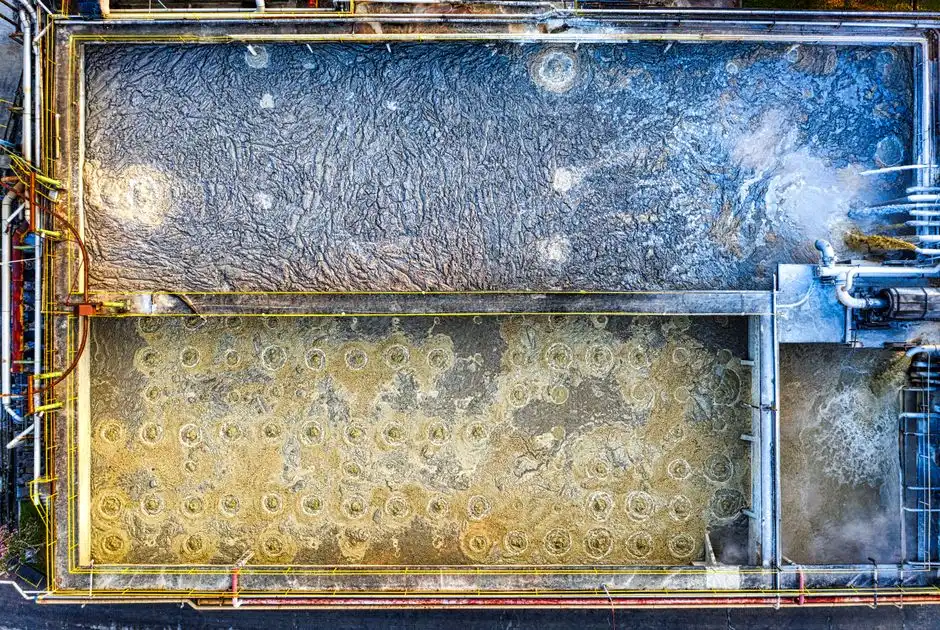
Equalization should precede pH correction and solids separation. HydropureWater’s supplied pretreatment research specifies 8–24 hours of equalization based on average daily flow to damp batch discharges, followed by pH correction toward 6.5–9.0, with staged dosing when influent swings exceed 2 pH units. Those values are equipment-selection guidance in the research, not confirmed Thornton requirements. The actual target must come from the POTW permit and the precipitation study.
Hydroxide precipitation is the normal starting point for copper, zinc, and other dissolved metals. Jar testing must define the parameter-specific pH window, reaction time, coagulant dose, and residual performance. Properly controlled precipitation systems are reported to achieve 85–95% total-metals removal (Fluence, 2024-11, as cited by HydropureWater), but a removal percentage does not prove compliance; the guaranteed final concentration must be compared with the controlling limit.
Sulfide polishing is justified when hydroxide precipitation cannot reliably reach a tighter residual-metal requirement. The supplied research reports sulfide residuals of 0.01–0.05 mg/L for Cu, Zn, Cd, and Ni, compared with 0.5–2.0 mg/L for hydroxide, but reagent cost is 2–4× higher and sealed reactors with scrubbed H₂S ventilation are required (HydropureWater, undated research excerpt). A PLC-controlled chemical dosing system for pH and metal precipitation should therefore be evaluated against reagent interlocks, flow-paced feeds, pH control, alarms, and the need for staged reactors.
DAF and lamella serve different feed characteristics. The supplied research gives DAF hydraulic loading of 5–25 m/h, capacity of 4–300 m³/h across 13 models, and 90–98% TSS removal (HydropureWater, undated research excerpt). DAF is the stronger choice when oil, grease, floatable reagents, or colloidal metals dominate. The same research gives lamella surface loading of 20–40 m/h and identifies it as the stronger choice for high-flow metal-hydroxide sludge when footprint is constrained. Lamella is less effective for free oil and colloidal fines than DAF.
| Decision condition | Preferred solids-removal basis | Reason | Verification required |
|---|---|---|---|
| Oil, grease, floatable reagents, or colloidal metals dominate | DAF | DAF can float oil-coated and colloidal material; supplied research reports 90–98% TSS removal and 85–95% oil and grease removal | Oil-and-grease characterization, polymer response, flotation performance, and sludge float tests |
| High-flow metal-hydroxide sludge and constrained footprint | Lamella | Reported surface loading of 20–40 m/h and effective handling of dense metal-hydroxide flocs | Solids settleability, sludge blanket depth, carryover, and peak hydraulic test |
| Mixed or changing stream | DAF followed by clarifier or filtration, if justified | Separates floatable contaminants before settling and provides redundancy for variable feeds | Composite testing and pilot or vendor performance testing |
Use the comparison of DAF and lamella for mining pretreatment to structure jar and pilot testing, not to select a universal winner. The governing design inputs are the worst-case flow and load, oil content, colloid behavior, sludge characteristics, footprint, and the final effluent limit.
Specify monitoring, polishing and residual handling
Monitoring must be placed at points where an operator can diagnose failure before the sewer connection is affected. HydropureWater’s supplied research recommends a multimedia filter operating at 1–2 m/h to strip residual TSS below 10 mg/L and protect against clarifier carryover during hydraulic surges or polymer mis-dosing. Size the filter and its backwash system for the applicable hydraulic event, not average flow. A common arrangement is differential-pressure-triggered backwash with filtered turbidity or TSS trending and an automatic diversion or alarm when the discharge limit is at risk.
Polishing should be justified by residual performance, not added by default. If jar tests show that the selected solids-removal unit cannot reliably meet the POTW limit, evaluate filtration, ion exchange, or sulfide polishing according to the remaining pollutant. Ion-exchange units foul readily with oil, grease, and hardness, so they belong after clarification rather than serving as the primary treatment stage (HydropureWater, undated research excerpt).
Disinfection is a permit question. If the POTW requires a residual because of long force mains, siphons, or pathogen risk, the supplied research identifies chlorine dioxide at 1–5 mg/L as an option. Confirm the required residual, monitoring method, contact condition, and prohibition on residual chlorine before including a generator. Do not treat that range as a Thornton requirement.
Metals-bearing sludge is part of the treatment train, not a disposal afterthought. HydropureWater reports filter-press cake at 25–35% dry solids in one source and 30–45% under well-run conditions in another. Require a solids acceptance test, leachate characterization, paint-filter test where applicable, transport route, and written disposal acceptance before selecting the dewatering method. The receiving facility must identify whether cake can enter a subtitle-D landfill or requires another route. Filtrate should return to the headworks for retreatment.
Enforcement exposure must be included in the design basis. The supplied research notes that sewer enforcement may include a Notice of Uncompliance, restriction of discharge, and civil penalties up to $25,000 per day under Clean Water Act §309 (HydropureWater, undated research excerpt). Those are federal enforcement mechanisms, but the applicable POTW’s permit procedures and local consequences must be verified. Size the train with enough operating margin to maintain the permit limit during documented surges and upset conditions, without representing an unsupported design-margin percentage as a regulatory requirement.
Issue a procurement-ready equipment specification
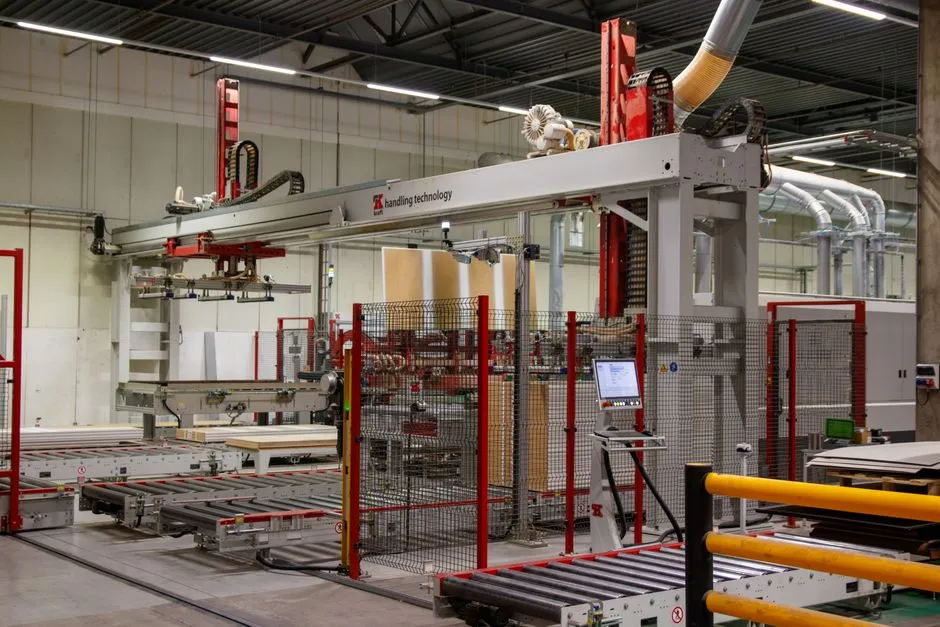
The bid basis must combine the worst-case site composite with the controlling POTW limit. HydropureWater’s supplied research calls for design around the peak 2-hour flow with 20–30% turndown capacity, while final sizing must use site-specific flow and load data. Equalization, precipitation reactors, solids-removal equipment, filtration, and controls should each be checked against peak hydraulic demand, sustained load, batch discharges, and the permitted operating envelope.
Do not ask bidders to demonstrate compliance only against federal categorical standards. Attach the receiving POTW’s current sewer-use ordinance and the site’s industrial discharge permit to the solicitation. Where a Thornton-area requirement remains unresolved, identify it as a pricing and design allowance rather than inserting a generic local range as though it were law.
| Bid requirement | Supplier response required | Buyer check |
|---|---|---|
| Guaranteed effluent | Final values for every regulated parameter at the stated flow, load, pH, and upstream conditions | Compare directly with the POTW permit and local ordinance |
| Design basis | Flow range, peak 2-hour flow, turndown, pollutant loads, and stream assumptions | Confirm the bidder used the worst-case site composite |
| Performance test | Commissioning method, sampling points, analytical methods, duration, and acceptance threshold | Reject untested transfer of influent or vendor data |
| Chemical and solids costs | Consumption rates, expected sludge yield, cake solids, filtrate return, and disposal assumptions | Price the complete operating and residual-handling chain |
| Controls | PLC inputs and outputs, pH and flow control, alarms, interlocks, data logging, and fail-safe response | Trace each alarm to a defined operating action |
| Interfaces and responsibilities | Wastewater characterization, laboratory support, POTW liaison, electrical, civil, chemical storage, sludge characterization, and final disposal acceptance | Assign every interface to the owner or supplier |
Require bidders to separate guaranteed equipment performance from assumed site performance. Any exclusion concerning chemicals, sludge analysis, disposal, permits, or utility work must appear as a written exception. This prevents a low capital bid from hiding costs that arise when the metals-bearing sludge has no accepted disposal route.
Frequently Asked Questions
Do federal categorical standards or the local POTW limit control equipment sizing?
Both matter, but the site-specific POTW ordinance and industrial discharge permit are the procurement controls. Federal categorical standards establish the floor; the POTW can impose tighter numerical limits, sampling requirements, fees, and enforcement conditions. Confirm the current ordinance and permit with the receiving authority, and confirm the applicable categorical subcategory against current eCFR text because the supplied sources conflict on the ore-mining citation.
Should equalization, precipitation, and DAF or lamella be sized from average flow?
No. Use the worst-case site-specific flow and load, including batch discharges, storm events, and the peak 2-hour flow. HydropureWater’s supplied research recommends 8–24 hours of equalization based on average daily flow, but that retention criterion still requires an influent-flow and batch-load study. Size downstream units from the equalized peak and sustained metal load, not the plant average.
What should drive the DAF versus lamella decision?
Use a waste-by-waste comparison. Choose DAF when oil, grease, floatable reagents, or colloidal metals dominate and when the available DAF system for mining wastewater solids and oil removal can meet the hydraulic and loading basis. Consider lamella for high-flow metal-hydroxide sludge where footprint is constrained and settleability tests support it. Require jar or pilot evidence because neither unit automatically guarantees the controlling POTW limit.
What inputs are needed to compare supplier cost and acceptance risk?
Request a total-cost schedule covering reagent consumption, electricity, sludge dewatering, laboratory analysis, disposal acceptance, disposal charges, and any final polishing. Require the bidder to state guaranteed final effluent values, test conditions, flow basis, turndown range, chemical consumption, sludge yield, controls, alarm response, monitoring provisions, and commissioning criteria. No reliable project price can be stated until the POTW limits, worst-case composite, disposal route, and utility requirements are confirmed.